‘Dignity for all’: Idaho bill proposes firing squad as state’s primary execution method
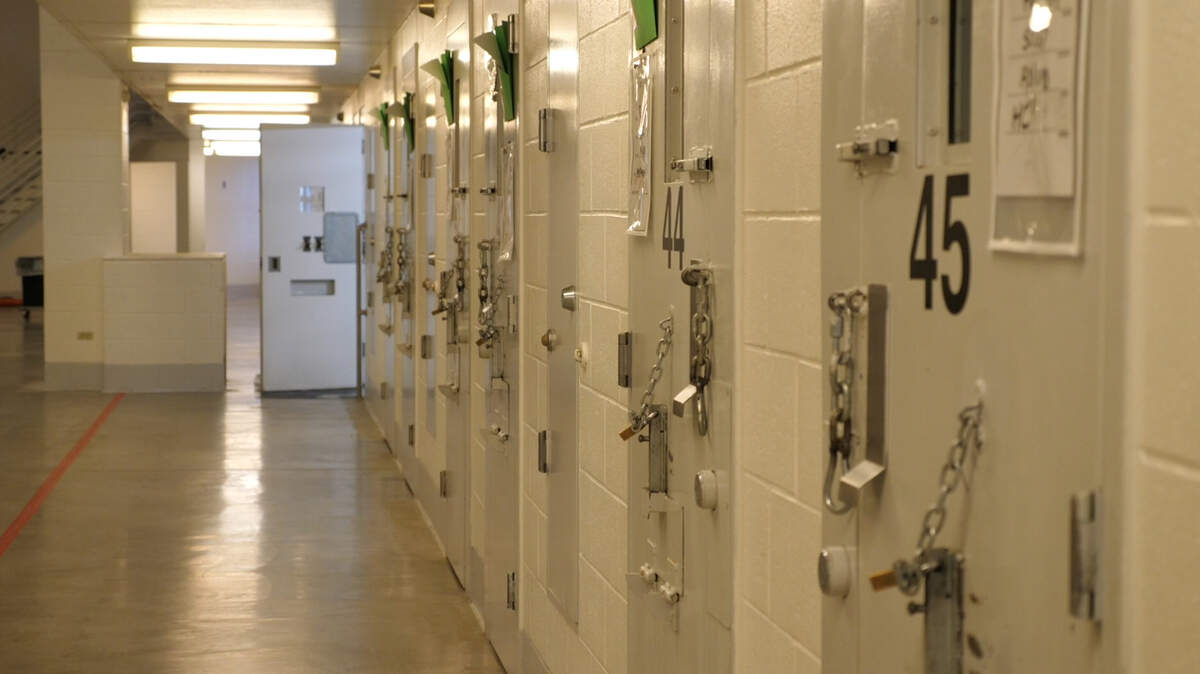
Eleven months after Idaho failed to execute a prisoner for the first time ever using lethal injection, Republican lawmakers have their targets set on using a firing squad as the state’s primary execution method.
Rep. Bruce Skaug, R-Nampa, introduced the bill Tuesday, which would make Idaho the only U.S. state to give preference to a firing squad. Skaug sponsored a bill that became law in 2023 that added back the firing squad as a backup method of execution in the state, but only when lethal injection is not possible because of a lack of execution drugs.
The Idaho Department of Correction has since had more consistent access to pentobarbital, the state’s preferred chemical for lethal injections. The state prison system most recently bought a batch of the drugs in October, court records showed.
But nearly two years later — and after state prison officials failed to find a suitable vein for an IV in the body of 73-year-old death row prisoner Thomas Creech — Skaug now hopes to ensure that prisoners on Idaho’s nine-member death row are shot do death. Lethal injection would become the state’s backup method.
“I see this bill as being less problematic with appeals in the courts,” Skaug told a House committee Tuesday. “Essentially, if you don’t have the bullets, then you go to the pentobarbital.”
An Idaho Department of Correction spokesperson declined to comment Tuesday about Skaug’s bill. The agency revised its execution protocols late last year to use a catheter for a central line during a lethal injection, rather than just a peripheral IV line, and also spent $314,000 in taxpayer money to design and build a new “execution preparation room” where prison officials make that call, IDOC officials told the Idaho Statesman in October.
Four other states in the U.S. with capital punishment have the firing squad on the books: Mississippi, Oklahoma, Utah and South Carolina. But none has the execution method as its lead option. If passed into law, Idaho would become the lone state to adopt such a statute.
Utah was the last U.S. state to use a firing squad in an execution, in 2010. Under the law at the time, prisoners were allowed to choose their method of execution. Utah also is the only U.S. state to execute a prisoner by firing squad since 1976, doing so three times, according to the Washington, D.C.-based nonprofit Death Penalty Information Center, which takes no formal position on capital punishment.
“The U.S. Supreme Court has never found a method of execution to be unconstitutional,” Robin Maher, the nonprofit’s executive director, told the Statesman in a phone interview. “As a threshold question, there’s a floor of what is unconstitutional, and we should also be asking what the right thing is to do.”
From 1980-1982, Utah had the firing squad as its primary execution method, according to Deborah Denno, a law professor at Fordham University in New York City and one of the foremost death penalty experts in the country. But Idaho’s neighboring state did not execute any prisoners during that period, data from the Death Penalty Information Center showed.
Denno noted a growing history of failed and botched executions by lethal injection across the U.S. in recent years, including one in Idaho in February 2024. A Department of Justice report last week said evidence indicates that “significant uncertainty” remains about whether lethal injection causes unnecessary pain and suffering, which may violate the Eighth Amendment of the U.S. Constitution.
Death by firing squad is considered by some to be the quickest, most instantaneous and therefore least painful way to put a person to death.
“I think this would be a move in a positive direction for the state of Idaho,” Denno told the Statesman Tuesday by phone, “because it’s the least inhumane method that we currently have in the United States.”
IDOC: Execution chamber remodel cost of nearly $1 million
If passed into law in Idaho, the firing squad would not overtake lethal injection as the state’s primary method until July 2026, Skaug said. That would grant the state prison system time to complete upgrades at the maximum security prison south of Boise, and also carry out any upcoming executions by lethal injection “to get those done” in the interim, he said.
Skaug’s 2023 law committed $750,000 to IDOC to remodel the state’s existing execution chamber to make way for a firing squad. He told the committee Tuesday that the prison system would not need to request any more money to finish the project outside of that prior appropriation and the agency’s existing budget.
However, IDOC officials told the Statesman last year that the latest estimate for a four-month build-out of the facility for the controversial execution method was nearly $1 million. And the earlier renovation for the new lethal injection preparation room already ate up all but about $436,000 of the appropriated funds for the overall remodel.
On Tuesday, Rep. Chris Mathias, D-Boise, voiced his ongoing hesitancy to the committee about using a firing squad to execute Idaho prisoners. The bill advanced for a future public hearing.
“When this came to us I think two years ago, I just expressed concerns about the state being in the retributive killing business, and I still will bring that sentiment to the full hearing,” Mathias said.
In an interview, Skaug, a personal injury attorney, told the Statesman that his bill is related to carrying out capital punishment in the state with efficiency and “dignity for all.”
“It is retribution, for the families that lost someone to murder and the person that died from murder,” Skaug said, adding that retribution is a part of what judges are meant to consider when sentencing.
This story was originally published January 21, 2025 at 2:12 PM.