Want to see the solar eclipse over Idaho this Saturday? Here’s how to watch safely
Millions of Americans will be treated to a rare celestial event on Saturday morning as the moon passes between Earth and the sun, causing an annular solar eclipse that’ll be viewable to some extent to nearly everyone in North America.
But it’s still unsafe to look directly at the eclipse despite the moon blocking out most of the sun’s light — about 91% in the path of totality and 85% in Boise.
Viewing any part of the sun — either with the naked eye or through any binoculars or cameras without a special-purpose solar filter — can cause permanent damage to the eyes. The only time it’s safe to look directly at an eclipse is during a full eclipse, according to NASA. With this weekend’s eclipse is annular, so it won’t be safe to look directly at the eclipse at any point.
With that knowledge in mind, here’s what to know about how to safely watch the eclipse in Boise this weekend.
What is an annular eclipse?
There are three main kinds of solar eclipses: total, partial and annular.
- A total solar eclipse is when the moon completely blocks out the sun, as Idahoans witnessed in 2017.
- A partial solar eclipse is when the moon passes through the path of the sun but doesn’t line up perfectly, instead creating a crescent-shaped shadow.
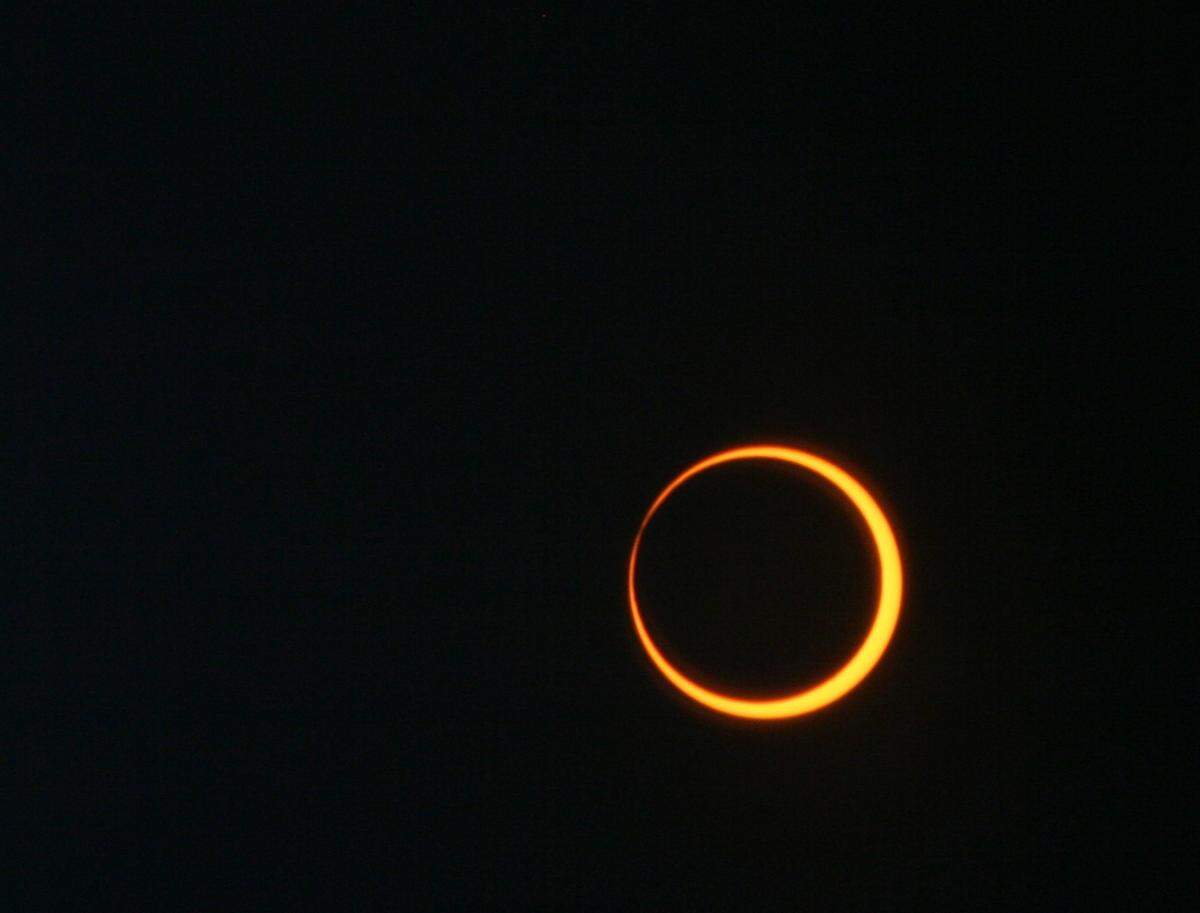
- An annular solar eclipse is what Idahoans will witness on Saturday. According to NASA, an annular eclipse is when the moon lines up perfectly between the Earth and the sun, but it’s too far away from Earth, meaning, from our point of view, it doesn’t entirely eclipse the sun.
Instead, the moon will align perfectly with the sun for those in the path of totality, but a “ring of fire” will glow ferociously around the dark moon.
How can I watch the eclipse safely?
The most common method for watching an eclipse is eclipse glasses. These flimsy cardboard glasses have solar filters over the eye holes, which allow the user to look directly at the eclipse.
Eclipse glasses can be purchased from Amazon, but many big box stores such as Walmart and Target also sell them. You can, of course, use glasses from the last eclipse in 2017 if you still have them, and the solar lenses aren’t broken.
If you’d rather save money, you can also make a homemade pinhole camera; it won’t let you look directly at the sun, but you can see the eclipse’s progress using shadows.
NASA’s Jet Propulsion Laboratory has an online guide on making a pinhole camera, and all you need is two pieces of white cardstock, aluminum foil, tape, and a pen, paper clip or pencil.
The pinhole camera is made by cutting a square in one of the pieces of cardstock and taping aluminum foil over the hole. Using the pen, pencil or paper clip, you poke a hole through the aluminum foil and hold your creation over the blank piece of cardstock.
A small circle of light will appear on the bottom cardstock where the sunlight can get through — as the eclipse progresses, the circle of light will mimic how the sun looks.
When can I watch the eclipse in Boise?
The path of totality starts on American soil in western Oregon before traveling on a southeast route through northern Nevada and into Utah. Those in the path of totality will see about 91% of the sun blocked at the peak of the eclipse, according to Space.com, with the 9% being the ring of fire around the outer edge.
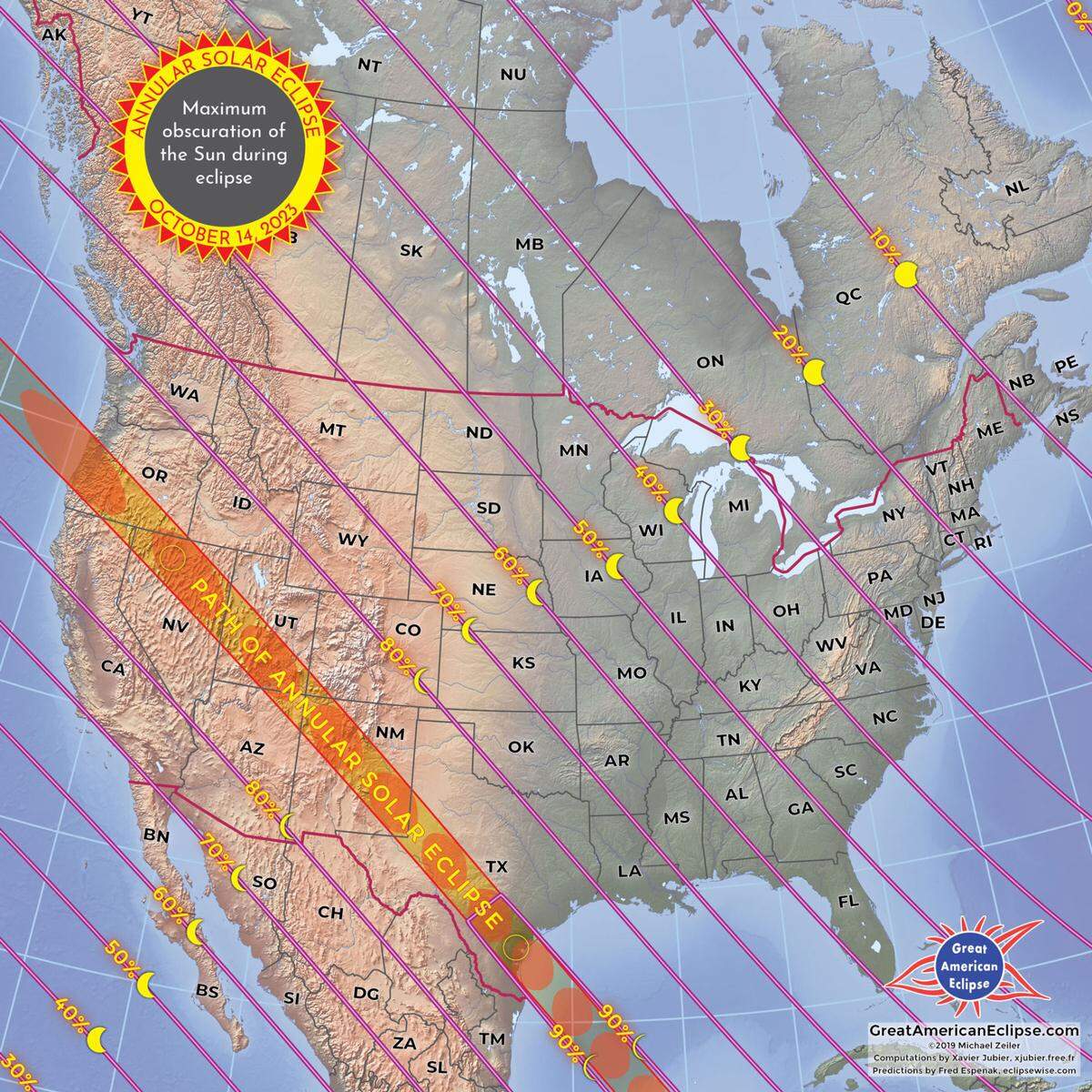
For those wanting to remain in Boise for the eclipse, it won’t be as magnificent as it would look within the path of totality, but it’ll be pretty close.
Boise will see 85% of the sun blocked out, with a partial eclipse starting at 9:07 a.m. Mountain Time. The annular eclipse will reach its max for Boise at 10:24 a.m. and last for several minutes before fading into a partial eclipse, lasting until 11:47 a.m.
This story was originally published October 11, 2023 at 4:00 AM.