
UFOs? Shooting stars? What are those lights moving across the skies of Eastern Idaho?
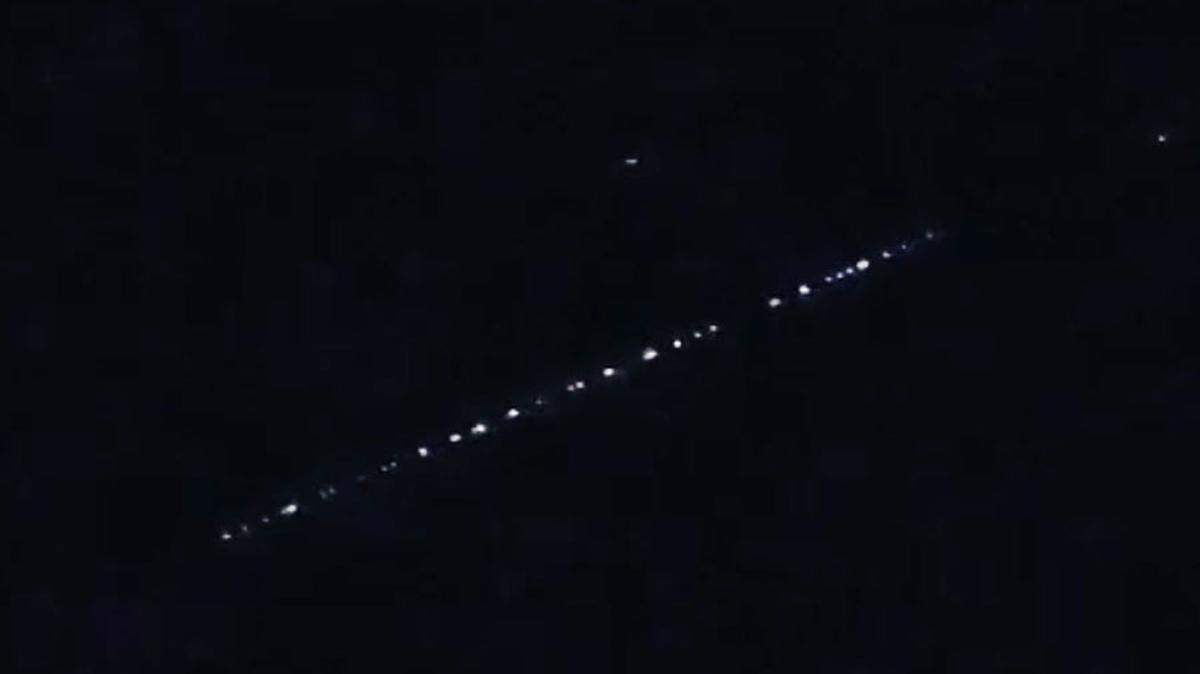
People have gazed at the stars for centuries, and if you happened to look up at the night sky in Eastern Idaho in the past 30 days, you may have noticed a peculiar sight.
A line of lights slowly and uniformly moved across the sky.
Were they UFOs? Meteors? Stars? Some other stellar phenomenon?
Steven Shropshire, a physics professor at Idaho State University, told EastIdahoNews.com that the lights are satellites. But not just any satellite — Starlink satellites.
What makes them especially visible is “actually a bit of a marketing ploy.”
The James Webb, Hubble and International Space Station are generally the biggest and most visible satellites in space. The Starlink satellites are much smaller than the ones sent up by NASA.
“They are actually designed to be reflective to get your attention. That is something they deliberately do with the Starlinks. They are not very big, but they look big because of the reflective finish on one side,” Shropshire said.
Starlink connects people all over the world with high-speed internet access. In fact, it can connect people in remote areas — even during natural disasters and wars.
The Starlink satellites have most recently been utilized during the war between Russia and Ukraine, and may have had a hand in changing the outcome by making sure Ukranians did not lose essential communications.
The satellites were launched by Elon Musk. Starlink is operated by Musk’s company Space X, which is the same company that has been launching rockets into space.
Space X hasn‘t always had smooth sailing. The New York Times reported recently that a farmer in Australia found a large chunk of space debris from a Space X spacecraft called “Dragon.” During February’s Starlink launch, 40 of 49 Space X satellites fell out of orbit, according to The Associated Press. The satellites burned up in the atmosphere.
Shropshire says debris from satellites falling to Earth is a rare occurrence.
“That is something all space agencies from the United States, Europe and Russia are very careful with. The debris fields are well plotted out, and most launches do not produce large debris fields,” he said.
While Starlink satellites improve the world’s connectivity, many astronomers worry they will make studying the stars more difficult. Starlink claims they “lead the industry in innovations to reduce satellite brightness, minimize impact on astronomy, and protect the natural night sky for all to enjoy.”
“They can appear as streaks, which can make it difficult for astrophotography and various things. Space X … is now trying to make them less reflective so they won‘t be as bright, but anything up in space can get in the way,” said Anna Hoskins, a lecturer in the ISU physics department.