‘False advertising’: Idaho U.S. senators Risch, Crapo oppose Biden’s ‘inflation’ bill
Idaho’s U.S. Sens. Mike Crapo and Jim Risch joined their Senate Republican colleagues over the weekend in a party-line vote against the federal economic package that totaled hundreds of billions of dollars designed to reduce the impacts of climate change and lower health care costs.
Crapo, the ranking Republican on the Senate Finance Committee, took aim at the bill, known as the Inflation Reduction Act. He called the spending package “reckless” and “mislabeled” after an outside financial analysis showed the proposed law would have little to no effect on dropping record-level inflation.
“Even as Idahoans are reeling from pain at the pump, shock in the grocery aisles and continued erosion of their paychecks, Democrats continue to advocate for using partisan budget tools to raise taxes and increase spending,” Crapo wrote in a Monday editorial. “Any claim that this legislation is inflation-reducing is false advertising, with no analytical support.”
The bill, which advocates and Senate Democrats have called the most consequential legislation to address climate change in U.S. history, was long a campaign promise from the Biden administration. The Senate narrowly approved it after a marathon session Saturday. The 51-50 vote allowed the bill to pass through a process known as reconciliation, which requires only a simple majority. Typically legislation needs a supermajority to pass in the Senate.
All 50 Senate Republican voted against the bill, while every Democrat and independent voted in favor. Democratic Vice President Kamala Harris cast the tie-breaking vote.
“This is an example of leaders leading, understanding that there are solutions at hand if folks have the willingness and the courage to actually step forward and fix the problems that the American people have a right to believe that their elected leaders will address,” Harris said about the bill’s passage. “This is a great day. And I think that there is no question, when you think about some of the historic work that has been accomplished — over $300 billion to address the climate crisis — this is extraordinary.”
What’s in the bill?
The bill includes $369 billion over the next 10 years to curb carbon emissions and prioritize renewable sources of energy, according to estimates from the nonpartisan Committee for a Responsible Federal Budget and Joint Committee on Taxation. That spending includes subsidies for individuals and private industry, such as tax credits on the purchase of new and used electric vehicles, and incentives for utility companies to cut methane emissions and invest in so-called clean-energy infrastructure.
Another $98 billion in the bill would go toward health care. Of that, $64 billion would help pay down health insurance premiums by extending subsidies for coverage through the Affordable Care Act, which is known to many as Obamacare. The bill also would keep in check prescription costs for seniors, by allowing Medicare to negotiate with manufacturers on the price of certain drugs.
The proposed law uses tax increases to cover the spending. The bill establishes a 15% minimum tax on all U.S. corporations earning profits of more than $1 billion annually, and over the next decade boosts the Internal Revenue Service’s tax enforcement arm to catch tax cheats, which is estimated to bring in $124 billion.
A separate analysis by the Wharton School at the University of Pennsylvania found that the bill could actually increase inflation slightly until 2024, but reduce it thereafter.
Overall, the bill is expected to cost $433 billion while generating $739 billion in revenue, according to the joint estimate. If that comes to fruition, it will reduce the federal deficit by more than $300 billion, the Committee for a Responsible Federal Budget projected.
Democrats ‘picking winners and losers’
Idaho’s U.S. senators continued to blast the bill after its approval, during what remains a 40-year high for inflation.
“We haven’t seen this kind of record inflation since Jimmy Carter was president, yet Democrats today chose to pass legislation that will raise taxes and spend hundreds of billions of dollars,” Sen. Risch said in a statement Sunday. “Passing this legislation and leaving it to taxpayers to foot the bill is the height of irresponsibility.”
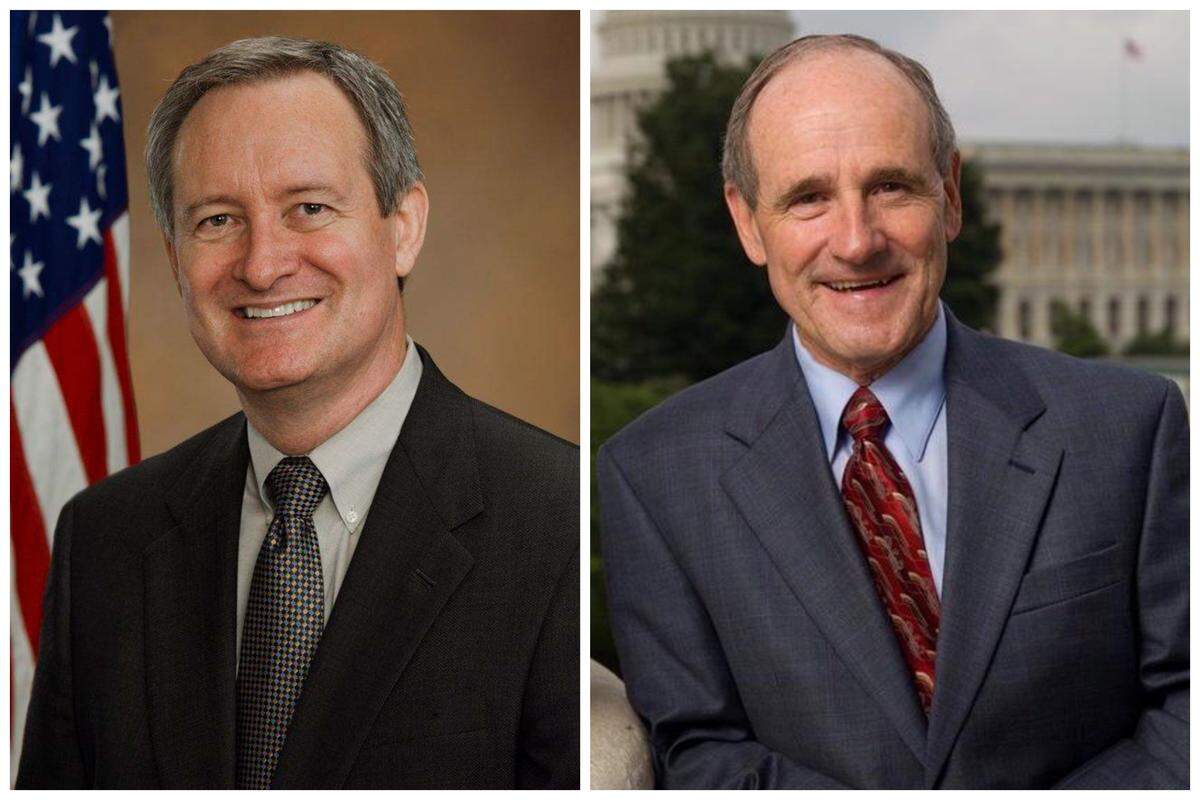
Risch, 79, whose current term doesn’t expire until 2026, targeted the bill’s expansion of IRS audits, increased taxes on domestic energy companies — including financial penalties for not working to limit methane emissions — and government handouts for the affluent to buy electric vehicles and utilities that pursue certain energy production technologies.
As to the climate measures Risch would support instead, a spokesperson for the senator told the Idaho Statesman that Risch continues to be “a vocal supporter of carbon-free energy technologies,” including nuclear, geothermal and hydroelectric powers.
“He is proud that Idaho is one of the cleanest and most affordable energy states in the nation,” Marty Boughton, Risch’s spokesperson, said in an email. “Sen. Risch will continue to support bringing online more clean, baseload energy without jeopardizing grid reliability or Idahoans’ ability to pay their utility bills.”
In a compromise to secure the votes of the more conservative members of the Democratic caucus, namely Sen. Joe Manchin, of West Virginia, the bill also includes new oil and gas leases off the Gulf of Mexico and and Alaskan coast.
Sen. Bernie Sanders, of I-Vermont, complained that the giveaway requires public waters totaling the size of the state of Michigan to be offered up for sale annually to the fossil fuel industry before offshore wind energy projects can be approved.
“This is not Bernie’s bill. I understand that,” Manchin told reporters Sunday. “But it’s a piece of legislation that’s a tremendous piece of legislation. It’s a balanced approach.”
Crapo, 71, who is running for his fifth term in office in November’s election, called out the partisanship Democrats exhibited to force the bill through the Senate.
“We should be working together on policies to bring us out of this economic quagmire, but the bill we voted on today doubles down on a tried-and-failed tax-and-spend strategy,” Crapo said in a statement Sunday. “This bill does nothing to address the significant inflation we are facing, or to ease burdens born today by low- and middle-income Americans.”
A Crapo spokesperson added that the senator has alternatively been working across the aisle on a bipartisan bill to offer energy companies flexible tax credits to promote innovation across a range of technologies, including generation, storage, carbon capture and clean hydrogen production.
“Sen. Crapo believes environmental responsibility and economic growth need not be mutually exclusive,” Marissa Morrison Hyer, Crapo’s spokesperson, told the Statesman by email. “Instead of picking winners and losers, federal policy should be technology-neutral, which is what this bill would achieve.”
Election rivals weigh in
David Roth, 41, Crapo’s Democratic opponent in the election, told the Statesman he supports the bill and would have voted for it. He applauded, for instance, the health care measures included in the bill if signed into law, such as Medicare’s new ability to negotiate prescription drug prices and the extension of Obamacare subsidies, which Roth said he’s been able to use to buy health insurance.
Roth also backed the climate elements of the bill, but lamented that they’re still likely not aggressive enough. Nevertheless, he applauded the legislation’s efforts to help reach Biden’s goal of cutting U.S. emissions by at least half of 2005 levels by 2030.

“At least we’re moving in the right direction, and at least we’re doing something and acknowledging that there’s a problem and we need to do something about it,” Roth said in a phone interview. “And I’m glad to see the Democratic caucus come together to accomplish pushing it through, and just need to start delivering for American people — for the people who in 2020 said, ‘Let’s try something different.’”
Scott Oh Cleveland, 60, of Eagle, who also is running against Crapo as an independent, said the incumbent is just playing politics in voting against the bill, and pointed to Crapo’s prior support of Biden’s infrastructure law. He called the climate-focused package “just another reckless spending bill to launder taxpayer funds,” and said he would have also opposed the bill.
“The bill will in fact raise taxes on average Americans, weaponize 80,000 new IRS agents and fund more green energy nonsense,” Cleveland told the Statesman by email. “It will also increase inflation, not lower it.”
The bill could come up for a vote in the U.S. House as early as Friday, when members return from recess. It is expected to pass in the Democrat-controlled lower chamber en route to Biden’s desk.
“This bill tackles inflation by lowering the deficit and lowering costs for regular families,” Biden said in a statement Sunday. “This bill also makes the largest investment ever in combating the existential crisis of climate change. The House should pass this as soon as possible and I look forward to signing it into law.”
Idaho’s two U.S. House members, Republicans Reps. Mike Simpson and Russ Fulcher, have each signaled in statements on social media that they will oppose the bill. Both are up for reelection in November.
“Democrats passed reconciliation (Saturday), knowing it will only make inflation worse,” Simpson said in a Twitter post Monday. “Instead of offering Americans a lifeline, they will raise your taxes, spend billions outside our means, and weaponize the IRS against families and small businesses.”
This story was originally published August 9, 2022 at 4:00 AM with the headline "‘False advertising’: Idaho U.S. senators Risch, Crapo oppose Biden’s ‘inflation’ bill."