Changed names, manual labor: 150 years of mistreatment in Native American boarding schools
The U.S. Department of the Interior released the first volume of its Federal Indian Boarding School Initiative Investigative Report on Wednesday, highlighting 150 years of mistreatment in federal American Indian boarding schools.
The 106-page report underlines how, over a century and a half, U.S. officials forcibly removed Native American children from their homes and relocated them to 408 federal boarding schools.
The boarding schools were built in response to the Civilization Fund Act of 1819, which was created to culturally assimilate Indigenous children by taking them away from their families and suppressing their cultural beliefs, according to the report.
The report describes how American Indian, Alaska Native, and Native Hawaiian children were subject to identity-alteration methodologies. Some of the methods included changing their names to English names, cutting their hair, and preventing them from using their native language, participating various cultural practices and observing their religion.
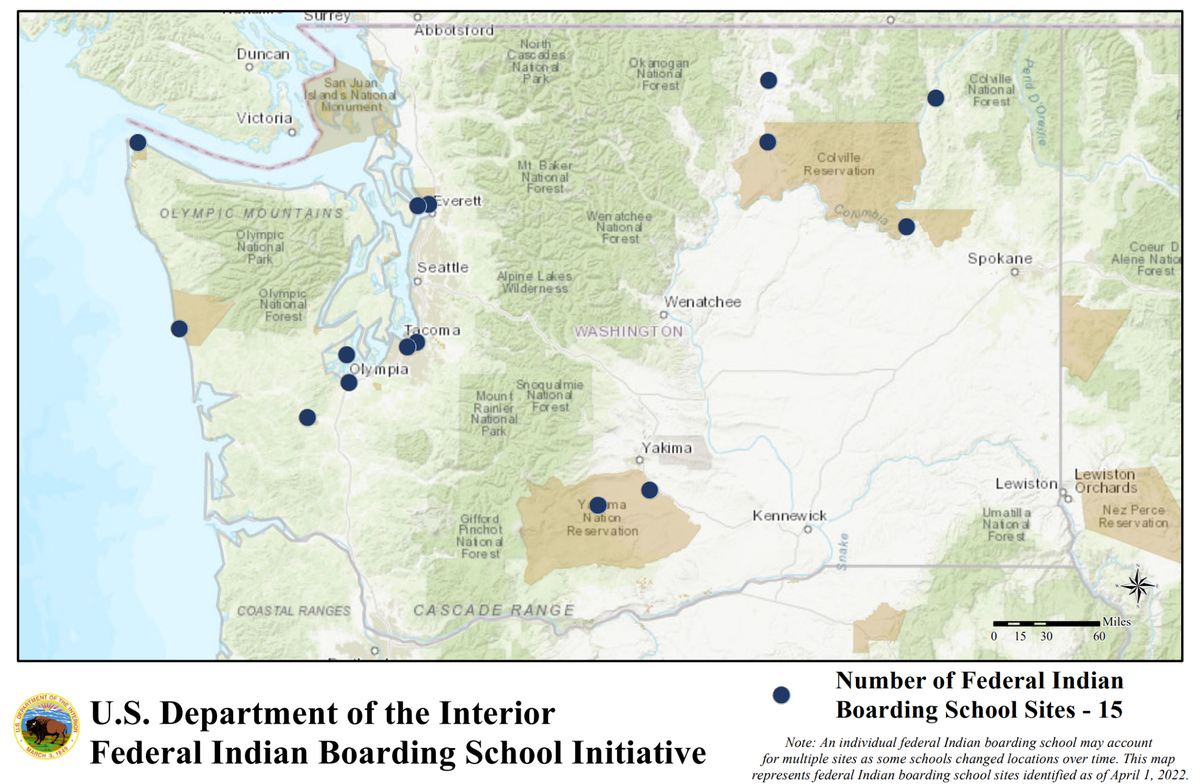
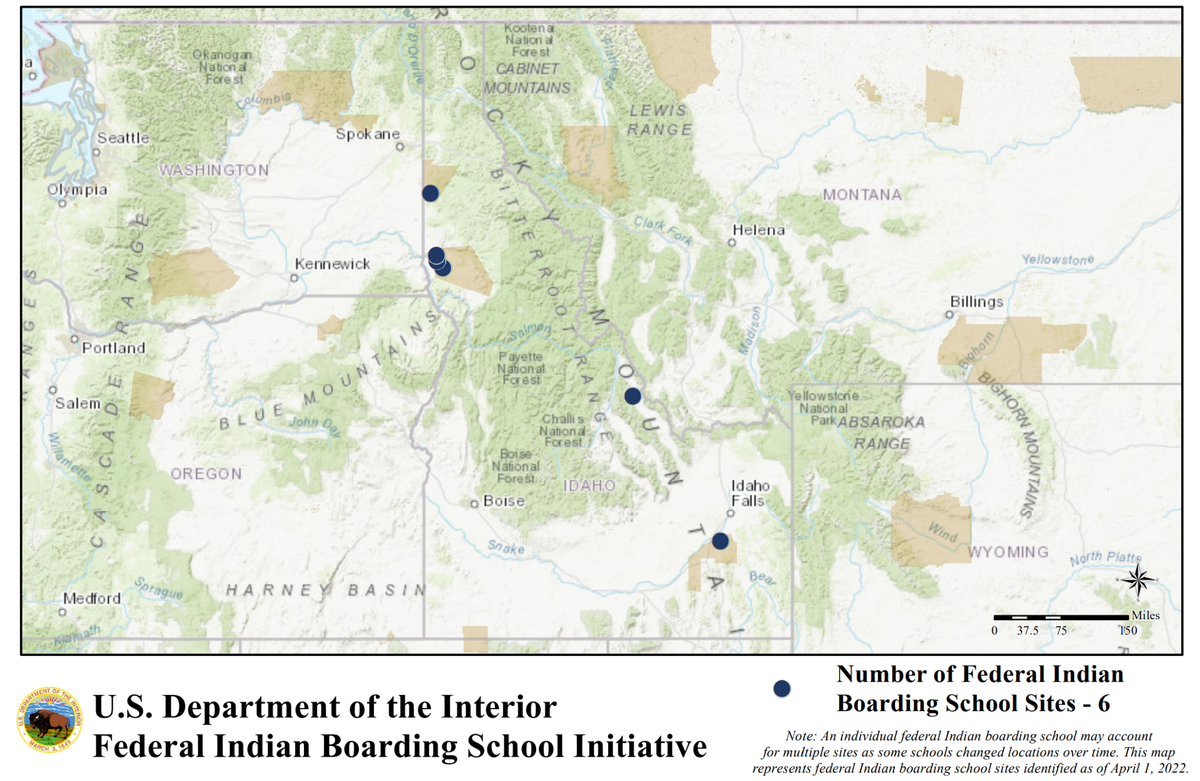
Six of these boarding schools existed in Idaho and 15 in Washington. Oklahoma housed the most boarding schools in the country with 79.
Washington
Chehalis Boarding and Day School - Oakville
Colville Mission School - Kettle Falls
Cushman Indian School - Tacoma
Fort Simcoe Indian Boarding School - White Swan
Fort Spoke Boarding School - Davenport
Neah Bay Boarding and Day School - Neah Bay
Puyallup Indian School - Squaxin Island
Quinaielt Boarding and Day School - Taholah
S’Kokemish Boarding and Day School - Olympia
St. George Indian Residential School - Federal Way
St. Joseph’s Boarding School - Federal Way
St. Mary’s Mission School - Omak
Tonasket Boarding School - Tonasket
Tulalip Indian Industrial School - Tulalip Bay
Tulalip Mission School - Priest’s Point
Idaho
Fort Hall Boarding School - Fort Hall
Fort Lapwai Training School - Fort Lapwai
Lemhi Boarding School - Lemhi
Mary Immaculate School at the Mission of the Sacred Heart of DeSmet - De Smet
Nez Perce boarding School - Lapwai
St. Joseph’s Mission School - Culdesac
Manual labor and unmarked graves
The report comes less than a year after Deb Haaland, the U.S. Secretary of the Interior, announced at the National Congress of American Indians 2021 Mid Year Conference that the Department of the Interior would begin a review of the United States’ troubled history with federal boarding schools.
Haaland became the first Native American to serve as a cabinet secretary in 2021 after being nominated by President Joe Biden. She is a member of the Pueblo of Laguna and is a 35th generation New Mexican.
“The consequences of federal Indian boarding school policies — including the intergenerational trauma caused by the family separation and cultural eradication inflicted upon generations of children as young as 4 years old — are heartbreaking and undeniable,” Haaland said in a press release.
“We continue to see the evidence of this attempt to forcibly assimilate Indigenous people in the disparities that communities face,” Haaland continued.
Along with suppressing the identities of Indigenous children, the report also found that the schools primarily focused on manual labor and vocational training, which left graduates with few applicable job skills in the U.S. workforce, further crippling tribal economies and communities.
The investigation also identified marked and unmarked burial sites at 53 different schools. The locations of the burial sites were not disclosed in the report. The discovery of 215 unmarked graves at the Kamloops Indian Residential School in Canada was a precursor to the Department undertaking the investigative report.
The report will now move onto a second volume, aided by a $7 million investment from Congress.
Bryan Newland, assistant secretary for Indian affairs for the Department of the Interior, recommended using the investment to produce a list of the burial sites, approximate the amount of federal funding used to support the boarding schools, and to further investigate the legacy impacts of the school system on Native communities today.
The following resources provide more detail on report:
Volume 1 of the Federal Indian Boarding School Initiative Investigative Report
List of Federal Indian Boarding Schools
Federal Indian Boarding School Maps
This story was originally published May 12, 2022 at 3:00 PM.