‘The Idahoan Project: Finding Common Ground.’ 55 people share their Idaho experience
Idaho Statesman photographers Katherine Jones and Darin Oswald, along with former intern Meiying Wu, worked for two years on this project, talking to Idahoans who, we hoped, were as diverse as could be — multigeneration Idahoans, the next generation, newcomers. We talked to people with vocations from rodeo cowboys to attorneys, from spud farmers to tattoo artists, from firefighters to artists. We went up north, we went east; we went to ranches and we poked around Boise.
We had the same three questions for everyone: What does it mean for you to be an Idahoan? What words do you use to describe yourself as an Idahoan? Finally — and most importantly — we asked: What do all Idahoans share in common?
It’s easy far too easy to find the things that make us different from each other. But it turns out we have much more in common than we thought.
Watch our mini-documentary here:
(Captions reflect ages and occupations at the time the photograph was taken.)
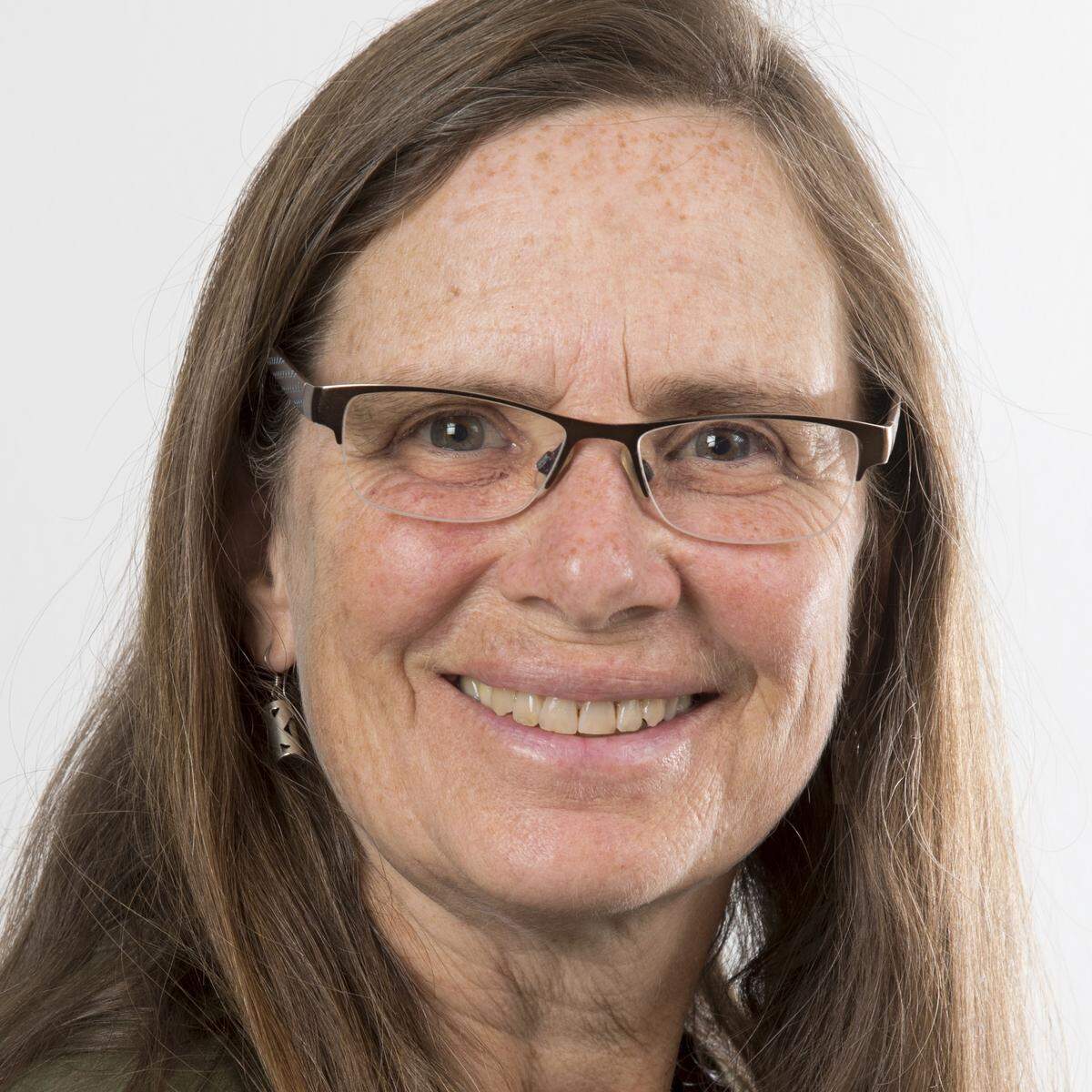
Sister Mary Forman
Sister Mary Forman was born in Boise in 1947. She has lived in Idaho for 39 years.
“When I was in graduate school people would ask me where I’m from,” Forman says, “and they often confused Idaho with Ohio or Iowa and I said, ‘No, I’m a little spud from Idaho.’ What I mean by that is earthy, close to the soil,” she laughs. “And built short so I’m close to the ground. I come from good peasant stock.”
Many Idahoans descend from “down to earth” people, like farmers, ranchers, lumbermen, miners.
“My father was from Moreland, Idaho — little tiny burg — and he was the only one in his family that ever got a college education,” she says. “And so, for many of us, an education is extremely important — and it isn’t always easy to get an education.” She’s a proud second generation pharmacy student.
Being an Idahoan also means deep family values. “I come from a family that’s both Polish Catholic and Mormon — my father was a Mormon; my mother was Polish Catholic,” Forman says. “So family values were strong on both sides and growing up, I knew that, too.
“Staying together as a family, working through hardships as a family: Those are things that I know growing up in Idaho.”
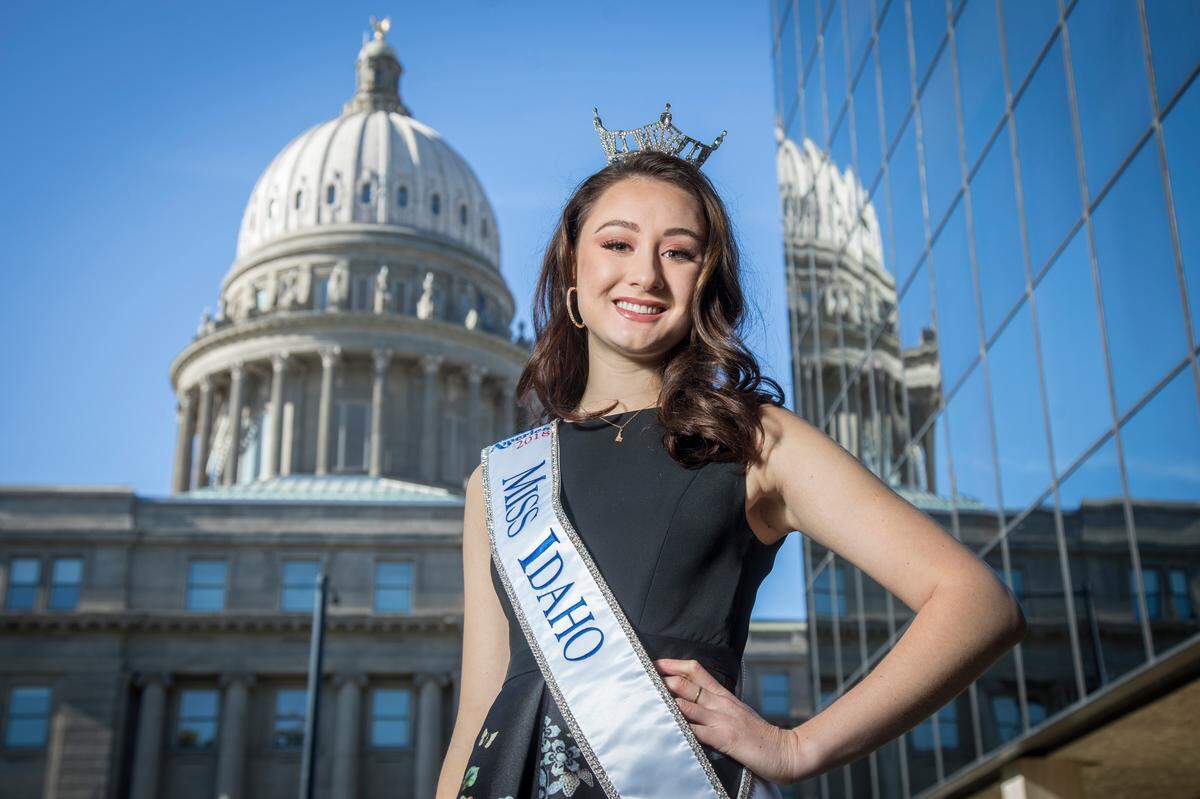
Nina Forest
Nina Forest moved from Louisiana when her father got a teaching position at Idaho State University. “I really grew up in Idaho,” she said.
As Miss Idaho America 2018, Forest travels the state and meets with many different kinds of people. “I really do get the true sense that Idahoans share the same values, the same ideals about family and about government,” she said. “And I think that’s something really rare to find these days in our community.” She dedicates a year of her life to her role and finds that many Idahoans share a similar sense of service. “Idaho and our people, I think, we’re all so incredibly thoughtful and service-oriented. We care about the people we’re surrounded with. I think being Miss Idaho really reflects what Idaho is all about.”
For her, words to describe Idahoans would be compassionate, selfless and caring.
“We’re united by the concept that we’re all living in this world, and we all want to make it as best for each individual as possible. I think that’s what really unites Idahoans.”
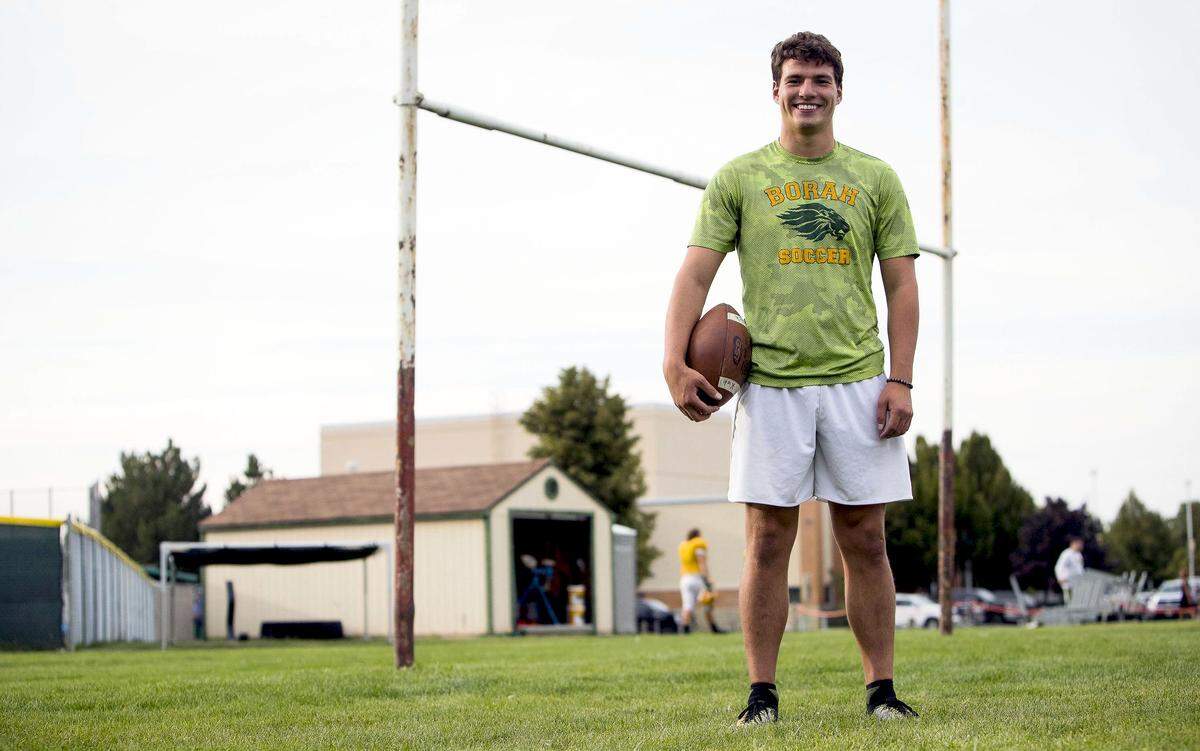
Kelly McCullough
Kellan McCullough has lived in Boise all his life.
“We have a strong sense of community,” McCullough said. “It’s not like really small towns where everyone knows everybody, but you have a sense of what’s going on in your neighborhood. Everyone supports each other.”
He gave a example from a Borah-Capital football game. “They had a sign that said ‘Capital supports McCullough.’ I had non-Hodgkins lymphoma (cancer). I have lot of friends from other schools and a lot of support from everyone — even when I didn’t know it was coming, like at the Capital game. We’ve been rivals ever since the beginning of the two high schools.
“It’s just community.”
And that’s something all Idahoans share. “We all love Idaho. There are not many people who don’t like living here.”
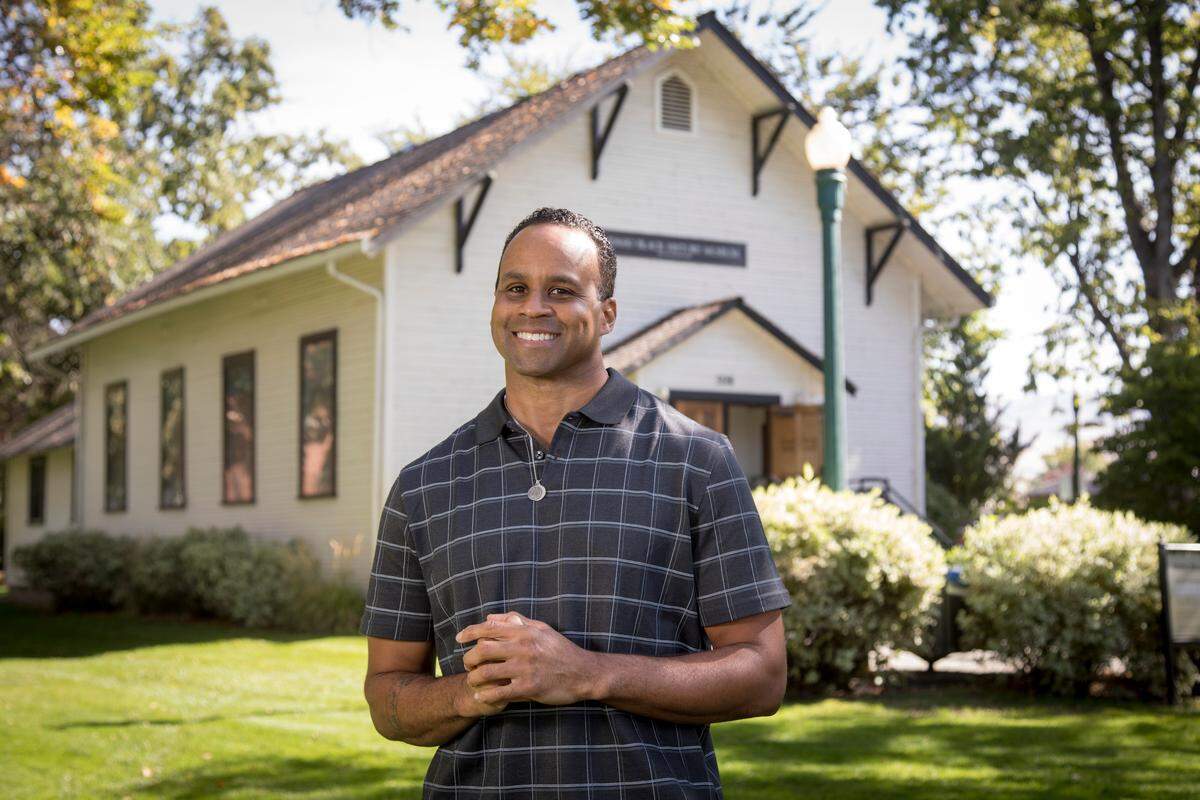
Phillip Thompson
Phillip Thompson’s family came to Boise in 1905 to build the first Black church in Idaho. He’s the sixth generation, and his daughter is the seventh.
Thompson calls himself a bit of a conundrum. “I don’t think I’m what people think of as an Idahoan,” he said. He’s Black and contrary to his family’s Protestant roots, he’s Muslim. “That just goes against everything that people stereotypically think of about Idaho. It changes their schema.”
That’s a beautiful thing in Thompson’s estimation.
“People somehow have conflated Idaho with Alabama and that we’re the bastion of white supremacy. And then I’m like, no, I’m from Idaho. Idaho is the world’s best kept secret.”
The Black History Museum builds bridges between all the disparate communities that make up Idaho — refugee communities, homeless communities, religious communities, he said. “All these different parts make up this unique entity known as Idaho. Black history is part of all those narratives. ...
“We all have a stake in the game. We’re all in Idaho.”
Leela Abrahamson
“For me, being an Idahoan is knowing where you come from and who you are. This is where I’m from and this is who I am.” Leela Abrahamson was born in Albuquerque, but her Lemhi Shoshone ancestors have lived in Idaho for “generations upon generations.”
“This is my indigenous homeland. I have roots here,” says Abrahamson, who grew up in Fort Hall. “This is where I was raised by my mother. … My culture is here, my teachings are here. I know the original names of landmarks and structures here, because this is where I grew up. ..
“This is all my family’s ever known.”
Abrahamson is a member of the Shoshone-Bannock Tribes and was raised traditionally — and yet also as part of a modern society. A “dual citizenship” in many ways, she says, that creates a tension and a bond.
“Idaho has a sense of culture, a lifestyle, a way of life that we live here,” she says. “That’s what I feel like Idaho has a lot, is a sense of community and belonging.
“And … just the beauty of it, like you can’t get away from that. It’s so beautiful here that I couldn’t imagine living anywhere else.”
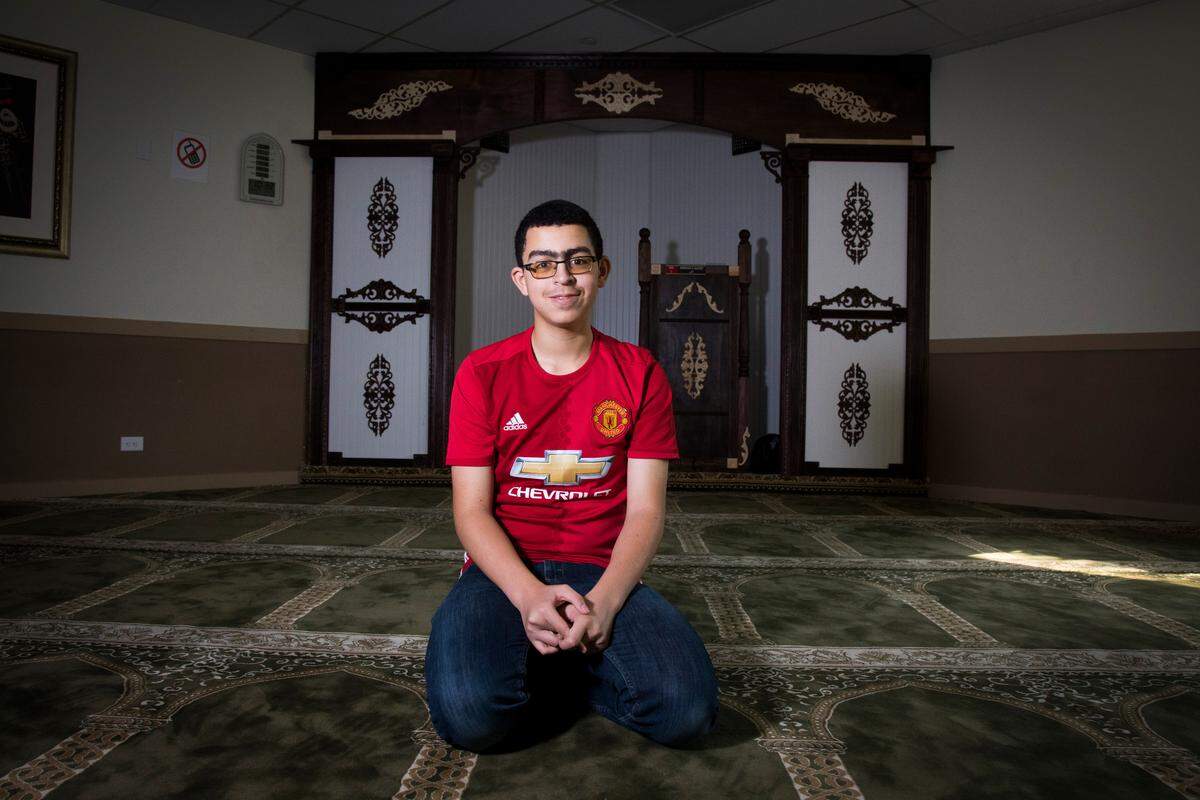
Omar Abdelnaby
Omar Abdelnaby was born in Cairo, Egypt. His parents came to the United States as University of Idaho students in Moscow; the family moved to Boise in 2012 when Omar’s father got a job at Micron. The family has applied for citizenship.
“Firstly and foremost, I’m Muslim,” said Omar. “Secondly, and just because I was born there and I have really strong ties, I’m Egyptian. And then I’m Idahoan.”
But he’s really happy his parents chose Idaho from all the places they could have gone to school. Because, Omar said, “being an Idahoan means being one of the most happy people alive. ...
“Idahoans, I’ve found, are really accepting and they don’t really talk a lot about you even if they find something weird about you. As in ... ‘yeah, we understand what you’re going through’ ... ‘yeah, we accept you; yeah, come here and have tea with us or something.’”
He recalled the stabbings at the Wylie Lane apartments and how Boiseans rallied around the victims as well as refugees in general. “I thought that was really amazing because Boise people had no real obligation to do anything like this. They could have left it to the mosque, or any other religious groups ... but no, they found a lot of sympathy and kindness in their hearts ...
“I’d be really proud to be called an Idahoan officially.”
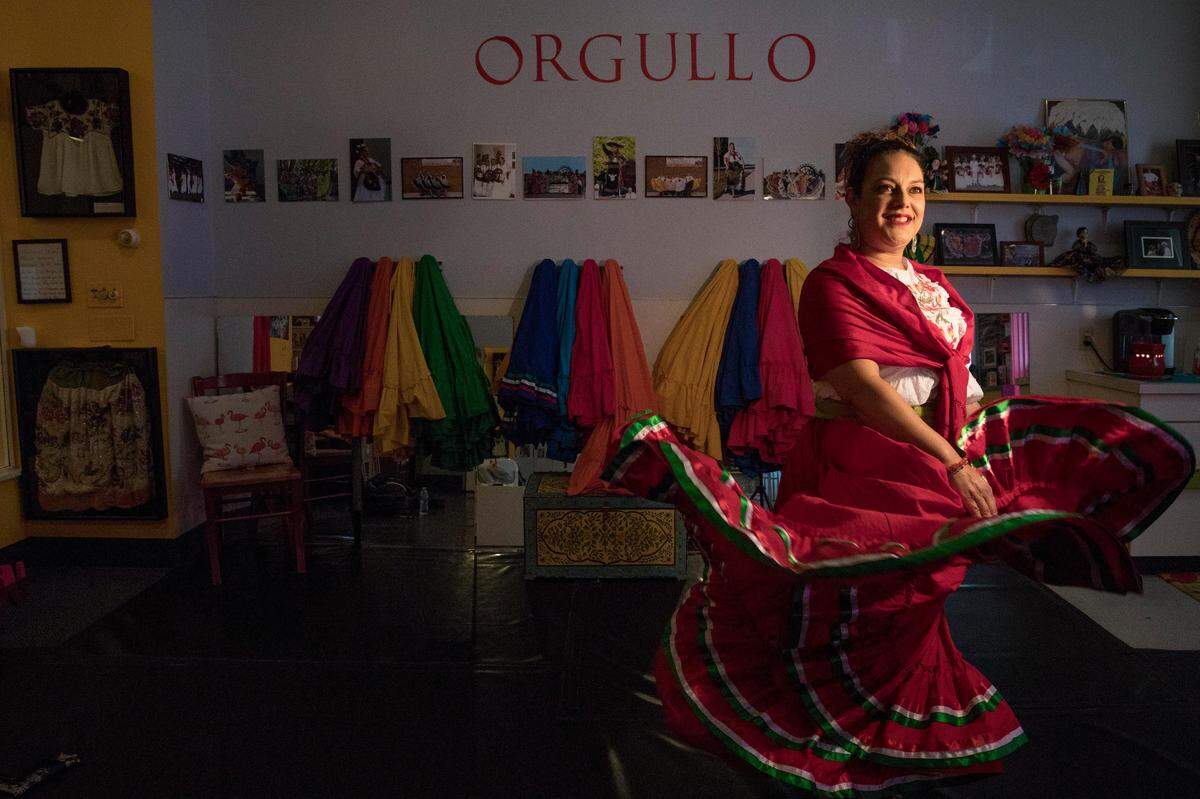
Monique Michel-Duarte
Monique Michel-Duarte moved from Los Angeles to Boise 21 years ago.
“Twenty-one years later, I know why they call it Idahome. Idaho is my home,” said Michel-Duarte. “L.A. is a good place to be from; I love southern California. That’s where my family is, it’s where I grew up, those are my roots.
“But Idaho is different because that’s where my children have been raised. This is where my husband and I chose to move and start our family.”
Gretchen Cheney
After leaving Idaho and living in Delaware, Connecticut, Texas and California, Cheney and her family returned in 2013.
“Life everywhere else was to me busier, and the seasons weren’t as good,” Cheney said. “Life was just more difficult — difficult to get places. Even if you love the outdoors, it was difficult to get there.”
Access was important to the family, because open spaces and outdoors are one of the reasons they live here. “You go to Bogus and you go on the trails, and there’s just this wonderful community. The outdoors are so accessible here and that’s just big for Idahoans. ...
“I feel like we’re really lucky to be Idahoans — and really blessed.”
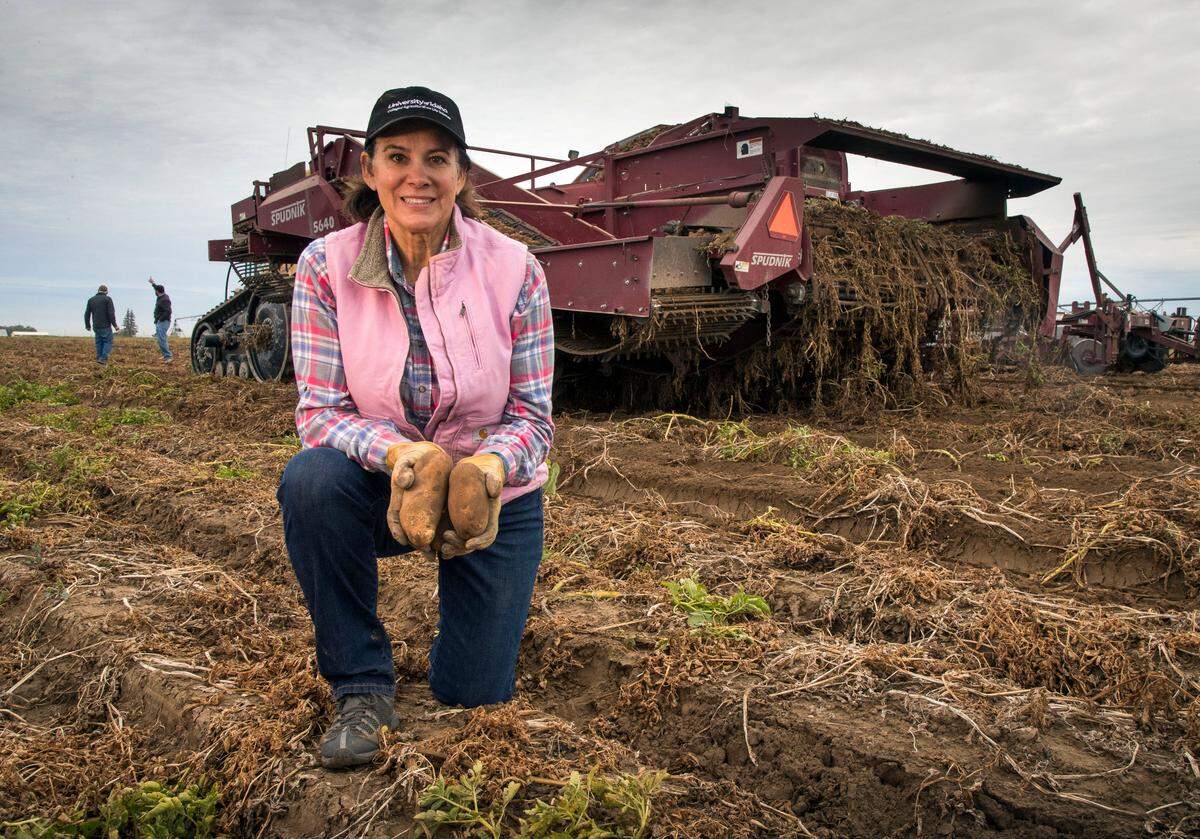
Mary Hasenoehrl
Mary Hasenoehrl has been an Idahoan for 60 years.
“To be an Idahoan is (to) choose to live in Idaho,” she said. “Whether you choose to live in urban Idaho, rural Idaho, or off the grid — you love the state, and you choose this for your home.”
She’s proud of being an Idahoan. She’s active in her community — to keep it vibrant — and thinks that what all Idahoans share is a desire — or need — to explore.
“Whether it be exploring your neighborhood, exploring the great outdoors, exploring new research ideas, exploring your libraries — I think we all love to explore. As an agricultural community, we’re always exploring new ideas — ways to produce better potatoes, and ways to keep our soil healthy.”
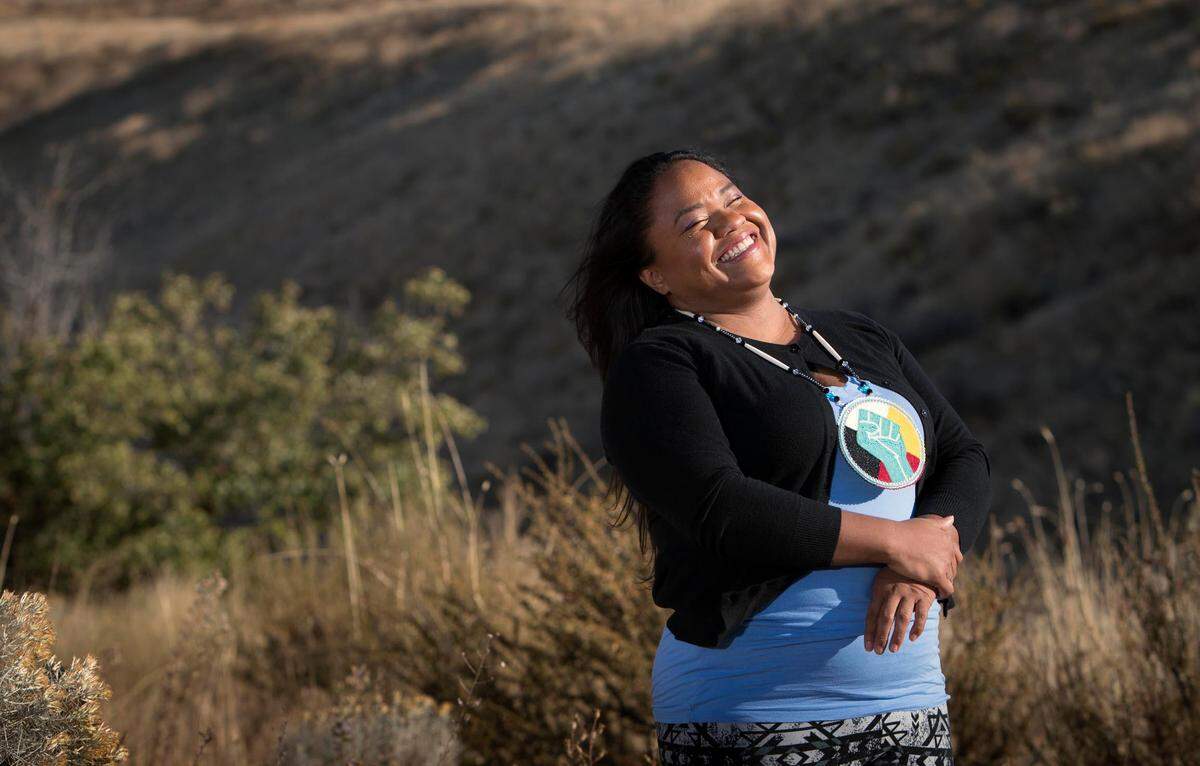
Tai Simpson
Tai Simpson was born in Chicago and after living abroad, returned to Idaho. She is a social activist defending minorities and civil injustice.
“Because I’m Nimiipuu, our stories, our history and our culture are older than Idaho. That means that I, as an Idahoan, have ancestry that is older than Idaho — and older than the United States in fact,” Simpson says.
“To have that kind of ancestry and genealogy, and know exactly where it comes from, gives me a sense of strength, and a sense of purpose, and a sense of home unlike other Idahoans.”
Simpson loves the magic in Idaho’s rugged mountains. She loves that anywhere one goes in Idaho, there’s an adventure: history to explore, culture and nature to experience.
But the thing that Idahoans share is wanting to build a legacy for their families.
“I’ve had the privilege of working with agricultural families, who want sustainable farms they can pass from generation to generation. On the flip-side of that same coin, indigenous families work hard to preserve nature as she is — untouched, undamaged — so that we can give that to our future generations.
“Whether we are on any side of a political aisle or from various communities, the thing we all want is the best future for the generations to come.”
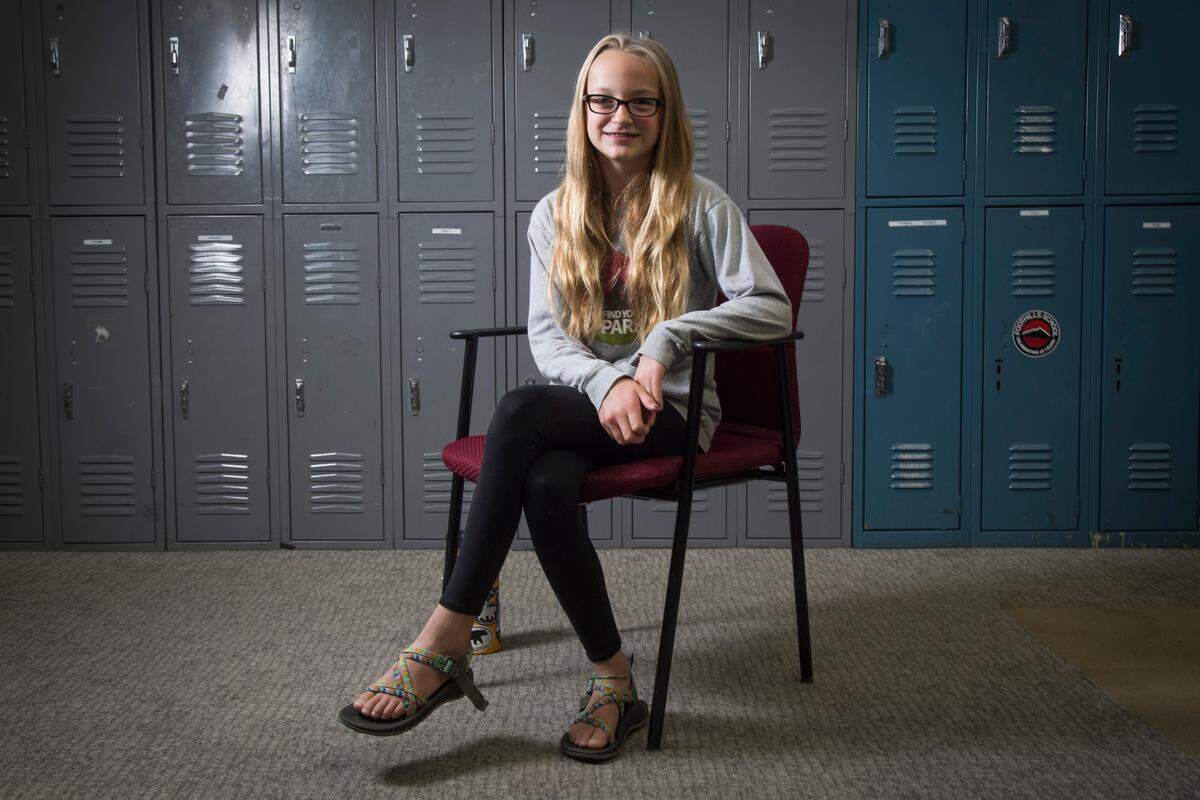
Ellie Shandro Outen
“I think of how Idaho is my home,” said Ellie Shandro Outen.
“To me, an Idahoan is somebody who is adventurous, an explorer; somebody who is a musician; or somebody who cares about our community.”
Ellie is very active for the Treefort Music Festival, and she uses that as an example. “What is I see is — I see people gather. I see all kinds of friends. We all come together ... and it’s this amazing thing where people laugh and we have music.”
As for the sense of community, that’s what all Idahoans have in common. “We care about our community and use our mountains. We all take care of our community. And even if it’s in different ways, we all have one way — where we make our community stronger.”
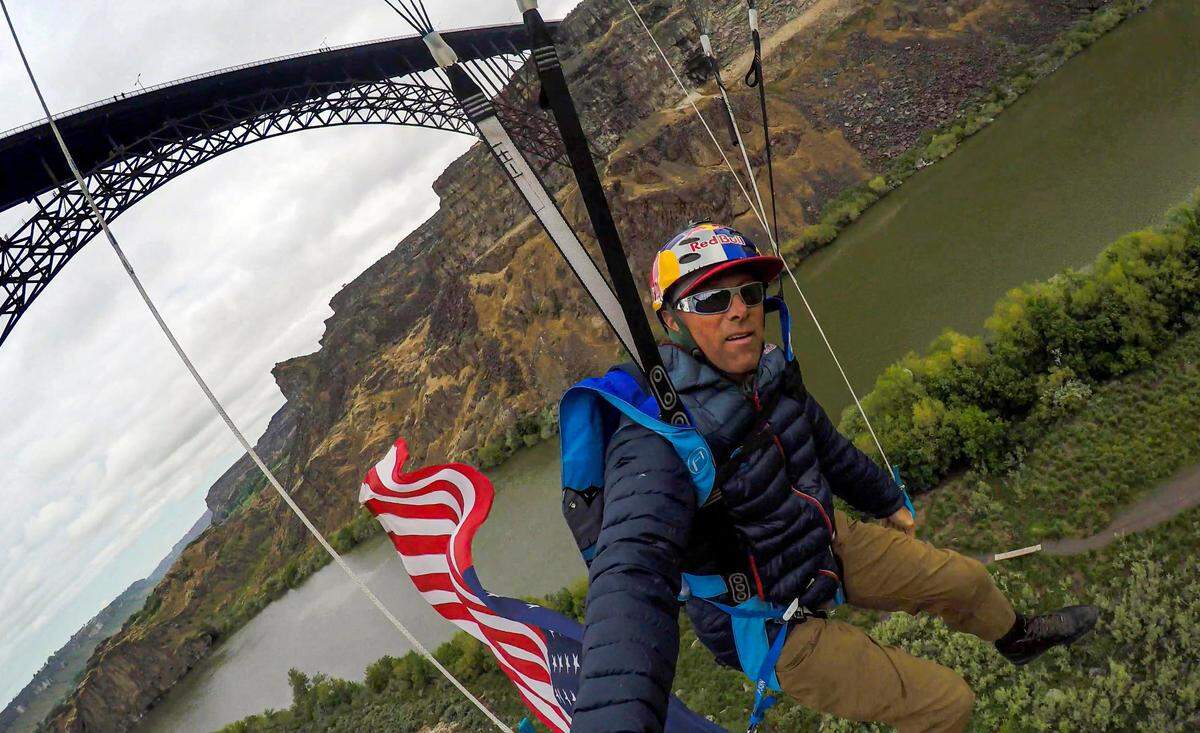
Miles Daisher
Miles Daisher has lived in Idaho for 15 years.
“It’s tough to say what it means to be an Idahoan,” Daisher says. “A lot of people are thinking potatoes, trucks, guns, wilderness, wide open (spaces) and fishing.
“To me, it means freedom, adventure, perseverance, and kind of facing challenges and getting out there,” he said. “Kind of like adventure, but more so like pioneering. Like Lewis and Clark — they came through Idaho. They were pioneering this place.”
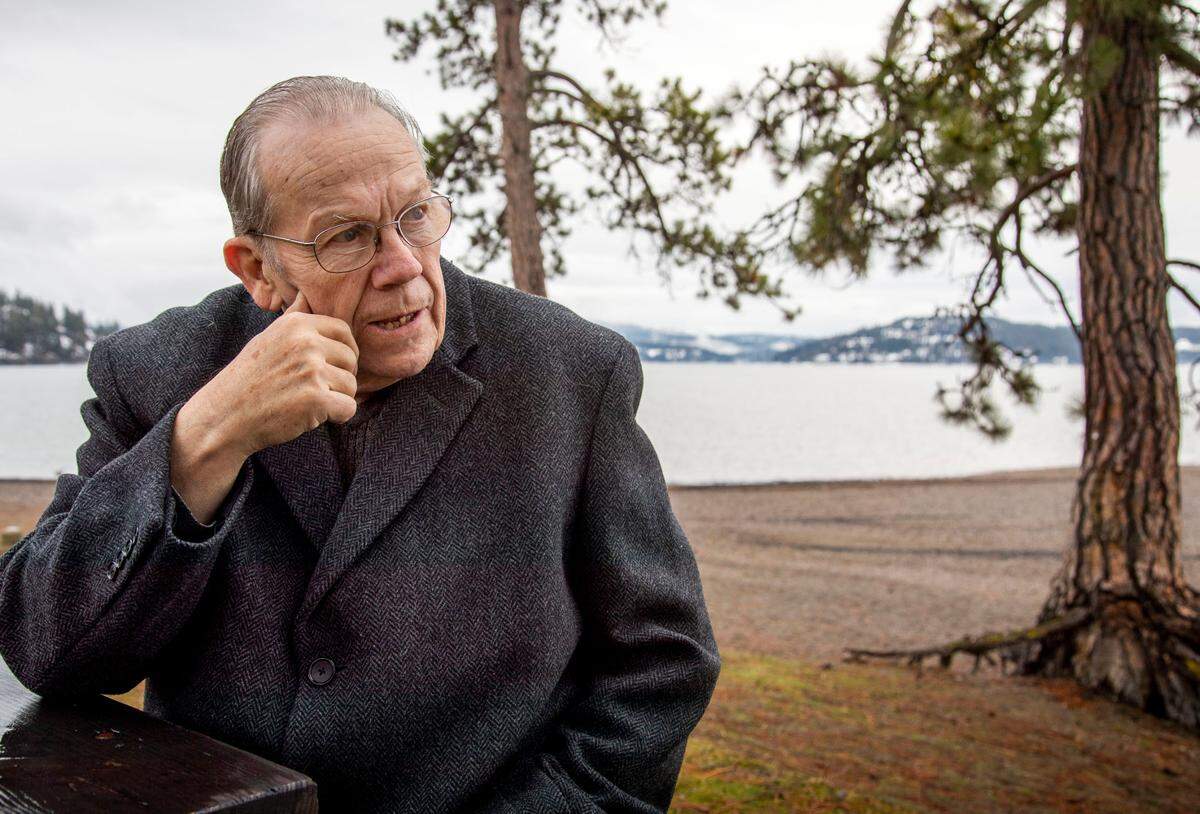
Norm Gissel
Norman Gissel has lived in Idaho his entire life, except for four years when he was in the U.S. Air Force.
”We have an interesting cultural blend of grit and a sense of privacy,” Gissel says. “And with that sense of privacy goes the idea that we’ll help our neighbor any way we can, when it’s needed, and when they ask for help. ...
“The grit part is that it’s not easy to make a living in Idaho and you have to work hard at it. And you have to bring with a certain amount of grit to succeed. We all share those common cultural values, in my opinion.”
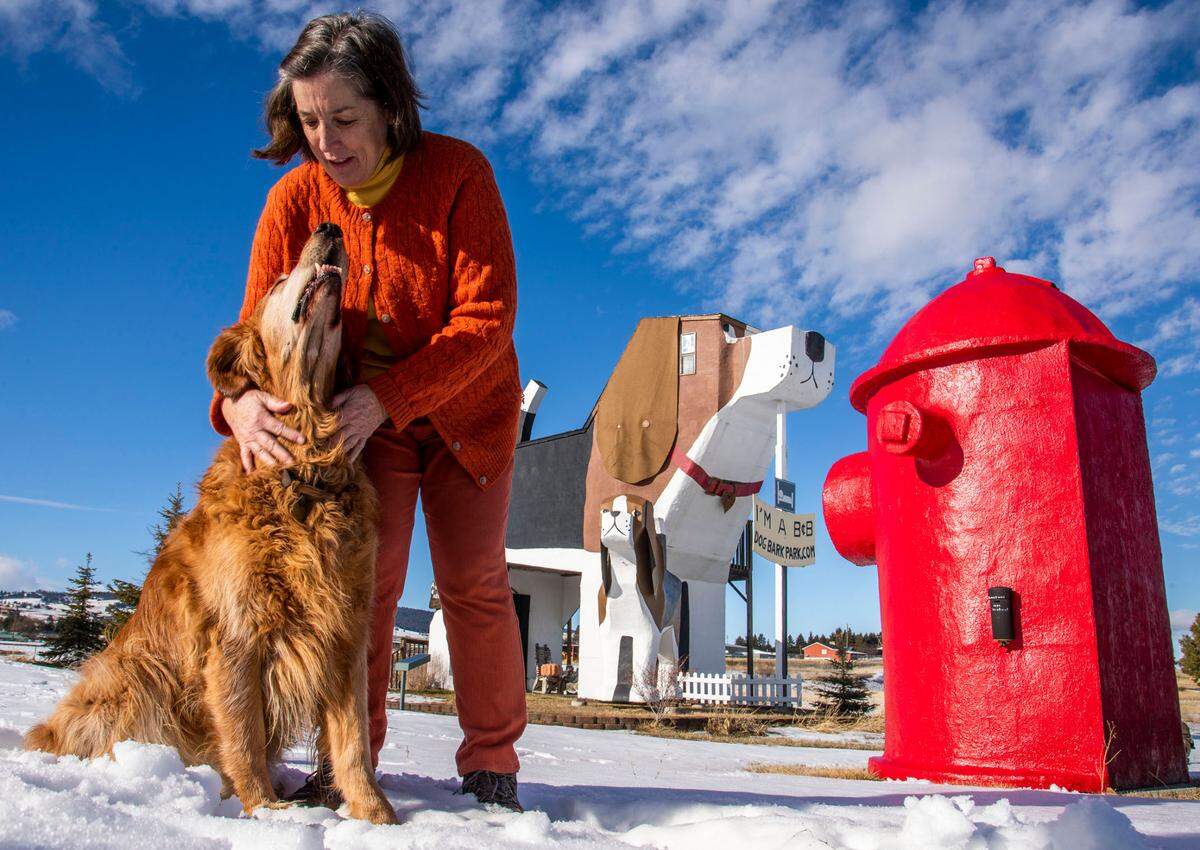
Frances Conklin
Frances Conklin, 69, has lived in Idaho for 25 years.
”We are significantly influenced by the vastness of the physical space that makes up Idaho,” Conklin says. “And whether we’re aware of it or not, we have adapted to that environment that’s around us. ... A huge state with a lot of empty space in between it.”
Because of that, and the literally miles between cities, “I deem it important as an Idahoan to be as self reliant as I can be,” she says. That’s not just in terms of making a living or having warm clothes and a chain in the trunk in case you get stuck in snow.
“But also making sure that I — and those around me — are safe,” she laughs. “If trouble comes, most likely help is going to show up some time (soon).
“But it’s that gap in between the times where I think one’s confidence in their ability to be able to take care of a situation is important to always have in mind as an Idahoan. ...
”As Idahoans, I think one thing that we have in common is our no nonsense ‘What you see is what you get’ kind of way of being in Idaho. Pretense and falsity is not who we are in Idaho. Instead, I think we’re basically honest and authentic.”
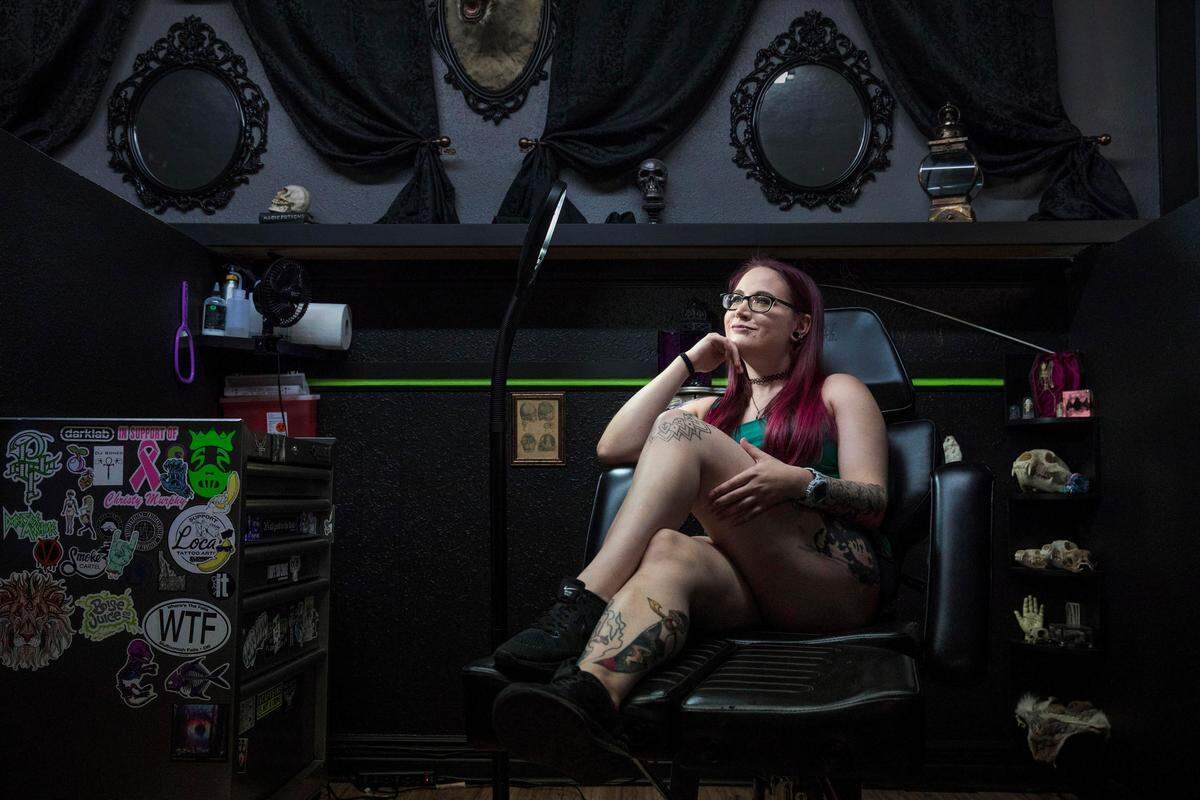
Noel Laabs
Noel Laabs is an Idaho native, born and raised. She’s never lived anyplace besides Boise.
“There’s a lot of camaraderie that goes into being an Idahoan,” Laab said. “I grew up here and I’m used to everyone being so nice and easy-going and accepting, for the most part, of people — and I really like that. That’s how I turned out to be as well. ...
“We’re kind of a big melting pot, really, as the United States is already. I feel like Boise, especially, is a small version of that. There’s a lot of different cultures ... You kind of get a taste of everything.”
Being laid-back and friendly is what all Idahoans share in common. “It’s a very safe place to be, it’s very communal — and I love that about everybody.”
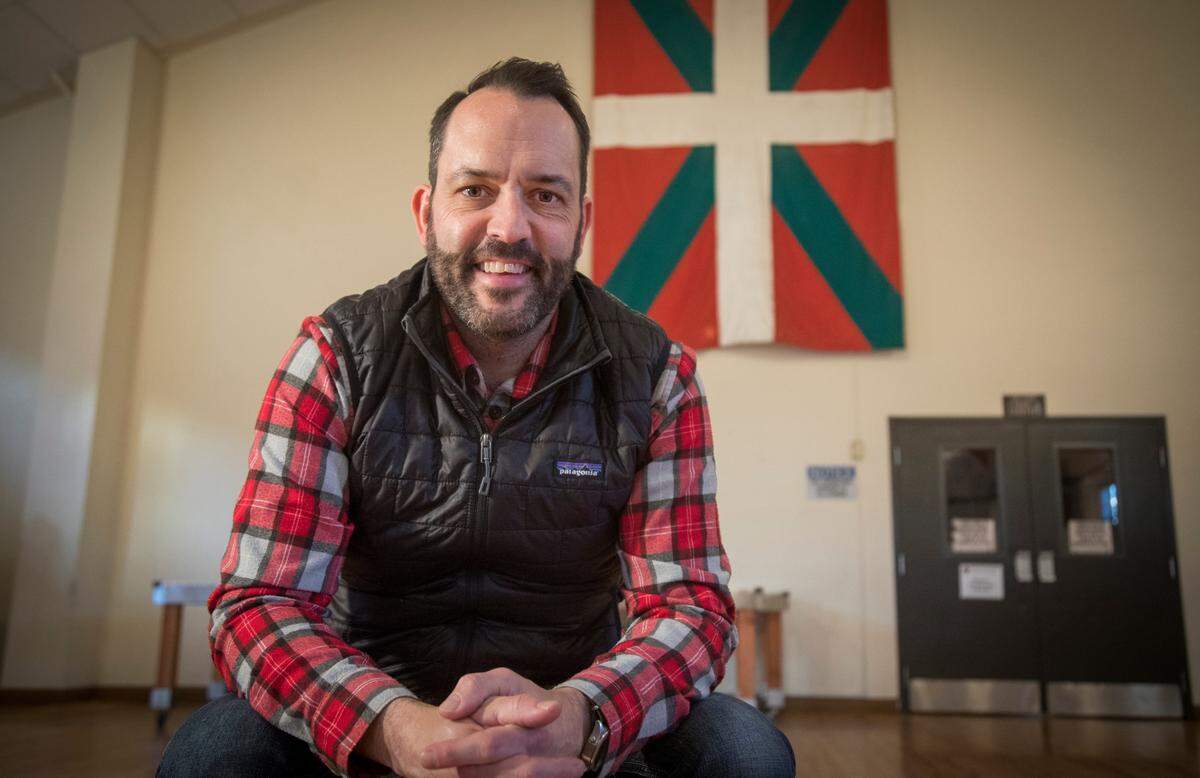
Sean Aucutt
Sean Aucutt was born and raised in Idaho.
“On my mother’s side, my great-grandparents moved to this state from the Basque country as sheepherders,” Aucutt said. “They started being Idahoans then, adjusting to the landscape and the culture of Idaho — and started our family being Idahoans since then. ...
“Because of the roots and culture that my parents and grandparents passed on to me ... being Basque would definitely be part of being Idahoan.”
Being Idahoan also means having a sense of community. “Being local, being involved in your community that is Idaho, or is, for me, Ada County, and Boise. I think of Idahoans as super-genuine, true to their word; good, honest people. ...
“I’m proud to be an Idahoan,” Aucutt said. “Proud because I love this state that we live in. It’s so unique and so unspoiled that I’m really proud to keep it Idaho and keep what makes Idaho unique, unique.
All of that means being a part of something. “Communities can overcome a lot of sort of divisiveness,” Aucutt said. “Strength in our community can lead us forward.”
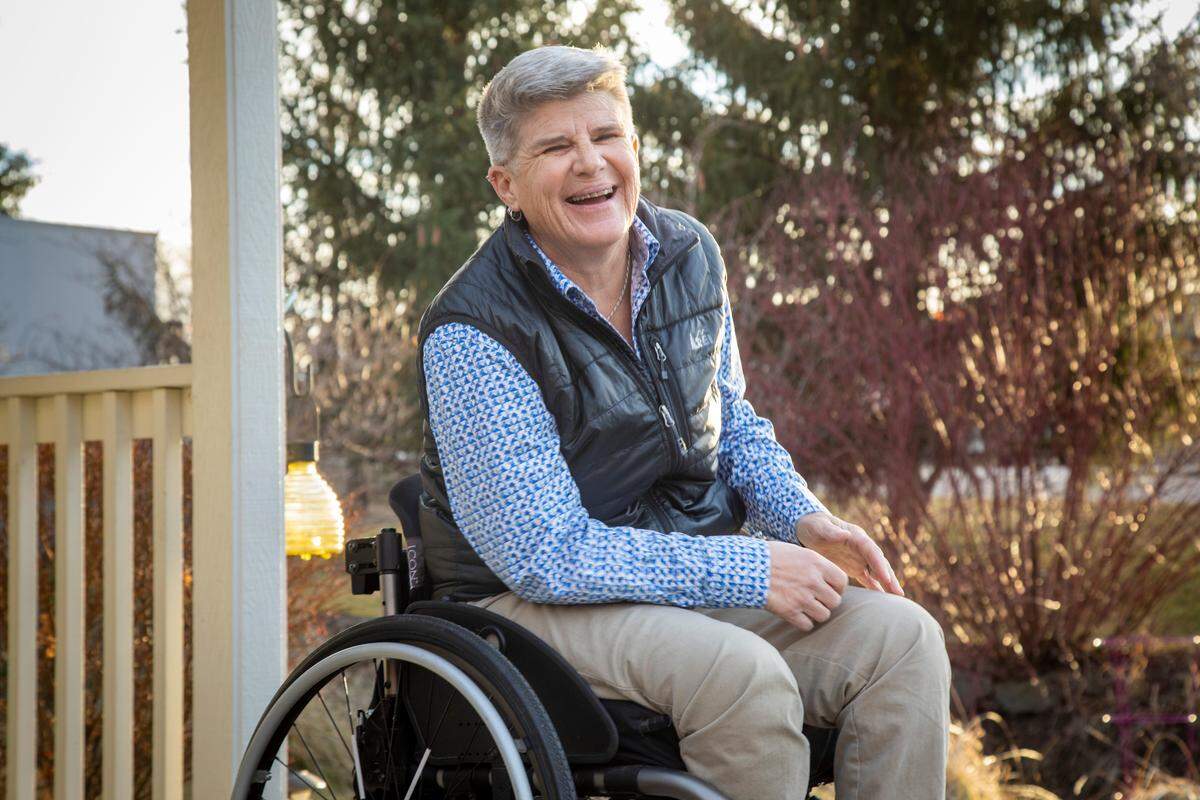
Mel Leviton
Mel Leviton has lived in Idaho on and off since she was 5 years old; she estimates 40 years in all. “The last time I came back was in 1999, and I said that’s it. This is home.”
The outdoors is why Idaho feels like home. “I love wilderness,” Leviton says. “Surprisingly, a lot of our wilderness is still accessible to me, which is great. I’m not one of those people who thinks they should make wilderness accessible so I can get into it now, because that would ruin it. And I don’t want it to be ruined. ...
“I want it to be there for my grandchildren.”
And then there’s the people — she’s drawn to them too. “In a lot of ways, Idahoans get a bad rap. But on an individual basis, if you’re broke down on the side of some country road, somebody will stop and help you.”
She’s thought a lot about what Idahoans have in common. “I want to say openness,” she says, “but I think you have to build rapport before people are open. ... So stubbornness.” By that, she means that whatever we decide, we’re going to do it.
But in her work, she’s seen those stubborn people, with differing ideas and values and belief, able to come together. When stubbornness is combined with the openness that’s built with trust, “I actually think we reach some pretty amazing solutions to issues and problems,” she says. “Stubborn, but open. They’re kind of the antithesis of each other, but in many ways, I think that just kind of sums it up.”
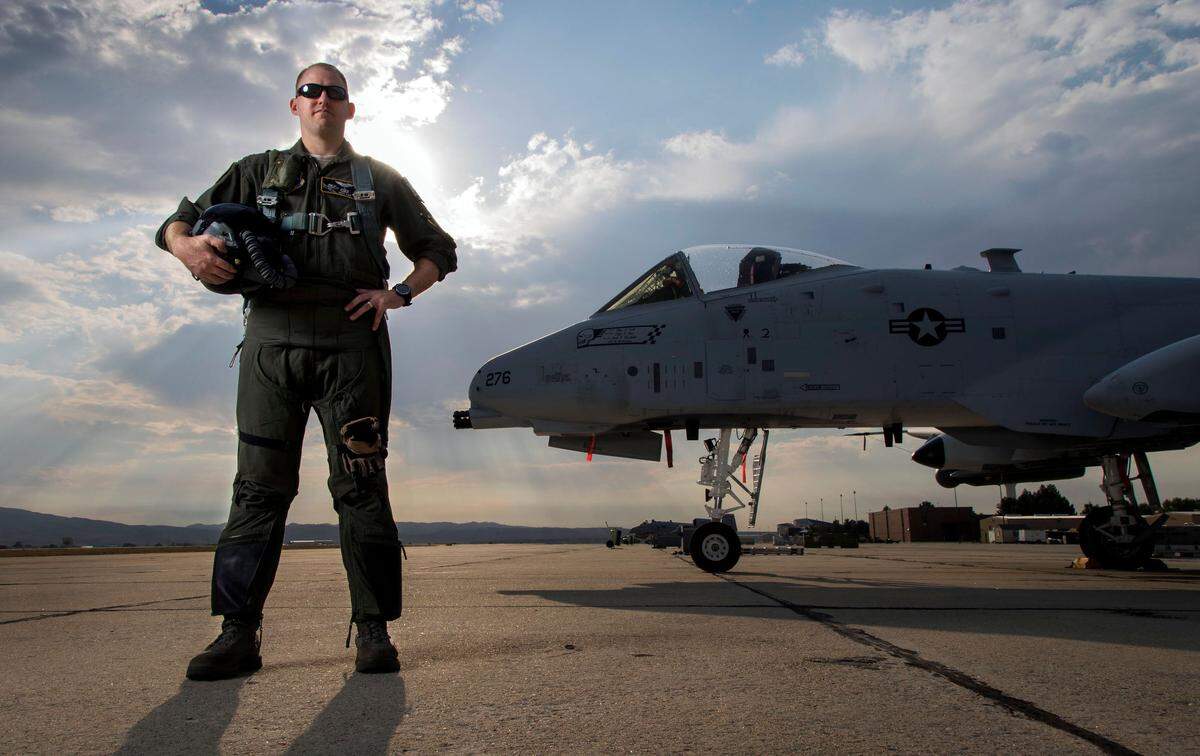
Greg Kirk
Greg Kirk is a lifelong Idahoan.
“When people visit Idaho or recently have moved to Idaho, they often comment about how friendly the people are here. To be an Idahoan you have a general friendly disposition; you like to be courteous to people around you,” he says. He uses the words “grateful” and “proud” to describe Idahoans.
And don’t forget “outdoors.” “Most Idahoans have an affinity for the outdoors. I think you would be hard pressed to find an Idahoan who doesn’t enjoy at least one of our outdoor opportunities like hunting, camping, fishing, mountain biking, any of our water or snow sports,” he said. “By in large, most Idahoans enjoy the outdoors.”
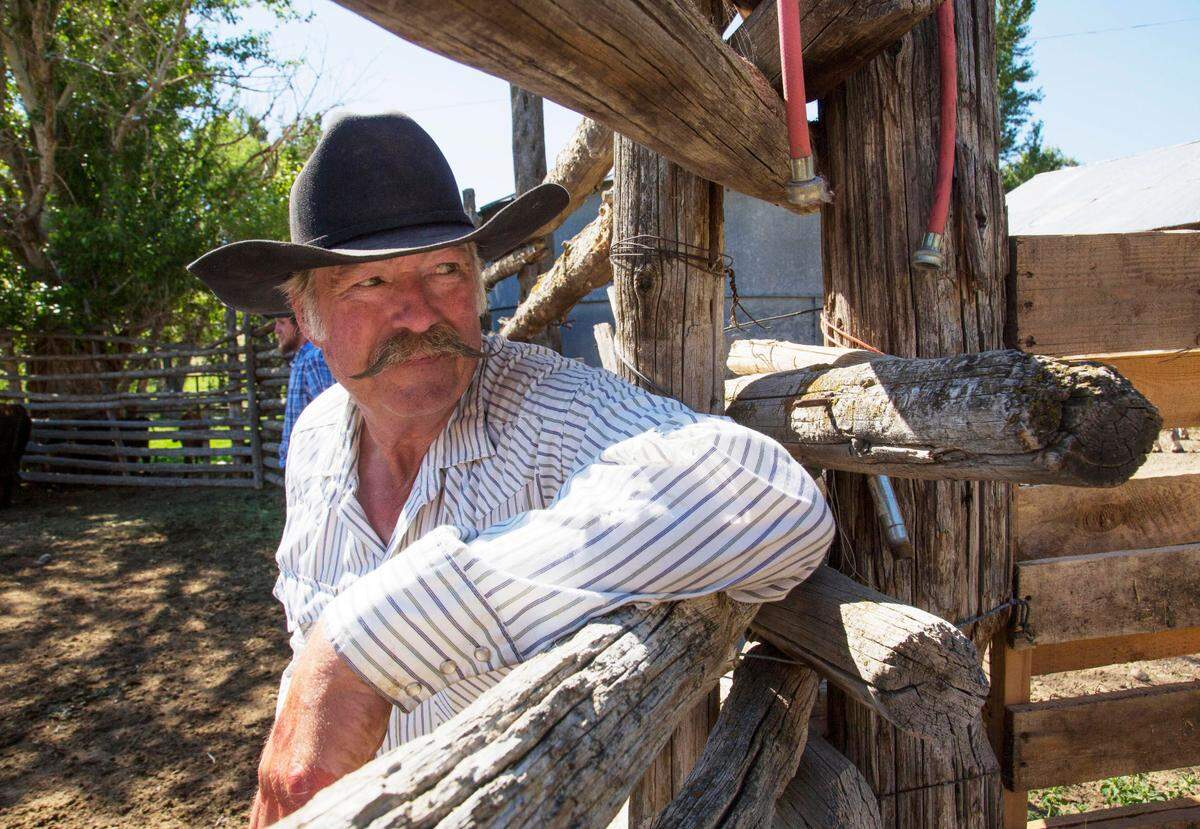
Paul Nettleton
Paul Nettleton has lived his entire life in Idaho.
Nettleton’s great-grandfather homestead the ranch in Owyhee County in 1865. “I come from a long line of survivors,” he says. “They were a hardy bunch.”
There was the trip across the plains to survive, for starters. “(The early Nettletons) were flooded out and then they were burned out — not by Indians, but I’m talking about the weather,” he says.
“The next generation was also flooded out once, and that nearly destroyed the ranch. You just keep going back and doing it all over again. I’m the fourth generation after that. ...
“Everybody talks about (Idaho’s) beautiful scenery and the wide open country, the mountains, the desert, and the lakes,” says Nettleton. “I would also like to emphasize the people. The nice friendly people. Common sense people who don’t get offended by every little thing you say.”
He goes on: “All native Idahoans share a common love of the land. They have a hardy nature and are willing to get along with folks, but are also wanting to keep what we have here in Idaho.”
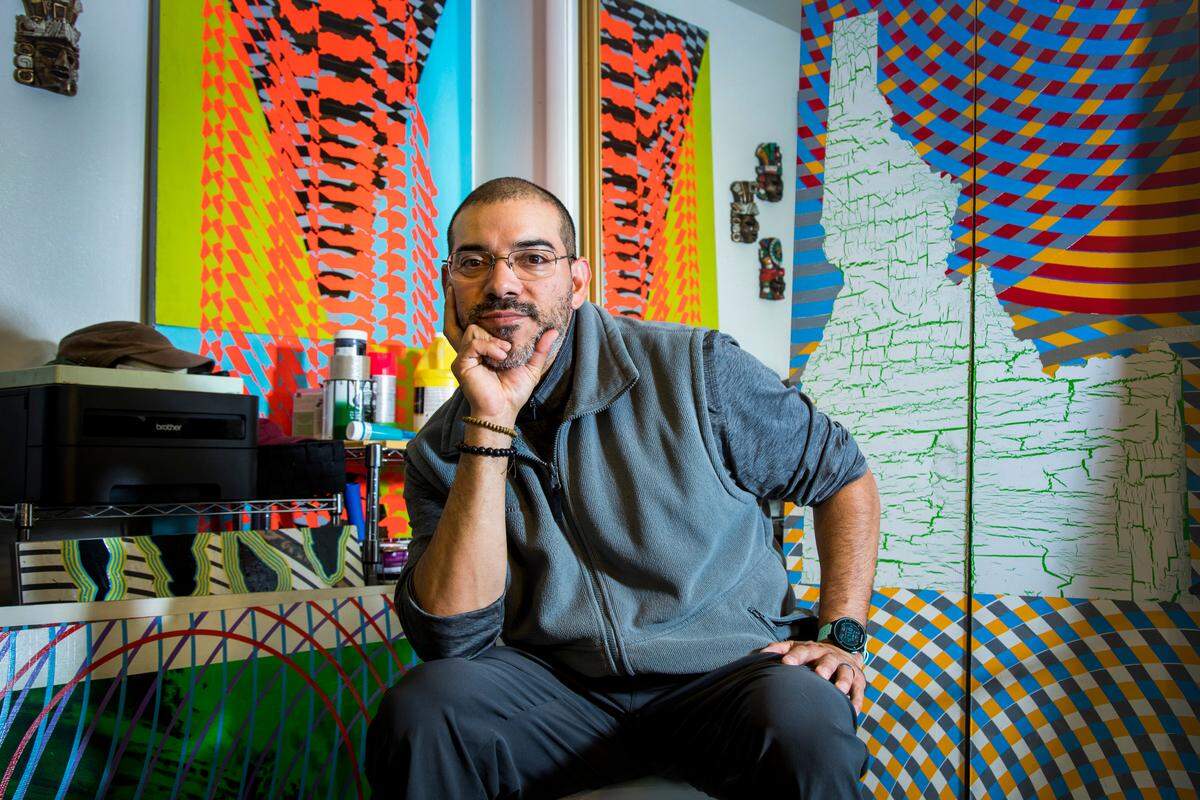
Migel Delgado
Migel Delgado was born in Burley, raised in Florida, moved back to Kimberly for high school and graduated from Boise State University.
Idaho infuses all of Migel Delgado’s paintings, although it’s not something a viewer could pick out.
“It’s just part of me,” he says. “Me being here, standing on this ground, touching that panel or touching that painting — that’s me putting Idaho into the painting. ... There’s no literal thing to read into it. It’s a part of me, a part of the work.”
Like most teenagers, Delgado went through the process of trying to figure out who he was. But it wasn’t until he learned about his grandfather’s migration story that something clicked.
“(That’s) where I was like — I’m an Idahoan. Through (my grandfather’s) history, through his story of coming to America, working from Blackfoot to Mountain Home for the seasons.
“That’s Idaho to me: Working for your family, working off the land. To me that’s it.”
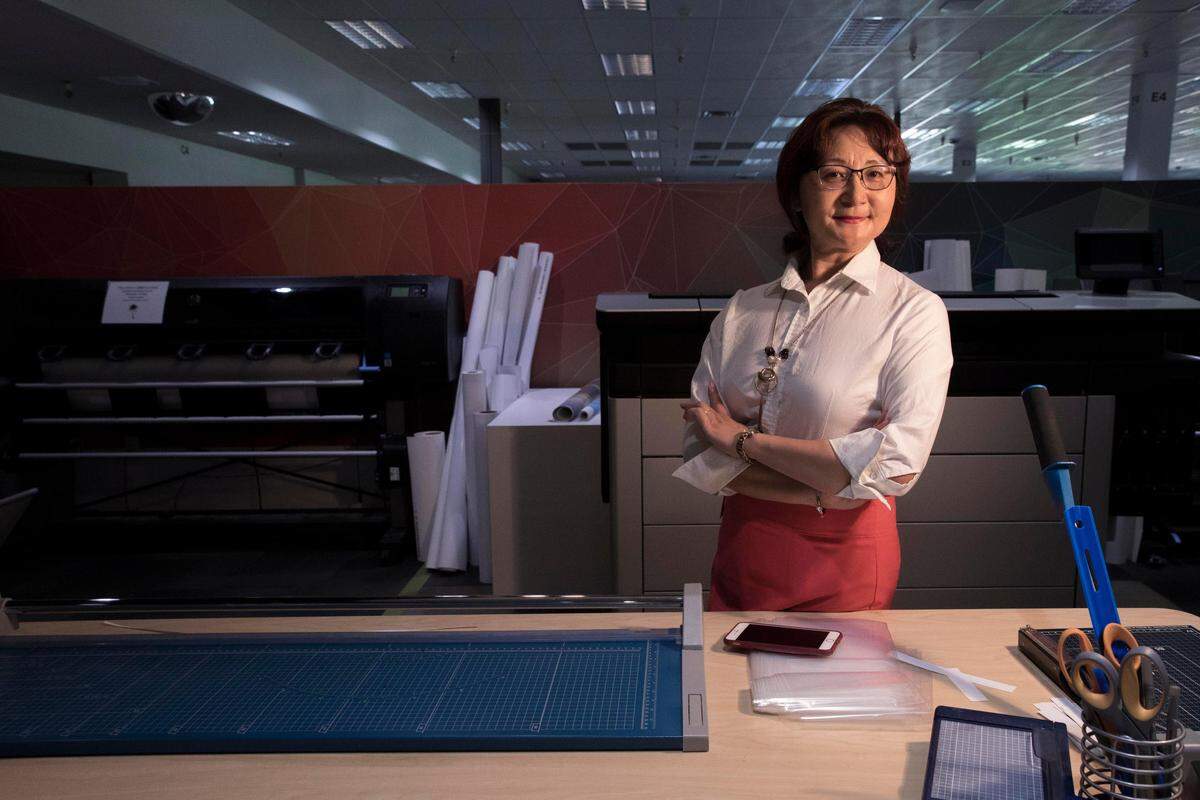
Sarah (Shi) Wu
Sarah Wu came from Sichuan, China, and has lived in Idaho with her husband and their three children for more than two decades. She chose Sarah as her English name.
For Wu, being Idahoan means being involved in the community and sharing cultures. She is on the board of the Idaho Chinese Organization, and has volunteered to dance at many fundraisers and dance events over the years.
Wu said in an email to the Statesman that she believes Idaho is an inclusive melting pot where she can keep her Chinese culture and be an Idahoan.
She values the opportunity to contribute to society as both. She insisted that her American-born children learn Chinese, and her son describes himself as a “Sichuan spicy Idaho potato” to imply his multicultural background.
Wu finds herself an ambassador for Idaho as she travels internationally. “It’s Idaho, not Iowa,” she laughs. However, once she mentions Idaho’s infamous potatoes, Sarah explains that people quickly understand the difference. “Oh, potato state. Oh, OK.”
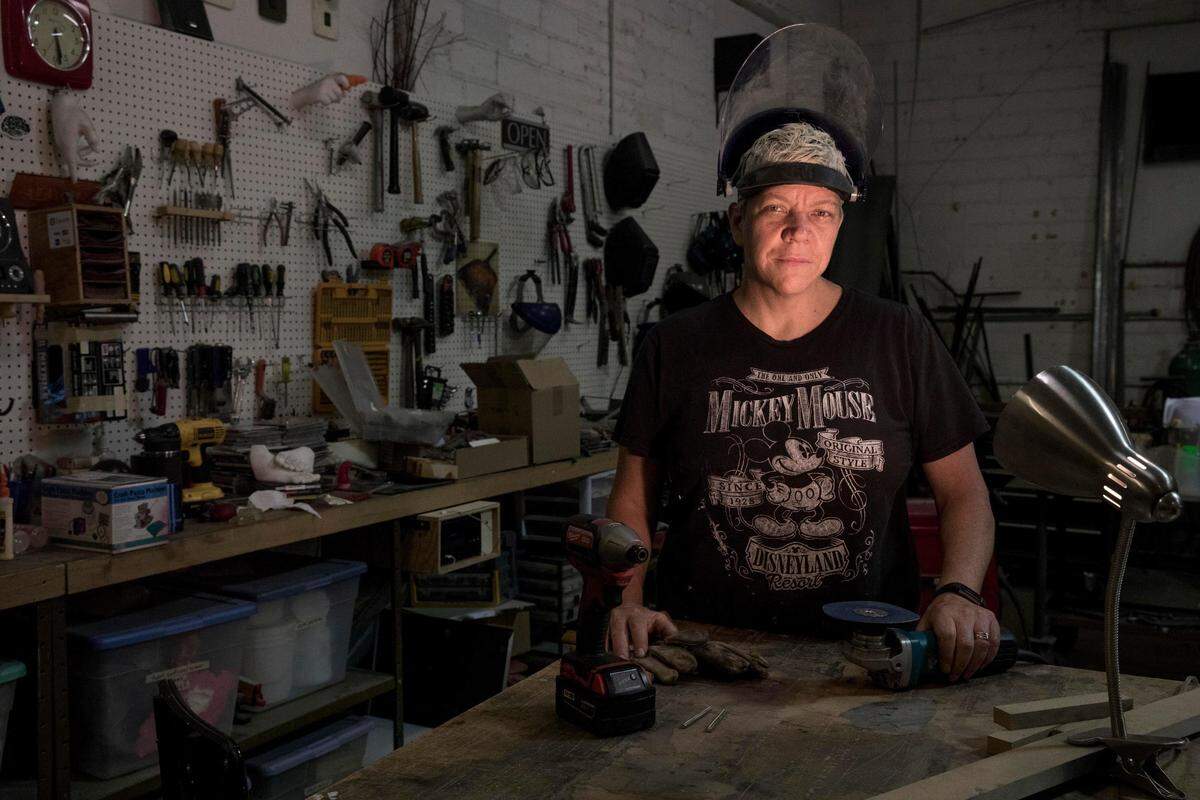
Sue Latta
Sue Latta grew up in Nevada and has lived in Boise for 26 years.
“I really feel more like a Boisean than an Idahoan, because Boise is our little hub in a very different state,” Latta said. “For me, it’s very comfortable. It’s easy. Those things might be changing with the growth, but for right now, it’s an easy place to live.”
Latta was one of the plaintiffs who sued Idaho on the same-sex marriage ban in 2013. “Boise is a little blue hub and has been very accepting,” she said. “What was true was that we expected to get a little bit of pushback from the larger Idaho, and we didn’t.
“We got nothing but congratulations and thank you, and ‘Yay!’ for doing what you’re doing.”
Latta ended up in Boise by accident, when she was deciding between two colleges. Boise won. “And here I am, 26 years later. I’m here. I’m planted here.”
Rika Torres
Born in Japan, Rika Torres married an American and has been in Boise almost 20 years. She is a permanent resident.
“(When I travel), I enter the United States with my Japanese passport, but U.S. officers always say, ‘Welcome home.’ Idaho has been my home, and I have been an Idahoan for 20 years. ... I think I am a good example of ‘an immigrant becomes an Idahoan.’”
Even as she claims Idaho as her home, Torres’ Japanese heritage is still important to her.
“But Idaho is OK with that. ... Idaho allows me to be an Idahoan but still Japanese. ...
“I really believe that people choose to be Idahoans.”
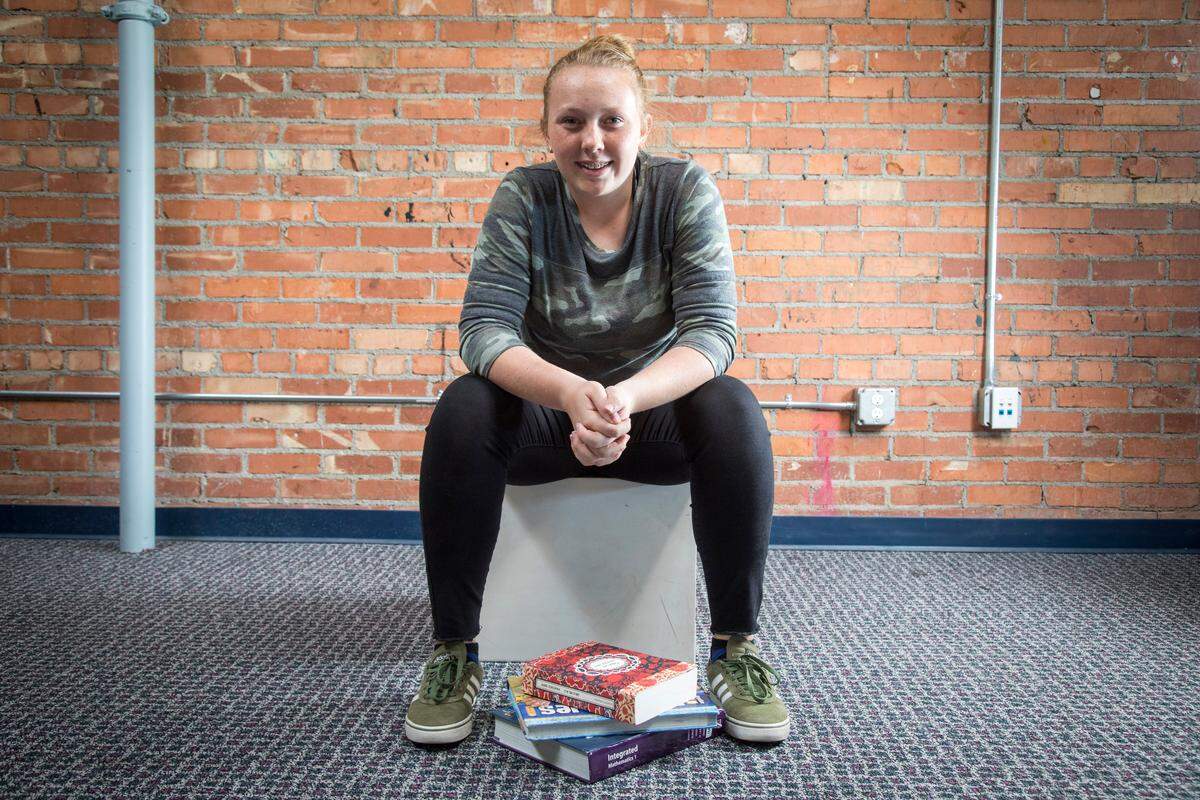
Kaiya Kearns
Kaiya Kearns was born and raised in Boise.
“We’re all pretty outdoorsy people,” Kaiya said. “To be an Idahoan, it means to be able to adventure or explore anywhere you want, and be able to do anything you want whenever you want.
“To be able to enjoy life with your friends and get to meet new people. ... and we all know one another.”
As a budding photographer, that makes a special connection between her, other people and the landscape.
“I feel like (my photography) makes me an Idahoan because I can show other people what I’ve experienced ... I can tell them all about the new place I went or show them the pictures that I got.”
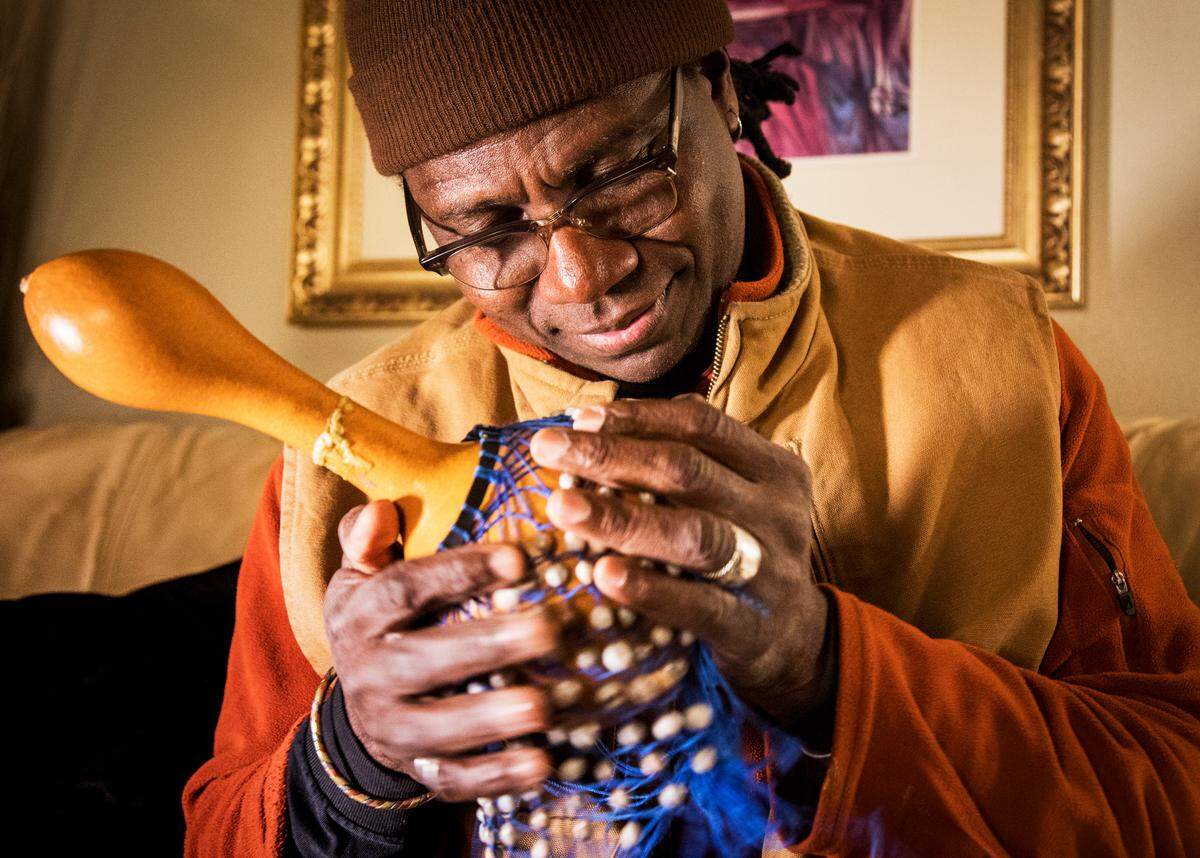
Dayo Ayodele
Dayo Ayodele was born in Nigeria, came to the United States to go to school in 1981 and moved to Idaho four years ago.
“I’ve adopted Idaho as my state, as my home, and Boise, especially, as my city,” Ayodele said. His daughter is growing up here. “That’s more of me having roots in Idaho.”
Ayodele works in insurance, but music, and his band The Afrosonics, is where his heart and soul is. That’s what brings Idahoans together.
“I believe the music that (the Afrosonics) do is actually Idaho music, really,” he says. “Because it’s all the influences of everybody growing up here and me moving here.” He brings his musical and cultural roots from Nigeria, and it all mixes it with band members’ other influences.
“It’s like a soup of different elements, and most of them are from Idaho,” he said. “It’s not African only. It’s all the culture that kind of sprouts from here.”
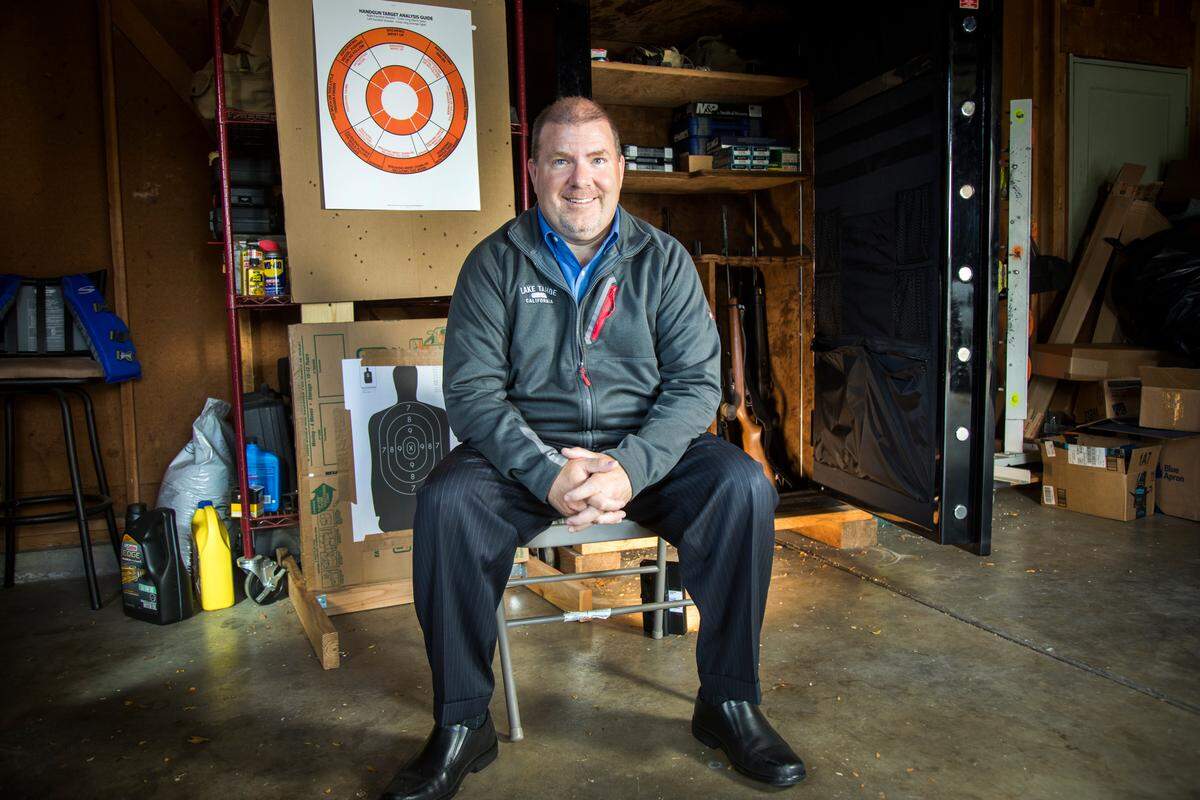
Scott Gibson
Scott Gibson moved to Idaho in 1995. “My wife was raised here, and when we were married, we decided to move here to raise the family,” he said.
Being an Idahoan “means kindness, it means community,” Gibson said. “We’ve taken four sons through elementary school, middle school, high school; band, soccer, football, church, Scouting. In all that time, we’ve never had a cross word with another Idahoan.
“We’re currently taking our fifth son through all those things, so I hope that doesn’t change. I hope that kindness and community will stay the course.”
Remembering that can bridge some of Idaho’s divisions.
“There are polar opposites in everything and everywhere you go,” Gibson said. “I don’t know how someone that doesn’t feel blessed or lucky to be here, reconciles being here. I think if I didn’t love it here, I’d find another place to be. ...
“That’s part of what can make us special — is that there is difference. I have a fun time with guns — and other people don’t want anything to do with guns. As Idahoans, we can still live here and still appreciate being here, even though we’re complete opposites. ...
“As Idahoans, we appreciate what we have. It’s a great place to be in Idaho.”
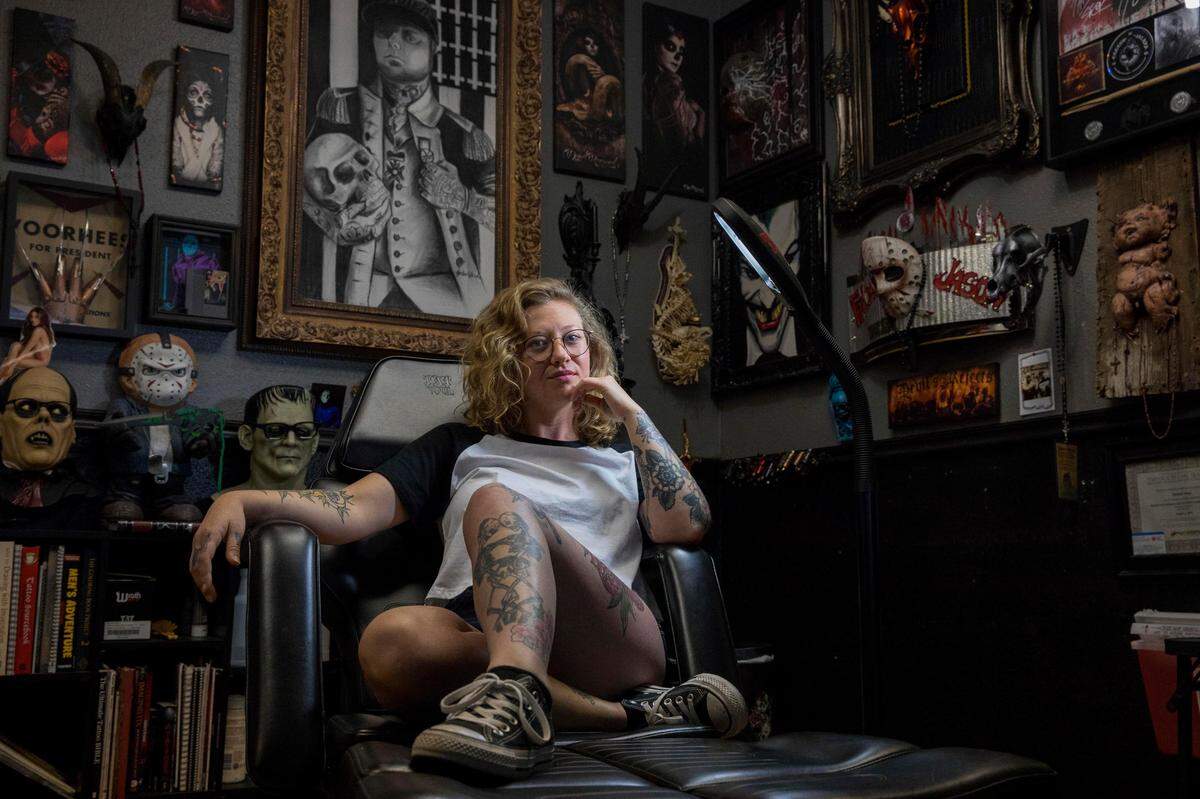
Jordan Allred
Jordan Allred has lived in Idaho her whole life, including Meridian, Coeur d’Alene and Garden Valley. She’s lived in Boise 23 years.
“Being an Idahoan means cherishing what we have — as a city and (as a) landscape,” Jordan said. “You drive five minutes that way, it’s mountains; you drive five minutes this way, it’s desert. We have forests; we have a great community. We have giant buildings and then we have little communities all around it. ...
“It’s really precious, what we have. So being an Idahoan means, to me, just being really grateful.”
And humble, she adds. “We have to stay humble with it being so small and it’s a little treasure — I mean, we’re the Treasure Valley,” she said. “With everybody coming into Idaho, it’s expanding — and there’s a reason: because it’s so great and it’s so pretty.”
What all Idahoans share is “the love and appreciation for Idaho in general, I think,” she said. “And knowing that we have something special.”

Hannah Carlsen
Hannah Carlsen has lived in Idaho her entire life.
“To be an Idahoan is to live your life in pursuit of substance and quality,” she said, “while having a strong sense of community and taking care of one another.”
Perseverance is a word she uses to describe Idahoans. “We all work hard through what we endure, and we keep pushing forward and survive. We make it through whatever obstacles are thrown in our way.”
She has a strong sense of loyalty for her state as well as the people in it, and that extends to her country and the land that we live on. “I’m proud to be an Idahoan — the absolute beauty of the state that we live in,” she said. “And the people here are good — the type of people you can still meet and seal the deal with a handshake and a word.
“Idahoans know we all have something special. And we cherish it, and we want to preserve it.”
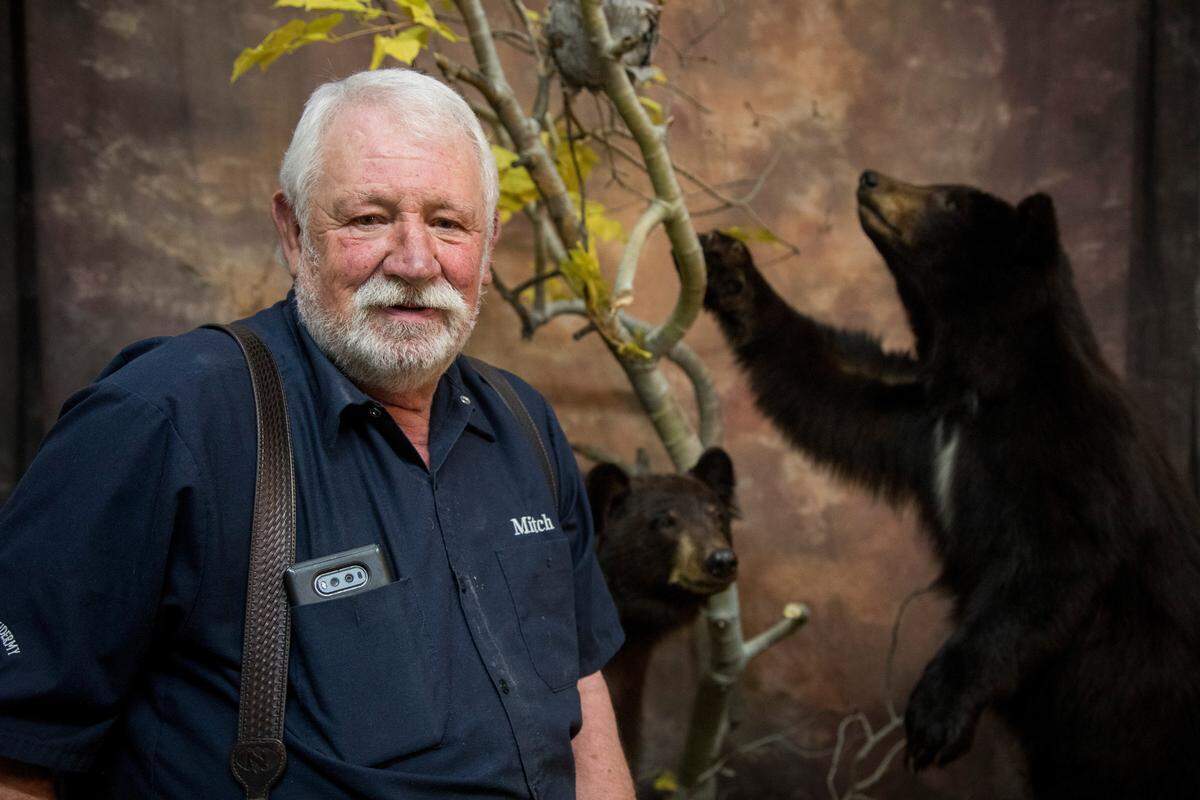
Mitch Sanchotena
Mitch Sanchotena was born in Elko, Nevada, and moved to Burley when he was three years old. He bought his first deer rifle with money he earned from picking potatoes for six cents a sack.
“I guess I’m just really proud to be an Idahoan. I’ve turned down pretty darn good jobs in other parts of the nation to stay in Idaho,” Sanchotena said.
“It’s wild places and wild things that keep me here, as you can tell. I’m a single issue person — I think there’s still a place here for God’s critters and that we don’t have to take it all up in subdivisions and high rises and big cities.
“And I guess to be an Idahoan is to appreciate free-flowing rivers and wild places and public lands and managed wildlife.”
He’s not so sure that Idahoans share much in common — except maybe partisan politics — and he’s not certain that even Idaho’s great outdoors can bring people together; he’s critical of the discrepancy between money and legislation to protect it.
“In my opinion, we’re destroying the outdoors. There may not be an outdoors for your children,” he said. “We’re borrowing that child’s resource, and we’re not doing very good job at taking care of it for them.”
In the meantime, he’s getting outside. “Idahoans, we still have it pretty good. I mean we can still shoulder a rifle and walk up a canyon hunting chukars or deer or elk ... and if we want to raft a river, it’s open to us to raft ...
“But Idaho to me is still wild places and wild things.”
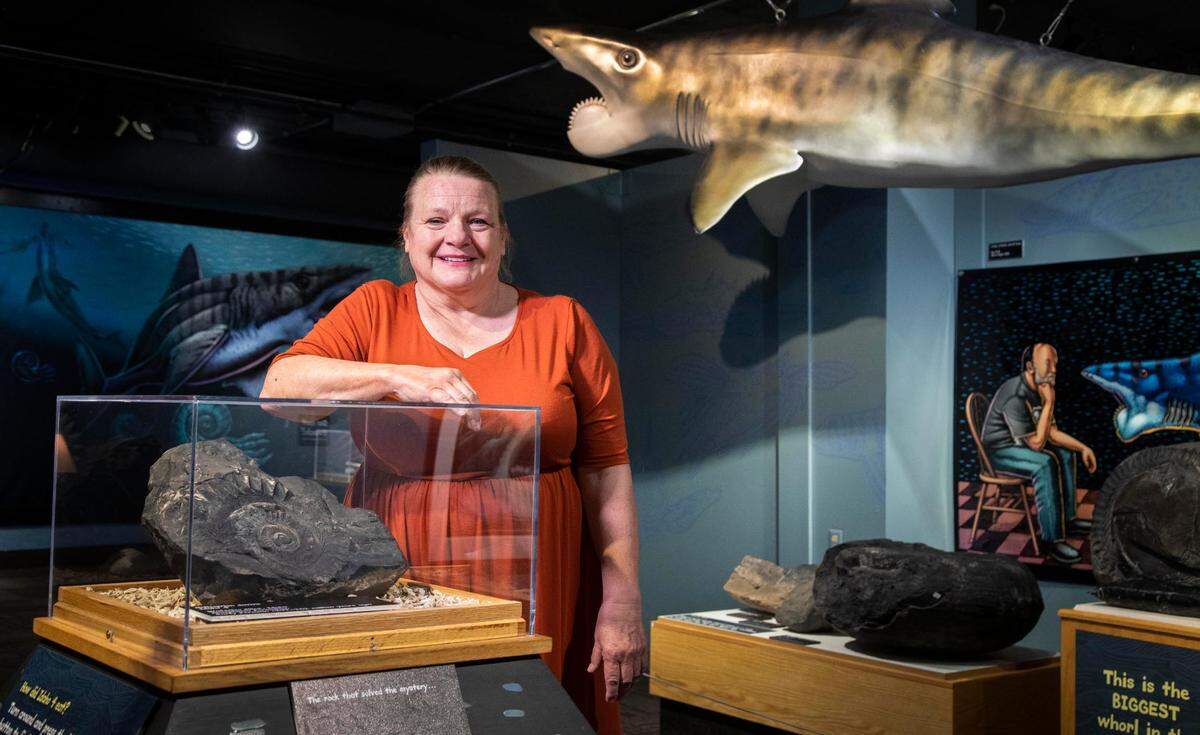
Virginia Jones
Virginia Jones has lived in Idaho for about 52 years.
”It means you really are very connected to nature and the outdoors,” Jones said about being an Idahoan.
“You’re going to be a self-reliant person; I think it also means you are a resilient person,” she said. “You don’t live here for the big cities or high-paying jobs — you live here because you love the land, and you like the people that live here.”
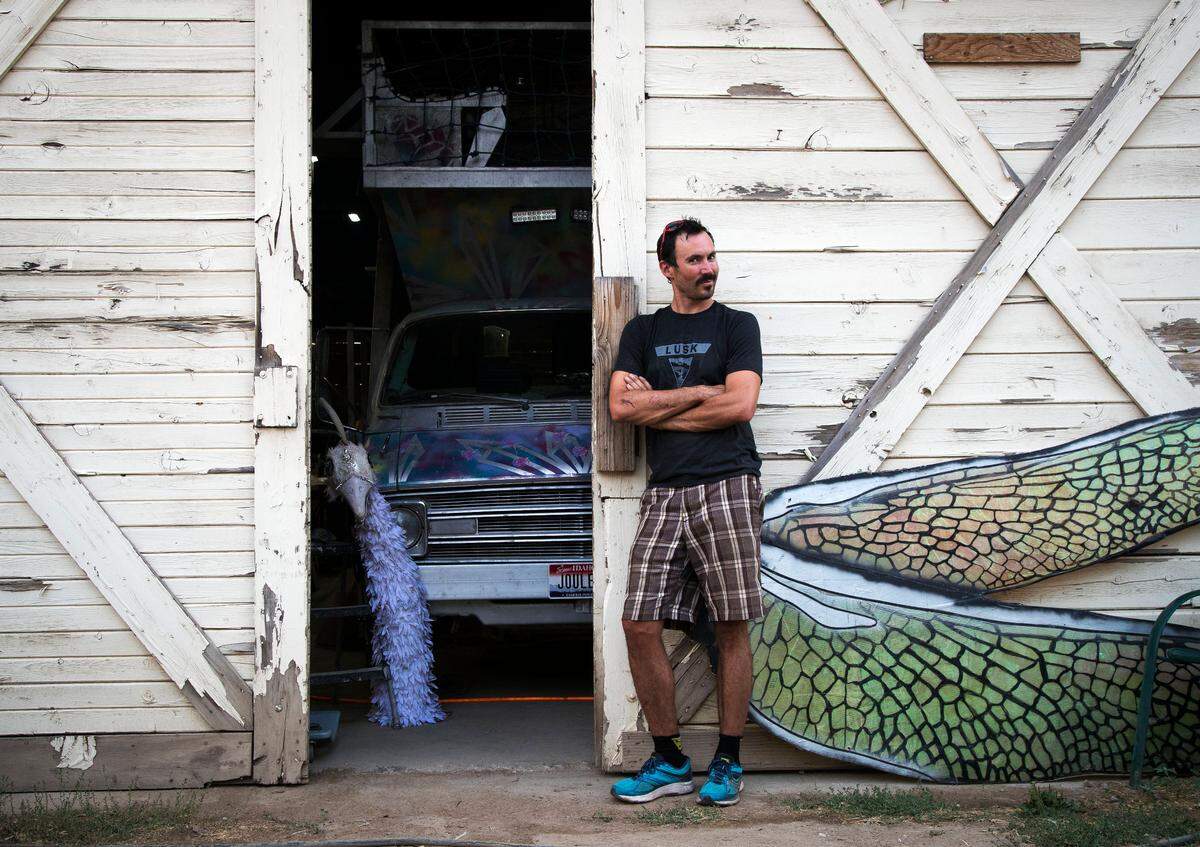
Sam Johnson
“We love where we live,” he said. “We love living in a place where there’s so much space and land for us to recreate, live and enjoy.”
“Being an Idahoan means that you are connected to this place,” Johnson said. Everybody I know does something that connects to the land in some way. It doesn’t have to be an activity like rock climbing, mountain biking, rafting or skiing — (although) many of us do connect to Idaho in that way.
“Everybody does something in the outdoors. It might be going to hot springs, taking hikes; it might be camping. It doesn’t matter, we all connect with this place. ...
“Because it’s so good living here, you know. So many of us are spoiled in the way that the rest of the country doesn’t get to experience this kind of beauty with this kind of lifestyle.”
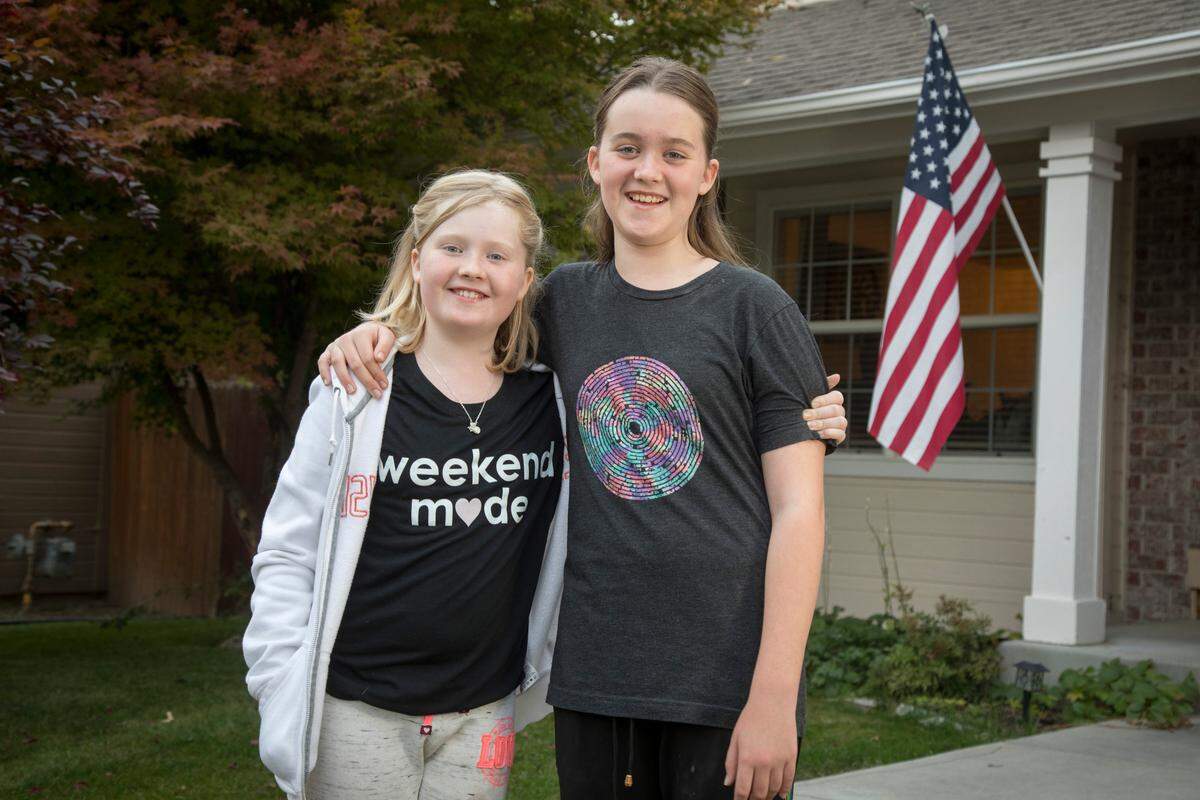
Kaitlin Brooks
“I was born here; I live here,” said Kaitlin Brooks. “It’s like my home.”
“I know what it’s like to be an Idahoan — it’s like a place you never want to leave,” Kaitlin said. “It’s beautiful here. It’s like a poem. It’s like heaven.”
In Idaho, adventures await her, like hiking and swimming and canoeing, trying new food and visiting Shoshone Falls and Lucky Peak, the Discovery Center and Stanley.
And Idaho is also someplace special for special reasons.
“I was diagnosed with autism when I was a baby. I couldn’t speak until I was 4 1/2 years old,” she said. “And today I am still me. ... Today, I feel that I am sensitive — and today, I can be me.”
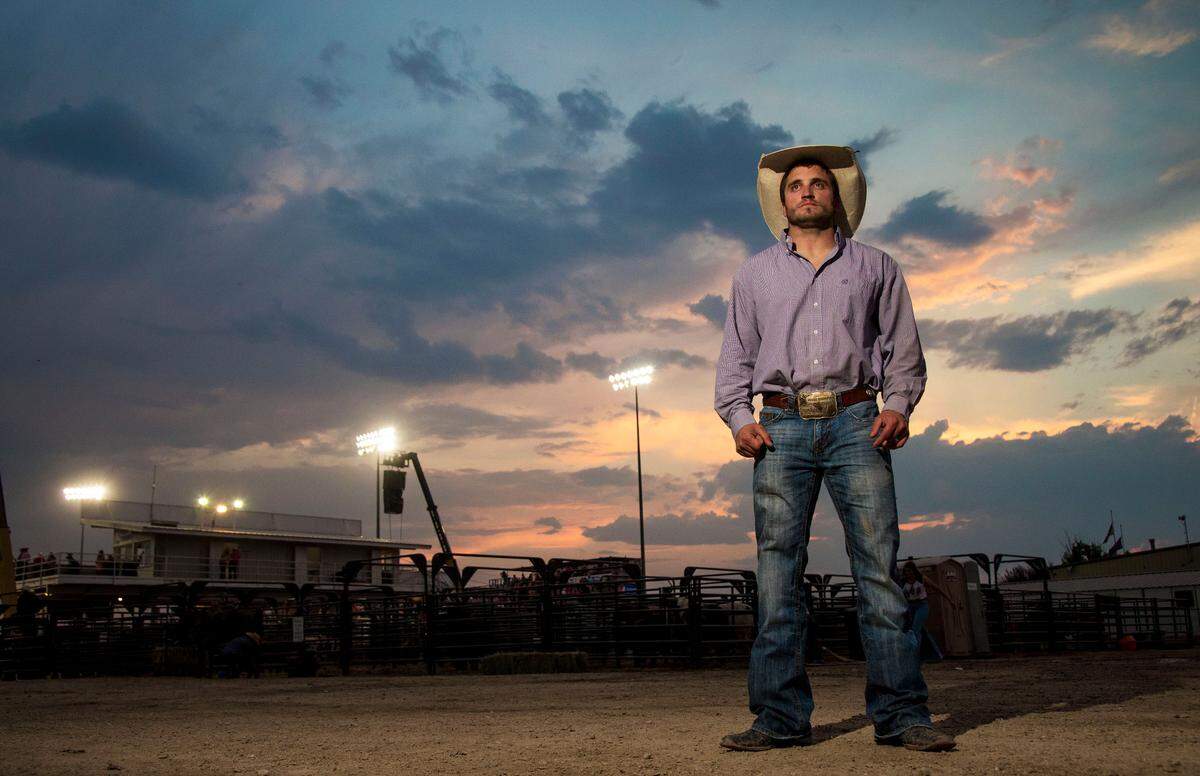
Morgan Wilde
Morgan Wilde, from McCammon, is an Idaho native.
When Wilde thinks about what it means to be an Idahoan, he thinks of hard work. “I was up there stretching (before the rodeo) and looking across the crowd, and I was thinking everybody here has worked to be here. Whether it be the contestants, the spectator, the announcers — (they) are here working; these people have all worked.
“And as I was driving here, I passed a lot of tractors out harvesting right now and all of them guys are working. There’s not any lack of hard work in Idaho.”
He has three words that describe his state: “Idaho’s wild. It doesn’t take long or that far and you can be in the middle of nowhere in Idaho. And you can get as wild as you want to — you can come here (to the rodeo) and get wild; or you can go into the mountains and get wild — it don’t matter.
“Friendship: I’m not from around here (Caldwell), but as I was walking out of the arena, people kinda come together and everybody’s friends. It doesn’t matter where you go. It’s an accepting state — everybody loves everybody, I guess.
“Family: Idaho’s pretty tight knit. Down from where I’m from, both sets of grandparents, my parents, my in-laws, my wife’s grandparents, everybody — there’s family everywhere. It seems like everybody sticks around and enjoys it here.”
And then, what all Idahoans share: “You know this is kind of cheesy, but, there’s love. Love for real, ya know,” he said. “I love to rodeo. I love to hunt. I love to fish. I love to snowmobile. I love my family. I think we all have something we love. Everybody I know has a couple of things they love and they put their whole heart into it.”
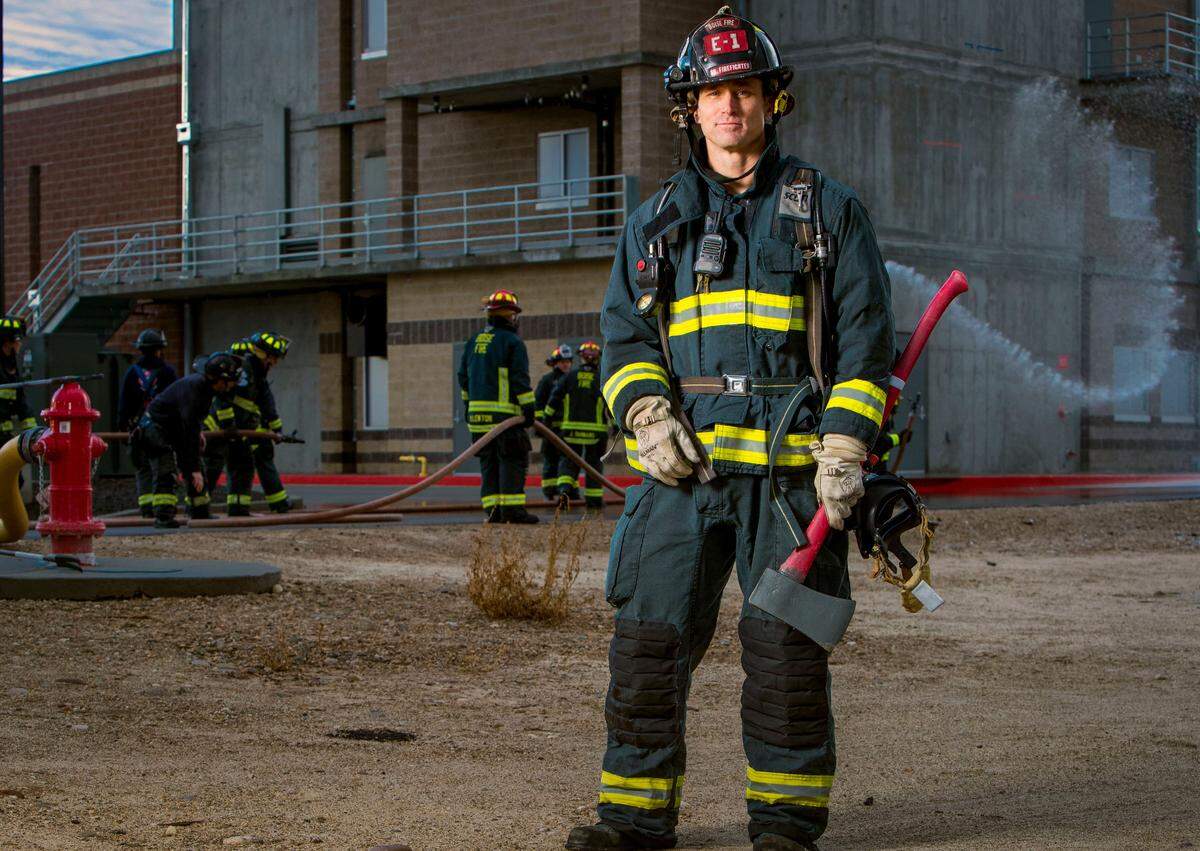
Kevin Allen
Kevin Allen has lived in Idaho for 22 years. He moved from Colorado in 1996.
“One of the main words that comes to mind is gratitude,” Allen said. “Gratitude for the beauty of Idaho, in the outdoors, the great cities we have.
“Because of my appreciation and gratefulness for the state, I want to be a part of that greatness of the state. I want to be a part of the reason it’s so great. So every day, when I got out into my world, I try to bring that to all the interactions I have.”
The kindness of Idahoans is part of what makes Idaho so beautiful, he said.
“I’ve traveled a bit, and in other places, I don’t feel the sincerity I feel with my fellow Idahoans. So I think there’s a realness to us. We look at each other in the eye; we acknowledge each other — we smile.”
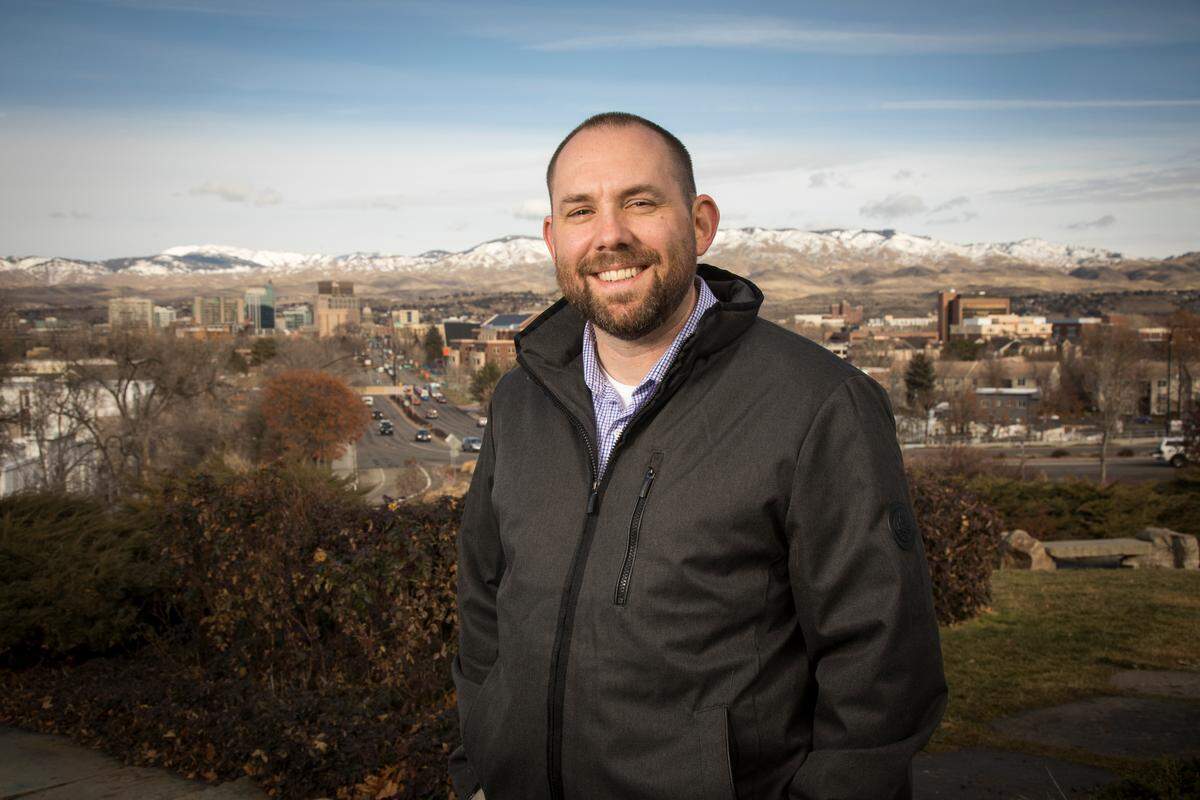
Cole Moline
Cole Moline moved to Boise from Seattle after doing internet research. “Once I got here, I knew I was right,” he said. “It’s been the best two months I’ve had in 20 years.”
So two months? And you’re an Idahoan? “Yeah, I’m here,” he said. “You can’t get rid of me. I came here for a reason: I just wanted a better life, I wanted to be happier, yeah. I’m an Idahoan. I don’t plan on leaving.”
Moline has three words to describe his new state and new state of mind.
“I’m just outright awake. I’m ready to live life. Man, it took me forever to get like that again,” he said. “I’m so grateful. That’s my second one, I’m grateful. That’s who I want to be. I want to be humble and friendly and yeah. It’s been a long time; I’m very humble about this.” He can’t stop the emotion that wells up.
“I’m very happy to be here — that’s my third word: I’m happy. That’s who I want to convey myself to be: Happy, humble and just alive.”
He’s been blown away by Idaho friendliness, handshakes from random strangers, welcomes wherever he goes. “It’s a big giant bear hug,” he said. “And I’ve got some for you as well, if you want one. I hand them out freely these days. I love it.”
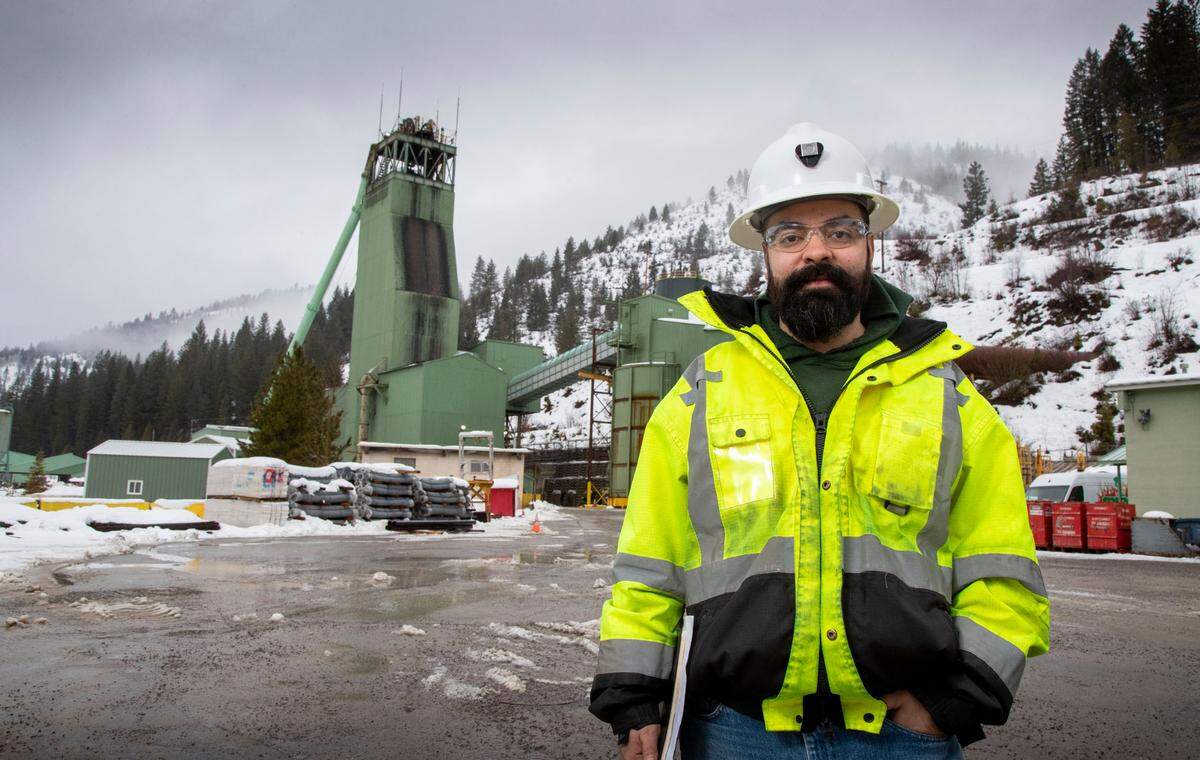
Lance Boylan
Lance Boylan has lived in Idaho for eight years.
“When I moved here I’ve never felt so welcome in any community that I’ve lived in, and I’ve lived in different areas across the U.S.,” says Boylan. “I had no one here — no family, no friends, nothing. I was completely new to the area and immediately felt a sense of belonging, and was embraced by the people who live here.”
Boylan notes the deep history of mining in North Idaho. “People who, you know, forge the nation by the strength of their back, right? And sweat of their brow. It sounds poetic but I really mean that. ...
“There’s a sense of like a frontier spirit, that you make your destiny and you are rewarded by the hard work that you do.”
Rhonda Jameson
Rhonda Jameson is originally from Texas.
“When I first moved here in the ‘90s, I would have said diversity is what Idaho lacked. Now I can look at diversity as something more than just ethnicity. A diversity of characters is important,” she said.
“You don’t know who you’re talking to here in Idaho City. You might be talking to a millionaire living in a trailer, or somebody with a Ph.D. that is just happily fishing in their stream or panning for gold. All those different kinds of people I feel comfortable talking to, and that enriches my life here just as much as if we had a diversity of ethnicities here. ...
“I chose Idaho. I had specific criteria: It had to be in the mountains, it had to be undiscovered; we needed to live in a slower, more rural setting to raise my kids, but still have the amenities of the city. That is what Idaho has. That is what this area has. ...
“You need to be a little tougher living here in Idaho. If you see yourself as an Idahoan, I think you see yourself as an independent, tougher person.”
Colby Akers
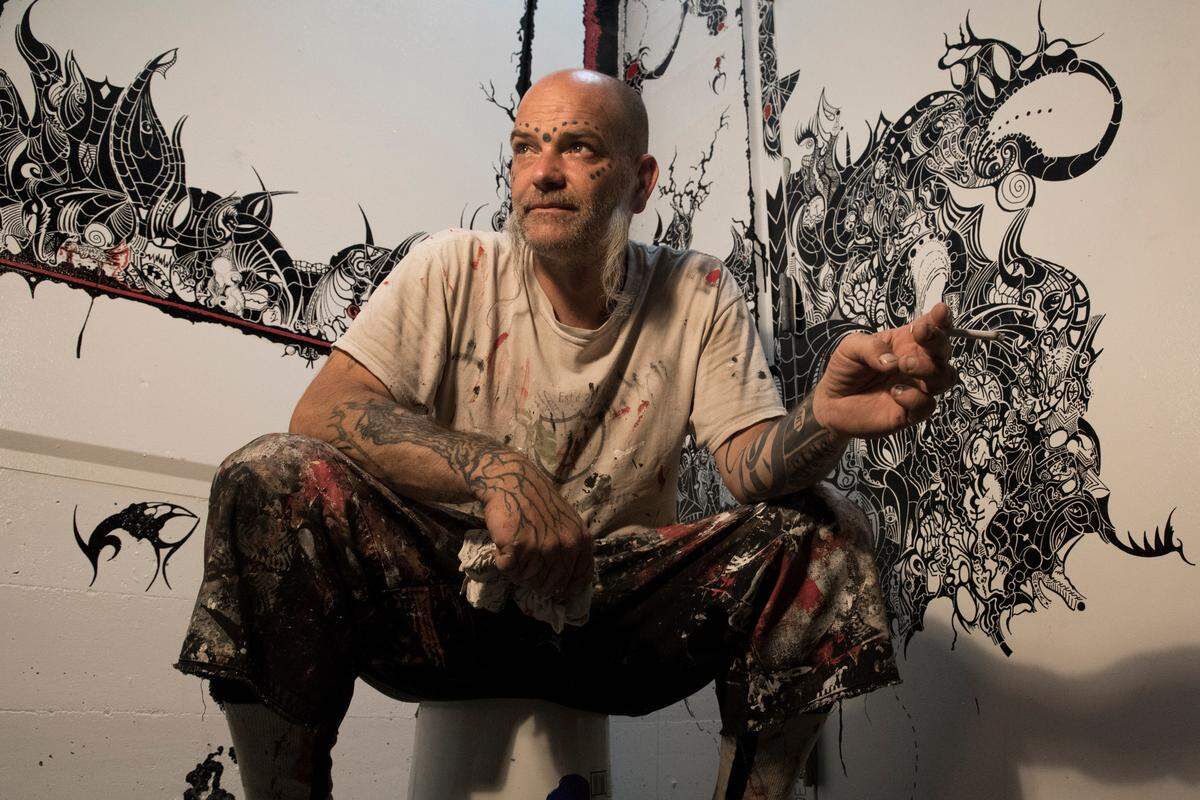
Colby Akers grew up in Idaho. After moving around, he returned to Boise and started Freak Alley Gallery in 2002. “Kids came, and life, now I have the gallery and I’m hanging on for dear life.”
Akers looks at his Idaho roots with humor. He grew up in the Magic Valley — the symbolism there makes him grin — and was a foster kid until he was 18. “So I’m also the state’s child,” he said. “And it’s the Gem State. I’m kind of like a diamond in the rough. Now I live in the Treasure Valley. It’s kind of more magical. ...
“The state influences me that way.”
Akers started painting in Freak Alley in 2002. “My whole thing really is just doing something that we didn’t have,” he said. “We got tons of great artists, just nobody was able to ever give them really a venue.”
Akers lives for making his artwork, and for making the alley gallery accessible to, he estimates, 300-500 local and regional artists over the years. “I’ve been contacted by other towns,” Akers says. “Their artists come here. Other artists come here. I’m glad I’m able to help and influence the state that way.”
Sean Quinlan
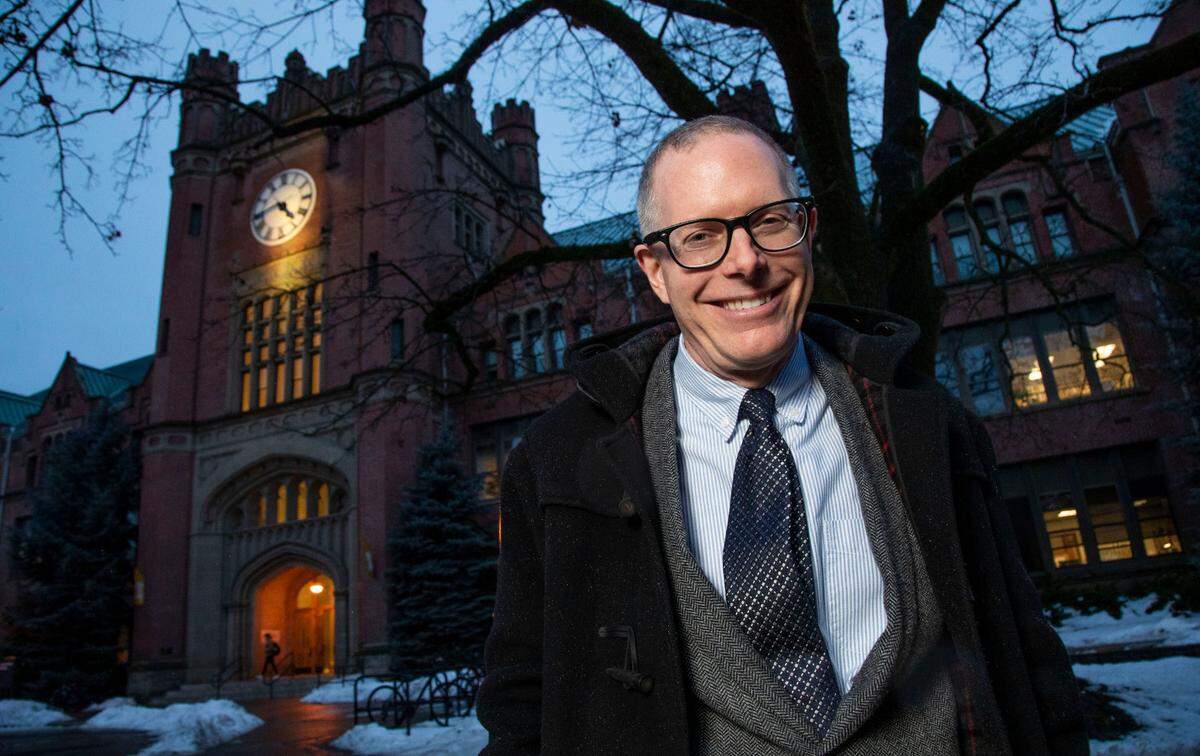
Sean Quinlan has lived in Idaho since July 2001.
”One of the things that has struck me in 20 years of living in Idaho, is the wide diversity of people I’ve met from a huge range of backgrounds and walks of life,” says Quinlan. “And the generosity of spirit that I’ve seen between people in so many different occasions who come from very different backgrounds and have very different understandings of the world.
“There’s a great warmth and depth of spirit in there that, in my experience of living elsewhere in the country, I’ve never quite seen and never quite experienced. ... Whenever I travel or I’m away from our home here, there’s always this feeling of closeness and community that I experience when I come back to Idaho.”
The landscape in Idaho is significant — it’s overwhelming beauty from one end of the state to the other. “But it’s also a tough terrain too,” he says. “And I think it imprints upon people who live here a real sense of both possibilities and limits. ...
“In our best moments, it gives us all a sense of patience with one another and perhaps even ourselves.”

Vivek Agarwal
Vivek Agarwal has lived in Idaho Falls for eight years.
”(Being Idahoan) is to be part of a history that has been well respected within the nuclear domain,” Agarwal said. “And which will be the future, enabling clean and secure energy for future generations. It’s interesting that I get to contribute to that history and future.”
He says that when he travels, people at the security check points look at his driver’s license and say, “‘Oh, Idaho. I know that state is known for potatoes, but what do you do there?’ I tell them that the state of Idaho is more than potato,” he said.
“It has been the host of 52 nuclear reactors, believe it or not, and it will be part of the future reactors that will be built. So, that’s the rich heritage that Idahoans share and will share for future generations,” Agarwal said. “That means a lot, to be part of this culture.”
Rabbi Mendel Lifshitz
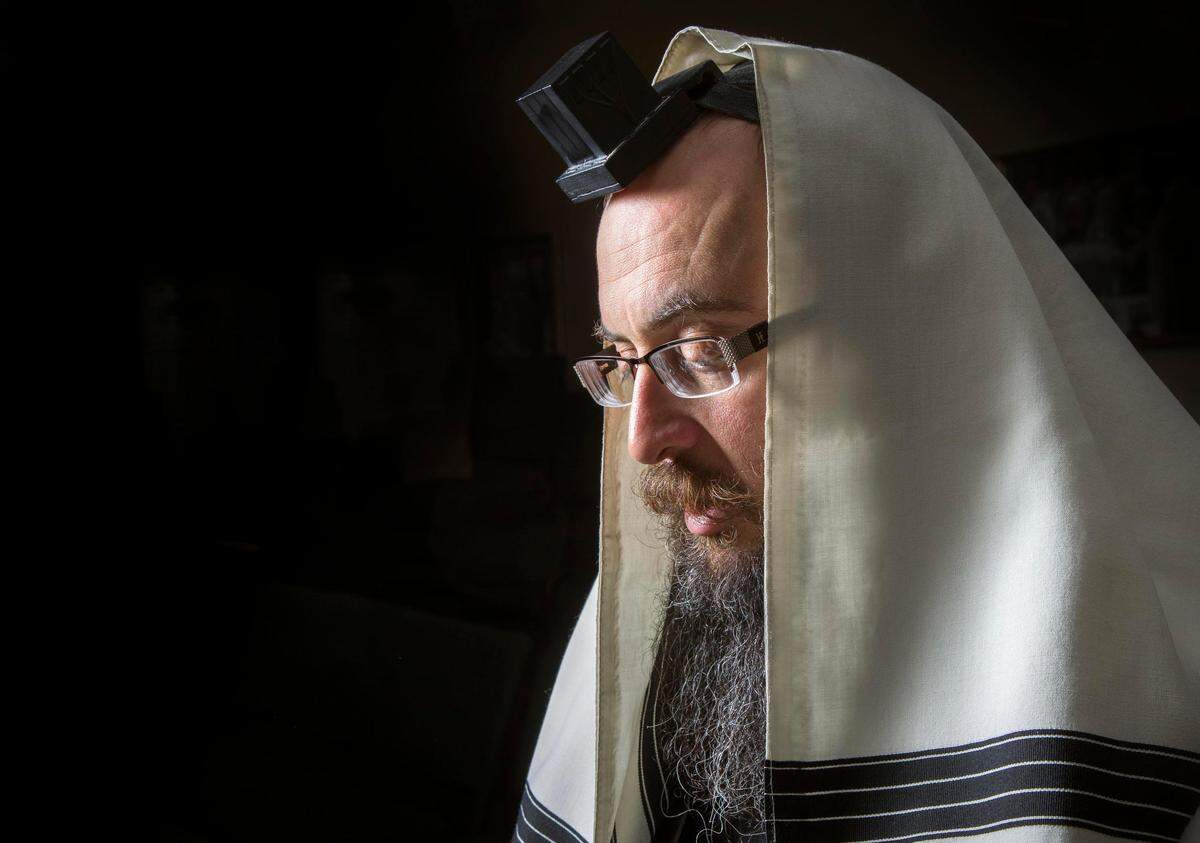
Rabbi Mendel Lifshitz moved to Boise in 2004.
“As a Jew and as a rabbi — the only traditional rabbi in Idaho — I’m perhaps a unique Idahoan. But I think that is what Idaho is all about,” Lifshitz said. “Being an Idahoan is celebrating your own unique personality, or who you are.”
He uses the word “unpretentious.” “We live the way we believe. And I think that’s across the board,” he said. “To be able to live life according to your values, according to the traditions that you hold so dear, and share them with others in an unpretentious way — is really what celebrates the spirit of Idaho. ...
“Idaho straddles the fence of being tethered in old traditional values, and yet embracing the multicultural and modern universe we occupy today. And having great fidelity to both those values is unique to Idaho.”
John Wallace
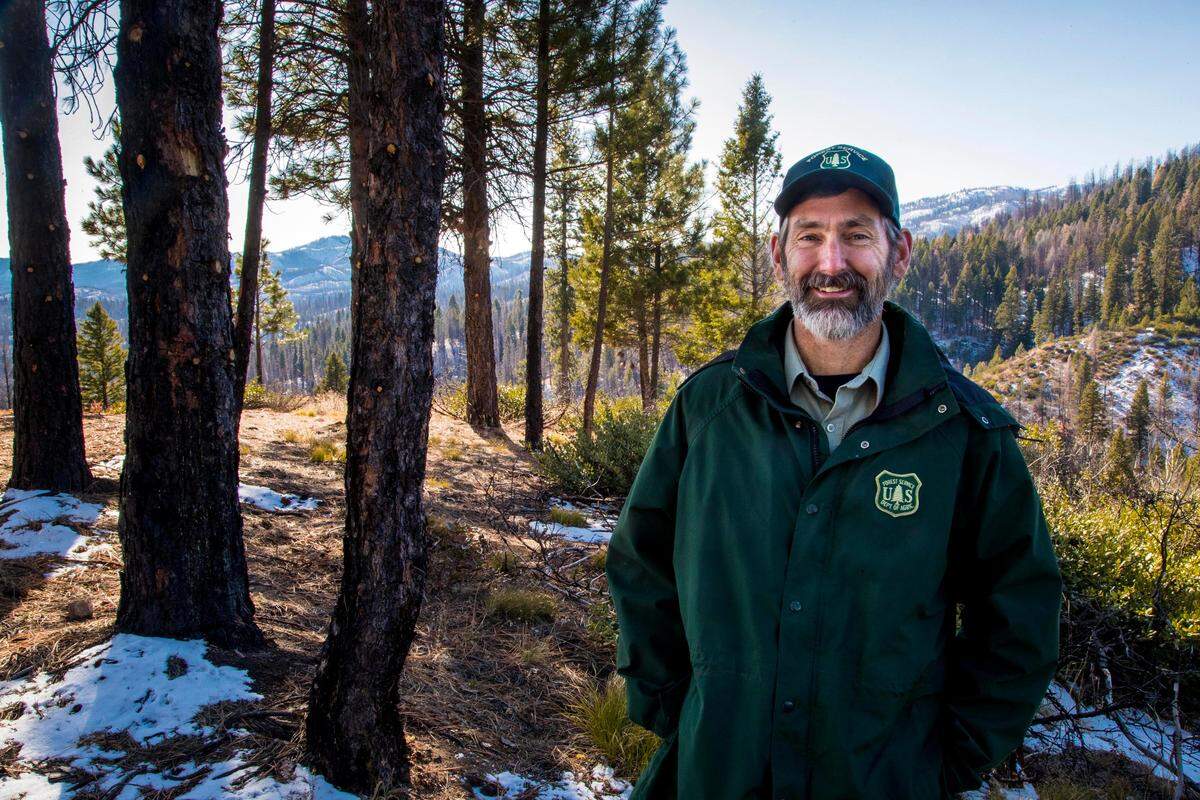
John Wallace came to Idaho in 1996 from Michigan.
Being Idahoan means taking advantage of Idaho’s natural resources. “Whether it’s hunting or fishing, coming out and just enjoying the outdoors,” Wallace said, because the outdoors is what Idahoans share in common.
“There are different groups out there, but there’s a common understanding between everybody — that common love for the outdoors that brings everybody together.”
Idaho has a lot to offer, Wallace said, and to be an Idahoan evokes several several feelings:
“I would say I’m humbled by what it (Idaho) has to offer. (I’m honored) to be able to enjoy everything it has to offer. (And I am amazed.) No matter where you go in the state — the views, the people — you couldn’t ask for anything more,” he said.
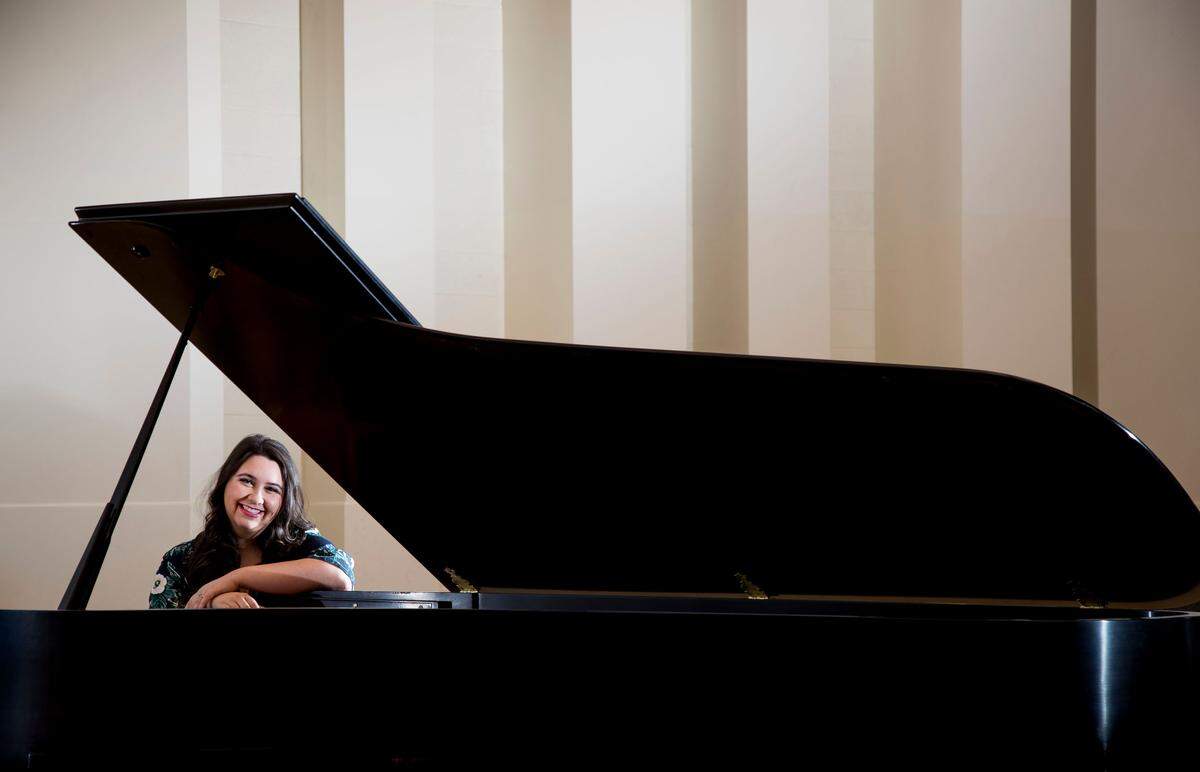
Stephanie Zickau
Stephanie Zickau has lived in Idaho since her first birthday.
“I identify as a musician, but I also do a lot of other things: I’m a wedding coordinator, I like to sew, and compose music. I don’t necessarily fit into just the category of ‘musician.’ So I think Idaho doesn’t necessarily fit into the category of just like ‘potato farmers’ or something. Idaho has a lot more to offer.
“There are a lot of different, independent qualities of Idaho that kind of come together to form the state as a whole. Like we have, obviously, the beautiful Sawtooth mountains and all of the gorgeous open landscapes. But, also we have Boise, a thriving metropolitan area, and there are a lot of cool things happening here now.”
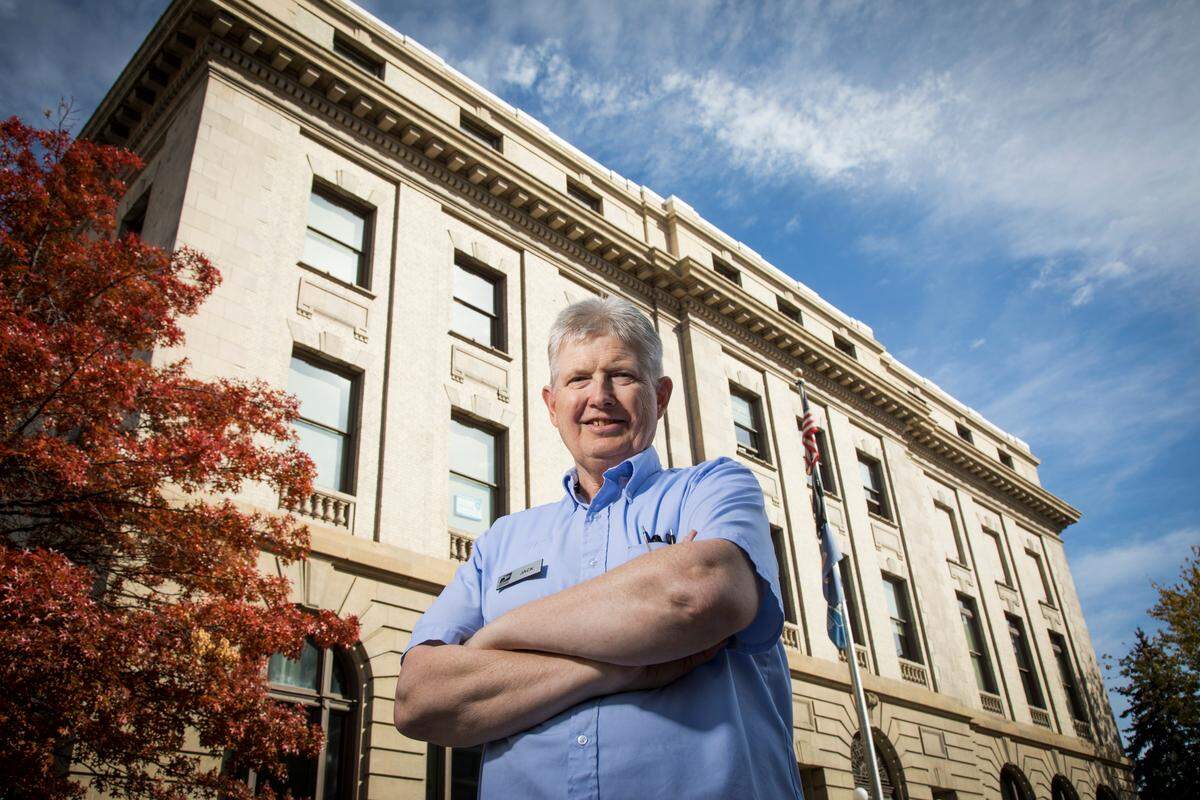
Jack Burstedt
“I’ve been here all my life,” said Jack Burstedt. “Born in Salmon, Idaho, and I can’t imagine living anywhere else.”
Burstedt uses the word blessed because, he said, “I could have been born anywhere, (but) I was born here. My great-grandparents came over from Sweden and for whatever reason, of all the places in the United States to settle, they settled in a little town called Moore, Idaho. ... Fourth generation on my dad’s side.”
As for all Idahoans, Burstedt is not sure there’s a common thread. “But I think the one thing — not to be facetious — I think we’re all glad we don’t live in California. I don’t mean that as a slam against California, but you see a lot of people from California moving up to Idaho. You don’t hear about the Californians complaining about an infusion of Idahoans moving down there.”
But he goes on. “Nobody’s going to agree on everything, but overall I think people like this state. ... The people are friendly; the smaller the town you go to, the more people wave at you. They don’t even know you, but they’re waving at you as they drive by.”
People are just kind here, he said.
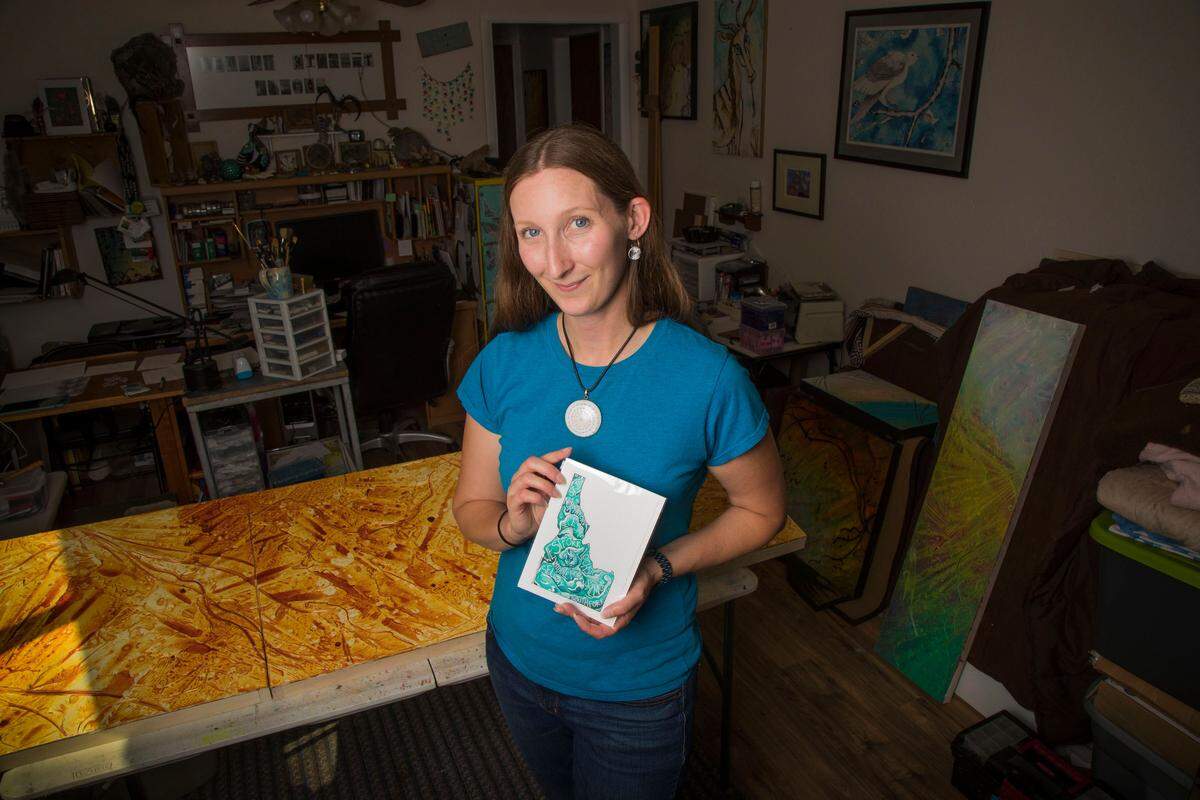
Lauren Kistner
For Lauren Kistner — born and raised in the Gem State— being an Idahoan is special.
“It means we’re lucky. Every day we get to wake up to nature right outside your back door,” she said. “And within a 40-minute drive is everything me and my husband are interested in doing in the outdoors — like rockhounding, huckleberry picking, fishing — it’s all in our backyard basically.”
Plus, she says, all Idahoans share a community. “We love our beer. We love our food. A sense of community. Everybody’s out there trying to support each other, and that is what’s great about Idaho.”
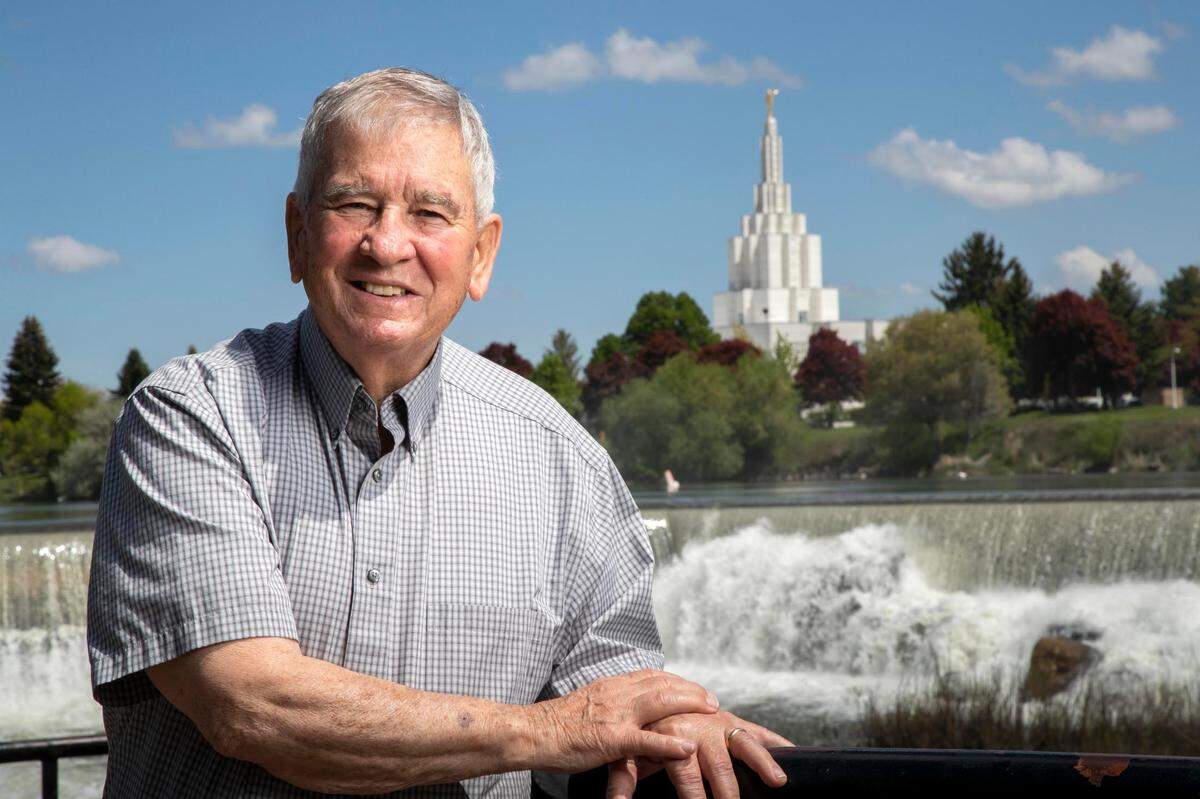
Thomas Campbell
Thomas Campbell has lived in Idaho his entire life.
”I served (in) public office for a long time. And, as you know, the community is always divided politically, and I served both sides — all religions,” Campbell said. “I have learned in my lifetime to let everyone live their own life, and respect them for what they are and what they do — and not what you think they should be.
“So I have friends from every religion and every political party. (People from) all aspects of life are my friends — and good friends. And I love and respect them all, so I would think ‘tolerance’ would be an indicator of the kind of person I am.”
Jodi Brandt
Born and raised in Ohio, Jodi Brandt has lived in Idaho for three years.
For her own research, Brandt asked 500 people in the Treasure Valley about their identity and geographical location. For instance: I belong to a neighborhood, like Vista neighborhood or the North End; or I belong to a city; or a region, like Southwestern Idaho or the West, or more broadly, America. “The vast majority of people that we surveyed chose Idahoan. People definitely feel strongly attached to this identity of being Idahoan,” she said.
For her, a connection between Idahoans is “water.”
“Idaho is a dry enough place that people really value and appreciate water because it’s relatively scarce,” she said. “I go all around the state for my research, talking to ranchers, farmers, and recreators. Farmers are concerned about water and how they’re going to get it to water their crops; a rancher values water for his livestock. There are countless backpackers whose destination is an alpine lake. And then there’s our hot springs. That’s a really special thing about Idaho — our hot water.
“I feel that clean water and special water is a thread that runs through everyone’s life here.”
Rocky Lima
Rocky Lima came to Boise when he was 17 years old to play football for Boise State University.
“When I played football over here, I was shy and everything — but when I get on the field, I was so happy,” Lima said. “It felt like home.”
However, Hawaii is still very much a part of Lima’s life. “That’s my roots,” he said. When he goes to Hawaii, that’s going “home.” “When he gets on the plane to leave, “I look down on the islands till it’s gone and disappeared — and then I realize I’m going to go back home. To my other home in Boise.”
Lima notes the Hawaiian influence on Idaho history — the name of the Owyhee Mountains, for instance. “I’m one of very many Hawaiians (who have) brought the aloha spirit to Boise. ...
“To be an Idahoan is a gift. It really is.”
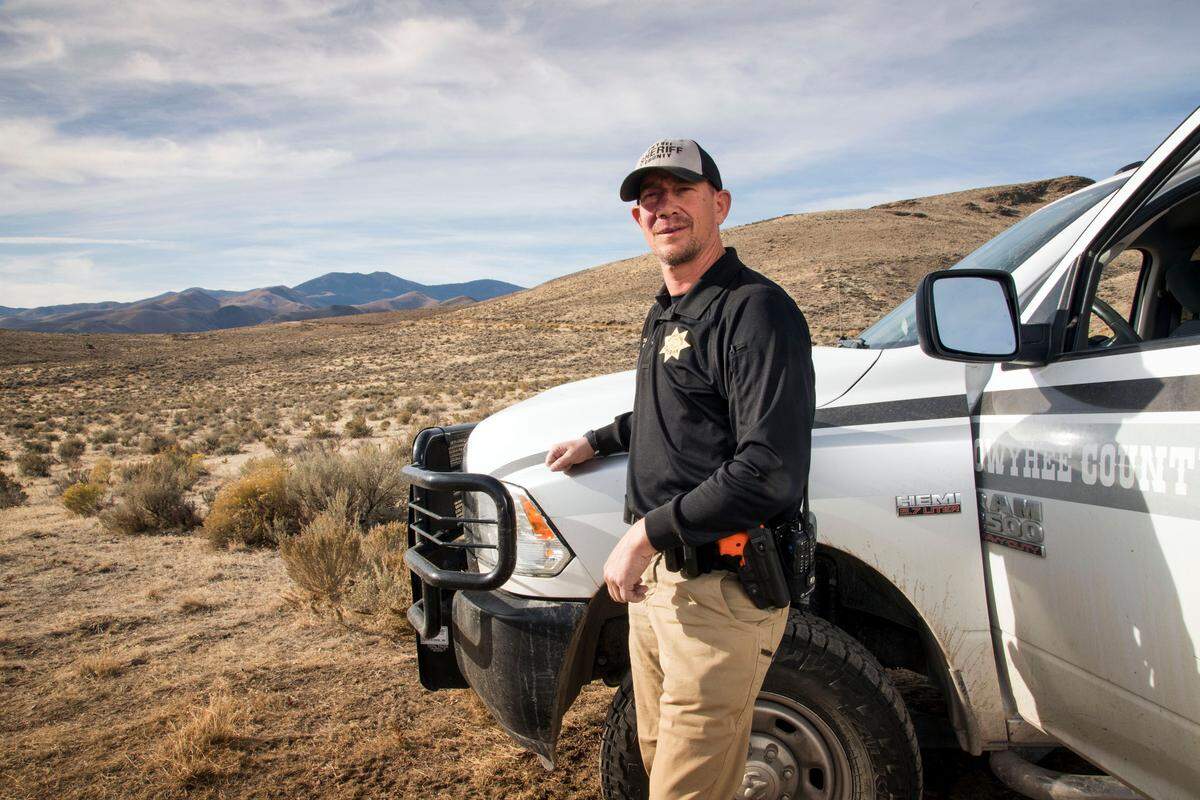
Perry Grant
Perry Grant grew up in Marsing and now heads law enforcement in Owyhee County.
“I believe to be an Idahoan means you are self sufficient while not being afraid to lend a hand to others,” Grant said. He uses the word “blessed” to describe how he gets to live where he does — and work where he does. “I’ve seen a lot of places, but there’s nowhere I’ve been where kindness surpasses Idaho.”
And he uses the word “freedom.” “People in Idaho don’t take their freedoms for granted,” he said, “and I respect the people that stand up and fight for their freedoms.”
He continues. “All native or newer Idahoans appreciate the fact that they can live their lives the way they choose.”
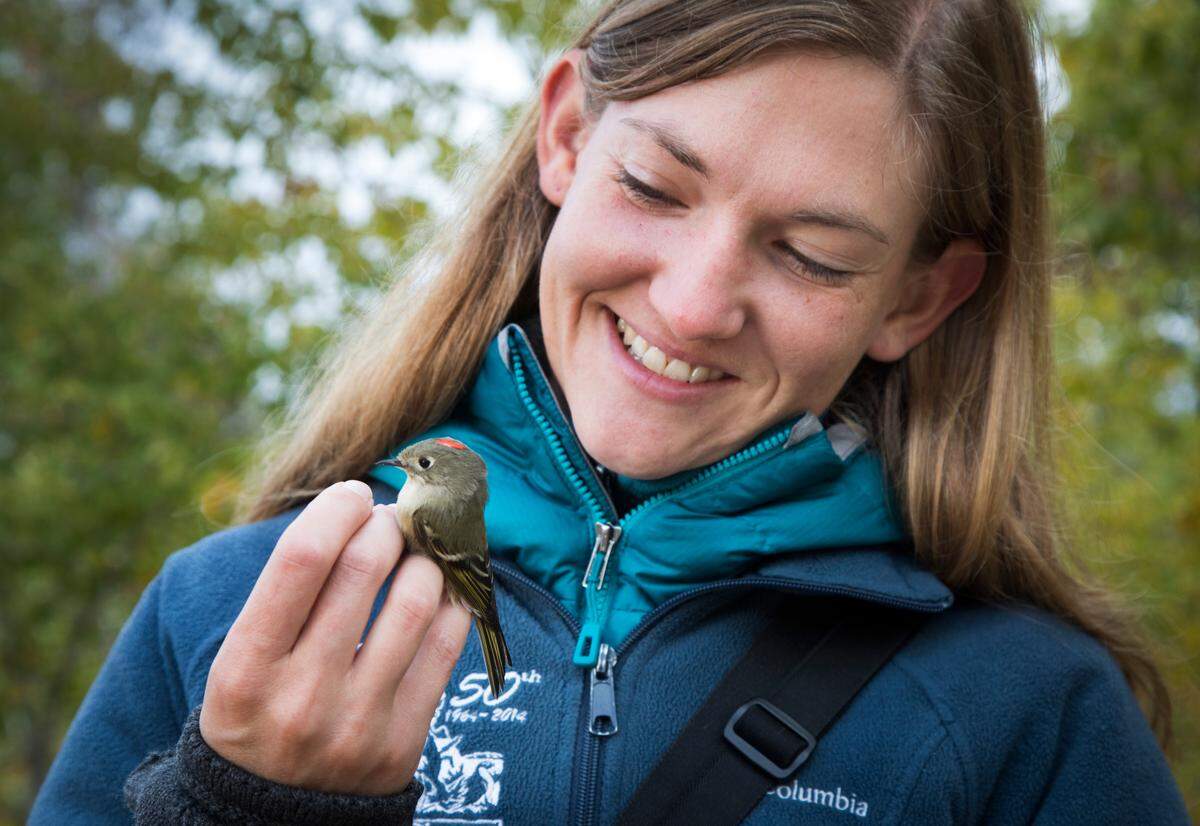
Heidi Ware Carlisle
Heidi Ware Carlisle was born in Idaho. Her mother grew up in Gooding and her grandfather is from Owyhee County. “Fifth generation Idahoan at least,” she said. “In my roots, I guess.”
“I’m kind of biased as a biologist,” Carlisle said. “But nature and outdoors is pretty huge for Idaho. I think it’s why native Idahoans love Idaho — and it’s why new Idahoans are coming to Idaho ... because of all this space and stuff we get to enjoy.”
Idahoans share a love for the land, although in different ways. “It could be a rancher, who really appreciates the land because it’s their livelihood; or a farmer. Or somebody who goes hunting every fall and harvests that meat that feeds their family off of the land.
“Or me, as a biologist, who is also a bird watcher — going outside and looking at nature is what I really enjoy.
“No matter how you are using the land, we all kind of have that same connection and tie and kind of share that.
“Even if we disagreed on a lot of other things, we’re all kind of connected there.”
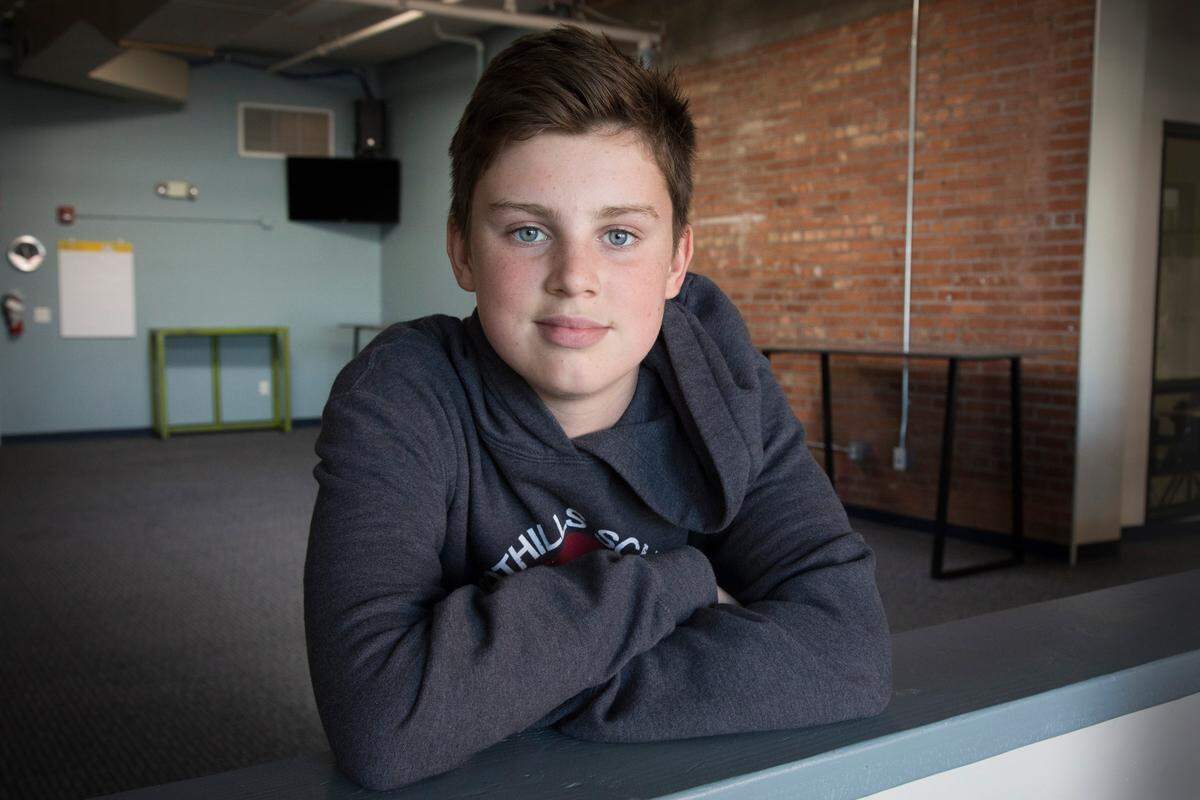
Simon Richardson
“I’m an Idahoan and a Boisean, I guess, since I live here,” said Simon Richardson. “I’ve lived here for most of my life.”
Idahoans have very specific traits, according to Richardson. “We just really enjoy everything. We enjoy being in the grass at the park, or eating the fresh tomatoes that you just grew from your garden. ...
“It means to enjoy the outdoors and live in the moment. Idaho is so beautiful, there’s so much nature. ... Go on hikes, float the river, ski ... sleep under the stars. ... Idaho is just such a beautiful place. There’s so much we can all share. “
And then there the other thing that all Idahoans share: “Those awkward moments when someone thinks we live in Ohio or Iowa. And everyone thinks we eat potatoes.”
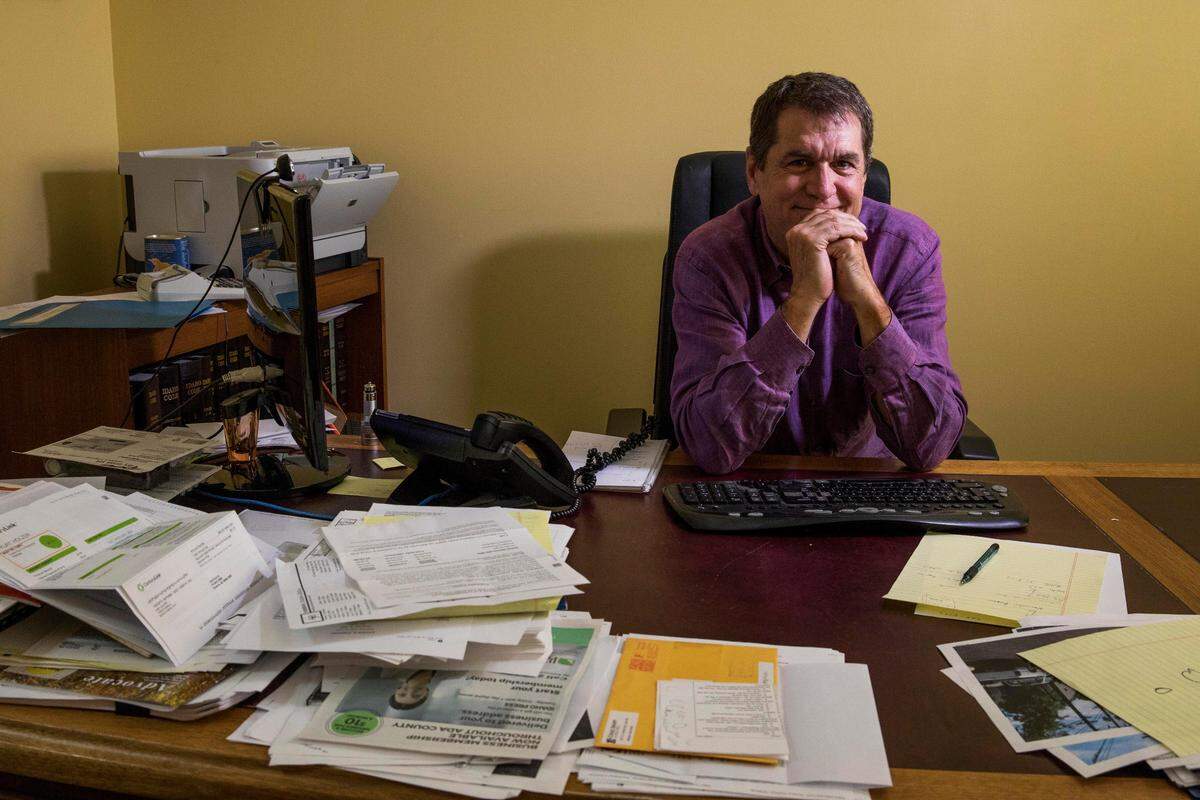
Kurt Holzer
Kurt Holzer was born in Brooklyn, New York, raised in Fort Worth, Texas, and has lived in Boise since 1993. “I don’t know where else I would want to live.”
Ten years before Holzer moved to Boise, he vacationed in Idaho with his mountain bike, kayak and dog loaded up in his pickup truck. From the Snake River Plain to the forests of North Idaho and the lakes and rivers of Eastern Idaho; from the mountains to the desert, he says, from wild rivers to open spaces, “the breadth of things Idaho offers, I think, is unmatched ...”
He moved to Boise to start his profession, and found other attorneys who were willing to bypass more lucrative locations, sharing his love of place and work. “The quality of work here is high,” says Holzer. “You choose to come here.”
“When you think about what an Idahoan is, you think about somebody who understands balance, who understands freedom, who understands the acceptance of other people’s ideas,” said Holzer. “I think Idahoans can appreciate both country and city. Idahoans can appreciate ballet and hunting ...”
He likes the relative isolation of Boise, far away from the influences of Portland and Salt Lake City. “So we are who we are. We rely on each other here so much.” He also loves that Idaho is a place where one can hike, ski, water ski, golf, hunt, go whitewater boating and cycling. “All these are things that make Idahoans Idahoans.”
And if he looks into the future, it’s right here in Idaho. “The number one thing I expect from Boise is it’s going to be where I keep living. I have no desire to leave. None,” he says. “There’s no place I want to live out my life.”
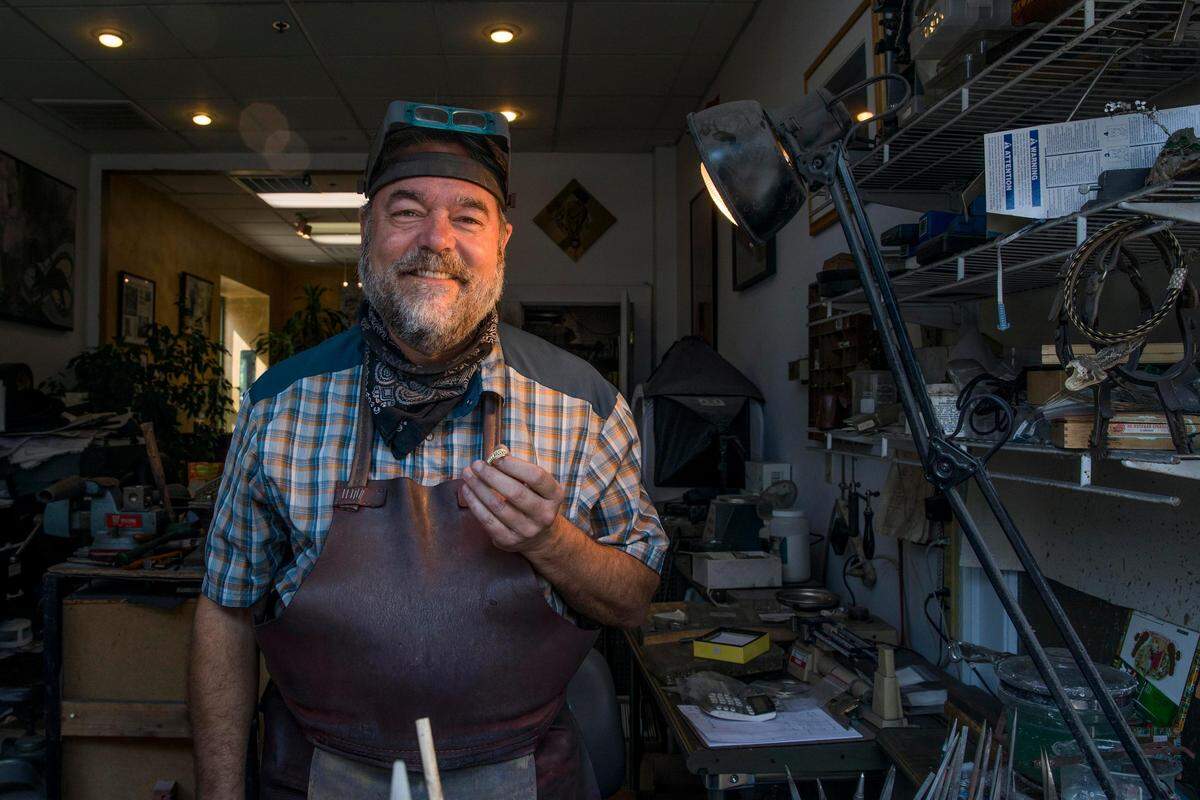
Mike Rogers
Mike Rogers was born in Kamiah and has only left Idaho to live in California for two years.
“Idaho is still unpopulated to the point that it’s pretty easy to go out and be alone, and that’s a rare thing,” he said. “If you’re an artist, just sitting in nature and turning your brain off and watching everything is such a source of creativity. My God, it’s so good.”
That source is crucial. “I’ve been trying to put beautiful things into the world my whole life,” he said. “And do my little part to make Idaho a spot where real art can come from.”
Music and art thrives here, he says. “If anybody needs anything, somebody from the art community will be there to help every single time. It really is a big beautiful family here — just the best people.”
Rogers watches the world pass by his studio/shop window in Downtown Boise, with his dog by his side. “Idaho is stuck with me,” he said. “I’m staying.”
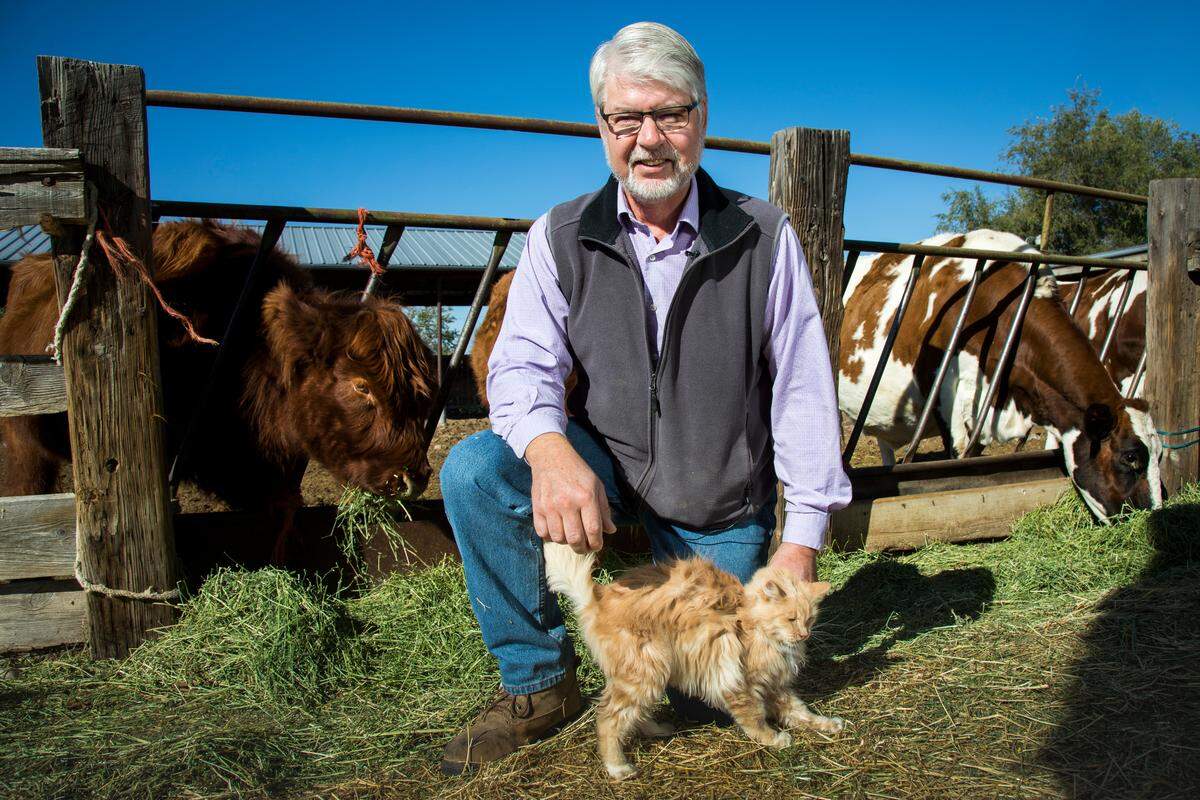
Hans Bruijn
Hans Bruijn was born in Holland, came to the United States in 1976 and started dairying in Meridian in 1981. “I’ve never regretted that.”
”What got me here initially, after I decided to start dairying here on my own, were the opportunities,” Bruijn said. “To do whatever you can do, work hard and be successful.”
Agriculture has always been his focus, and it’s part of Idaho’s roots. “We’re still a strong agricultural state, regardless of what happens in the tech industry,” he said. “People still need to eat and that’s going to be more and more important, too, I think, as the population increases.”
And after that, one gives back. “That means involved in your community,” he said. He’s volunteered with Meridian Dairy Days and with FFA and 4H. There’s no paycheck for that, but “the rewards are you get to meet a lot of great kids.”
He also loves Idaho’s open spaces. “I like the fact that you don’t have to travel far to go anywhere — from the high desert to the forest and rivers,” he said. “I like the fact that even though we’ve got a pretty big town close by — that within 20 minutes, half an hour, you can go somewhere where you don’t see anybody, to kind of recharge. ...
“For all those people that are moving in, I think they’re kind of looking at the same, what we already have here, the wide open spaces.”
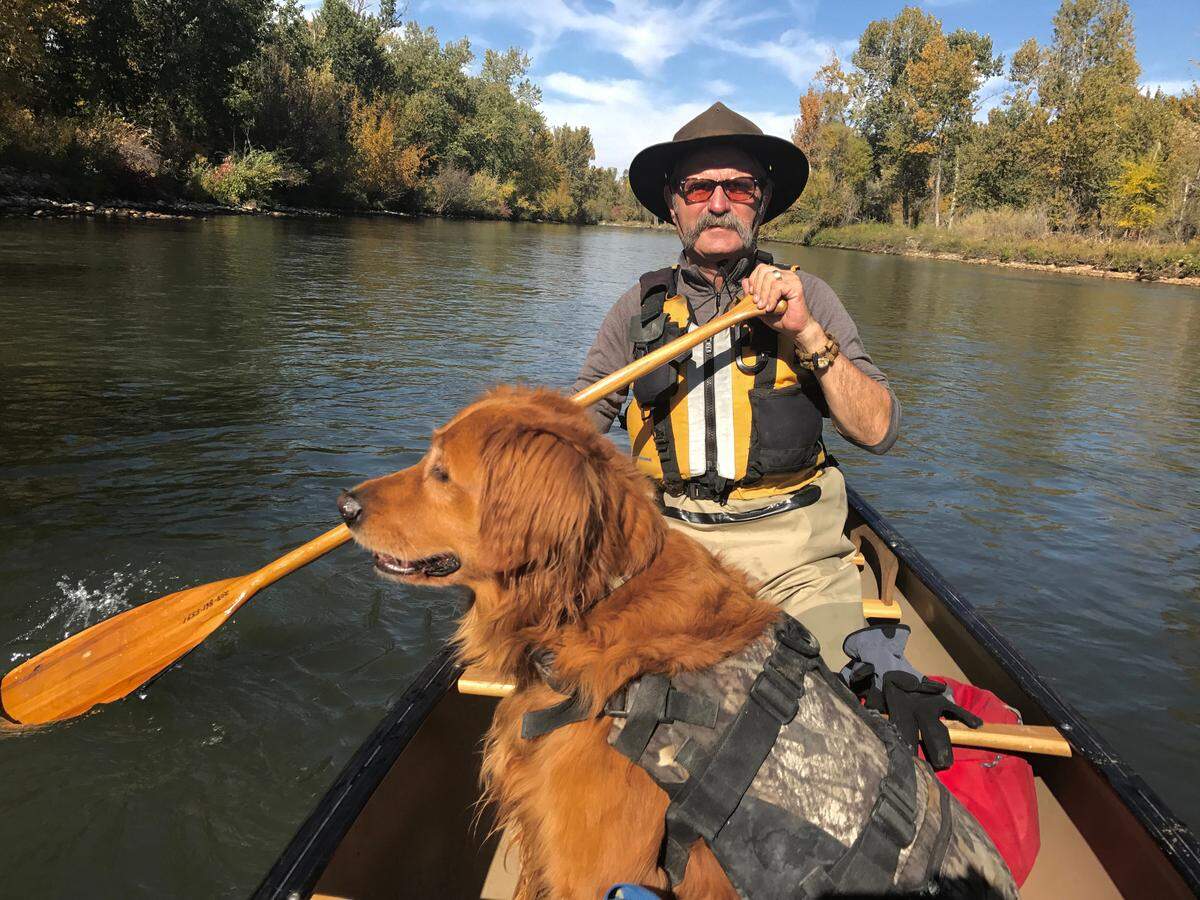
Pete Zimowsky
When Pete Zimowsky was in college in Utah, he had three fishing licenses — one for Utah, one for Wyoming and one for Idaho. He learned to fly fish in Eastern Idaho, which confirmed where he intended to live. Zimo moved to Idaho in 1974.
“Maybe I’m an adopted Idahoan — I’m like a lot of people who came from elsewhere,” Zimo says. “Back in the old days, man, if you weren’t a native Idahoan, you weren’t an Idahoan.”
He feels like that rigid inside/outsider philosophy seems to be mellowing. “Because we do have a lot of people here now. Yes, I’m adopted.”
Sitting by the banks of the Boise River in town, Zimo gestures north to the Sawtooths and south to the Owyhees. “We’re in the heart of the outdoors. That is why I’m an Idahoan.”
Boating the Lochsa River, hiking in the Frank Church River of No Return Wilderness, fishing the Henry’s Fork — “Idaho from Coeur d’Alene down to Bear Lake and from Hells Canyon to the Tetons. Man, we’ve got it all,” he says.
“I would hope that all Idahoans share the love of the outdoors — and I hope they share the responsibility of making sure we keep our public lands. I’ve got six grandkids, and I want them to be hiking the Frank Church or Hells Canyon. ...
“If you’re an Idahoan ... you want to protect this state and make sure you have a place for your kids to go in the future.”
Zimo was 27 years old. when he moved to Boise to work for the Idaho Statesman. He breaks into the John Denver song: “He was born in the summer of his 27th year, coming home to a place he’d never been before...”
This story was originally published July 19, 2020 at 4:00 AM.