Earthquake sloshes waters of endangered species’ only home in the world — 500 miles away
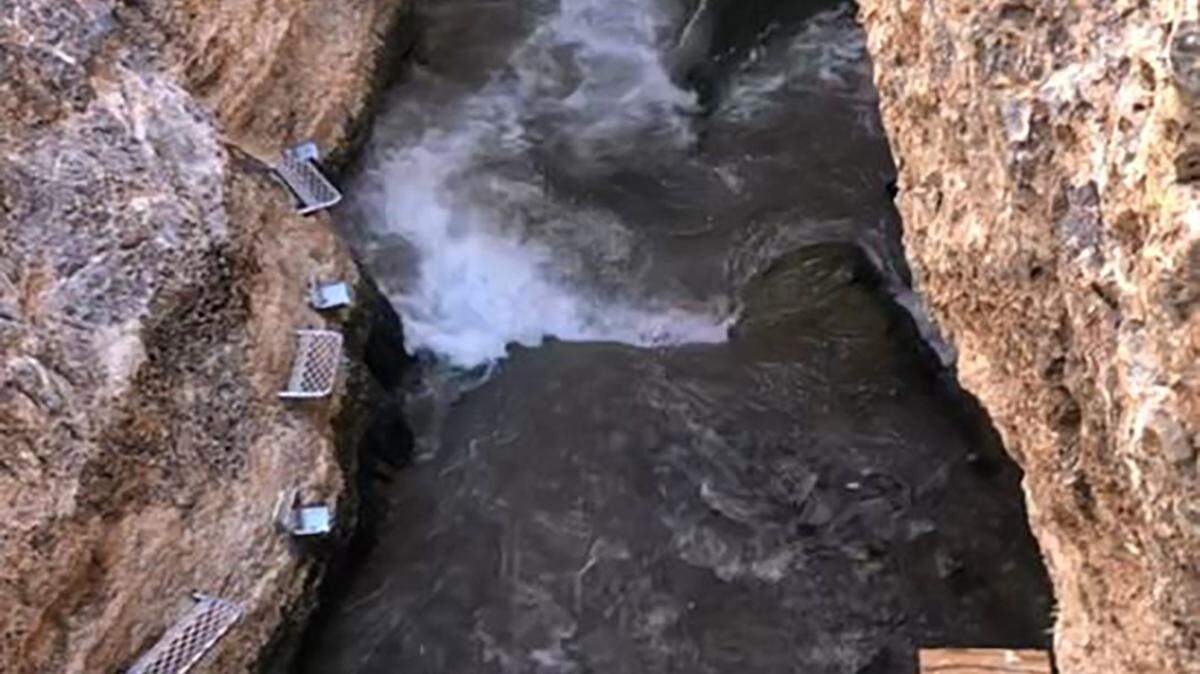
A 7.0 magnitude earthquake off California’s coast sent trembles as far as 500 miles away — right to the doorstep of one of the rarest fish species’ only home on planet Earth.
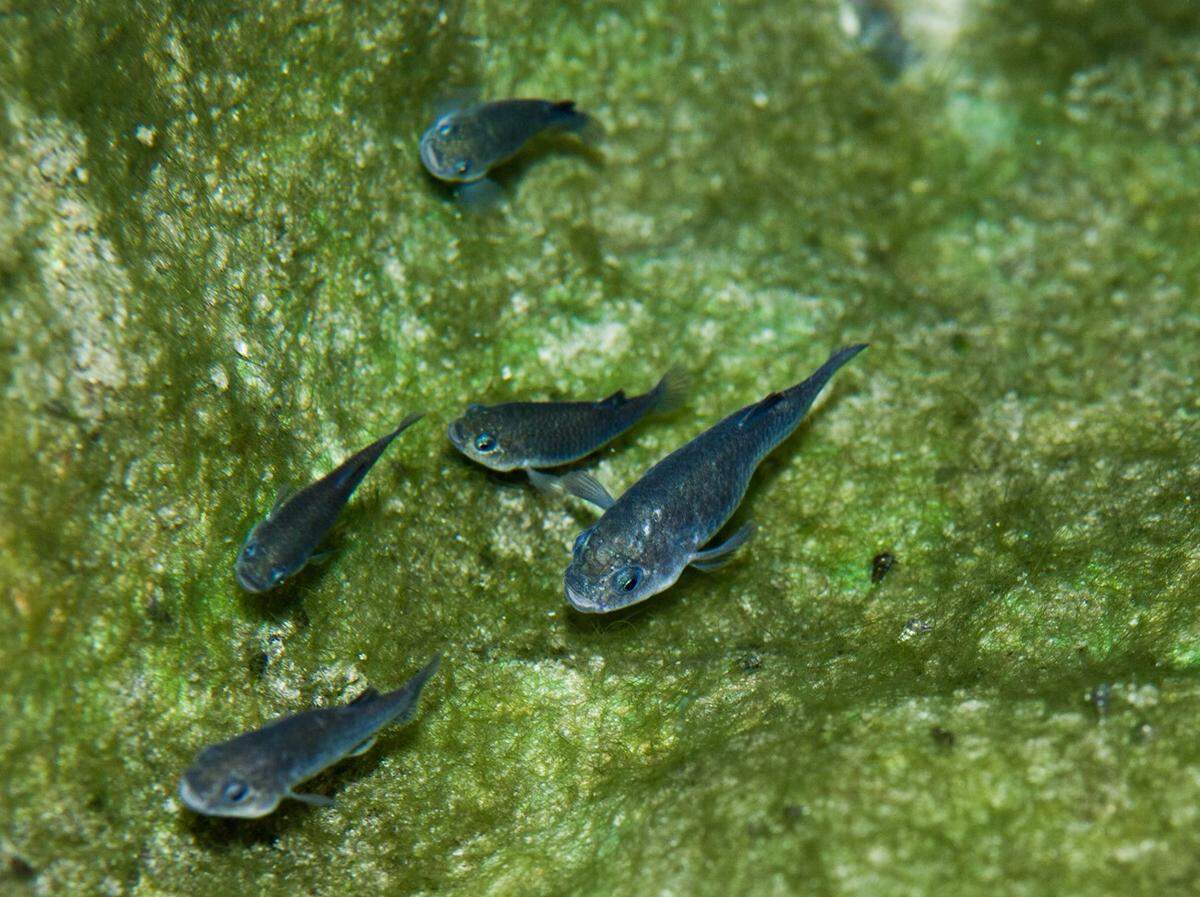
Scientists are evaluating how the tremor might impact the endangered Devils Hole pupfish in the Nevada portion of Death Valley National Park, park service officials said in a news release.
It took only about two minutes for the quake’s rattle to reach the waters of the underground cavern and slosh waves nearly 2 feet high, officials said.
The waves are technically known as a seiche, and while rare, the phenomenon has occurred there a number of times in the past, officials said.
The waters of the pool, protected from the wind at the bottom of the collapsed cave, are usually still, and “the waves swept most organic matter” from a shallow shelf down into the 500-foot deep cavern — including lots of pupfish food and eggs, officials said. The shelf is the pupfish’s main spawning area.
Photos show the comparison between the amount of what looks like algae and other organic matter coating the shelf before and after the catastrophic waves. The shelf appears completely bare of organic material in the aftermath.
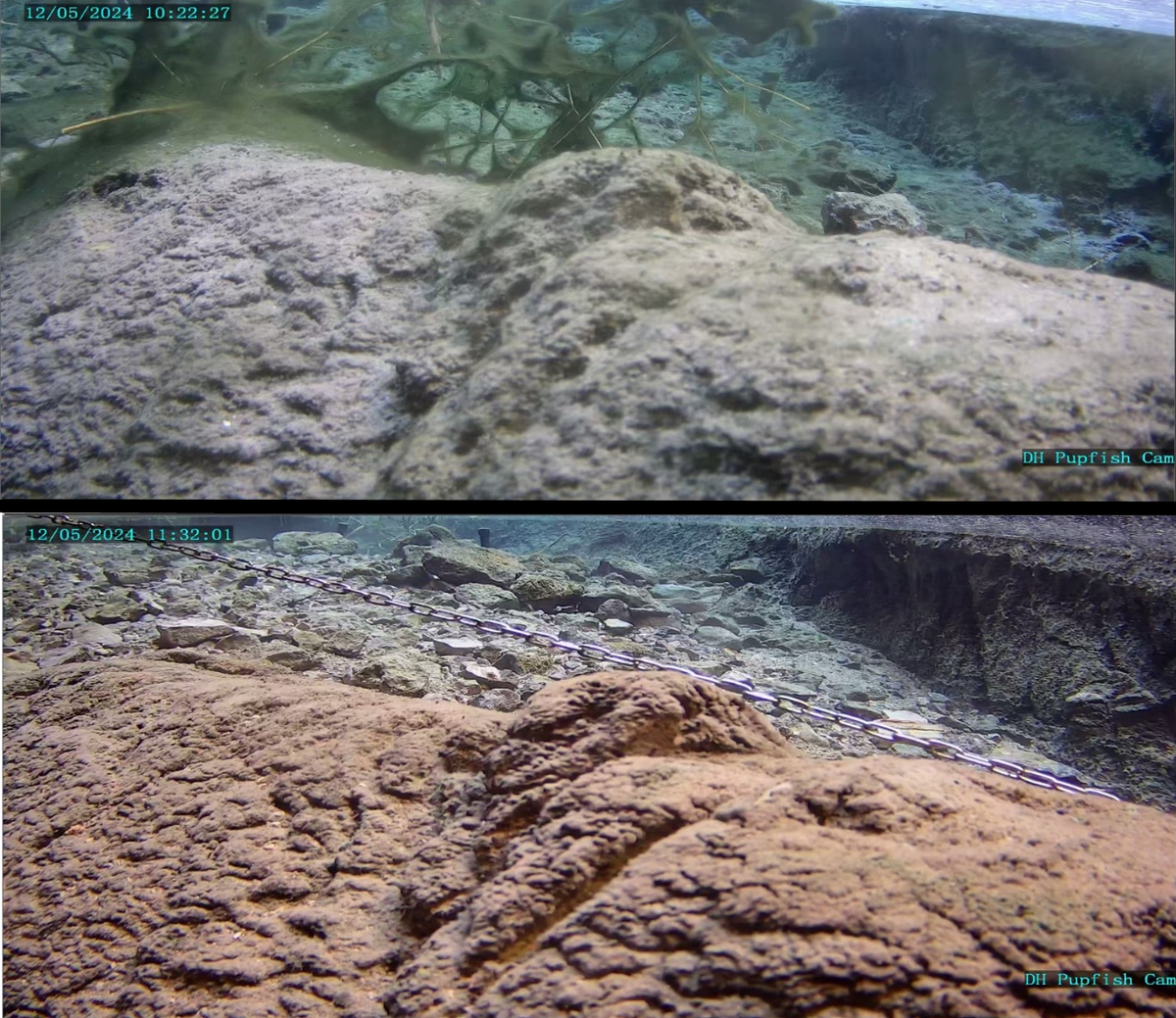
“In the short term, this is bad for the pupfish,” National Park Service biologist Kevin Wilson said in the release. “A lot of pupfish food just sank deeper into the cave, most likely too deep for the fish to get to it. There were likely pupfish eggs on the shelf that were destroyed.”
While that might seem pretty bleak, it isn’t necessarily devastating, scientists said.
“In the long term, this type of reset is good for the pupfish,” Wilson said. “It cleaned off any decaying organic matter that could otherwise cause pockets of low oxygen.”
The species survived such seiches several times over the course of its evolution, most recently in 2018, 2019 and 2022, officials said. The fish previously increased spawning activity in response to similar disturbances.
The species was thriving at levels scientists hadn’t seen for 20 years during the 2022 “desert tsunami,” McClatchy News previously reported.
Still, because the fish live in the upper 80 feet of the cave and depend solely on the 11-foot by 16-feet sun-lit shallow shelf for food and spawning — it’s the only natural habitat in the world, after all — scientists aren’t “taking any chances” with the fish’s survival, officials said.
The fish are affected not only by earthquakes and sloshing waters but also by groundwater pumping and climate change, officials said.
Scientists will likely increase the amount of supplemental food they give to the fish, of which there were 212 as of September, officials said.
Devils Hole is about a 90-mile drive northwest of Las Vegas.
This story was originally published December 6, 2024 at 4:25 PM with the headline "Earthquake sloshes waters of endangered species’ only home in the world — 500 miles away."