‘Rare’ new fossils show swamp-dwelling mammals scurried among dinosaurs in Colorado
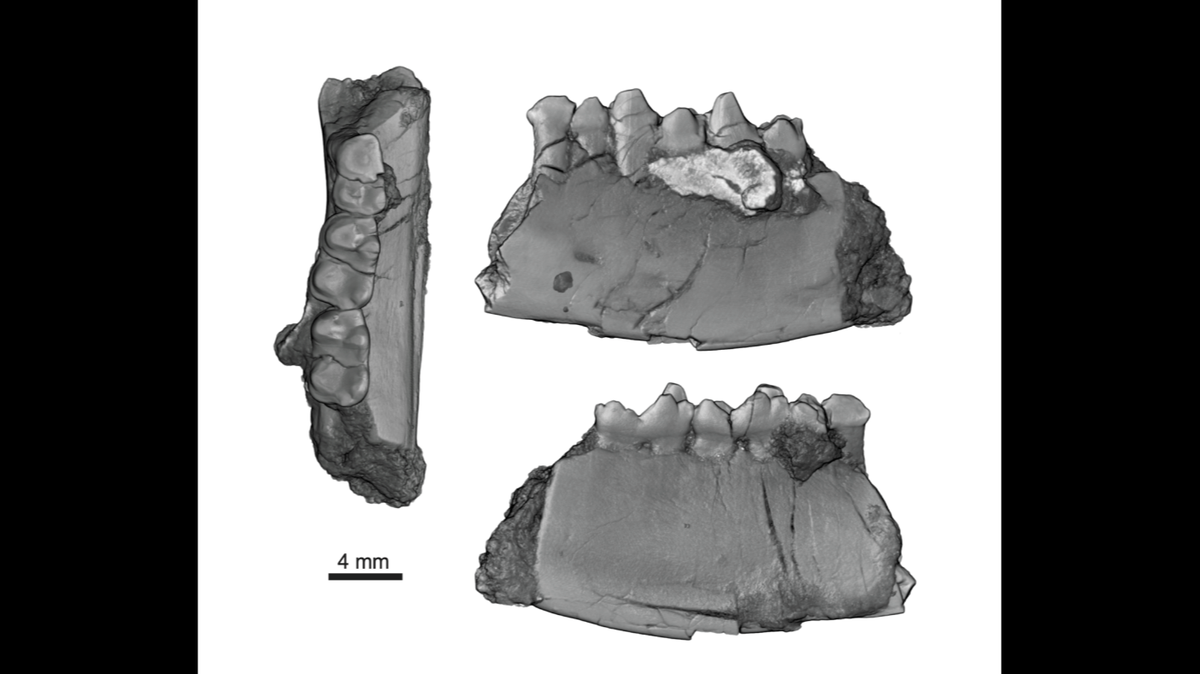
Rare fossils uncovered in Colorado show an unexpected swamp-dwelling creature lived among the dinosaurs millions of years ago.
A team of paleontologists uncovered the “new (or, more accurately, very old)” fossils near Rangely, according to a news release from the University of Colorado Boulder.
The researchers identified the creature as a mammal from a piece of jawbone and three molar teeth, the release said. Researchers described the creature as being about the size of a muskrat.
The team named it Heleocola piceanus — which roughly translates to “swamp dweller” in Latin — and published their findings Oct. 23 in the journal PLOS ONE.
And while a creature no bigger than 2 to 5 pounds “might seem tiny and insignificant,” especially compared to “much larger dinosaurs living at the time like tyrannosaurs or the horned ancestors of Triceratops,” it was actually “surprisingly large for mammals in the Late Cretaceous,” researchers said.
Before an asteroid killed non-avian dinosaurs 66 million years ago, most mammals were only about the size of today’s mice or rats, researchers said. So this new mammal was “positively huge” in comparison.
The team was led by University of Colorado Boulder’s Jaelyn Eberle, the curator of fossil vertebrates at the CU Museum of Natural History and a professor in the university’s Department of Geological Sciences.
Eberle believes the animal was a cousin to modern-day marsupials. It likely ate plants and possibly insects or other small animals.
“Colorado is a great place to find fossils, but mammals from this time period tend to be pretty rare,” Eberle said. “So it’s really neat to see this slice of time preserved in Colorado.”
But why is it described as a creature of the swamp if it lived in the dry climate of present-day Colorado?
“The animal lived in Colorado roughly 70 to 75 million years ago — a time when a vast inland sea covered large portions of the American West,” researchers said.
A map shows the “western interior seaway” that separated Appalachia and the western U.S.
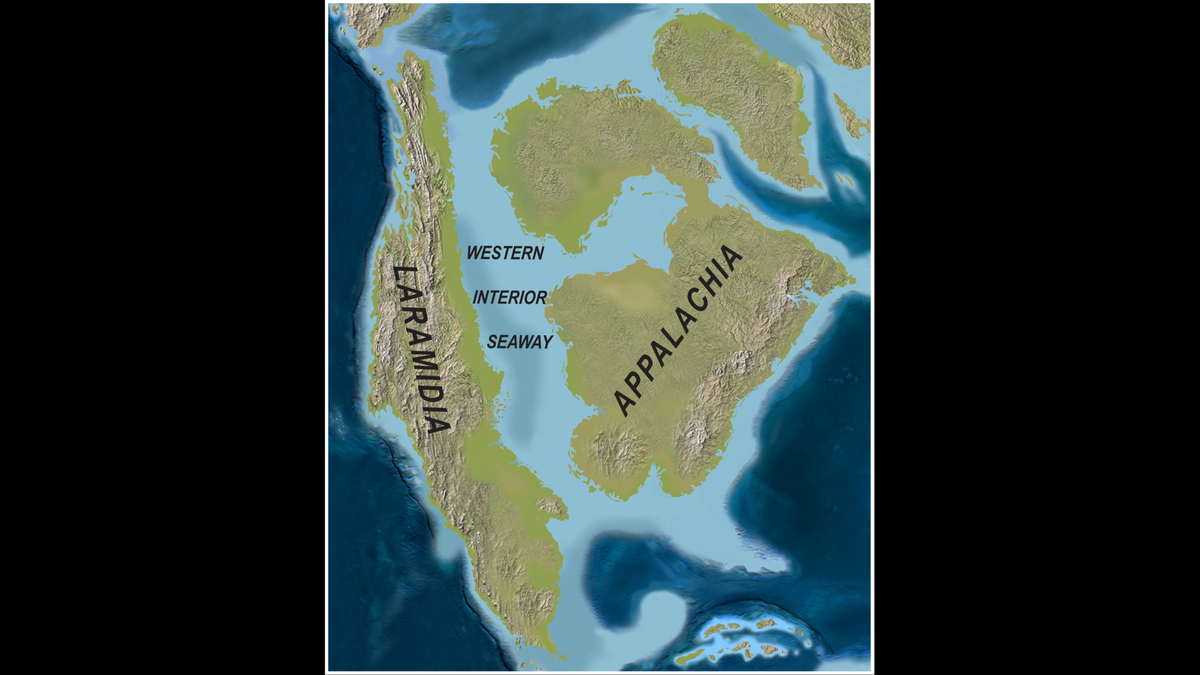
“The region might have looked kind of like Louisiana,” said ReBecca Hunt-Foster, a paleontologist at Dinosaur National Monument in Utah and western Colorado, not far from the town where the team found the fossil. “We see a lot of animals that were living in the water quite happily like sharks, rays and guitarfish.”
Paleontologists Hunt-Foster and John Foster are both co-authors on the study.
Foster, who is a scientist at the Utah Field House of Natural History State Park Museum, recalled spotting the first 1-inch piece of mammal jaw appear from a slab of sandstone he collected from the site in 2016.
“I said, ‘Holy cow, that’s huge,’” he said.
Rangely is about a 280-mile drive northwest from Denver.
This story was originally published October 25, 2024 at 10:58 AM.