Fed-up residents tear down fence blocking 1,400 acres of public land, Colorado cops say
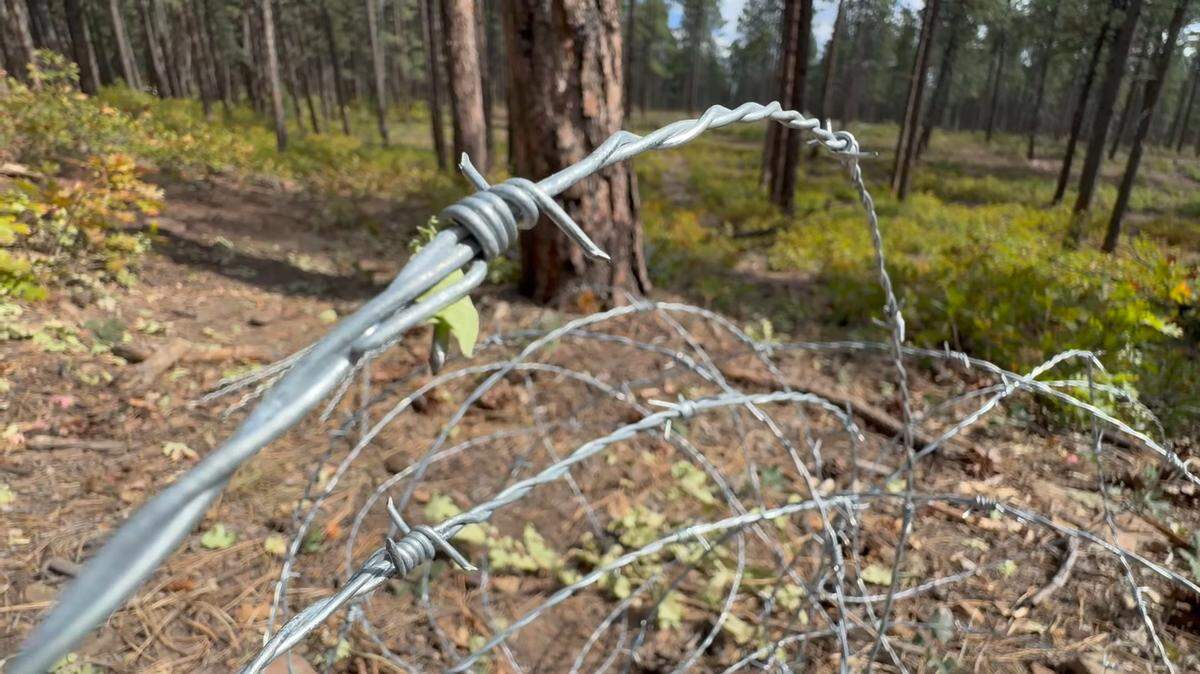
A mysterious religious group is building a fence around 1,400 acres of public land in southern Colorado, claiming it belongs to them.
But local residents insist the group, of which some members have ties to the Fundamentalist Church of Jesus Christ of Latter-Day Saints, are squatters attempting a land grab of a popular recreation area in the San Juan National Forest known as Chicken Creek.
The group calls itself the Free Land Holders Committee but doesn’t appear to have a presence online.
And although the folks building the fences are not members of the Fundamentalist Church of Jesus Christ of Latter-Day Saints themselves, many of them were born into the polygamist sect led by Warren Jeffs and “escaped once the leader was imprisoned in Texas for rape in his role in the arranged marriage of teenage cousins,” the Denver Post reported.
Records show the U.S. Forest Service has owned the 1,400 acres since 1927, the outlet reported.
The dispute came to a head Thursday, Oct. 10, when the residents in the town of Mancos took matters into their own hands and tore down several miles of the group’s barbed-wire fencing.
“Our community’s not going to put up with a theft of our public lands,” longtime resident Tim Hunter told The Colorado Sun. “We utilize these public lands a lot. It’s just, it’s uncalled for.”
Hunter told The Durango Herald: “They kicked a hornet’s nest in our community.”
The Montezuma County Sheriff’s Office released a statement on Facebook on Oct. 9 saying the department is aware of the property dispute as well as residents’ plans to remove the fence.
Deputies said the group believes the land “belongs to them under the Homestead Act of 1862,” a Civil War-era law that gave citizens up to 160 acres of public land so long as they lived on it and improved it by cultivating it. But the law was repealed across the country in 1976, except in Alaska, where it continued for another decade.
Deputies said the group has no plans to restrict public access to roads or trails and asked residents to stand down. Residents said in the comments section the fence was already restricting the public’s access, which is why they planned to tear it down.
“Did anyone from the Sheriff’s Department actually walk up there to confirm that no public access was blocked off? Or are they just taking the group’s word for it?” someone asked. “Because I am hearing something VERY different from people who were up there today.”
“They mean the gravel road isn’t blocked,” someone replied. “There are no gates or game gaps. It’s going to be a death trap in the winter.”
Officers went on to say the group has been cooperating with both the Forest Service and the Sheriff’s Office to resolve the dispute.
“The Sheriff’s Office is also aware of the protest planned for tomorrow afternoon and is asking that Montezuma County citizens refrain from gathering in the area and/or attempting to remove fencing,” sheriff’s officials said in the release. “Please allow the judicial system to proceed as it would in any property dispute. The Sheriff’s Office has jurisdiction on federal lands for criminal cases only. This is a civil matter at this point.”
The statement goes on to say Montezuma County Sheriff Steven Nowlin met with the U.S. Forest Service and with the group, and “both parties have agreed that no further development of the disputed property, including additional fence construction, will occur until a federal judge makes a ruling on ownership.”
The sheriff’s office statement seemed to anger residents who insisted in the comments that the group continued working on the fence into the evening on Oct. 9. Many of them commented that they use the land for hiking, biking, horseback riding and hunting, and several ranchers also lease the land from the government to graze their cattle on it.
“Sheriff, with all (due) respect, something needs to be done about this immediately,” someone commented on the post. “They are disregarding any agreement you may have had with them and work continued on this fence into the evening today 10/9/24.”
Several people said they were concerned how long it would take the issue to go through the courts and worried the issue wouldn’t be handled with any sense of urgency when winter threatens to turn the barbed-wire fencing into a “death trap” for wildlife or snowmobilers.
“Someone had to remove that mess from the forest,” someone said. “Elk, deer, and cattle are going to hang in it when it snows. It’s not snow rated fence.”
“Someone’s kid on a snowmobile is going to hit it,” another person said.
Others questioned the mysterious nature of the group, and some invoked Ammon Bundy, an anti-government militant and activist who led an occupation of the Malheur National Wildlife Refuge in Oregon in 2016, saying the dispute seemed similar to his.
“Give it back to the Utes!!!” someone said, referring to the indigenous Southern Ute Indian Tribe and the Ute people native to the land. “Not (yours) anyway.”
“This is pretty much the only correct thing to do,” someone replied.
Mancos is in the southwest corner of Colorado, about a 365-mile drive from Denver.