Firefighters find ‘big’ — and venomous — creatures while battling Utah fire. See one
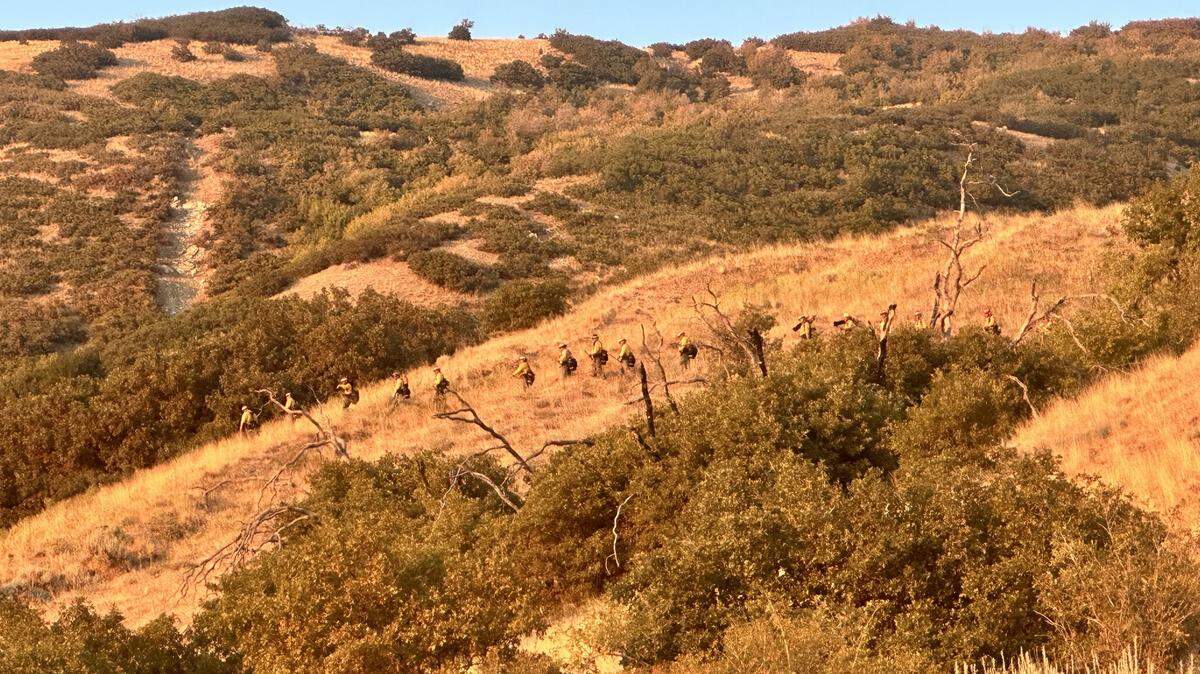
As firefighting crews battle a wildfire in a remote area of Utah, they’re encountering “big” — and venomous — creatures, video shows.
The U.S. Forest Service Uinta-Wasatch-Cache National Forest shared a video on Friday, Sept. 13, of a menacing rattlesnake that appears poised to attack the person recording it.
The fearsome rattle of its tail rings out as it slithers within dry brush on the forest floor, the video shows.
“It’s big,” the person recording says in the video as they zoom in on the snake’s head, its eyes fixed on them. “That’s scary.”
It’s just one challenge the firefighters face as they battle the Rudd Creek Fire, officials said.
“Although the fire is quite visible from the valley, crews working to contain the #RuddCreekFire face challenging conditions in remote, rocky, and very steep terrain,” officials said. “In addition to rolling debris and poor footing, firefighters have reported a few encounters with large rattlesnakes that inhabit the slope.”
The fire started Sept. 10 and was caused by a lightning strike, KUTV reported.
The snake appears to be a Great Basin rattlesnake, which are common in Utah, the station reported.
The species can grow between 16 and 64 inches long, according to the National Park Service.
The fire spanned 28.5 acres and was 90% contained as of Monday, Sept. 16, according to fire authorities.
Rudd Creek is about a 20-mile drive north from Salt Lake City.
Snake bites
Venomous snakes bite more than 7,000 people each year, according to the Centers for Disease Control and Prevention.
“About 5 of those people die,” the CDC said. “More people would die if they did not seek medical care.”
Rattlesnakes, copperheads, cottonmouths and coral snakes are all venomous snakes that live in the U.S.
If you see a snake, back away slowly and don’t touch it. Here’s what the CDC says you should do if a snake bites you:
Try to remember the color and shape of the snake. It could help with treating the bite.
Stay calm and still to slow down the spread of venom.
Seek medical care as soon as possible.
Apply first aid if you can’t get to the hospital quickly.
Wash the wound with warm, soapy water.
Cover the bite with a clean cloth or dressing.
Don’t slash the wound with a knife or try to suck out venom.
Don’t apply ice to the wound.