Researcher spots insect species never seen before in Montana — right in her backyard
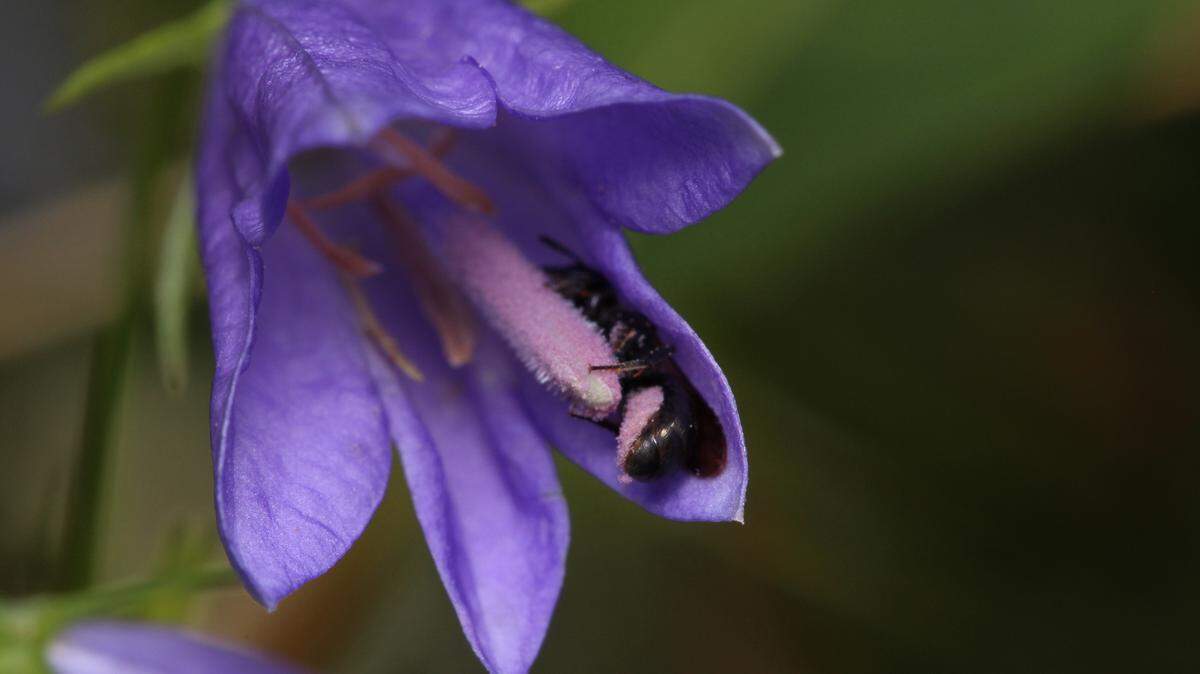
A new species of insect was spotted further west than ever before — right in a researcher’s Montana backyard.
Casey Delphia noticed an unfamiliar skinny black bee in her backyard and brought it inside to examine it under a microscope in 2021, according to a Nov. 28 MSU News Service release.
Over the years, the assistant research professor in the department of plant sciences and plant pathology at Montana State University’s college of agriculture “has found that her own garden is often an excellent place to find pollinators,” the release said.
But this one perplexed her. She noted in an email to McClatchy News that the bee carries pollen on the underside of its abdomen, unlike other bees which carry pollen on their hind legs.
“It had some characteristics that reminded me of one genus, but other characteristics that reminded me of another genus,” she told MSU News Service. “So, what the heck is this?”
It turned out to be a type of bee that nests in cavities of plant stems or holes in trees, but didn’t match the only species of that bee known to live in Montana, the release said.
It did match a non-native species from Europe that was only known to live as far west as Michigan, the release said. A related species had been documented only as far west as Illinois — in a paper Delphia had published over the summer in the Pan-Pacific Entomologist.
How the bees made their way to Montana is a mystery, at least until researchers can crack it. The species could have found their way on their own, or they could have been introduced by human travel on outdoor furniture, bird feeders or fencing transported from other parts of the U.S., the release said.
And although the species are not native to the U.S., they haven’t been recorded as having any negative effects on the ecosystem, the release said.
Recording when introduced bees expand habitats is a key part of Delphia’s work since joining MSU in 2008 and participating in the Wild Bees Project of Montana since 2014, according to the release.
It’s particularly important in a state as big as Montana, where scientists know quite little about wild species that call the state home, the release said.
“We know so little about what is present in Montana,” Delphia said in the release. “People ask all the time, how are our bee species doing here? And we have no idea. We need to know what we have here first. And once we know what we have, then we can monitor what’s here and how they’re doing.”
Delphia recorded another introduced bee species in 2019 after discovering a type of carpenter bee — also in her backyard garden — that often get confused with bumble bees, the release said. She published her findings in the Journal of the Kansas Entomological Society.
It’s one of the most rewarding aspects of her work, according to the release.
“The idea that we can still make new discoveries is astounding,” she said in the release. “When we think about what bees live in Montana, it sounds like such a basic question. But we don’t know that, and then the surprises we’re finding are amazing. We just keep finding exciting things. Maybe a lot of them have always been here and we’re just now discovering them, or maybe they’re new.”