Idaho just changed highway speed limit for semi trucks. What drivers should know
Big changes have hit some of Idaho’s largest highways.
On July 1, speed limit signs for heavy-duty trucks started coming down on major roadways, including Interstate 84 east of Boise, as a new state law took effect.
House Bill 664 did away with Idaho’s split speed limits, which capped the maximum speed for trucks weighing more than 26,000 pounds at 70 mph on rural stretches of interstates.
Now, large tractor-trailers can legally zip down some roadways at 80 mph.
What does this change mean for regular Idaho drivers and their experiences on the road?
The Idaho Statesman spoke with law enforcement and transportation officials to understand how the law is being implemented and what drivers should expect.
Here’s what we learned:
Why are speed limits changing in Idaho?
The speed limit change has drawn pushback from some truckers and state transportation leaders, who worry that heavy trucks traveling faster could pose safety concerns.
Proponents argue that having one common speed limit will improve traffic flow and reduce congestion and confusion.
Before the law took effect on July 1, Idaho was one of only a handful of states with differential speed limits, according to state Rep. Doug Pickett, R-Oakley.
Pickett said that there has been a national shift away from split speeds, and he wanted to see Idaho head in that direction.
“What this addresses is the fact that inconsistent road conditions are the biggest dangers on the highway, not speed itself,” Pickett said during a February hearing in the Idaho House of Representatives introducing his bill.
“Speed doesn’t kill,” he said. “Differential speed kills.”
Pickett argued that vehicles traveling at different speeds on a roadway increases the likelihood of vehicle “interactions” — which can escalate into collisions.
“With differential speeds, you have more road rage, more tailgating, more trucks pulling out in front of faster-moving cars, trucks camping out in the left lane with as many as eight, 10 or 12 vehicles behind them,” he told the Statesman.
Pickett and other supporters believe having a uniform speed limit will make interstates safer — and relieve a common frustration for drivers in cars and pickup trucks: being stuck behind slow-moving trucks traveling side by side on a two-lane stretch of highway.
Where did speed limit signs change in Idaho?
The new law applies statewide, but only three Idaho highways required changes to speed limit signage to reflect the new law.
Specifically, HB 664 updates the speed limit for semi trucks on rural sections of interstate highways.
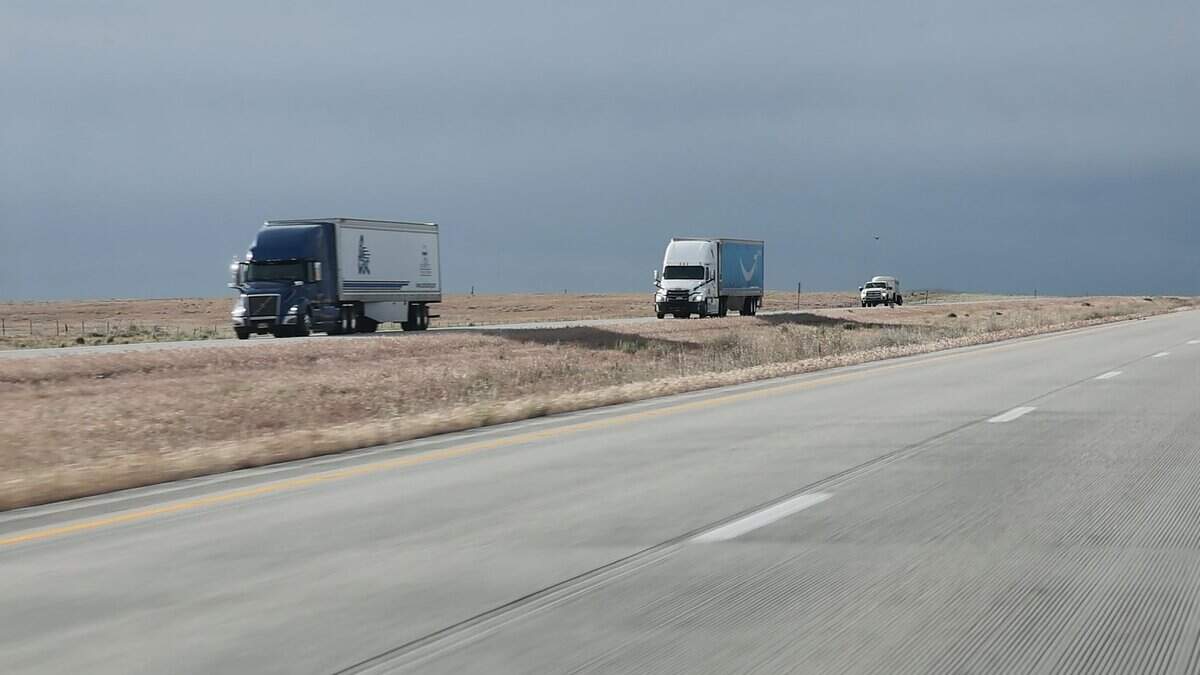
In the Treasure Valley, the new limit affects Interstate 84 west of Caldwell and east of Boise.
Farther east, sections of Interstate 86, which connects I-84 and I-15 between Pocatello and Burley, now conform to the higher speed limit.
If you travel along I-15 in Eastern Idaho, you’ll notice the speed limit change there as well.
On these stretches, drivers may see large trucks traveling at faster speeds than before, according to Idaho State Police Capt. Jason Bailey.
“There can be spots now where you might see a truck going 80 miles an hour, and they’re not breaking the law — as long as they’re driving responsibly and safely,” Bailey said.
Bailey noted one area where speed limits didn’t change: I-84 between Caldwell and Boise.
That area, which is popular with commuters, already had speed limits set at 65 mph through most parts, Bailey said.
These speed limits apply to all vehicles — including semi trucks.
Who does Idaho’s new law impact?
The new speed limits apply to all vehicles.
Previously, drivers of vehicles with five or more axles that weighed more than 26,000 pounds were required to travel 10 mph hour slower than those in lighter vehicles.
Are all semi trucks allowed to go 80 mph?
Most commercial trucks weigh in at around 80,000 pounds, according to Allen Hodges, president and CEO of the Idaho Trucking Association.
In Idaho, however, you might spot trucks much heavier than that.
Idaho is one of very few states that allows truck weights to reach up to 129,000 pounds on freeway systems, according to Hodges.
When traveling at 80 mph, the extra weight “increases your braking distance another almost 200 feet,” he added.
According to Hodges, more than 70% of trucking association members say they will not increase their speeds based on the new law.
Many commercial trucks have speed governors, which limit them from going over a particular speed for safety and fuel consumption reasons, he explained.
How common are semi truck crashes in Idaho?
According to ITD crash data, semi trucks and other commercial vehicles were involved in approximately 10% of all crashes on Idaho roads in 2024.
This percentage more than doubles to 25% along corridors where the speed limit is set for 80 mph.
However, trucks that have a 100,000-pound difference in weight can still be lumped together in crash data.
Idaho Transportation Department board members expressed concerns during a meeting on June 17 that the weight or size of commercial vehicles isn’t differentiated on crash reports in the state.
Will new speed limits make driving near semis safer?
In response to the new law, the Idaho Transportation Department shared a study with the Statesman on crash data from each stretch of road that has removed split speed limits.
“Transitioning to a uniform 80 mph speed limit for all vehicle classes is projected to improve traffic flow by narrowing the operational speed gap,” ITD said in the study.
The uniform speed limit is also expected to reduce vehicle conflicts involving commercial vehicles, the study found.
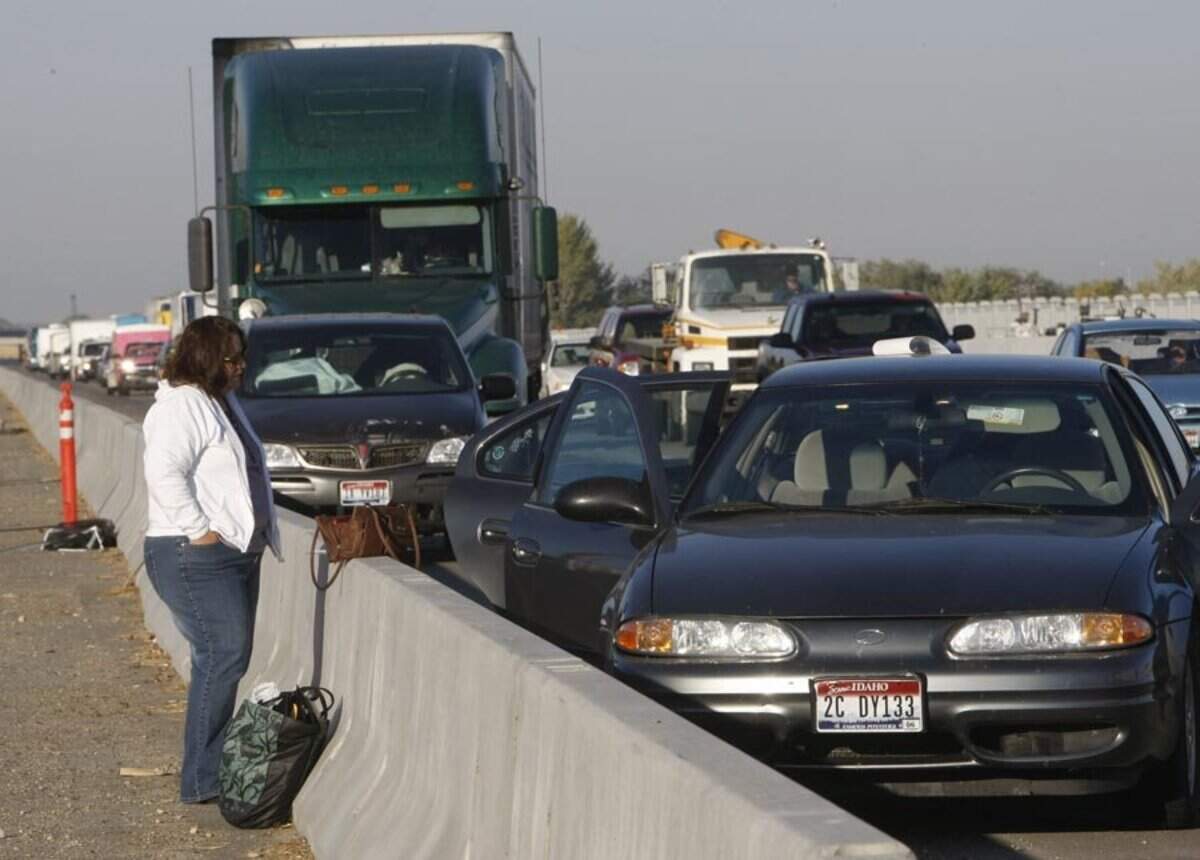
In 2024, there was a total of 1,592 crashes along the roadways now affected by the new speed limit, state data revealed.
Commercial vehicles were involved in 404 of those crashes, about 25%.
According to the historical context outlined in the ITD study, interstate speed limits first increased to 80 mph in 2014.
The same year speed limits changed, the percentage of crashes involving commercial vehicles, including semis, went from 18% to 22%.
“ITD will continue to monitor these 80 mph zones and the crash data,” John Tomlinson, an ITD communications manager, told the Statesman via email.
Future studies could reveal if getting rid of differential speeds made an impact on highway safety.
How severe are semi crashes in Idaho?
According to data from the Idaho Transportation Department, 1% of commercial vehicle crashes in 2024 were fatal.
Fatalities are more often than not from passenger vehicles in these wrecks, according to research from the Insurance Institute for Highway Safety and Highway Loss Data Institute.
“In 2023, 4,354 people died in crashes involving large trucks,” the safety institutes’ website said. “Sixteen percent of these deaths were truck occupants, 65% were passenger vehicle occupants, and 17% were pedestrians, bicyclists or motorcyclists.”
What are main causes behind semi truck crashes?
The Insurance Institute for Highway Safety and the Highway Loss Data Institute collected data from several studies to determine the severity of drowsiness while operating semi trucks.
“Research has found that truck drivers behind the wheel for more than eight hours are twice as likely to crash,” the safety institutes said. “Truckers’ long work hours cause sleep deprivation, disruption of normal sleep/rest cycles and fatigue.”
Hours of service regulations set by the Federal Motor Carrier Safety Administration allow truck drivers to operate vehicles for up to 11 hours in a day with a mandatory 30-minute break after eight hours of consistent driving.
Truck drivers are also required to take a minimum of 10 hours off between on-duty shifts and must spend 34 consecutive hours off duty if they have driven 60 hours within one week.
“The proportion of large truck crashes for which fatigue is a contributing factor is uncertain,” the institutes said.
Another main consideration for semi truck crashes is faulty equipment, especially braking systems.
A 2010-2012 study by the safety institute discovered that 42% of trailer-truck crashes involved “brake defects, and those severe enough to place the truck out of service tripled trucks’ crash risk”
The study also found that any broken equipment doubled the chance for collisions.
“Compared with passenger vehicles, stopping distances for trucks are much longer,” the safety institutes said. “On wet and slippery roads, there are even greater disparities between the braking capabilities of large trucks and cars.”
What are best safety practices when driving near a semi?
While travelers may notice big rigs zooming at higher speeds along interstate and rural highways, many trucks will still be chugging along at slower speeds.
“While this law changes posted speed limits, it does not change the realities of operating large commercial vehicles,” Aaron Snell, a spokesperson for the Idaho State Police, said. “Trucks require greater stopping distance, have significant blind spots and may travel below the posted limit due to equipment, loads, or road terrain.”
“Drivers should not assume traffic will move uniformly and must continue to drive attentively and responsibly,” he said.
Here are some Idaho State Police tips aimed at keeping drivers safe:
- Double check before you leave: Look at weather forecasts along your route, make sure your vehicle is well-maintained and have an emergency kit ready.
- Be aware: Watch out for pedestrians and cyclists, stay off of your phone while driving and always drive sober.
- Practice caution: Buckle up, obey speed limits and maintain a safe distance from other vehicles.