Idaho’s roads are getting rougher, new study shows. We led the U.S. in one metric
Idaho’s roads may not be the worst in the country. But one new study has found that over the past several years, they deteriorated faster than in any other state.
The study by loan marketplace LendingTree analyzed data from the Federal Highway Administration to rank each state by its proportion of miles in poor condition — pocked by potholes and uneven pavement, among other hazards.
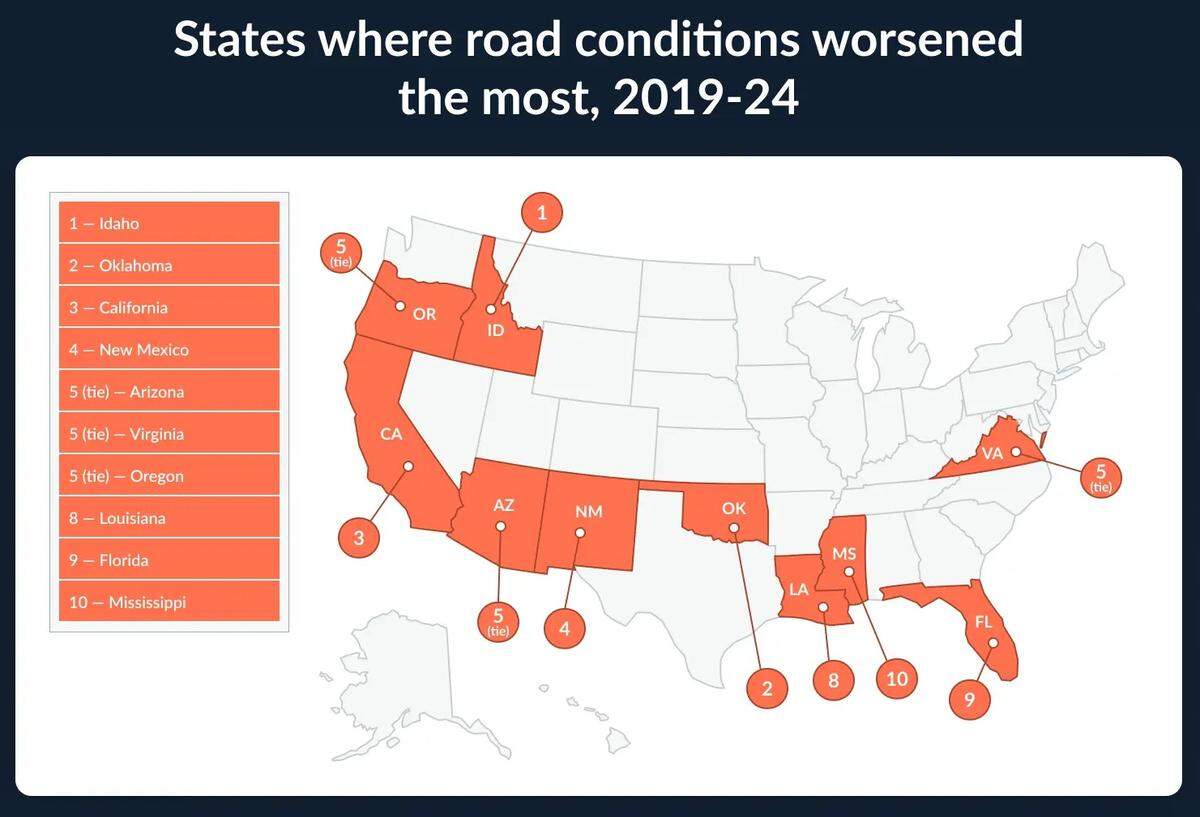
When 2019 data was compared with the most recent data from 2024, LendingTree found that Idaho’s roads worsened by the biggest jump, earning the state a No. 1 rank in that category.
Over the six-year period, the share of miles in poor condition in the Gem State rose from 3.5% to 5.9%. That represents a nearly 70% increase, the study points out.
“During a time when road conditions slightly improved nationwide … Idaho was the state which had the greatest increase in the number of roads that were rated in poor condition,” said Rob Bhatt, a licensed insurance agent and LendingTree “auto insurance expert.”
Put more simply, Bhatt told the Idaho Statesman in a phone interview, “The roads have gotten worse.”
Bhatt explained that roadway miles are considered poor based on an internationally recognized rating system called the International Roughness Index. That measure focuses primarily on pavement condition, Bhatt said, including factors like surface imperfections and depressions in the road.
In 2024, 236 of the nearly 4,000 miles of roadway evaluated in Idaho were considered in poor condition — up from 139 in 2019, Bhatt said.
That means that one in every 17 miles of Idaho roads studied scored poor on the roughness index.
Bhatt pointed out that the Federal Highway Administration data included both urban and rural roads. But it’s still not a complete picture of roadways in the state. According to the Idaho Transportation Department’s website, the department is responsible for maintaining more than 12,400 miles of highways and roads. And that doesn’t account for the roads managed by local jurisdictions.
Idaho’s roads still not too shabby, compared with CA, others
Importantly, Idaho’s roads still rank well above the national average in terms of condition, the most recent data showed.
Nationally, 8.9% of road miles — or one in every 11 — are in poor condition. Though headed in the wrong direction, Idaho still hasn’t broken 6%, placing it solidly in the middle of the pack for states with the worst share of roads in poor condition, with a No. 31 rank.
By comparison, 31.5% of road miles in Rhode Island are considered poor, followed by 27% of miles in California.
So the recent trend is nothing to panic about — more “something to be mindful of,” Bhatt said.
“This is really an opportunity for different areas and residents and policymakers … to kind of see where you rank,” he said. “A lot of people, obviously … rely on cars when we have to drive, and so roads are top of mind.
“And of course, we get frustrated when we have to drive over potholes.”
Bhatt noted that poor road conditions can be a traffic safety issue, with uneven pavement and other hazards adding risk while driving. Then there are the financial and time costs of repairing damage from road conditions, he said.
Bhatt said he hopes the data helps policymakers and others “identify or consider solutions that make it possible to make better roads in areas where it’s a problem, and also identify places that are doing it well.”
And if you’re wondering if all the still-nationally-ranked population growth in the state might have something to do with the trend, Bhatt gave growth a nod.
“Areas with rapid population growth do tend to see strain on their roadway systems,” he said. “We have seen in places that do not traditionally have large populations, and then suddenly get huge population booms, that kind of overwhelms all the infrastructure, and that includes roads and bridges.”