Boise Airport simulated a plane crash emergency response. ‘Stakes are very high’
What happens in the unlikely event of a plane crash at the Boise Airport?
Airport officials, along with the Boise Fire Department, Ada County Dispatch and many other agencies, simulated the procedure for responding to a plane crash at the airport Thursday morning for an emergency test.
It’s called the Triennial Exercise, and it is a full-scale disaster drill where the agencies can practice, test and evaluate the airport’s emergency plan, the response and the collaboration between about 40 agencies. The Federal Aviation Administration requires airports to complete this emergency test every three years.
It takes a lot of communication and “tremendous effort” to respond to a disaster, Boise Fire Division Chief of Special Operations Mike Walker said. He said the TriEx is “essential” because it brings every agency together for a full response.
“These are very complex incidents, and they’re probably the most devastating for our firefighters, for the airport, really, for the community in general,” Walker said. “So the stakes are very high, and our folks know that they have to be ready at that time to perform at the highest level.”
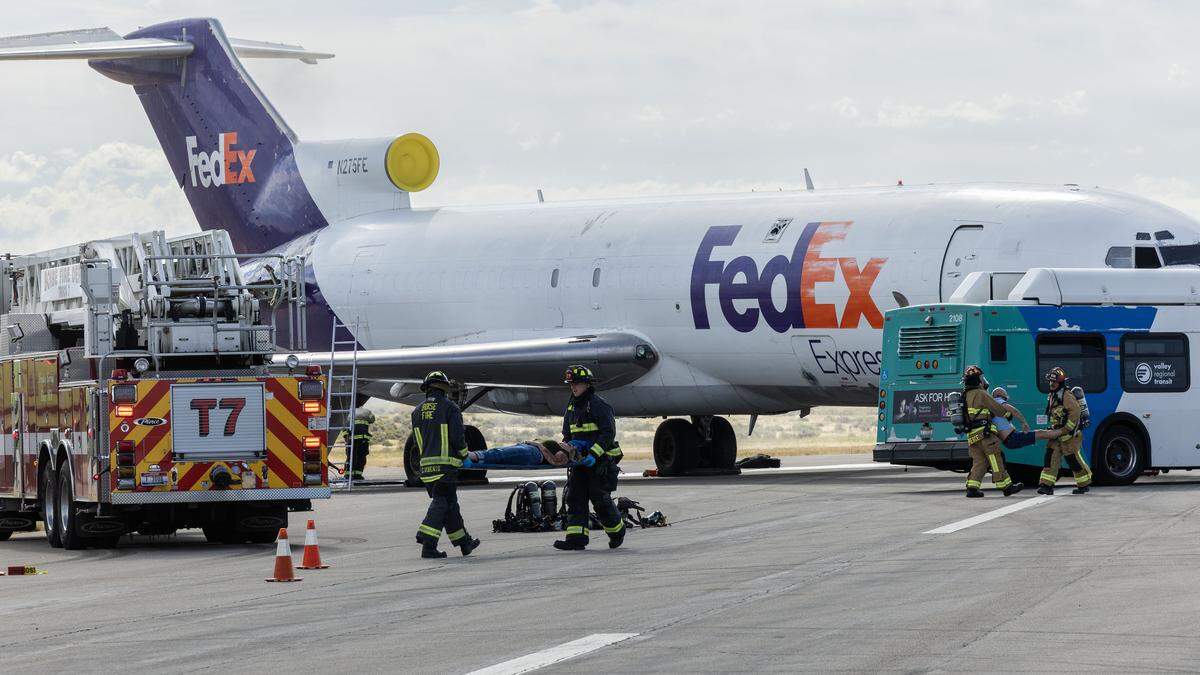
The scenario that played out was a cargo 737 plane reporting a hydraulic failure to the Boise Airport Traffic Control Tower. When the plane landed, it was unable to stop and veered off the runway, colliding with a passenger aircraft.
At the Boise Airport Third Runway, officials set up a FedEx cargo plane, the plane with the hydraulic failure in the simulation, with its nose right up against the middle of an airport passenger bus, representing the passenger plane in the simulation.
Firefighters started a fire near the plane, and several volunteer passengers were sprawled out around the aircraft. Even more were trapped in the passenger bus.
The fire department had 90 seconds to get to the scene after airport officials called in a plane crash. Specialized aircraft-rescue fire trucks arrived at the scene first and extinguished the fire.
More firefighters, paramedics and other first responders showed up to evacuate passengers and assess injuries. The exercise included 63 passenger volunteers simulating people with slight, critical and even fatal injuries.
The whole operation was completed in a little over an hour with all passengers cared for and transported from the scene.
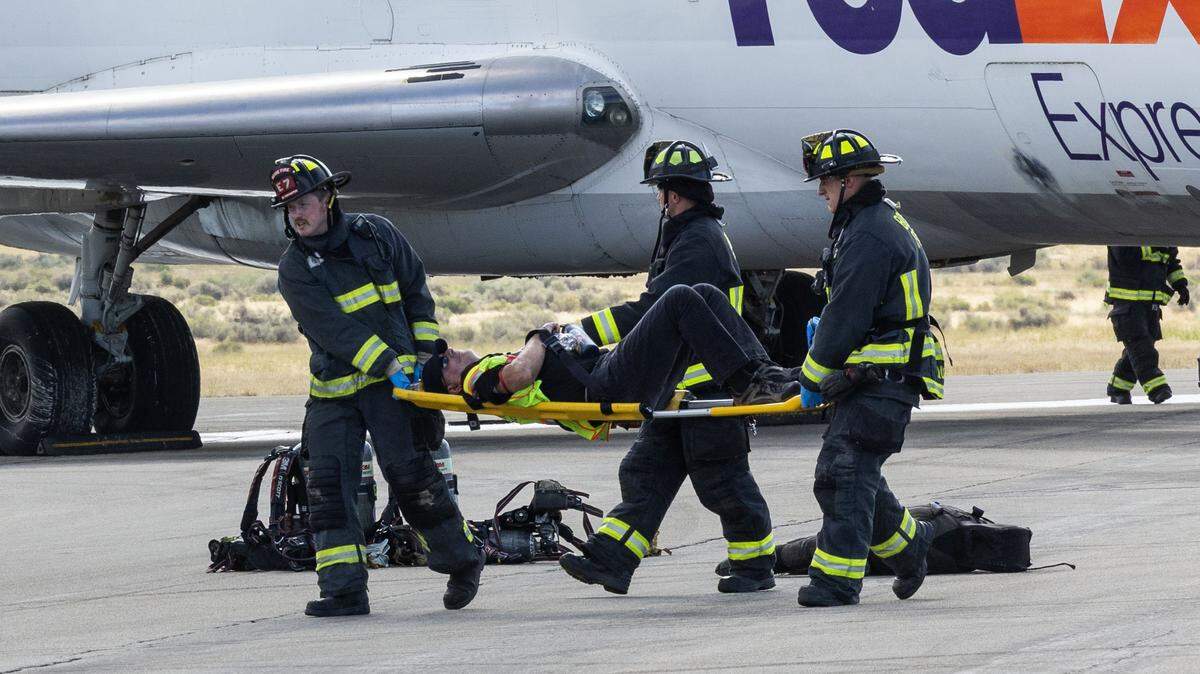
Walker reiterated that plane crashes do not happen often, and simulations aren’t the real thing, but he said the airport did a good job setting up a pretty “realistic situation.” It takes about a year to put together and plan for the emergency test, he said.
A critical factor in the response is communication between all the agencies and responders, Airport Director Rebecca Hupp said.
“When we have an incident or an exercise like this, the main goal is for us to be able to work together with our partners from other agencies, hospitals, other law enforcement, fire departments, really practice our plan and practice mutual coordination,” she said.
Walker said he was pleased with how the simulation played out and how each agency responded.
“I think it showed that all that communication and coordination, it worked really well,” Walker said. “And that gives us a lot of confidence that in the real thing, that we’ll be able to do the same thing.”
The next step is an after-action review, where the agencies will evaluate the response and what they should have done differently.
This story was originally published August 8, 2025 at 4:00 AM.