ITD will work on miles of Boise roads this summer, and you might not notice. Here’s why
The Idaho Transportation Department is in the process of fixing and sealing six major downtown Boise roads, and Treasure Valley drivers might not even notice it happening.
Earlier this year, ITD began applying hot chipseal — a new technology to the department — to Glenwood Street between State Street and Chinden Boulevard. Chipseal is a layer of gravel and other materials designed to seal roadway cracks and prevent further cracks or potholes from forming.
ITD has been using traditional chipseal to fix roads for many years, but the new technology allows construction workers to be on the job through the night, resulting in minimal disruption to traffic flow.
As ITD begins laying hot seal on Broadway Avenue this week, here’s how it works, and also where else will receive this new treatment throughout the summer.
What is hot chipseal and how does it work?
For many years, road construction workers have used a material called chipseal to fill cracks and potholes in roads. Traditional chipseal uses oil heated to around 150 degrees that’s applied during the daytime but then must sit for 24 hours before vehicles can travel on it.
The new hot chipseal can be heated to 300 degrees, allowing it to be applied during lower temperatures in the night. Additionally, it needs to sit for only 30 minutes, meaning roads can be opened up much more quickly.
The higher temperature also means the pavement will last longer before requiring repairs, ITD said in a news release.
ITD said it applied its first successful application of hot chipseal last summer along a 2-mile stretch of Idaho Highway 21 to ensure similar results could be replicated on busier stretches of road.
What roads in Boise are receiving the treatment?
ITD plans to hot seal over 100 lane miles of roadways in Boise. A lane mile is one mile of a single 14-foot-wide lane, meaning a single road can account for multiple lane miles.
In regular mileage, ITD will add hot chipseal to approximately 21 miles of road throughout the Treasure Valley, with the longest stretch being the 13-mile route along Chinden Boulevard between the Boise Connector and Idaho 16.
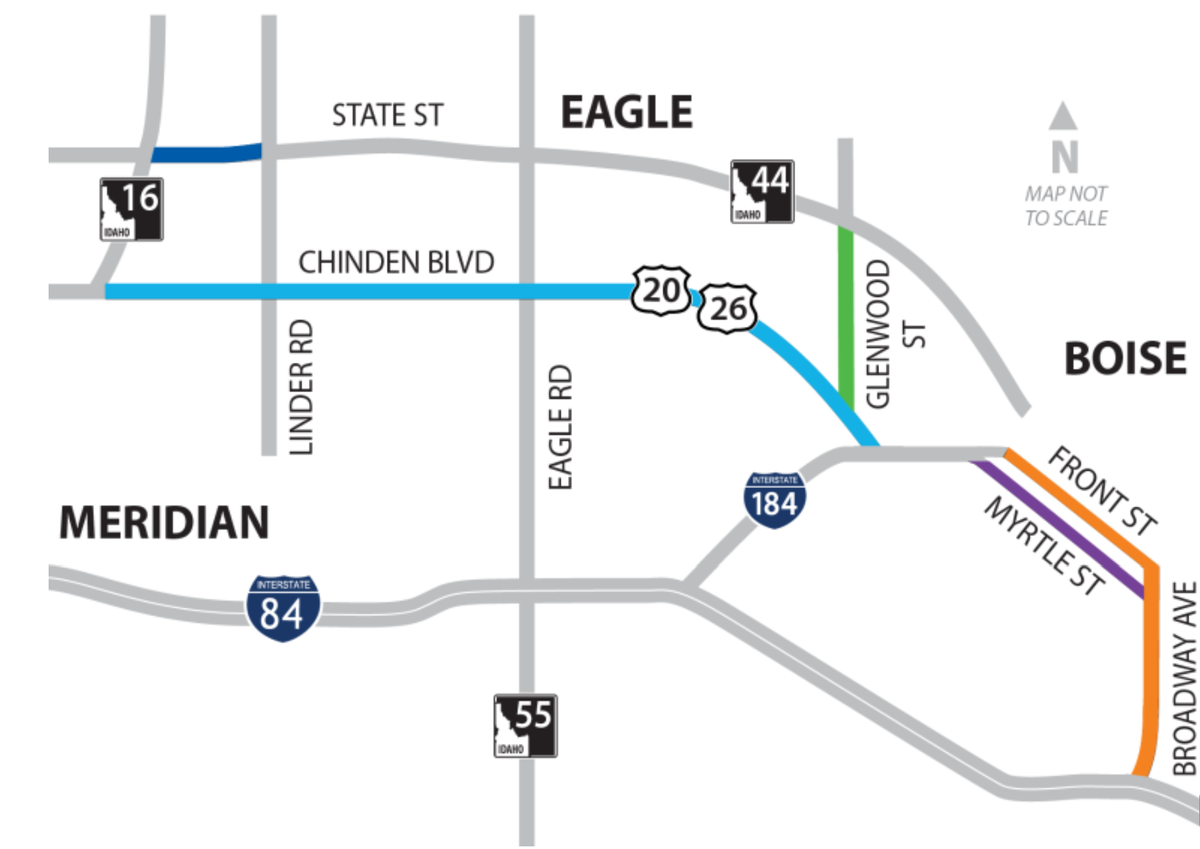
Work began on Broadway Avenue earlier this week and will continue on State Street between Idaho 16 and Linder Road, as well as on Chinden Boulevard.
Hot chipseal already has been added to Glenwood Street, and ITD said it plans to begin work on Front and Myrtle streets sometime this summer. The department expects the project to finish in late summer, weather permitting.
What can motorists expect during construction?
Because the bulk of the project can be completed during nighttime hours, Treasure Valley residents should encounter few disruptions.
ITD will work on roadways between 9 p.m. and 6 a.m., and work on just one road section at a time. Additionally, the department said that access to all businesses and residential areas around a project won’t be blocked.
If you do happen to come across a construction zone during work hours, here’s what you can expect:
Lane closures, but at least one lane will be open in each direction
Shifting traffic patterns
Flaggers in the roadway
Speed limits reduced