Infrastructure law has billions for trains. Boise sees chance to bring back Amtrak
Momentum keeps chugging along for passenger rail in the Boise area.
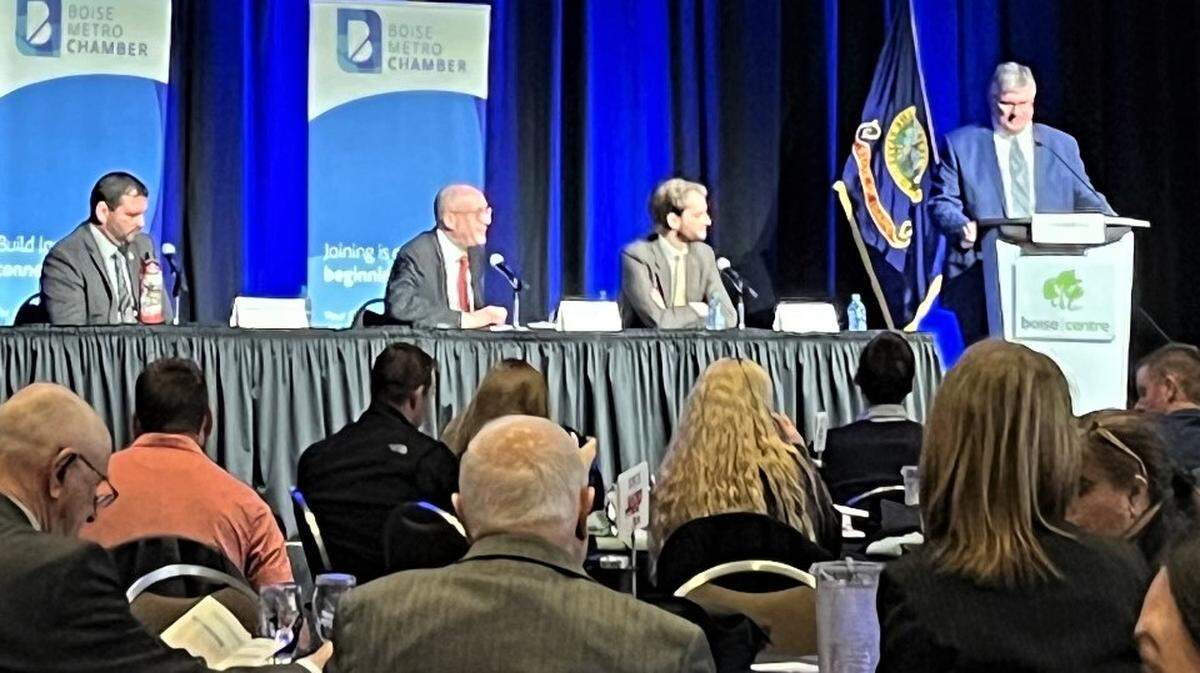
State and local leaders gathered at the Boise Centre on Thursday to discuss the potential return of Amtrak service through Boise. Programs made available in recent federal legislation have set up a timetable for applications as they move forward.
A train depot was once “the heartbeat of your community,” said Jarom Wagoner, the mayor of Caldwell, at a Boise Metro Chamber luncheon on Tuesday. Today, old depots in Boise, Nampa and Caldwell have been turned into educational or events centers.
Wagoner said that rail service still supports agriculture, industry and tourism.
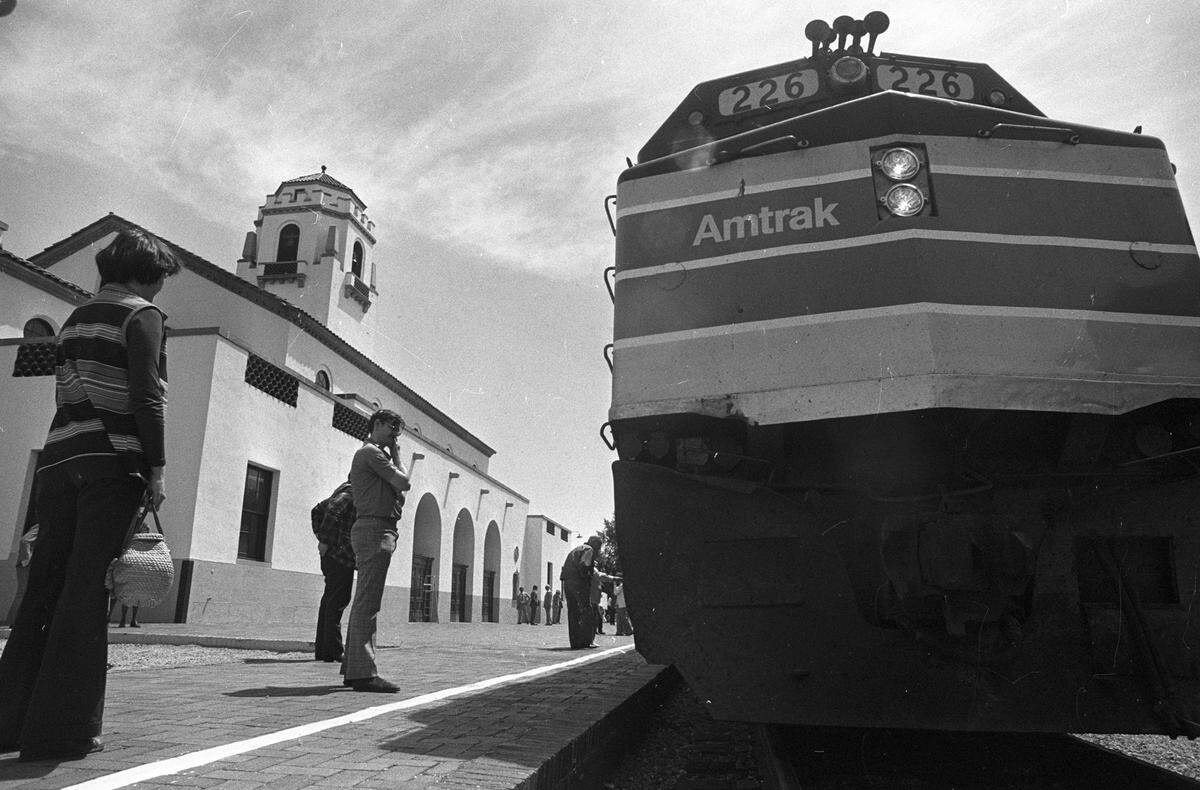
In September, Wagoner was one of several local leaders who signed a letter to the Federal Railroad Administration asking for a train route between Salt Lake City and Boise, called the Pioneer Line, to be restored.
The line ran until 1997, when it was terminated because of low ridership.
Boise Mayor Lauren McLean also signed the letter, as did Idaho’s Republican Sens. Jim Risch and Mike Crapo, and Rep. Mike Simpson.
McLean was at Thursday’s luncheon. She tweeted afterwards that she “looks forward to making partnerships towards this goal.”
Gov. Brad Little, who also signed the letter, gave the event’s keynote address.
“It would be wonderful if we had that back,” he said.
What’s next for bringing trains back?
A federal infrastructure bill that became law in November 2021 includes ten of billions of dollars for passenger rail.
One program in the law, the Infrastructure Investment and Jobs Act, is intended to add services to routes that are less than 750 miles long or were formerly operated by Amtrak. Applications are due in March.
“I know the city, Compass and others will be looking at making sure we respond to that opportunity,” Elaine Clegg, a Boise City Council member and the incoming CEO of Valley Regional Transit, told the Idaho Statesman by phone in December. Compass, or the Community Planning Association of Southwest Idaho, is the Treasure Valley’s regional transportation planning agency.
Applicants who meet a set of criteria will receive half a million dollars to prepare a plan of what reconfigured train service would look like. The local application would include where the train would stop between Boise and Salt Lake City, and how frequently it might run. The rail agency encourages applications to “reflect the full scope of the proposed corridor.”
“We’re obviously engaging with Salt Lake on the other end of the line, but also our communities here locally to gauge interest and to see what cities are interested in hosting stops and what that would look like,” Bre Brush, McLean’s transportation adviser, told the Statesman by phone. The application will be a joint effort between both states, she said. Salt Lake City also has an interest in a line connecting Utah’s capital with Las Vegas.
After that, the areas applying for service in Idaho would work together to develop a budget and the capacity needed for the planning effort, after which the Federal Railroad Administration would collaborate with the locales to create a more detailed plan of what the train service would look like, and when it would run.
Once the more extensive planning processes begin, local entities would be responsible for matching portions of the federal funds injected into the project. For one portion of the planning phase, cities or state agencies would have to pay for 10% of the cost. That number goes up to 20% upon further development. One aim of the planning phases will be to determine how much the rail project would cost.
Separately, the federal rail agency is studying long-distance routes that previously existed. In Southern Idaho, that means the Pioneer Line, which ran from Seattle to Chicago, stopping in Portland, Boise and Salt Lake City along the way. Much of the Pioneer Line’s track was and still is owned by the Union Pacific Railroad. A consultant is expected to produce a report for Congress that will include a review of that route this year.
In all, the infrastructure law includes $102 billion in funding for rail, with more than $60 billion allocated for passenger rail over the next five years.
“To kind of put that in perspective, it’s roughly the same amount of federal appropriations that Amtrak has received in its previous 50 years of existence,” said Chase Kitchen, Amtrak’s state and local government affairs manager for the Northwest, at Thursday’s Boise Metro Chamber event. “What kind of transformative investment (does) that have the opportunity to make across the country?”
The executive director of Utah’s Transit Authority, Jay Fox, told Idaho lawmakers in the audience that a successful application to the federal rail authority would require a unified mission.
“If you want it, it’s got to be a unified, aggressive approach,” Fox said. “The state, the state (transportation department), local communities all have to be on the same page.”