‘We must keep pace’: Infrastructure bill would offer Idaho transportation funding boost
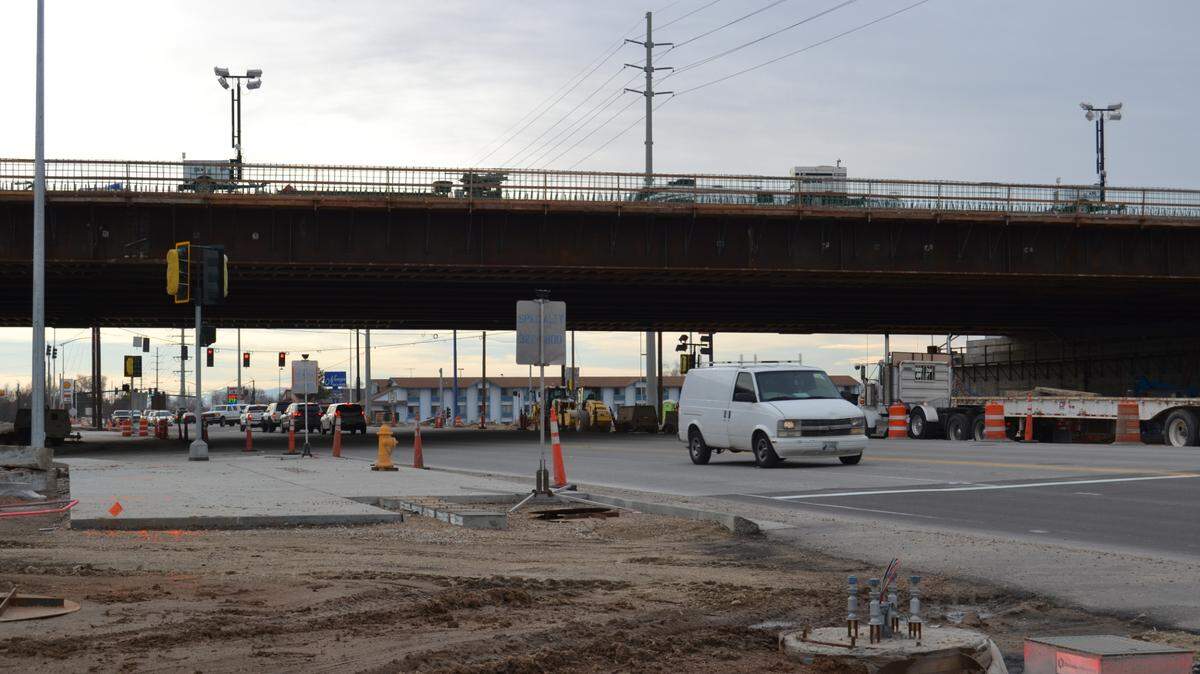
Idaho would benefit from as much as a 30% increase in federal dollars dedicated to overdue road and bridge upgrades over each of the next five years as part of the $1.2 trillion infrastructure package the U.S. Senate passed with bipartisan support this week.
The funding boost would reach a total of nearly $379 million committed to the state’s critical transportation connectors just next year, and rise to more than $410 million by 2026, when the historic spending bill is set to expire. The eye-popping figures for Idaho alone — representing about $97 million more by its final year than the state’s haul this year of federal funds toward wish list items including lane expansions and highway improvements — reflect what would be the largest investment in such projects in decades.
“We must keep pace with Idaho’s rapid growth. Estimates indicate Idaho has more than 1,000 miles of highway in poor condition,” Republican Sen. Mike Crapo, who is Idaho’s senior member, wrote in a guest column appearing in the Idaho Statesman. “The Infrastructure Investment and Jobs Act includes priorities to help ease these and other challenges in Idaho.”
Nearly $200 million for upgrades to Idaho’s public transit systems and $100 million to expand broadband internet coverage also are baked into the massive package over the next five years, according to a fact sheet released by the White House. Another $30 million would go toward the state’s electric vehicle charging network, in addition to other funding pledges.
But those grand funding plans come attached to a big if, and Idaho’s transportation and hard infrastructure sectors know it. Even with bipartisan support, including backing by both Crapo and Sen. Jim Risch, R-Idaho, to achieve a 69-30 vote for passage, the bill’s path to becoming law is not yet assured.
The bill still requires U.S. House approval before arriving to President Joe Biden’s desk. Democratic House majority leadership, however, has vowed not to take up the infrastructure bill until the Senate also passes a second spending package nearly three times as large and lauded by many Democrats as the key to funding the Biden administration’s agenda surrounding climate change, health care and education.
Risch, Idaho’s junior member, in a statement called that proposal an “impending $3.5 trillion social spending spree.” He and all of his Republican colleagues present Wednesday voted against an initial framework for the budget plan, though Democrats needed only their members to pass it with a simple majority through a process known as reconciliation. Still, nothing is guaranteed.
“So we’re a ways out from knowing how this could turn out,” Aubrie Spence, an Idaho Transportation Department spokesperson, said in a phone interview. “We’re definitely supportive as we move forward, and very optimistic as to what this could mean for Idaho in the future. There are a lot of moving parts at ITD, but we’re prepared and ready to go, and behind the scenes ready to jump on this the moment that we can.”
Even if the additional federal infrastructure dollars become available, she added, the state’s road, highway and bridge needs will still far exceed the proposed amounts. Idaho’s infrastructure received an overall letter grade of C-minus in 2018 from the American Society of Civil Engineers, citing a number of deficiencies, including a need for hundreds of millions of dollars more annually for deferred maintenance, not including anticipated expansion projects.
Gov. Brad Little, who has made transportation funding a priority during his two-plus years in office, has yet to publicly weigh in on the federal infrastructure package. Regardless, the federal money would be a welcome asset by many toward addressing necessities en route to a more suitable 21st century transportation network.
Vanessa Fry, a Boise State University professor who is also interim director of the school’s Idaho Policy Institute, sees the once-in-a-generation federal infusion as a way to catch up.
“As we’re growing as a state, we have a number of expansion needs, as well as the ongoing maintenance needs on an annual basis to take care of streets and bridges to keep up to date,” Fry told the Statesman by phone. “With a big pool of money, it’s an opportunity to think more holistically. My hope is it’s all taken into consideration along with public transit and how the funding collectively can be used for moving people and product from place to place, rather than just looking at transit and roads and bridges on one side or the other.”
COMPASS, the Treasure Valley’s transportation planning agency, shares some hesitancy over getting ahead of the legislation before it is finalized. But the organization also sees the potential of more guaranteed federal funding to assist with long-range planning, as well as expediting several priority road-building projects over the next seven years, and beyond.
“For us to do our job, and to get the contracts into place, it is critical for us to know what the revenue stream is going to be. Ideally, we need to know five years out so we can start programming those dollars and dealing with any cost increases,” Matt Stoll, executive director of COMPASS, said in an interview.
“That additional money that the state of Idaho is going to receive, ultimately what it means is we’re going to advance some projects, but we’re going to be able to advance projects sooner ... which is going to be beneficial to the traveling public, but also beneficial from an economic development standpoint for the state.”