Amtrak passenger train service through Boise ended in 1997. Could it make a comeback?
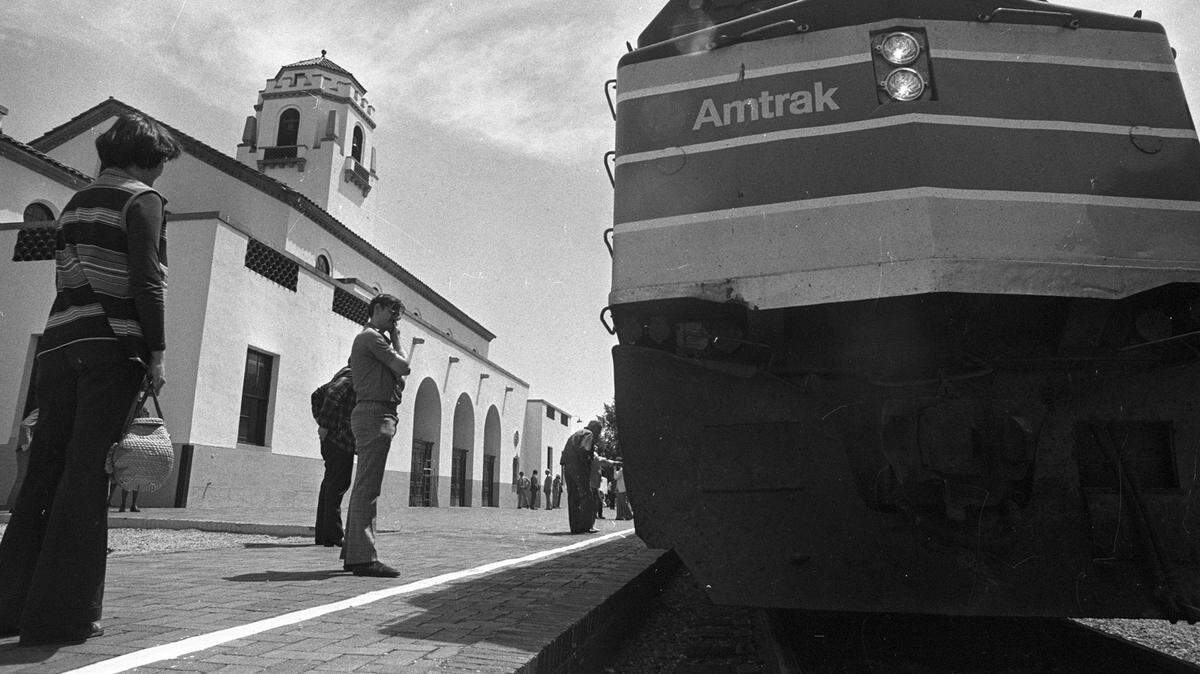
For six years growing up in Denver, Elaine Clegg boarded a train with her mother and sisters to spend the summer in Boise.
“I loved it,” said Clegg, who was first elected to the Boise City Council in 2003 and now serves as its president, in a phone interview. “It was so much fun.”
Boise’s last passenger train service, Amtrak’s Pioneer run between Salt Lake City and Portland, quit cutting across Southern Idaho nearly a quarter-century ago.
The Pioneer, which ran from Seattle to Chicago through Boise, Salt Lake City and Denver, was a victim of cost-cutting measures that saw Amtrak’s budget slashed by more than half between 1994 and 1997. Then-Boise Mayor Brent Coles called it “the end of an era.”
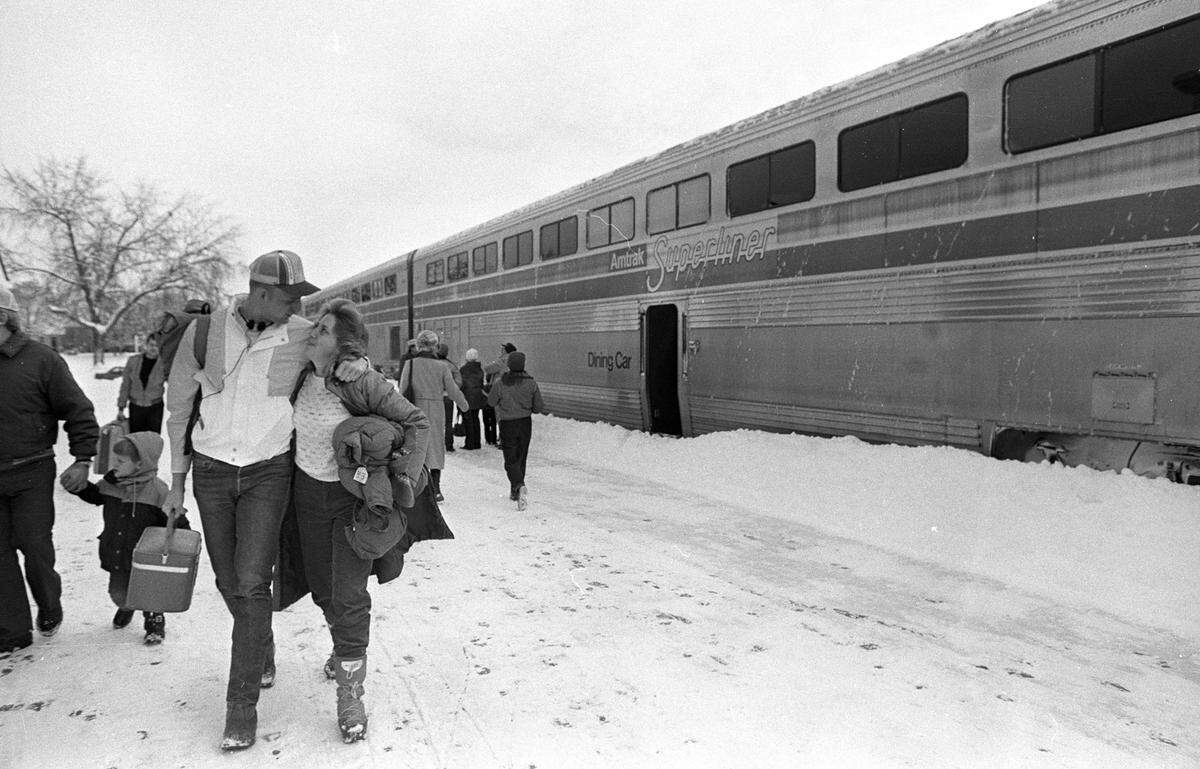
Clegg and other passenger train advocates would like to see the Pioneer restored.
A new push buoys their optimism that after years of failed efforts, something might happen.
A bill in the U.S. Senate calls on Amtrak to study the Pioneer route and three other abandoned passenger rail routes. The bill received bipartisan endorsement from the Senate Committee on Commerce, Science and Transportation, chaired by Washington Democratic Sen. Maria Cantwell, and could come before the full Senate before the August recess.
“We’re pretty confident it will make it through the Senate,” said Clegg, who serves on the transportation infrastructure committee of the National League of Cities.
Through that position, Clegg said she was able to speak personally with Transportation Secretary Pete Buttigieg and share her views.
“He’s very well aware of it, very supportive, as are two undersecretaries who we’ve met with numerous times,” Clegg said.
Boise City Council, Sen. Mike Crapo support Amtrak return to Idaho
The Boise City Council passed a resolution June 8 supporting the route. Sen. Mike Crapo, R-Idaho, who has worked for two decades to restore the Pioneer route, also urged the Senate committee to endorse the study.
“The hope is Amtrak will add the Pioneer line now that they have extra money potentially for infrastructure,” Lindsay Nothern, Crapo’s communications director, said by email.
A 2009 Amtrak study said it would cost $36.6 million to $44.7 million annually to operate a restored Pioneer run, depending on which of four routes the train took from Seattle to Portland, Salt Lake City and Denver. The route would lose an estimated $25 million to $35.5 million after ticket revenues were subtracted from expenses.
Costs would be significantly higher today, and the proposed study would determine how much it would cost to operate the route today.
At the time of the study, Union Pacific, which owns much of the track for the Pioneer route, said it would cost between $200 million and $309 million for track and other infrastructure improvements.
Upgrades along the Boise Cutoff, a 44-mile section of track off Union Pacific’s main tracks, would have cost $13.5 million in 2009, according to the report. Amtrak trains to Boise took the cutoff at Orchard, 26 miles east of the Boise Depot, before reconnecting with the main UP line at Nampa.
Federal government, state provide Amtrak subsidies
Since its inception in 1971, Amtrak has operated at a loss. For fiscal year 2020, ending in September, Amtrakreported an operating loss of $801.1 million. Operating revenues were $2.3 billion, down nearly 32% from the year before, mostly because of the coronavirus pandemic.
Passenger trips declined by 15.2 million riders, to 16.8 million customer trips. In 2019, before the pandemic, Amtrak, with about 300 trains a day, set a ridership record of 32.4 million passengers.
Amtrak typically receives $2 billion a year in federal government funding. Since March 2020, it has received $3.7 billion in emergency funding.
States provide about 14% of Amtrak revenues, $342 million in 2020. That money covers some of the costs of the railroad’s commuter lines, other than the Northeast Corridor, the nation’s busiest rail route. In 2020, the corridor, which takes passengers from Boston to Washington, D.C., accounted for 36% of Amtrak’s passengers and 52% of its gross ticket revenue.
The Pioneer operated daily beginning in 1977. Besides Boise, where the trains stopped at the city’s picturesque, Spanish-style depot opened in 1925, there were Idaho stops in Nampa, Mountain Home, Shoshone and Pocatello.
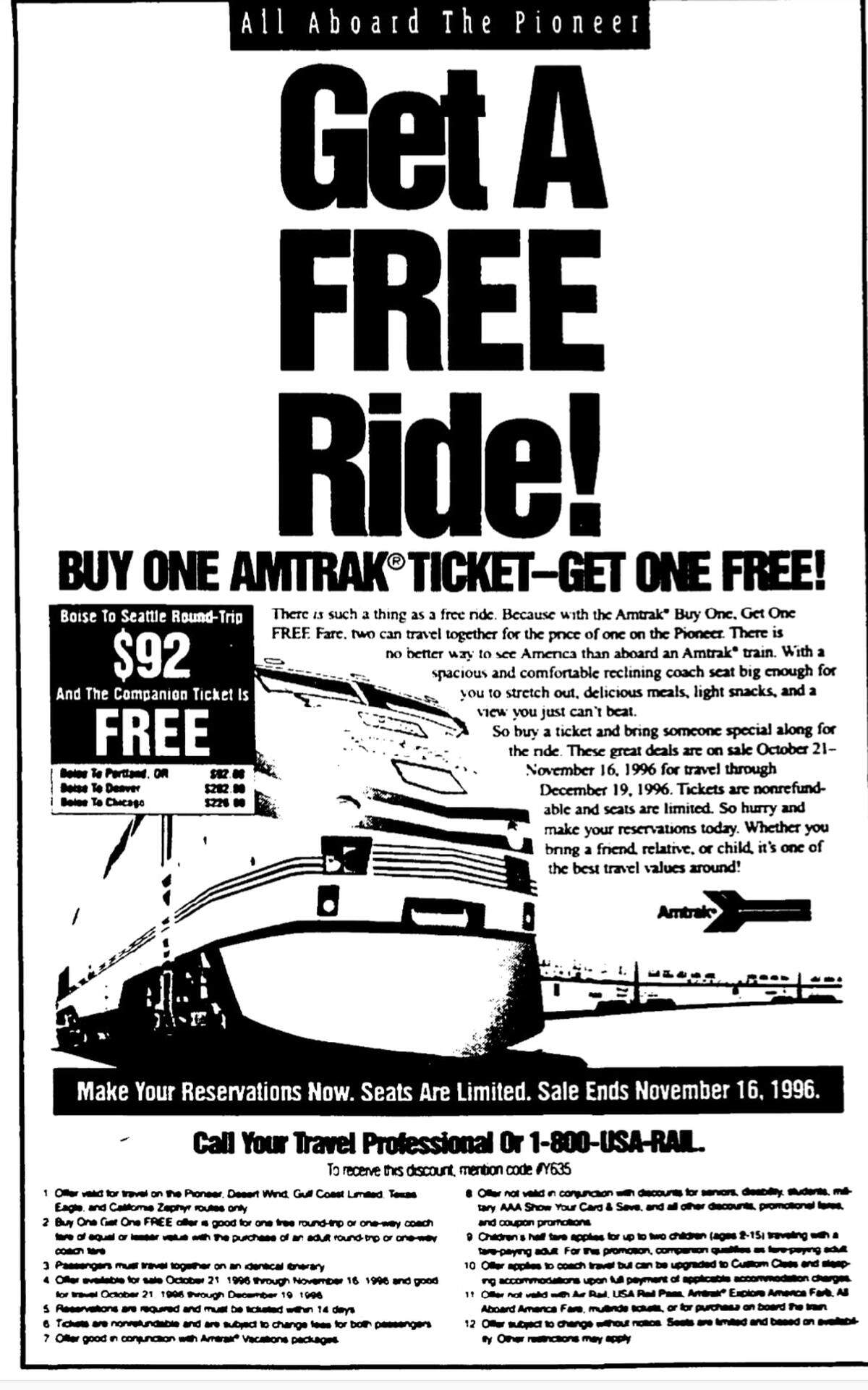
In 1993, service was reduced to three days a week until the Pioneer service ended in 1997 with the expiration of a congressional mandate that had kept the route operating.
Pioneer route had good ridership in Boise
The Pioneer lost $20 million in its final year. But it wasn’t because of a lack of passengers.
“The joke around Amtrak is that nobody rides the Pioneer because it’s always sold out,” ticket clerk Joe Beaver told the Statesman’s Tim Woodward at the time. “It’s 90 to 100% full every day. We’re turning people away all the time.”
Supporters complained Amtrak should have added additional passenger cars to meet demand, but a shortage of cars made that impossible.
At the time, Ada and Canyon counties had a population of about 250,000. Today, it’s triple that. With the added population comes greater interest in alternative transportation that wasn’t as prevalent in the 1970s, Clegg said.
“I think there’s a recognition that the rest of the world enjoys much better choice in how to get around their country because they make this investment, and maybe it’s worth doing so here,” Clegg said.
Clegg also belongs to the Greater Northwest Passenger Rail Working Group, a loosely knit group of train advocates who have been meeting for the last year to return intercity rail service in the Northwest.
“We think this is a part of the country that’s much underserved by rail, and there’s a lot of economic and environmental benefits if we can re-establish passenger rail in the region,” Clegg said Tuesday during a presentation to the Columbia River Gorge Commission.
The commission was established in 1987 by the states of Oregon and Washington to enhance the scenic, natural, recreational and cultural resources of the gorge east of Portland and support the area’s economy.
Resurrecting the Pioneer run would prove successful, Clegg said.
“I think people would ride it and it would bring great benefit economically,” she said.
President Joe Biden, sometimes called “Amtrak Joe” because of his longstanding support of passenger train service after years of commuting between Washington, D.C., and his home in Delaware, says rail should play an important role in rebuilding the nation’s economy. He has proposed $66 billion in funding for Amtrak repairs and developing new routes.
“Amtrak doesn’t just carry us from one place to another – it opens up enormous possibilities,” Biden said during an event marking Amtrak’s 50th anniversary. “And especially now, it makes it possible to build an economy of the future and one that we need.”
Dan Bilka, coordinator for the Greater Northwest Passenger Rail Working Group, said Amtrak bypasses much of southern Montana and all of Wyoming and South Dakota. Sandpoint is the only Idaho city served by Amtrak. Bilka said he hopes Amtrak takes that into consideration when deciding whether to expand its routes.
“Nothing is written in stone right now, and while there are encouraging signs, we need to make sure that we do our due diligence with partners all throughout the region and be able to make our case,” Bilka, who lives in Denver, said by phone.
William Flynn, Amtrak’s CEO, told The Associated Press this week that Amtrak plans to expand its ridership from 32 million to 52 million in the next few years.
Amtrak lost about half of its riders during the pandemic but has since regained 62% of its 2019 ridership.
Any congressional appropriation for Amtrak will face intense pressure to fund individual projects.
A U.S. government commission on Wednesday proposed a $117 billion plan to reconstruct the Northeast Corridor. Before the pandemic, it carried 800,000 passengers a day.
This month, Amtrak said it will spend $7.3 billion to replace hundreds of aging locomotives and passenger cars, some of which are more than 40 years old. It’s the largest single order in Amtrak’s history.
Clegg hopes that the Pioneer route could figure into Amtrak’s plan. Amtrak hasn’t commented on the efforts.
“I can’t say Amtrak is opposed to what we’re doing, but if there’s anyone that we’ve gotten pushback from, it’s them,” she said. “I believe that’s because they don’t think they’re going to have the resources to do this.”