
Idaho wanted to test 151,000 people a week for COVID. It is falling 125,000 short
The collective national shock arrived in Idaho five months ago, when an Ada County woman tested positive for COVID-19. The state had its first confirmed coronavirus patient.
Suddenly, the pandemic was real, imminently dangerous — and ready to lay bare every weakness in Idaho’s ability to deal with it.
Almost overnight, as the first outbreak scorched through Blaine County, the need for quick and accurate testing for the coronavirus became clear. Idaho needed to know where the virus was, when it was there and how quickly it was spreading. Medical machinery, public and private, began to spin up to create Idaho’s COVID-19 testing infrastructure.
Those gears grind slowly, but there are signs that the machinery is starting to get up and running.
In May, a state coronavirus testing task force released statewide testing recommendations. Since then, the state and federal governments have not furnished adequate resources for health care providers to meet those guidelines, creating a disconnect between public health strategy and on-the-ground health care efforts.
Lacking the guidance and resources needed to follow the task force’s recommendations and facing a long list of constantly changing limitations to their testing capacity, health care providers have been left to make judgment calls.
“We’ve yet to hear the ‘how’ from the testing task force on the ‘what’ they dropped on everybody,” said Tina Upson, Executive Director of Crush the Curve — a private organization intending to provide bulk employee testing to Idaho businesses.
With testing already short of desired levels, health care leaders have expressed fear about the ability to combat the virus come fall, when schools are poised to reopen and mark the beginning of a season already fraught with illness and respiratory viruses. Questions about whether a child’s fever or flu-like symptoms are a normal fall sickness or the beginnings of a coronavirus outbreak at school hinge on the availability of testing. With testing still limited, parents and school administrators may struggle to answer those questions.
“The whole idea behind testing is to try to identify where do we need to put in appropriate public health mitigation policies,” said Dr. Christopher Ball, bureau chief and laboratory director of the Idaho Bureau of Laboratories and co-chairman of the State of Idaho Testing Task Force. “We need to make sure that we match the ability to accept samples into the system in such a way that we can turn them around quickly, so that we can kind of hold the disease at bay.”
Testing capacity has increased over the last few months. According to data provided by the Idaho Department of Health and Welfare, the total number of weekly COVID-19 tests completed statewide has more than quadrupled since Idaho’s first outbreak.
This increase is only a tepid bit of good news, as increases in infections have greatly outpaced increases in testing capability. Over four times the number of tests are being performed as the weeks during Idaho’s first outbreak, but through the first two weeks of July, between eight and 10 times the number of positive cases were diagnosed.
With an average of roughly 25,500 weekly tests in the first three weeks of July completed statewide and an average of nearly 15,000 weekly tests completed in the two health districts overseeing the Treasure Valley hotspot, people in the Boise area are once again reporting the delays that defined testing in March and April — waiting a day or two to get a test, then anywhere from a few days to a couple weeks to get the results.

“One of the reasons why we saw everybody shut down so quickly (in the U.S. during the spring) was because you couldn’t really test, and if you were testing you were getting results back so late that you couldn’t really do anything meaningful about it,” Upson said. “We saw that, as an example, in Blaine County. Waiting for 14 days for test results, you’re already past your incubation period.”
Why does coronavirus testing matter?
Testing alone won’t end the pandemic, but the information learned from testing is key to mitigating the spread and minimizing the harm.
“Testing all by itself isn’t a solution,” Ball said. “Testing has to support broader public health decisions.”
These public health decisions range from determining whether an employee should show up to work to determining what sections of the economy can and cannot reopen with COVID-19 still present.
For public health leadership, the positive test percentage from large-scale testing is a key metric in evaluating how COVID-19 is being controlled. The World Health Organization recommends that governments maintain a positive test percentage of less than 5% for at least two weeks before lifting public health restrictions.
Idaho’s state public health leaders used the same 5% positivity metric in the guidelines describing the four stages of reopening.
Through the first three weeks of July, Idaho’s statewide positive test percentage has been between two and three times the WHO’s recommendations. The state has not been below 5% positivity since the week of June 6.
Scaling up testing to large-scale levels is a big project, and like all big projects, it requires planning and guidelines to achieve.
Since the pandemic arrived in Idaho, federal guidelines describing who to test, how much testing should be done and how testing should be scaled up were scant, ever-changing and carried out inconsistently across the state.
The state’s testing task force issued a more robust set of guidelines in late May, trying to help prioritize who should get a test and when. The guidelines recommended that 151,000 tests per week should be performed. Since the guidelines were introduced, Idaho has only once reached over 17% of that weekly number.
The State of Idaho Testing Task Force released its 37-page set of recommendations on May 20 detailing the condition of Idaho’s COVID-19 testing capacity at the time and projecting the future testing needs of the state.
“The governor made a request of the task force to put together, No. 1, how much testing capacity we had available in April and May, and (No.) 2, how much testing would need to happen,” Ball said. “Sadly, that was the easy part.”
Who gets a COVID-19 test, and who doesn’t?
The guidelines recommended a five-tier system intended to describe to testing providers who should be prioritized when administering tests. Tier 1 includes high-priority individuals, such as health care workers, high-risk individuals, and asymptomatic individuals entering congregate housing, while Tier 5 includes low-priority individuals, such as athletes and travelers.
The second tier describes a system of routine testing for asymptomatic individuals in high risk environments. According to the guidelines, approximately 26,000 tests per week — a number that the statewide testing total has only barely eclipsed once — should be used to test staff in congregate living facilities and employees of businesses that operate critical infrastructure and essential services.
Despite the guidelines using meat packing plants as one example of essential businesses that need routine testing, testing shortages have prevented the sort of asymptomatic monitoring that the guidelines recommend. Lacking adequate testing, workers at Idaho’s meat packing and food processing plants have been infected, with at least 282 cases tied to the plants since mid-May.
To test all five priority tiers, approximately 151,000 tests would need to be performed each week — nearly 30 times the number of tests performed the week that the guidelines were published. Although testing capacity has increased considerably since late May, the state still falls short of the task force’s recommendations by about 125,000 tests per week.
Months after being introduced, testing providers are frustrated. They feel that they lack the guidance and resources required to follow the state’s guidelines.
“The fundamental flaw with what the task force did was they dropped five priority groups onto a state and onto the shoulders of employers, and said, ‘Hey, these people need to be tested,’” Upson said. “They dropped this list of priority groups, but they knew that the state capacity wasn’t even there to satisfy their recommendation against priority group one.”
The state has offered some help with figuring out how to implement its recommendations, though. The Idaho Department of Health and Welfare in June issued a COVID-19 testing strategy for long-term care facilities. State and federal guidance calls for more testing in these nursing homes, assisted livings and group homes, to catch the coronavirus before it spreads unchecked among Idaho’s most vulnerable residents. The department said in June that the state lab couldn’t take all tests from facilities and advised them to have a backup plan. In July, it issued implementation guidelines with a list of laboratories, including the state lab and 12 others.
There also appears to be a wide gap between the task force’s intention with the guidelines and how they have been interpreted by testing providers. Testing providers took the guidelines as direction on what they should be doing, while the task force intended a less specific approach.
“The guidelines were not written to be prescriptive, they were meant to try and prioritize and describe how capacity would go.” Dr. Ball said. “They are more of an intellectual framework than a set of rules.”
While public health officials are hoping to use testing of symptomatic and asymptomatic individuals to get a clearer picture of the prevalence of the virus, scarce testing resources mean that private practices are still focused on using those resources for sick patients or to screen potentially contagious patients.
“Testing should inform a decision,” said Dr. Jim Souza, chief medical officer of St. Luke’s and co-chairman of the State of Idaho Testing Task Force. “So when we’re testing a symptomatic person, we’re using the test result to inform a diagnosis to guide treatments. In the symptomatic group, clearly testing guides a decision. In the asymptomatic group, testing needs to guide a decision, it shouldn’t just be to answer curiosity. Although, I fully understand the need to know, particularly when an individual has been exposed.”
Meanwhile, testing providers are still waiting on direction from state leadership about how they should fulfill the state’s recommendations.
“Probably the single most effective step we could take is an organizational one, with direction on needs and allocation of resources coming from a central state authority,” Dr. Souza wrote in a follow-up email to the Statesman.
Three legs of a testing stool: test kits, labs, people
Idaho is not alone in its struggle to expand testing capacity. That notion is certainly no comfort, but it does provide important context to the limiting factors of Idaho’s COVID-19 testing infrastructure. As cases surge nationally, scarce resources become increasingly important.
“There’s three legs to the stool of testing that all need to be pretty balanced or you fall over,” Upson said. “A lot of times, one full leg is missing.”
Supplies, the first leg, were the limiting factor in the early days of the pandemic. Test kits and protective equipment were in very short supply during the initial March outbreak, but have since become much more available as production has ramped up and new test methods became available.
In more recent weeks, demand for testing supplies has jumped back and forth into the conversation. As localized spikes occur, the demand for testing supplies follows.
“One of the lessons that this shows us is that this symptomatic group can expand and contract very quickly,” Souza said.
According to Ball and other public health leaders, the state receives an allocation of testing supplies every week that are distributed to the seven public health districts based on population. The health districts then distribute those supplies among the local testing providers. However, those supplies frequently fall short of the provider’s needs, forcing providers to procure their own supplies independently.
“Our incident command leadership is meeting multiple times weekly to respond in real time to the dynamic and changing needs of the situation,” Souza wrote in an email to the Statesman. “Regarding testing supplies, we have been tracking these and procuring additional supplies for the past two months. We are taking flu testing needs into account in our planning around supply needs.”
Public health leadership is acutely aware of the shortages in testing supplies. However, national limitations are affecting Idaho’s local supplies.
“I wish it were different in our system,” said Brandon Atkins, program manager at Central District Health. “I wish that a federal response was FEMA, federal aid, everything that came to the states had stockpiles of what we needed. That just isn’t what we have going in our system.”
The second leg: Medical lab capacity
Medical labs, the second leg, and are perhaps the most complicated of the limiting factors.
Laboratories that process COVID-19 samples are the backbone of Idaho’s COVID-19 testing response. Labs are also responsible for reporting thousands of pieces of data to public health workers and decision makers — which is, after all, the whole point of all this effort.
That doesn’t always go smoothly.
“We at the local public health level don’t receive the total number of tests being done in our community,” Atkins said. “We have no idea what the labs are doing.”
To have an understanding of the state’s testing capacity and an understanding of where resources are short, the Idaho Bureau of Laboratories has been conducting weekly surveys of Idaho’s medical labs, testing providers and hospitals since the beginning of May. The surveys ask basic questions about testing capacity, limiting factors and input from labs.
The survey results show a grab-bag of limitations that act as unwelcome party favors to a health care system stressed beyond normal limits.
Several months into the pandemic, many labs still lack the test equipment or reagents needed to perform tests. Many still lack testing supplies in the form of swabs or protective equipment. Some have such long turnaround times that they cannot process the number of tests they desire.
The survey shows how disjointed Idaho’s testing infrastructure is. Some labs and health care providers have enough supplies, reagents, and instrumentation, but not enough people are coming in to be tested. Others have too many people coming in.
“We now have the problem of the (outdoor outfitters) wanting to get their staff and clients tested before going on their trips,” one small rural hospital wrote in survey comments in mid-June. “Also, a family of five came for testing for returning to Alaska — all asymptomatic.”
More recently, as testing capacity has scaled up, skilled staff members trained to run the tests have come in short supply, according to Souza and other testing providers.
Asked to list what is limiting its test capacity, one North Idaho hospital wrote July 1, “Staff, swabs, reagents, media, sleep.”
A common thread that runs through conversations with Ball, the bureau chief and laboratory director of the Idaho Bureau of Laboratories, is that of a balancing act. If more samples are collected than labs can process, then turnaround times pile up and the public health value of a test is diminished.
“The demand is so much higher than the capacity that we have,” Ball said. “So if we continue to receive samples but we don’t have the ability to turn them around quickly and follow up with those folks quickly, then we’re going to have great stories about how many tests are being done every week, but we’re not really doing anything to effectively slow the transmission of disease.”
Lab capacity, however, has been slow to respond to the pandemic. In a weekly survey of Idaho laboratories conducted in the first week of May by the Idaho Bureau of Laboratories, the 27 labs that responded reported a stockpile 23,494 collection kits. Labs said they needed 3,685 kits to keep up with demand. In the first week of July, 28 labs responded to the survey, and reported a stockpile that had grown by only a few thousand to 26,511 — and labs now needed 22,647 kits to keep up with demand.
People are the third leg — one that is increasingly shaky.
Testing providers must procure their own supplies and develop testing procedures. They must have enough staff and protective equipment to administer the tests. Limited funds and the logistical difficulties of responding to new case clusters frequently limit testing capability, providers told the Statesman.
“What ends up being really the limiting factor, at least for Crush the Curve, is we have overhead,” Upson said. “We’ve got to put some shade over the heads of people when it’s 104 out. We’ve got to pay people for their time to be on the ground. The test kits cost money.”
Primary Health Medical Group CEO Dr. David Peterman told the Central District Health board in July that staffing was a major hurdle — in some cases more so than getting test supplies. His practice is among the largest urgent-care providers in the state and has several COVID-19 test sites. But, Peterman explained, health care businesses in Idaho have had their own staff come down with COVID-19 or need to be quarantined due to exposure, which puts additional stress on their testing capacity.
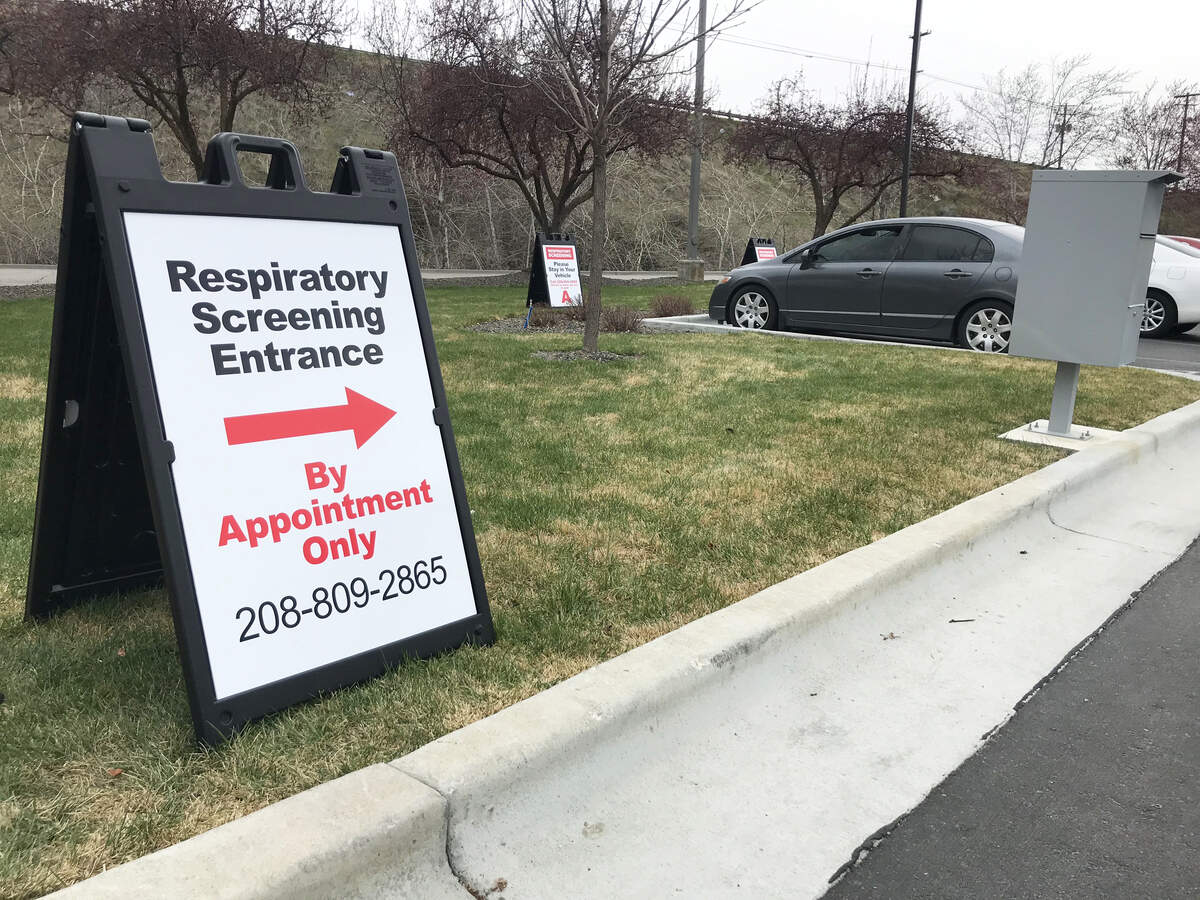
For Crush the Curve, the overhead and lack of state support has limited the organization’s ability to provide testing services.
The organization stood up two new testing sites as the number of cases spiked in Ada County, to help meet demand. It shut down those sites in mid-July, after only two weeks, for financial reasons, Upson told the Statesman.
According to the Idaho Department of Health and Welfare, Crush the Curve — founded in early April — did not receive any money from the state until the second week of August.
“There is a contract in place that if there’s a state-approved deployment, that Crush the Curve would be covered for our administrative costs to deploy rapidly to an organization or community needing testing,” Upson said.
The Department of Health and Welfare and Crush the Curve agreed upon a contract with a maximum value of $750,000 in June. The contract is intended to pay Crush the Curve to provide rapid response testing services throughout the state, paying out $12,500 for the initial deployment, $6,000 for additional days and allowing for additional payment for a deployment outside the Treasure Valley or more staff.
However, the requirements for state approval make rapid response difficult. The approval process requires negotiations between Crush the Curve, the state and the local health districts about the level of government involvement, number of staff and duration of the response. Following these negotiations, Crush the Curve must submit a detailed work order to be approved by the Department of Health and Welfare prior to deployment.
According to Upson, Crush the Curve deployed multiple times without state approval after determining that the approval process would take too long to prevent an outbreak.
The department has approved four deployments for Crush the Curve, the first of which was approved in July. According to the department, the state processed the first three invoices during the second week of August, paying out just over $60,000 to Crush the Curve.
While Crush the Curve is one of the first resources that Idaho businesses reach out to, the organization has performed a relatively small number of COVID-19 sample collections. Since the beginning of the pandemic through the first week of August, over 150,000 tests have been performed in Southwest, Central and South Central health districts — the three most hard-hit districts. Crush the Curve has administered just over 15,000 of those tests.
Testing laboratories have similar concerns over cost. In survey comments to IBL, several labs have complained of very low reimbursement for testing.
Even in the ideal scenario where all three legs are sturdy, testing can be limited by one key factor: humans.
“You can’t force people to get a test,” Ball said. “You provide people opportunities to get tested.”
What happens in the fall?
Even as cases surge, test providers are preparing for an increase in cases in the fall. Cold weather that prohibits outdoor social distancing and reopening of schools will likely lead to a new surge of COVID-19 cases, health care leaders have warned.
When children start showing symptoms of the flu or respiratory infections, how are parents and administrators to know whether a COVID-19 outbreak is beginning? Without adequate testing, their options are limited.
“My biggest concern is fall is typically when we go into normal respiratory virus season,” Dr. Ball said. “So not only are we going to be dealing with the virus, but we’re going to be dealing with all the other normal respiratory viruses that we’re familiar with, and that’s that’s going to put additional stress on the health care system.”
Peterman echoed that when he spoke to the Central District Health board.
“You will have so many children with fever (and) other symptoms, how do you examine them — safely — and make other decisions?” he said.
The fall has been circled on calendars of public health agencies for months. Crush the Curve has targeting fall as their goal for peak testing since their inception.
“Our goal was always the fall,” Upson said. “We felt like that would be a real struggle for Idaho. We haven’t lost focus on that.”
With testing limited before the additional burdens of fall, Idaho appears to be on a trajectory that would put health care leaders and providers in difficult situations. When asked about the possibility of medical providers prescribing quarantines for individuals who present flu-like symptoms but cannot get a test, a policy that has been implemented in numerous hotspots nationally, Souza responded by saying “if our testing capacity became more constrained, and we weren’t able to manage all of the symptomatic (testing candidates), that could be something that we all have to consider.”
Slow growth of testing capacity has made the hopes of a robust testing response during the most complicated season yet as realistic as grabbing a handful of campfire smoke, and in the process has broadened the responsibility of dealing with the pandemic.
“Because we don’t have as much testing capacity as we need, it means that people need to take more personal responsibility to engage in behaviors that will keep us all safe,” Ball said. “What my fear is — because everybody is experiencing coronavirus fatigue — is that people are letting their guard down at exactly the wrong time, and what we’re seeing is that we’re really in danger of having this thing get out of control.”
This story has been supported by the Solutions Journalism Network, a nonprofit organization dedicated to rigorous and compelling reporting about responses to social problems, solutionsjournalism.org.
This story was originally published August 16, 2020 at 4:00 AM.