He thought it was God’s money, so he stole it. Does he belong in prison with schizophrenia?
Dillon McCandless took a shotgun into a tribal casino in July 2017 and used it to steal $7,619. As police were arresting him, he insisted the money belonged to God, his mother says. He told his mother he needed to pay tithing on it.
McCandless, who was 27 at the time, had been diagnosed with schizophrenia three years before. But he struggled with his medications and hadn’t taken them in the days leading up to the robbery.
He pleaded guilty in August 2018 and is now serving a prison sentence of almost nine years.
McCandless’s family knew he was unstable and tried to get him help. The judge who oversaw his sentencing lamented his inability to do anything but send McCandless to prison. And in the past year, prison doctors have tried to get him to take medications, but he refuses and has the right to do so.
Had he committed a different felony in a different location — not using a gun, not on tribal land — McCandless likely would have been a candidate for one of Idaho’s mental health courts, where he would receive intensive treatment instead of incarceration.
The path to prison for McCandless was full of the same cracks that many Idahoans fall through, landing in the criminal justice system with a severe mental illness.
A fractured health care system allows patients to leave the hospital with little or no follow-up. Stigma keeps people from seeking help, and anosognosia keeps them from recognizing that they’re sick. The conflict between a person’s well-being and their right to refuse medical care shapes our involuntary commitment laws — in Idaho, setting a high bar for someone to be court-ordered into treatment.
And finally, there’s the lack of options for federal defendants like McCandless to get treatment in lieu of prison. One Idaho judge says that is partly due to push-back from the U.S. Department of Justice.
McCandless is now imprisoned at FCI Sheridan in Oregon — his latest stop in a series of transfers between Idaho, Nevada, Minnesota, California and Oregon. His mother says he also spent a few days at a facility in Oklahoma.
He is one of about 2,400 inmates in the federal prison system who have a diagnosed psychotic disorder like schizophrenia or a disorder with psychotic features, according to the U.S. Bureau of Prisons.
At his sentencing, a federal judge took a few minutes to talk to McCandless.
“There are days in this job when I quickly realize ... how limited are my skills and ability to cope with some of the problems that we have to address here,” U.S. District Judge B. Lynn Winmill said. “And this case ... as much as any I have handled in the last few years, has probably underscored that.”
Winmill’s judicial powers don’t extend to making sure defendants get the help they need before they break the law, nor can he give defendants with severe mental illness psychiatric care instead of prison, he said. (Because McCandless had brandished a firearm while robbing the casino, he was subject to a mandatory minimum sentence.)
“And unfortunately, there is just nothing I can do for you other than wish you the best of luck,” Winmill said.

The right to refuse mental health care
Dillon McCandless was in his early 20s when his schizophrenia symptoms became so severe that he was committed to a state psychiatric hospital in Blackfoot. He had been using drugs and alcohol and would sometimes behave violently.
A doctor in the hospital diagnosed him with schizophrenia and started him on a medication regimen.
McCandless did well on Risperdal, his mother said. But about a year and a half after going home to Blackfoot, he stopped taking the drug.
“He said to us one day, ‘I think I might be cured.’ He went off his anti psychotic medication to see if his symptoms had gone away,” his mother and father, Angela and Jay McCandless, said in a letter to Winmill while Dillon’s case was still in court. “It wasn’t long until he was in full blown paranoia again.”
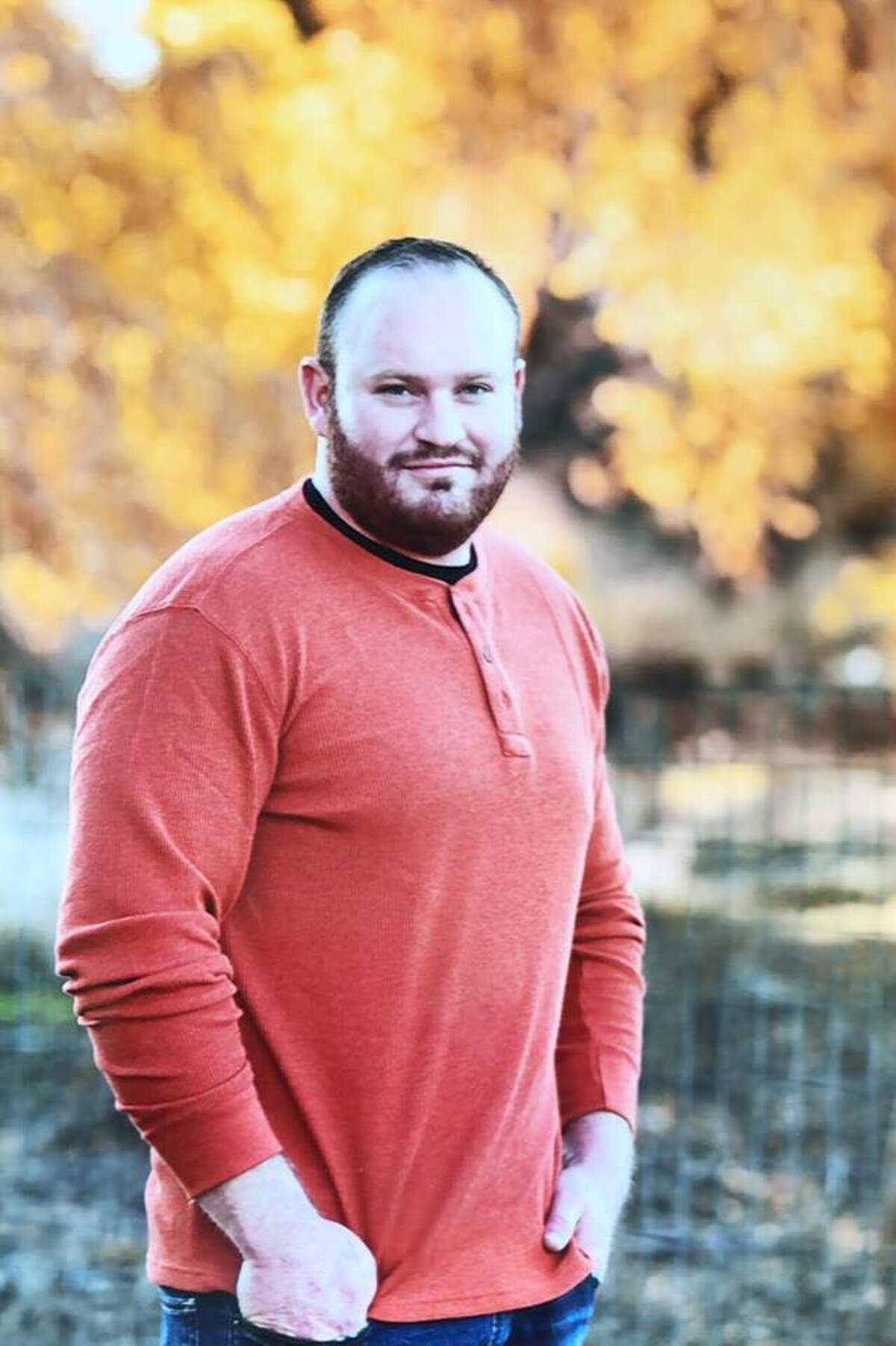
The family got him back on medication, but the Risperdal didn’t work as well. McCandless became depressed and isolated, feeling as though “his life would never be the same,” his parents wrote. He turned again to alcohol and drugs, and his mental health continued to deteriorate.
In the months leading up to the robbery, McCandless’s parents knew their son was sick. According to their records and detailed journals:
They called the state psychiatric hospital on May 6 to ask about having Dillon readmitted. The hospital referred them to a local office of the Idaho Department of Health and Welfare. They made an appointment to talk with someone about his medication, but Dillon refused to go, insisting “he was just fine.”
They made an appointment with his family doctor on May 8. Dillon said he would go, then informed them he was leaving for a job in Wyoming. When he returned two weeks later, Dillon agreed to try a new medication — Seroquel — but it “knocked him out” and he refused to take it, so they went back to Risperdal.
They went to the county prosecutor’s office in June to ask about having Dillon re-admitted to the hospital. “He told us Dillon needed to be a danger to himself or others and would have to be arrested and put in jail and charged before he could be re-evaluated,” they wrote. “We knew that his mental state was already fragile, and to make him a criminal just to try and get him help wasn’t the way to go.”
Idaho law sets a high bar for anyone seeking an involuntary commitment — whether it’s a prosecutor, a medical professional or a family member.
Involuntary commitment takes away a person’s right to make their own decisions about their medical care. So, in Idaho and other states, there is a formal process and a high bar to reach before someone is committed. Two separate mental health professionals must evaluate the person and reach the same basic conclusion: that the person will hurt themselves or others unless they’re hospitalized.
Angela and Jay McCandless are among many Idaho parents and mental health advocates who have voiced frustration with that system. Some Idahoans have died after their loved ones tried unsuccessfully to seek a commitment. A local police chief told the Statesman in 2016 that the commitment law is vague, subjective and taxing to carry out in rural communities.
And there are financial barriers. The psychiatric hospitalization isn’t automatically covered by the state, even though it is court-ordered. The patient, their health insurance, their families and others can be billed for it. McCandless’s parents provided insurance documents showing almost $30,000 of charges for his hospitalization and the ER visit leading up to it. They were responsible for about $8,200.
On the other hand, patients across the country have complained of being hospitalized against their will, in ways that violated their civil rights.
A BuzzFeed investigation in 2016 found that employees of private psychiatric hospitals in nine states were pressured to “fill beds by almost any method — which sometimes meant exaggerating people’s symptoms or twisting their words to make them seem suicidal,” for the purpose of billing their insurance.
One hospital was being investigated for allegations “that it routinely misused Florida’s involuntary commitment law to lock in patients who did not need hospitalization,” BuzzFeed reported.
‘Dillon are you okay?’
Dillon had been refusing to take his medication for five days before the robbery, Angela McCandless says. He was fixated on “Indian things” and buffalo — eating buffalo burgers and buying land to raise buffalo.
She woke the Saturday leading up to the robbery to find her son pacing outside the house, smoking cigarettes and talking to himself. He was barefoot and had a limp from walking on the gravel. He wouldn’t respond to her.
He eventually followed her inside, put on a heavy coat — it was 90 degrees outside — and said he was heading to Walmart to get food for lunch at a new job he was starting the following Monday.
Dillon walked out the door around 2 p.m. His mother started texting him three hours later. He didn’t respond.

“Please make good choices, love you,” she wrote at 10 p.m.
She couldn’t sleep that night. At 2 a.m., shortly before the robbery, she sent a text that said, “Dillon are you okay? Where are you? You have been gone for over 10 hours, what are you doing?”
She later learned that police were looking for someone who matched his description. He had robbed a casino.
His mother says there were no drugs in his system at the time of his arrest.
According to statements from witnesses and investigators:
McCandless drove to the Sage Hill Casino on the Fort Hall Indian Reservation at around 2:25 a.m. on Sunday, July 23, 2017. He parked his truck and stepped out with a shotgun in his right hand and a white plastic bag in his left hand. He entered the casino and walked up to the cashier, putting the plastic bag in the teller’s window. The teller noticed he had a bandanna around his face and a black tattoo on his hand. The plastic bag smelled like potpourri.
“Put the f------ money in the bag now,” McCandless said. He pumped the shotgun, and a shell fell onto the floor.
After the teller put $7,619 in the bag, McCandless left the casino and drove south on the highway.
Police issued alerts, and the McCandless family called police to say they thought the suspect might be Dillon, and he may have taken the shotgun from a family member’s home.
“If I had it within my power, I would be directing the state Health and Welfare Department and the equivalent federal agency to start providing the kind of health care that might have allowed us to avoid these problems,” Judge Winmill told him at his sentencing. “Unfortunately, that is not in my bailiwick.”
No federal mental health court
The McCandless family wish his case could have been moved to the state level, where he may have been admitted to mental health court.
In Idaho, mental health “problem solving” courts require defendants to enter a rigorous treatment program to help them medicate and manage their psychiatric disorders. Graduates are 21% less likely to reoffend than their peers who don’t enter mental health court, according to Idaho Supreme Court data.
The year McCandless robbed the casino, there was one spot open in the mental health court in Bingham County, where he lived and committed the crimes.
Nothing like that court exists in the federal justice system.
Mental health courts are “a way that we can address the real problem rather than settle it with prison,” Winmill told the Statesman in an interview.
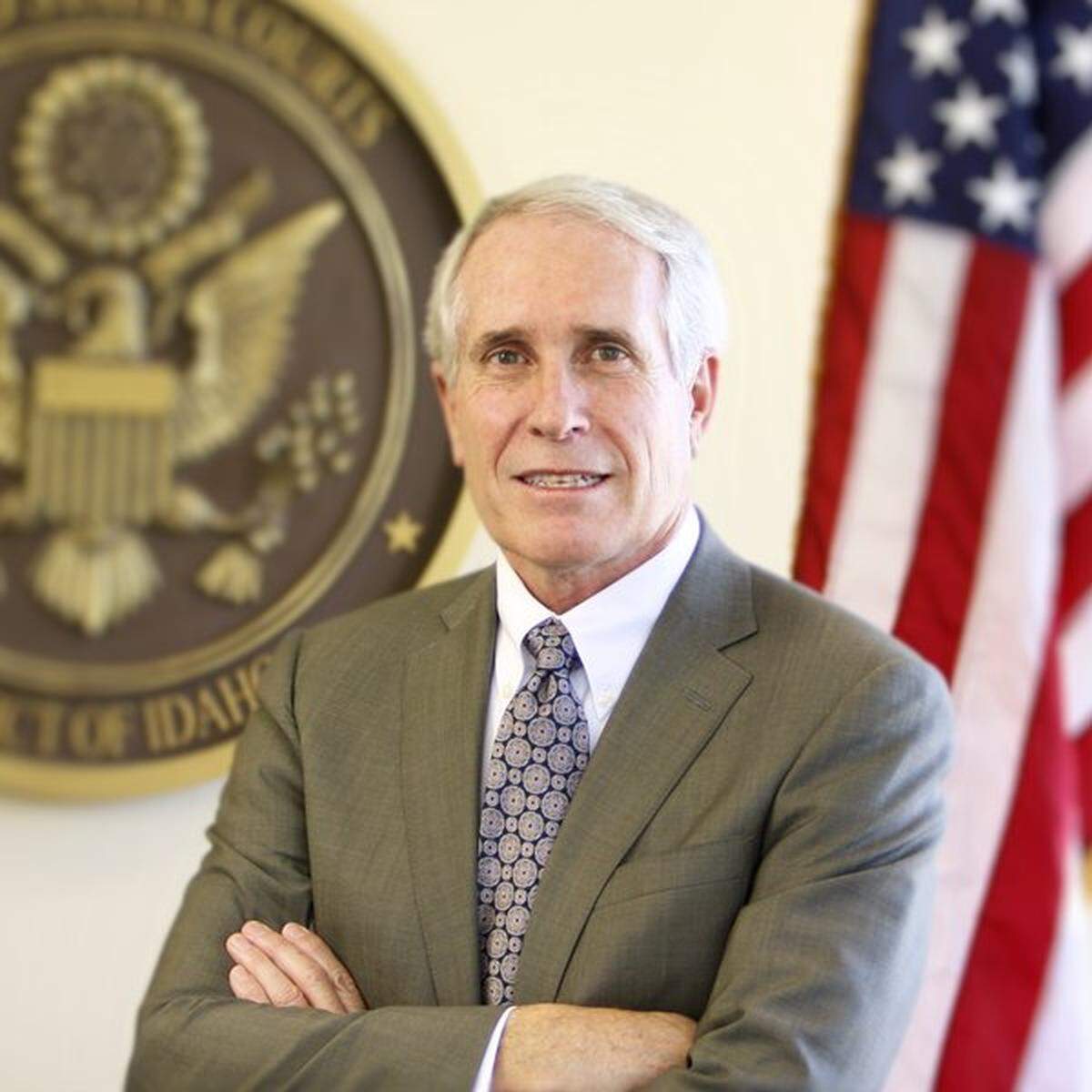
In his 25 years on the federal bench, Winmill has seen plenty of defendants whose severe mental illness played a major role in their criminal behavior.
Some presidential administrations have been “a lot less receptive to the idea than others” when it comes to creating federal programs that offer treatment instead of prison time, he said.
“There’s been a fair amount of push back” from the U.S. Department of Justice, he said.
The U.S. should do more to prevent those crimes in the first place, he said.
“It’s hard to understand culpability and what are the factors contributing to this person’s criminal behavior,” Winmill said. “But our first and foremost goal has to be to protect society. That’s why an emphasis on treatment in advance (is important). Waiting until the individual poses that danger, that’s really when the options disappear. We may just have to remove them from society.”
Sick inmates have the right to decide on meds
There’s no guarantee McCandless will get treatment in prison, either.
While the probation terms laid out for McCandless require mental health treatment when he leaves prison, there is no such requirement while he’s incarcerated. As is common with people who have schizophrenia, McCandless doesn’t like taking his medication due to side effects. He has the right to refuse medical treatment, so he does.
The Bureau of Prisons told the Statesman it could not say how many federal prison inmates with a psychotic disorder are receiving mental health treatment because the “numbers are very fluid and change daily” due to treatment plan updates and inmates’ decisions.
McCandless’s medical records show he often refuses his antipsychotic medications.
Inmates cannot be forced to receive medical care, except in very limited circumstances, according to the bureau.
A 2006 report from the Bureau of Justice Statistics found that nearly half of federal prison inmates had some kind of mental health problem.
While schizophrenia and psychotic disorders weren’t the norm, the report found that 7.8% of federal inmates had delusions and about 4.8% had hallucinations. (Those numbers were higher at state prisons, and much higher at local jails.)
The rate of federal inmates with a psychotic disorder was about three times that of the overall U.S. adult population.

As he is transferred from facility to facility, McCandless is introduced to new mental health providers. They rely on past medical records to figure out what he needs — but parts of those records are based on McCandless’s memory, which his mother says is flawed.
Health care providers in at least one facility decided he didn’t actually have schizophrenia. They believed he was faking symptoms to get sedatives, particularly Ativan, and that his main problem was addiction. Angela McCandless says he never abused Ativan and provided a list of pharmacy refill dates to the Statesman that indicate he used no more than 30 pills a month.
The Statesman requested a phone or email interview with McCandless. The administration at his prison denied the request, citing “the safety and security concerns of the institution.” The public information officer for the prison declined to explain how the interview would pose a “safety and security threat,” saying those details are “not public information.”
Active and muscular when he lived in Blackfoot with his parents, McCandless now looks unhealthy and weak, his mother said. He writes to her with odd requests, talks about hallucinations and delusions, says he has changed races or religions.
They are similar to things he told her in the years before the robbery.
McCandless told his mother in an email in August that he was having trouble.
“I seem to be lost and not able to tell time or where im at,” he wrote. “I have Relayed the message to staff Its been a long time and my mind is seeming to not be at rest. I am still in distress. they have a micraphone in my body. That is relaying womans noises to me and keeping me in pannic all the time. Or Its on the compound or somthing. keeping my emotions at a extreme distressfull level.”
McCandless is scheduled for release in 2025. His family requested a “compassionate release” for McCandless to be released early, arguing that his mental health is declining in the prison.
BEHIND THE STORY
MOREHow we did this story
Idaho Statesman reporter Audrey Dutton learned about Dillon McCandless during a fellowship on rural mental health care in 2018. Over the next year, she conducted interviews with his family, obtained court records and filed public record requests to learn how he ended up in prison and what kind of medical care he received behind bars.
Getting the medical records
The Statesman sought to gather as much information as possible about McCandless’s mental health before and after the robbery.
Dutton filed a Freedom of Information Act request for medical records in August to the U.S. Bureau of Prisons. Dutton requested the records on an expedited basis due to his parents’ concerns about his safety. A court had named his mother a temporary guardian at the time, so she signed a patient privacy waiver on his behalf.
The next month, the Bureau of Prisons mailed the Statesman a CD holding 874 pages of medical records. (The BOP sent McCandless’s mother a copy of the CD at the same time. She had placed a separate request.)
McCandless’s mother provided medical records and other materials documenting his mental health history before prison.
Seeking an interview
Dutton made a request to FCI Sheridan’s warden for an email or telephone interview with McCandless. The request was denied, citing “safety and security concerns of the institution.” Dutton asked for details and reconsideration. She noted that Bureau of Prisons policy allows denials if an interview “would probably cause serious unrest or disturb the good order of the institution” and argued that it was unlikely the interview would have such a drastic effect on the prison. The warden denied that request as well.
McCandless’s mother provided some of his email and written communications. The Statesman has included excerpts to give McCandless a voice in the story.