NTSB: Truck driver weaved out of lane 20 times before 2018 I-84 crash that killed 4 in Boise
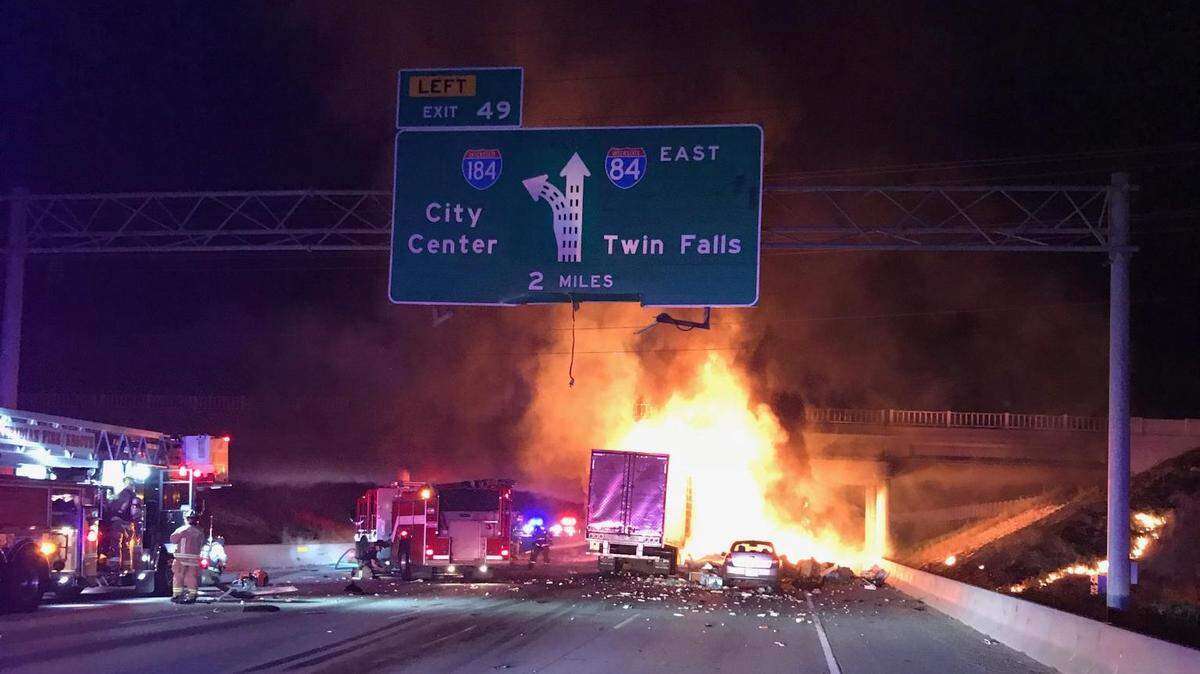
A semitrailer driver drifted in and out of his lane 20 times in the 17 minutes before he plowed into the back of a slow-moving Jeep Wrangler in a crowded construction zone on Interstate 84 in 2018, causing a fiery, fatal crash, a federal investigation found.
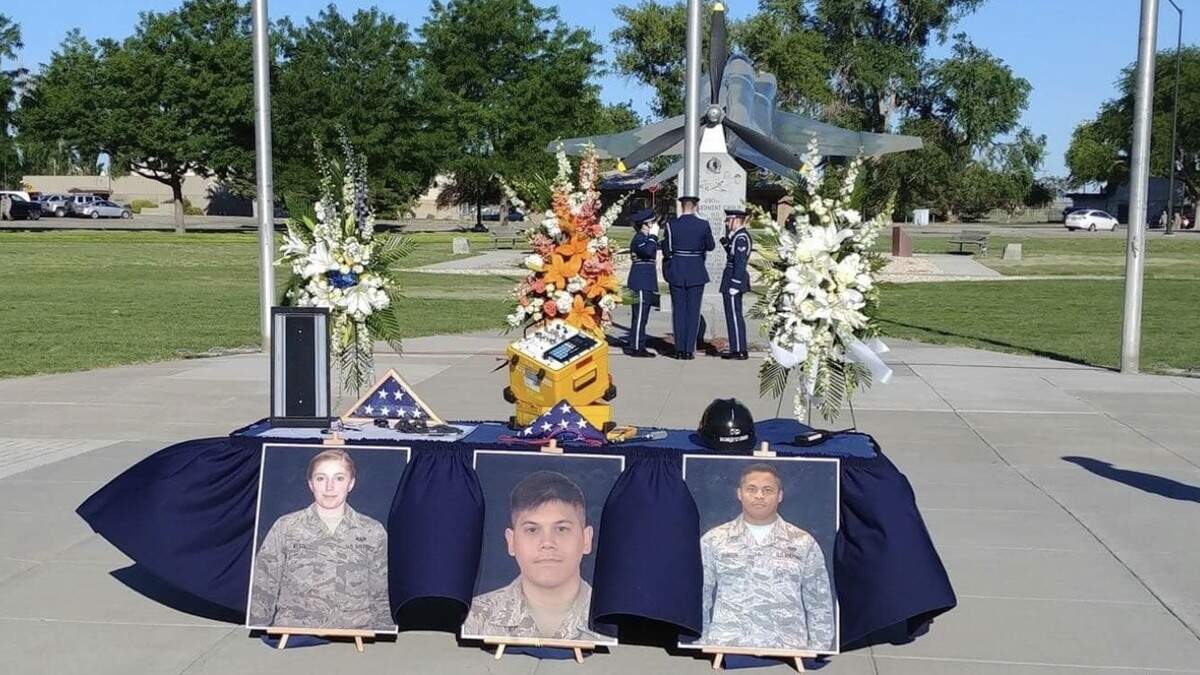
The driver, Illya Tsar, 42, died in the crash, as did the three occupants of the Jeep, all stationed at Mountain Home Air Force Base. They were Senior Airman Carlos “C.J.” Johnson, 23, of Key West, Florida; Senior Airman Lawrence “Pit” Manlapit III, 26, of Bridgeport, Connecticut; and Senior Airman Karlie A. Westall, 21, of Sioux Falls, South Dakota.
Two years after the June 16, 2018, crash, the National Transportation Safety Board concluded in a report that fatigue likely kept Tsar from responding to traffic that had slowed almost to a stop in front of him.
“The driver’s inability to maintain his vehicle’s lane positions, as well as his complete lack of response to the traffic queue as he came upon it, are consistent with a fatigue-related lapse in vigilance,” the NTSB concluded.
The NTSB also faulted the Idaho Transportation Department for allowing the contractor on a freeway construction project to shut down three of the four eastbound lanes, creating a bottleneck that left vehicles unable to move in the one open lane for an extended period.
An order by contractor Penhall Co. to traffic control subcontractor Specialty Construction Supply of Meridian to close three lanes was not authorized, but was allowed for several days before the crash, the report said. The construction staging and traffic-control plan called for two lanes to remain open.
“The ITD work zone inspectors noted the lane closures in their traffic control maintenance diaries, but they did not take any action to address the fact that the lane closures exceeded those permitted by the traffic control plan or to resolve the resulting hazards associated with the traffic queue,” the report said.
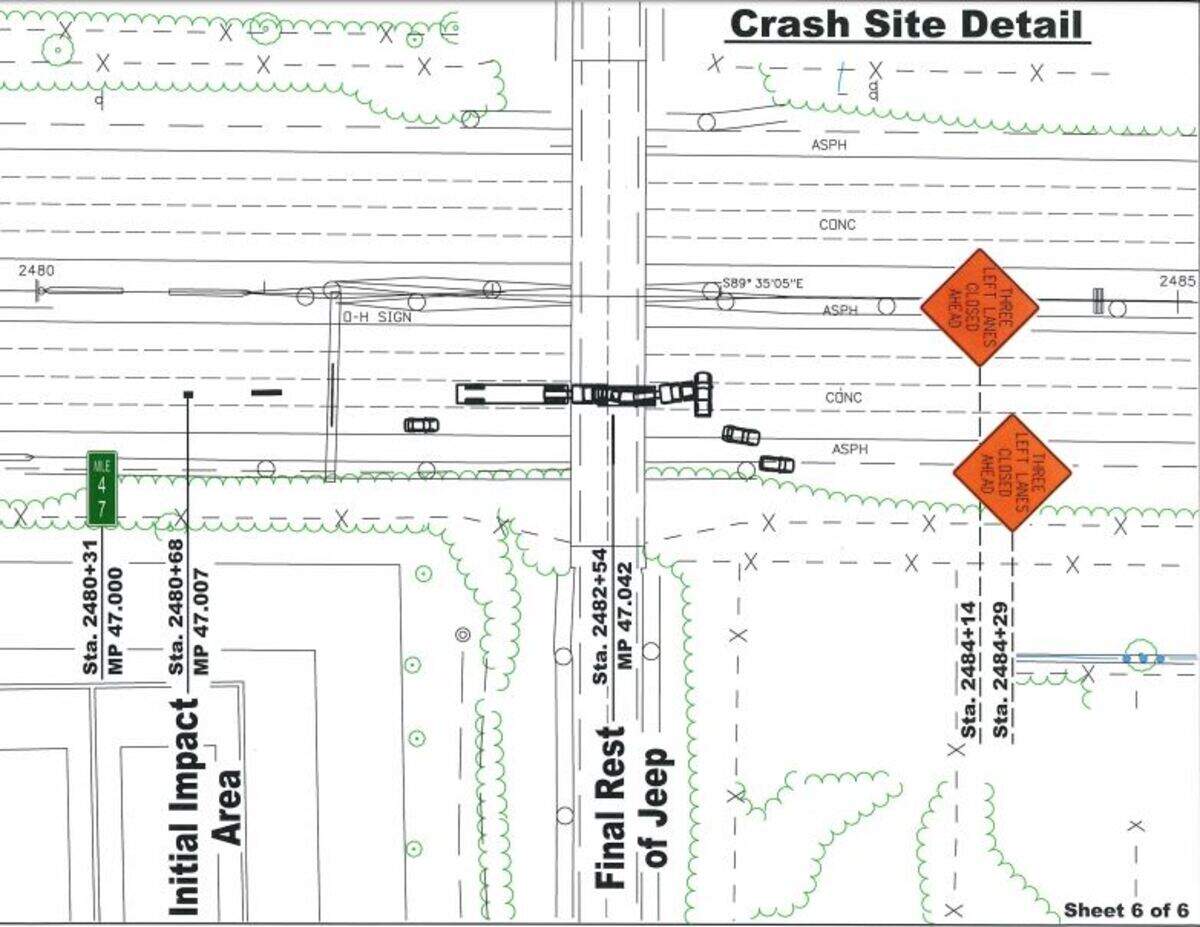
With only the one open lane, traffic backed up for more than a mile. Motorists were already in stop-and-go traffic before they reached signs alerting them to reduce their speeds and to get over because of the closed lanes, the report said.
“By merely noting, and not preventing, the contractor’s deviation from the traffic control plan, the ITD work zone inspectors failed to conduct the oversight for which they had been placed on the scene in the construction area,” the report said. “The ITD also failed by not ensuring that its inspectors fulfilled their oversight duties.”
Inadequate traffic controls and queue management procedures were cited as contributing factors, along with the lack of oversight by ITD.
Several lawsuits were filed against ITD and the other companies. Those suits are still pending.
“The Idaho Transportation Department has been advised by legal counsel to not comment further until the matter is out of litigation,” spokesperson Jake Melder wrote by email.
A person who answered the phone Thursday at Penhall’s Salt Lake City office referred a reporter to the company’s Irving, Texas, headquarters. No one returned a message left at that office.
Driver set out from Yakima with a load of apples
On the morning of June 16, 2018, Tsar, a resident of Rochester, New York, picked up a load of apples in Yakima, Washington. The fruit was bound for Albertsons Cos. in Methuen, Massachusetts, on a route that Tsar had followed while delivering Northwest fruit many times for Krujex Freight Transport Corp., of Vancouver, Washington, and other carriers.
An electronic logging device on the truck that tracked movement showed that Tsar could have slept for no more than 12 hours during the two days before the crash. Tsar told his employer that the ELD wasn’t working, so he was keeping his driving hours on a paper log.
He apparently falsified those records. The day before the crash, the ELD showed the truck moving for various intervals of time from 5:54 p.m. on June 15 to 1 a.m. on June 16. The logbook that he filled out showed him driving only from 9 p.m. to 1 a.m.
On June 16, Tsar reported taking off-duty time in the sleeper cab until 2 p.m. and driving until 7 p.m. The ELD, which the NTSB said was working properly, showed him driving eastbound beginning at 7:15 a.m. Pacific time. He drove a series of short segments, from 15 minutes to 3.5 hours, as he headed to Boise. The ELD showed the truck stopped for several periods of 2.5 hours or less.
Truck drifted for several miles
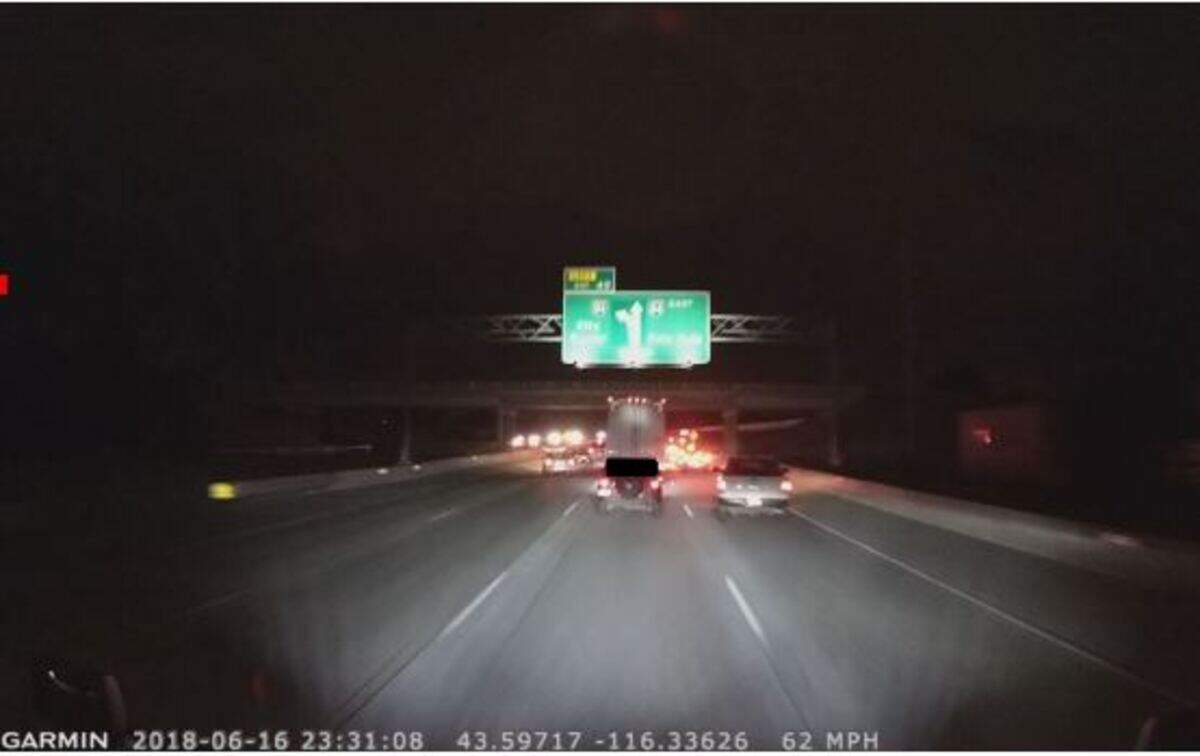
Seventeen minutes before the crash, at 10:32 p.m. Mountain time, Tsar drifted onto the eastbound shoulder 10 times before steering back into the adjacent slow lane, the NTSB found after viewing video from a camera installed in the 2019 Volvo truck-tractor. The drifting and corrections took place over a two-and-a-half-minute period, the NTSB said in its final report on the crash, issued June 11.
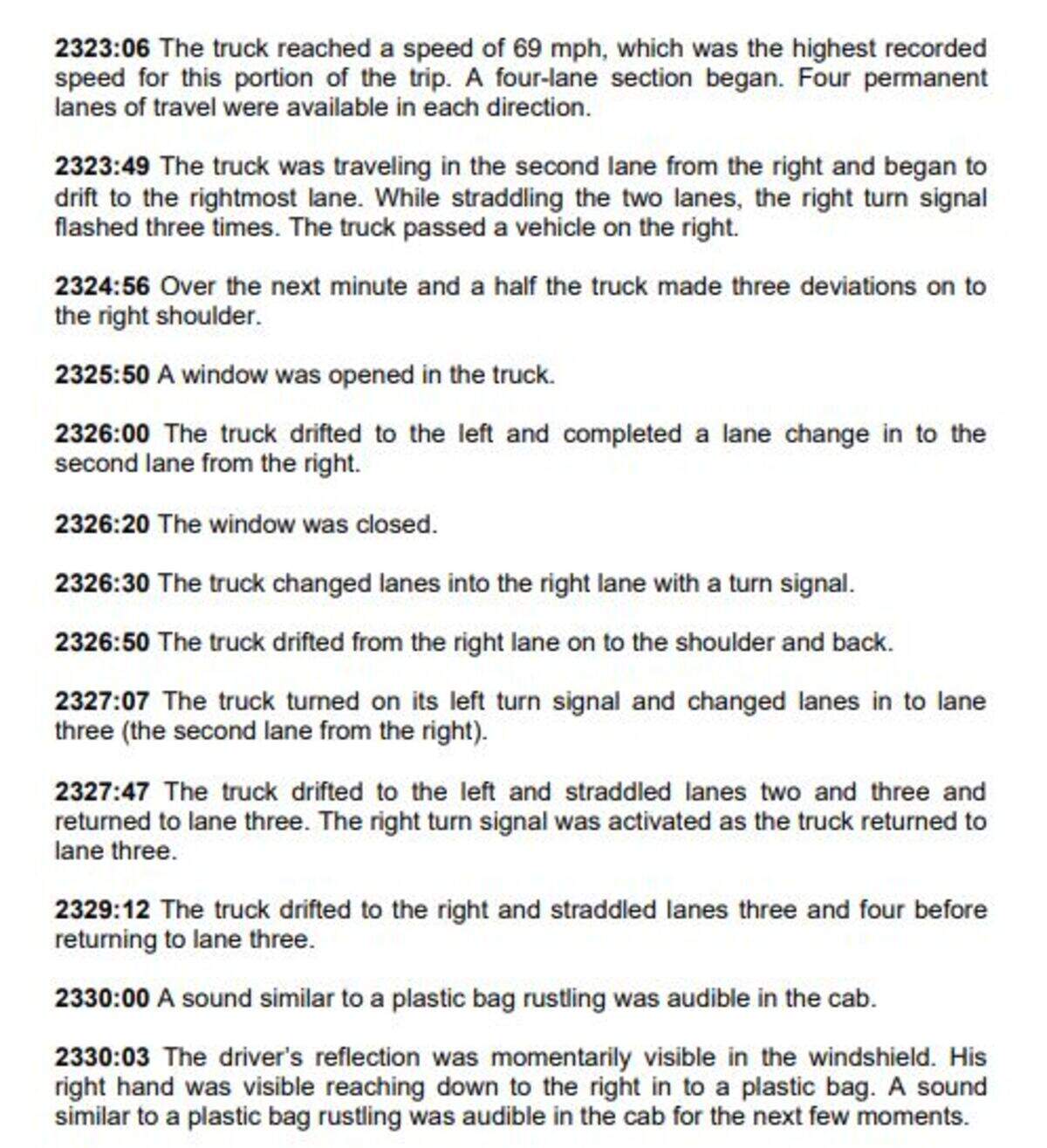
For the next 90 seconds, the truck drifted to the shoulder and back another five times while moving between 60 mph and 65 mph. At 11:23 p.m., the truck, then traveling in the second lane from the right, began to drift into the slow lane. During the next 90 seconds, the truck drifted onto the shoulder from the slow lane three more times.
At 11:26 p.m., the truck drifted from the slow lane left into the next lane. It then drifted back into the slow lane and onto the shoulder. At 11:27, it went from lane to lane, and then straddled a lane, before returning to the second lane from the right.
The Jeep Wrangler driven by Johnson was traveling only 3-4 mph, according to airbag data, and was in a line of traffic on the freeway when it was struck from behind by Tsar’s semi. The truck was going 62 mph, according to the onboard camera and through calculations by the NTSB.
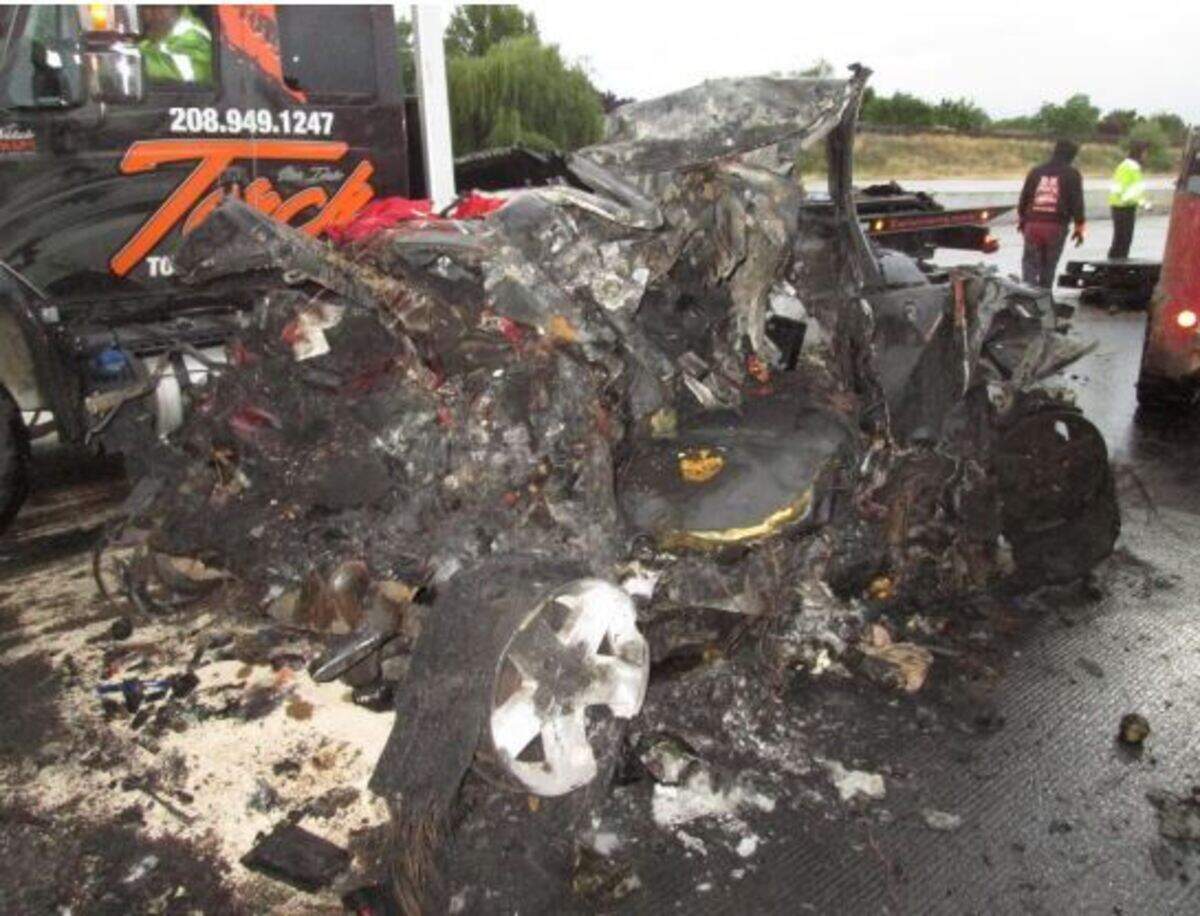
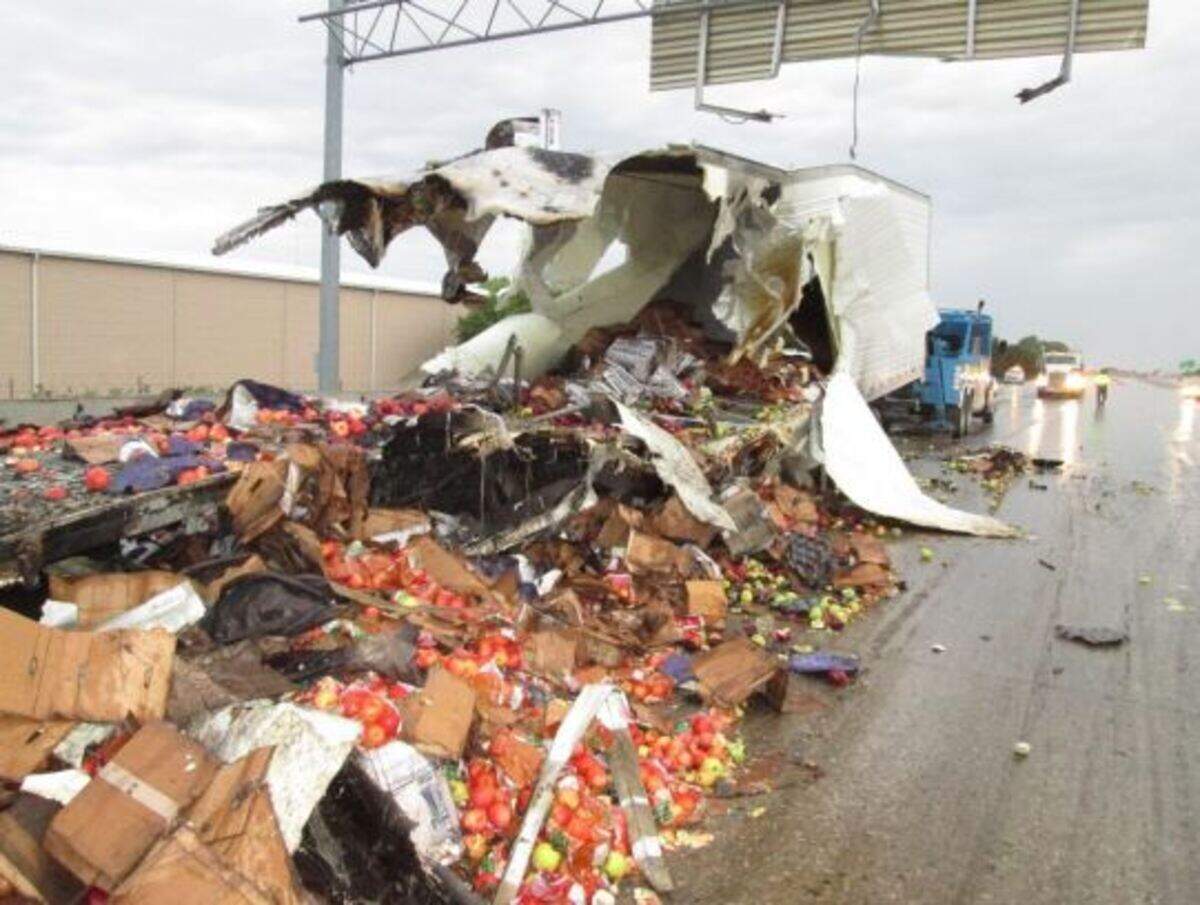
The impact pushed the Jeep underneath a semitrailer in front of it. The Jeep’s engine was slammed into the passenger compartment. Several other vehicles were also struck. The collisions caused a fire under the Cloverdale overpass that weakened the structure and led to its replacement.
Johnson, Manlapit and Westall all were killed, along with Tsar.
A toxicology test conducted on Tsar’s body after the crash was negative for drugs and alcohol, the NTSB report said.
The NTSB noted that the 2019 Volvo tractor-trailer driven by Tsar was marketed with a $2,524 crash-avoidance system. The truck’s owner, Krujex Freight, asked for the truck to be delivered without the crash-avoidance system, the report said.
Truck driver had poor driving record
Tsar, a Ukrainian immigrant, had been licensed to drive commercial trucks since 2009. His license showed no restrictions and he was authorized to drive single, double and triple trailers. He had worked for Krujex since May 2018.
A 2018 Idaho Statesman investigation revealed that Tsar had more than 20 driving violations in four states, mostly in Oregon and Idaho, and found evidence of violations in other states. New York suspended his license twice in 2017 for having two and three serious violations, respectively, within three years.
He was cited twice, in 2009 in Idaho and 2012 in Oregon, for driving on a suspended license.
A commercial trucking expert who reviewed Tsar’s driving record for the Statesman in 2018 described it as “amongst the worst I have seen.”
“His record should have been a red flag to anybody who was considering the employment of his services, or the continuation of his employment as a truck driver,” said Paul Herbert, a former trucker who runs the Western Motor Carrier Safety Institute in California.
Krujex Freight’s rate of driver out-of-service violations — which means the driver is a serious, immediate danger to themselves or others on the road — is three times higher than the national average, according to Federal Motor Carrier Safety Administration records.
Krujex did not return a call for comment.
Numerous lawsuits filed
Families of the three deceased Air Force service members filed wrongful death lawsuits against ITD and other parties, including Krujex and its owners, the Idaho Transportation Department, Penhall, Specialty Construction Supply, Albertsons Cos. and the Idaho State Police.
“It is the Johnsons’ desire that through this action and those of the other airmen families, real change can be made as it relates to the due diligence, planning, and execution processes of highway and interstate construction zones within the state of Idaho,” said Meridian attorney Dan Jenkins, who represents Johnson’s parents, Daisy and Keith Johnson.
“Ultimately, their true hope is that situations such as that which occurred on the night of June 16, 2018, can be avoided so that no family has to experience the pain, suffering and tragic loss that the families of these young airmen have endured and continue to endure.”
The Johnson lawsuit faults Krujex for hiring Tsar despite his poor driving record. It said the company advertised that it specialized in safe, dependable and efficient transportation of fresh produce across the country.
Albertsons was named in the lawsuit for allegedly not checking into Trujex’s safety record before hiring the company to transport its apples.
The lawsuit contends that the wreck more than likely would not have happened had Trujex not hired Tsar and if Albertsons hadn’t contracted with the company.
Penhall, Specialty Construction Supply, ITD and the Idaho State Police are alleged to have caused dangerous road conditions by closing off three of the four eastbound freeway lanes. The suit says the defendants knew about the hazard but did nothing to increase motorist safety.
The Johnsons are seeking an amount to be proved at trial, which hasn’t yet been scheduled.
The defendants deny they did anything wrong.
The lawsuit filed by Manlapit’s family has progressed the most. A jury trial is scheduled on Aug. 26, 2021, before 4th District Judge Peter Barton in Ada County. The others are still in preliminary stages.
Truck driver’s family files tort claim
Earlier this month, Tsar’s family filed a tort claim against seven public agencies: the state of Idaho, ITD, ISP, Ada County, the Ada County Sheriff’s Office, the Ada County Highway District and the city of Boise.
A tort claim is required before a claimant can sue a public body. It gives the agency an opportunity to view the claim and to negotiate a settlement, if there’s liability, without going to trial.
This story was originally published June 28, 2020 at 7:00 AM.