
Idaho congressional delegation brings bill to stop Lava Ridge wind farm near Minidoka
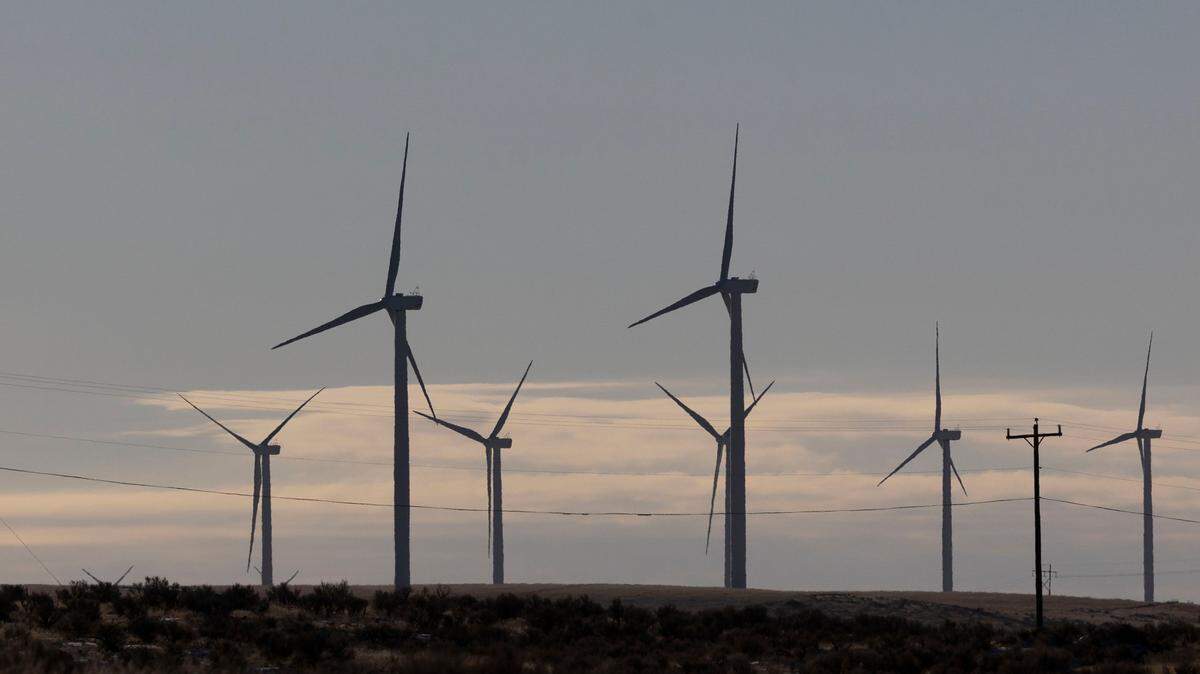
Idaho’s congressional delegation introduced a bill last week to stop the development of a clean-energy project in south-central Idaho.
U.S. Sens. Jim Risch and Mike Crapo and Reps. Mike Simpson and Russ Fulcher, all Republicans, introduced the “Don’t Develop Obstructive Infrastructure on our Terrain Act.”
Coined the Don’t DO IT Act by its sponsors, it would require the U.S. Secretary of the Interior to deny any wind or solar energy project proposed on public land that is disapproved of by a state legislature.
The bill was inspired by a proposed wind project in Idaho that has sparked significant controversy.
The Lava Ridge Wind Project, which is under review by the Bureau of Land Management, would be located 25 miles northeast of Twin Falls. It would place up to 400 turbines up to 740 feet in height across Jerome, Lincoln and Minidoka counties. The project would also include the development of new roads, power lines, substations, maintenance facilities and battery storage facilities.
It also would have turbines placed as close as a few miles to the Minidoka National Historic Site, a former incarceration camp for Japanese Americans during World War II.
Idaho officials, groups oppose wind project
The delegation introduced the bill after the Idaho House of Representatives in March unanimously passed a resolution expressing opposition to the wind project.
In a joint letter with the Idaho delegation to BLM state director Karen Kelleher, Idaho Gov. Brad Little and Lt. Gov. Scott Bedke previously expressed concerns about the wind project.
“Affected farmers, ranchers, tribes, the Japanese American community and sportsmen have voiced legitimate objections,” they said in the letter. “As it stands today, the local community predominantly has not shown support for this development.”
In the letter, the officials said the project conflicts with “deep-rooted” Idaho values for land conservation and land-use opportunities for recreation, grazing and sporting activities.
The project is facing opposition from Friends of Minidoka, a nonprofit organization based in Jerome that preserves the Minidoka National Historic Site. The organization claims the project would diminish the immersive experience of its historical center, which educates the public of the dark history of forced removal of Japanese Americans.
“Idahoans have been loud and clear on Lava Ridge: Don’t do it!” Risch said in a press release. “Yet, the Department of the Interior is still moving full speed ahead. The Don’t DO IT Act will empower Idaho and other states to prevent the federal government from implementing unwanted, obstructive, and misaligned wind and solar energy projects on public land, like Lava Ridge.”
The bill is now held in the Senate Energy and Natural Resources Committee.
About the Lava Ridge project
The environmental impact statement for the Lava Ridge Wind project is in the analysis phase by the BLM.
According to the draft impact statement, the need for the project arises from regional objectives to increase the amount of renewable, carbon-free energy sources into the energy supply. Idaho Power, the state’s largest electricity provider, aims to provide 100% clean energy by 2045. According to the impact statement, Idaho Power would need over 2,000 megawatts by 2045 to reach that goal with renewable energy.
The Idaho Capital Sun previously reported that if approved, the project would generate more than 1,000 megawatts of clean energy, which is equivalent power for more than 300,000 homes. It also would allow Idaho to export wind energy to neighboring states.