
West’s wildfire season is coming. Elite Boise smokejumper crew is first line of defense
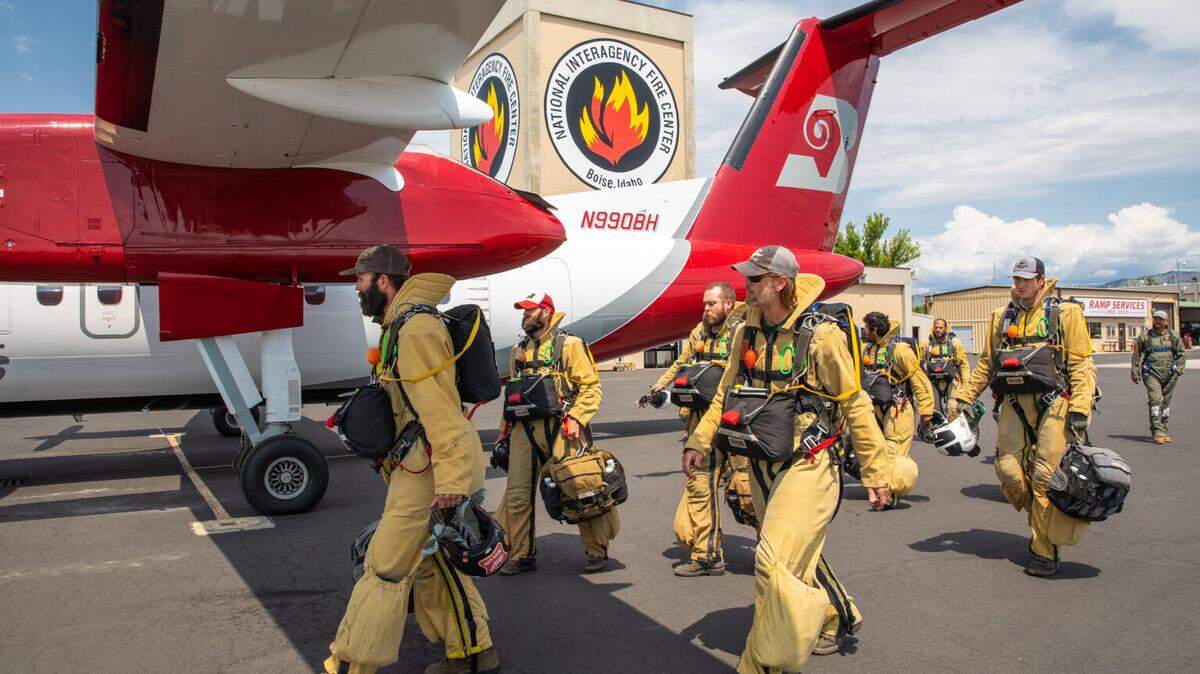
When dispatch calls in a new wildfire, Cole Siemion and the other Great Basin Smokejumpers are trained to suit up and be ready to board a plane in two minutes.
Smokejumpers are highly trained wildland firefighters who parachute from airplanes 3,000 feet off the ground to reach the fires.
Their goals are safety and speed, and the work is difficult and dangerous.
What makes smokejumpers unique and specialized is the way they reach fires. Parachuting to wildfires allows them to reach some of the most remote and rugged terrain, miles from any road or trail.
“Our primary mission is an aggressive, initial attack,” Siemion told the Idaho Capital Sun in an interview. “The vast majority of the time, the expectation is that we will be suppressing the fire until it is out. That might mean working all night. It might mean working until 4 in the morning, getting a few hours of sleep and starting again the next day.”
There are 65 members of the Great Basin Smokejumpers — or Boise Smokejumpers — based at the National Interagency Fire Center located near the Boise Airport. They are training and preparing to spend the late spring, summer and fall fighting wildfires across the West and even in Alaska.
After a snowy spring, the fire season isn’t especially active right now in Idaho and the West, but officials are expecting wildfire risks to increase as temperatures rise. When that happens, Siemion and smokejumpers will often be the first responders to many fires they jump into.
The Boise Smokejumpers are part of the Bureau of Land Management, and their base is located at NIFC. Between the BLM and the U.S. Forest Service, there are nine smokejumper base locations across the United States. Three of the bases are in Idaho (Boise, McCall and Grangeville), while the other bases are in Montana, California, Washington, Oregon and Alaska.
What is a smokejumper?
Smokejumping is not an entry-level firefighting position, and candidates must have previous fire experience, experience using chainsaws and hand tools, and must be able to pass a rigorous physical training test, according to the McCall Smokejumpers website.
Smokejumper candidates must also pass a multiweek training program in which they spend time in the field and in classrooms. The training includes mock airplane exits and jumps, leadership skills, parachute landing techniques, tree climbing, navigation exercises, work with tools and chainsaws, and practice parachute jumps.
Like many smokejumpers, Siemion gained experience as a member of a Hotshot crew. According to the Department of Interior’s wildland fire jobs website, a Hotshot crew is a mobile, specialized firefighting crew that works on the ground in rugged terrain on active and difficult areas of wildfires.
Siemion has worked as a smokejumper since 2015, when he started as a rookie with the McCall Smokejumpers.
Before that, he had never jumped out of an airplane before.
“Of course I was nervous standing in the door of an aircraft, but I’m still nervous even today having jumped for seven years,” Siemion said.
“The training is designed in such a way to ingrain safe habits, and I think our track record shows that the training works. Of course, jumping is thrilling. It’s fun. It’s exciting. But it’s also based on good, safe habits, and I always fall back on that.”
To date, Siemion said he has parachuted into wildfires 55 times and made 191 jumps altogether, including practice jumps.
Even as an experienced smokejumper, Siemion said the training is extensive and continuous. Each year, returning smokejumpers complete refresher training that includes suiting up, equipment checks, jump spot selection, landing procedures and malfunction procedures.
Great Basin Smokejumpers rig their own parachutes, and must demonstrate their skills packing chutes over and over before jumping for real. They also track and document who rigged each chute, including the date and location. As of Thursday, Siemion has rigged 184 parachutes.
“The expectation is once we rig a chute, we have to have a system of accountability for who rigged that chute and maintain the documentation,” Siemion said.
Along with learning to pack parachutes and jump out of airplanes, Great Basin Smokejumpers also learn to sew so they can make, modify, repair and customize their gear.
Outside of the active fire season, smokejumpers may be found in the loft at their base working with a sewing machine to make their own jump jackets, pants and gear bags. They also customize their own parachute helmets by combining a ski helmet with a wire-cage face mask. Smokejumpers who obtain a Federal Aviation Administration qualification also learn to repair and patch their own parachutes, in case one is damaged out in the field.
Some fire personnel specialize in manufacturing gear and obtaining an FAA senior rigger qualification, which Siemion is working to obtain now. He said all Great Basin Smokejumpers develop some level of skill at sewing and repairing gear.
“We know best what our needs are, and we are always trying to make improvements,” Siemion said. “We might not be the fastest sewers in the world. But if we want to make adjustments, maybe that is finding a more comfortable jump jacket with better padding or lighter materials. With some proficiency at sewing, we are able to adjust much more quickly and nimbly than if we only relied on contracts with outside vendors.”
What happens when smokejumpers are called out for a fire?
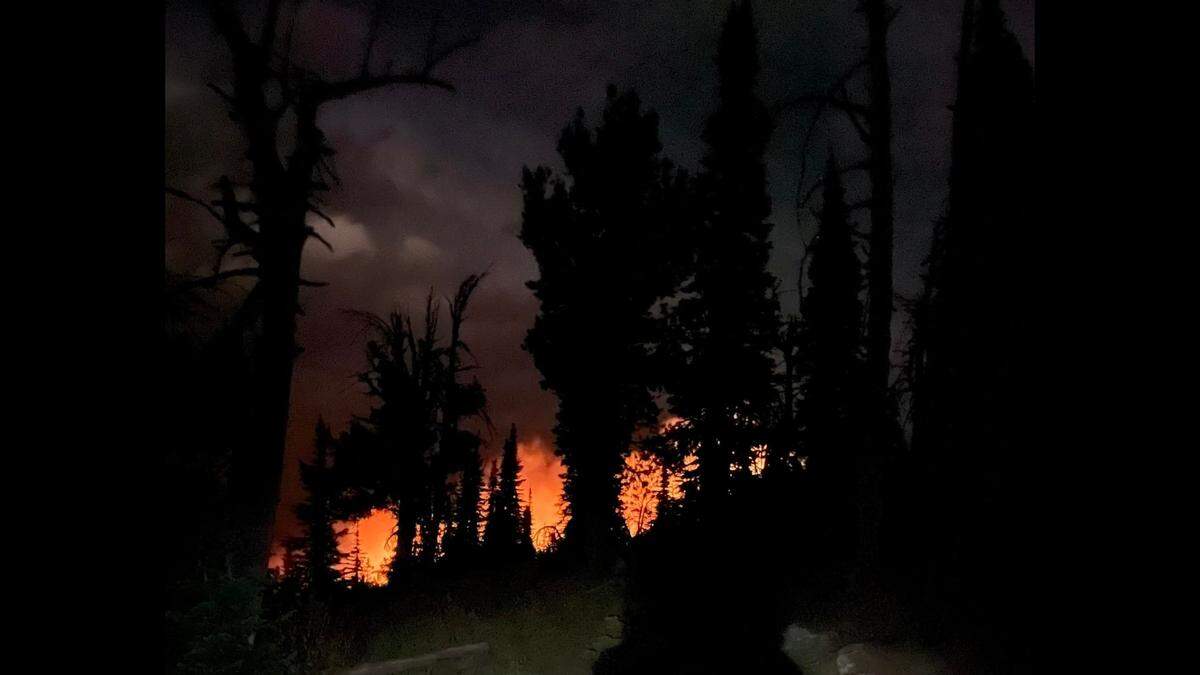
When the Great Basin Smokejumpers are called out for a fire from Boise’s National Interagency Fire Center, they could be heading anywhere in the West or up to Alaska.
Eight smokejumpers load into a plane and assess the fire from the air once they get close. If the fire is small, a minimum of two smokejumpers will parachute in. If the fire is larger, they might send all eight.
Working with a spotter, the smokejumpers select a landing zone and jump from the plane wearing the jump jacket and pants they may have sewn themselves, and the helmet they customized. They carry a pack with personal gear, including water, food, a radio and a fire shelter.
Once the smokejumpers land safely, the crew on the plane will drop them cargo, which may include fire packs designed to sustain two firefighters for 48 hours, hand tools, sleeping bags, more water or chainsaws.
After working all day and night to fight a fire, the work isn’t done when a fire is out or smokejumpers hand off a larger spreading fire to a larger team.
Smokejumpers then must pack out up to 130 pounds of gear and hike out to a road, trail or helicopter landing spot to get picked up. Sometimes, that means a one-mile hike. Other times, packing out could entail an 8-mile hike off trail through rugged mountains to reach the closest suitable spot to land a helicopter.
For Siemion, it’s becoming a career.
He enjoys the different experiences that each fire offers, and he enjoys working with the other smokejumpers.
“Being a public servant working to protect people’s property and our shared natural resources is something I get satisfaction with,” Siemien said. “Most of all, it’s a pleasure working with a group of such highly motivated, hardworking, smart problem solvers. That is what it comes down to and it is what the Boise Smokejumpers is all about, as is the larger wildland fire community as well.”
What is the outlook for this year’s fire season?
Because of record snowpack across parts of Idaho and the West, there isn’t a lot of large fire activity in the United States now, said Nick Nauslar, a predictive services meteorologist at the National Interagency Fire Center in Boise.
“Right now we are expecting a slower or even a delayed start to the fire season in parts of the Southwest, the mountains, Utah and Nevada, and throughout a good part of California,” Nauslar said in a telephone interview. “However, a heat wave or two can quickly change things, as we’ve seen before.”
While the snowpack and melting snow provide moisture on the ground that may lead to a delayed start to the fire season, that moisture is also helping fuels such as grasses and shrubs grow, which will increase the risk for rangeland wildfires, particularly at middle elevations, as those fuels dry, Nauslar said. As a result, Nauslar said Idaho and parts of the West could start seeing grass fires in the next month or so.
Nauslar and other meteorologists and officials will continue to monitor fire risk and activity as temperatures increase and the risk levels change.
“One thing to caution people on is that just because we could have a delayed start to the fire season doesn’t mean there won’t be any fires,” Nauslar said. “If those big fires happen in your backyard or near you, it can have big effects on you even though on a broader scale it may not be a ‘bigger’ fire season. No matter the year, we always get fires and almost always get big fires across the West at some point.”
Smokejumper requirements
According to the McCall Smokejumpers website, the minimum physical requirements a smoke jumper candidate must meet on the first day of training are:
▪ Seven pullups
▪ Twenty-five push-ups
▪ Forty-five sit-ups
▪ A 1.5-mile run in under 11 minutes (that’s a 7:20 per mile pace)
In smokejumper training, candidates are also required to demonstrate packing out 110 pounds of gear over a distance of 3 miles in 90 minutes or less, according to the McCall Smokejumpers.
This story was originally published May 23, 2023 at 4:00 AM.