In Boise visit, Bureau of Land Management director says we’ll ‘fight back’ on megafires
The director of the Bureau of Land Management in Boise said the infrastructure spending that directs millions to wildfire prevention will become more critical for Idaho in the coming years as the Bureau of Land Management works toward gaining a handle on megafires.
Megafires — blazes larger than 100,000 acres — have burned a swath of land across southern Idaho in the last several decades, including the Soda Fire, which scorched more than 280,000 acres southwest of Boise in 2015.
Tracy Stone-Manning, who was sworn in as director in October, visited Boise last week to learn about fuel breaks and visit the National Interagency Fire Center.
“We’re always gonna have fire,” Stone-Manning told the Idaho Statesman in an interview. “The question is, are we going to have megafires that fundamentally change the ecosystem? And that’s what we’re fighting back against, and that’s why Congress is investing so much money and the president has asked for it.”
Director tours Boise-area fuel breaks
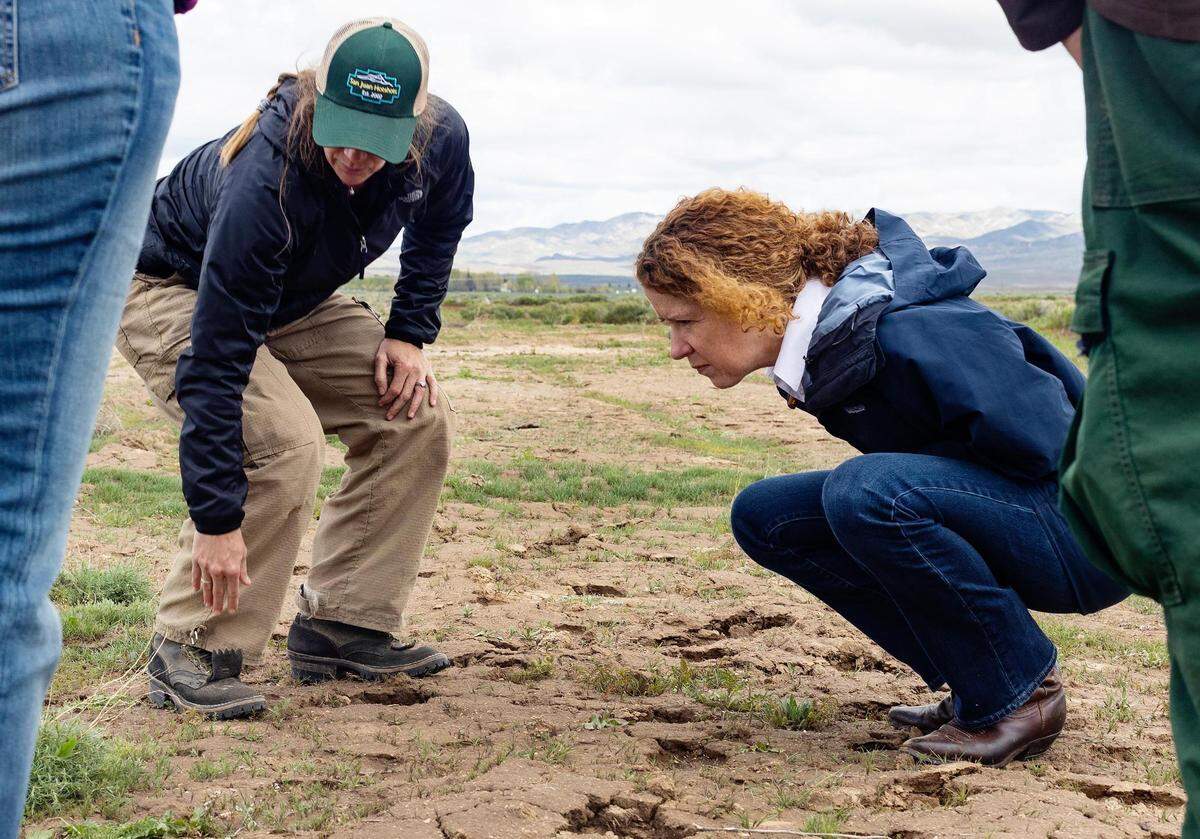
Stone-Manning and several other Bureau of Land Management officials — including incoming Idaho director Karen Kelleher — toured part of the Paradigm Fuel Break Project site between Boise and Mountain Home. Lance Okeson, Boise District BLM fuels program lead, said the roughly 300,000-acre site represents a paradigm shift in how the agency deals with megafires.
“I think we’re at the beginning of turning a corner,” Okeson told the Statesman. “Megafires are not something we have to accept.”
Okeson stood in the middle of one of the Paradigm fuel breaks at Ditto Creek and Lehto roads as he spoke. The breaks are strips of land on either side of roads that help slow fire’s momentum, allowing firefighters to gain ground over a burn. The Bureau of Land Management has been working on fuel breaks in the Paradigm project area since 2016, clearing invasive and highly flammable cheatgrass, Russian thistle and more.
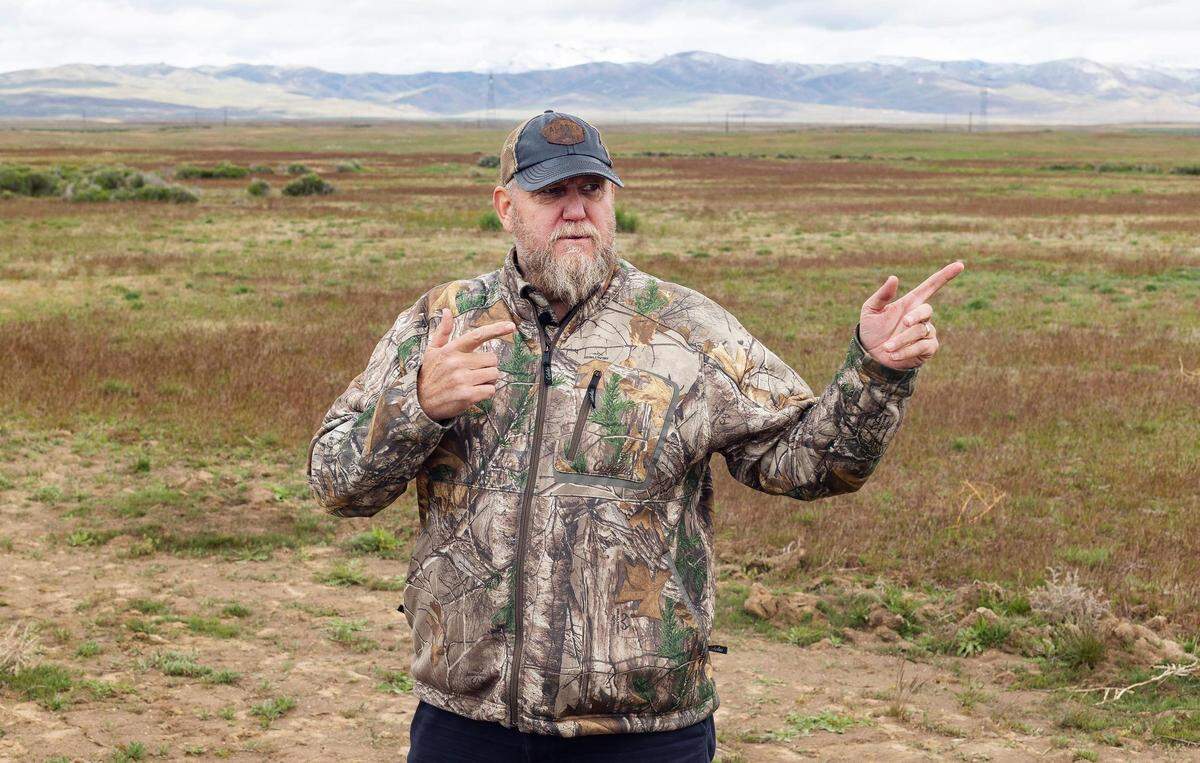
For now, the break looks like a barren strip of land. The agency has seeded forage kochia, a Eurasian shrub known for its fire resistance and ability to outcompete damaging grasses. Small tufts of forage kochia dot the fuel break from previous planting seasons, while more tiny seedlings are starting to push their way through the soil.
Okeson said similar fuel breaks have proven effective just down the interstate near Mountain Home, though the use of forage kochia is somewhat new and controversial, since it’s not native to Idaho. The breaks can reduce flame height and fire intensity, letting fire crews gain control with fewer resources.
“We’ve called them a force multiplier,” Okeson said.
Stone-Manning said about 1.5 million acres of BLM land are due for fuel treatments in the next five years. Those will include more fuel breaks, mechanical thinning and prescribed fire.
Mike Williamson, spokesperson for the BLM’s Boise District said the Idaho Bureau of Land Management has received about $21.9 million to address fuels this fiscal year, which ends Sept. 30. That is an increase of about one-third and will be used to treat roughly 250,000 acres.
“Through projected increases in both fuels program base and Bipartisan Infrastructure Law funding from 2023 through 2026, BLM Idaho anticipates an estimated $30 million available annually for wildfire resiliency infrastructure work,” Williamson told the Statesman in an email.
Fuel breaks create optimism for the future
Okeson said the fuel breaks help create compartments on the landscape that will prove useful as growth, like the 2,300-home Mayfield Springs subdivision nearby, means human lives and property are at risk in wildfires.
What’s more, the bureau hopes the Paradigm project will prevent fires from moving downrange or taking priority over burns in the Owyhees, where sage grouse habitat is at risk. The birds, whose population is declining, have teetered near endangered species protections for years.
Stone-Manning said eventually the hope is that sage grouse and natural sagebrush can return to the area.
“The thing that I’m excited about with investments in infrastructure is to be able to show folks the powerful restoration on our public lands to make them more resilient,” Stone-Manning said.
This story was originally published May 9, 2022 at 9:31 AM.