Idaho leaders open door for potential development near McCall amid public opposition
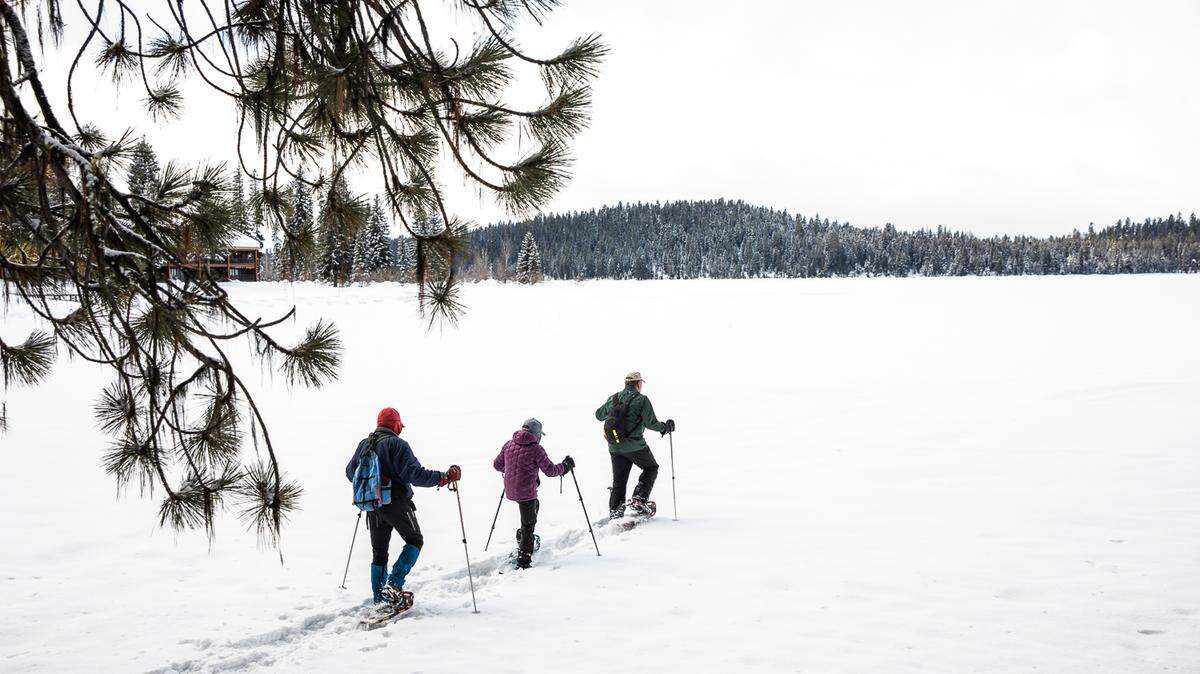
The Idaho State Board of Land Commissioners on Tuesday voted to dissolve a moratorium on leases on state-owned land in McCall, opening the door for potential development and a controversial land swap as residents and recreationists voiced their concern.
The board, which includes Gov. Brad Little, Attorney General Lawrence Wasden and Idaho Department of Lands Director Dustin Miller, voted to approve the Payette Endowment Land Strategy. That plan will address more than 5,000 acres of state-owned endowment lands that the department says are currently “underperforming” in revenue generation under their designation as timberlands.
The strategy splits 13 parcels into four tiers of “transition lands,” marking out timelines for nine of the parcels to transition into more lucrative revenue sources for the Department of Lands, which uses funds from endowment lands to benefit public schools in Idaho.
The board also voted to lift a moratorium on leasing activities on its McCall-area land and “begin accepting applications for lease, easement, land exchange, and disposition of lands.” The Department of Lands will begin vetting applications immediately, including a controversial land swap proposal that many in the McCall area have rallied against.
According to the Department of Lands’ recommendations approved by the board Tuesday, the department can begin vetting an application from Trident Holdings, a Boise investment firm. Trident proposed swapping timberlands it plans to buy in North Idaho for roughly 28,000 acres in the McCall area that would include 10 of the 13 parcels in the Payette Endowment Land Strategy plan.
According to what Trident is calling its Preserve McCall plan, some of the land would be set aside for recreation, including a large public park and the possible expansion of Ponderosa State Park.
Trident’s plan would also include lakefront development on Payette Lake, other residential development and community amenities like workforce housing and a community center.
The Trident proposal has been a source of heated debate since last June. Public comments submitted to the Department of Lands show some Idahoans in favor of the proposal. They argue that a single owner and commitment to recreation could prove a better deal than the possible piecemeal sale of the land.
But most commenters — including more than a dozen people who testified during the Tuesday meeting — pushed back against the Trident proposal. They said the public lands are critical to McCall for their tourism and recreation draw, as well as their sentimental value. They worry a developer like Trident could renege on its promises or harm water quality and wildlife through its developments.
Many commenters also asked the Land Board to slow its approval of the strategic plan or extend the moratorium on leasing. A large number of public comments expressed support for conservation or recreation easements on the transition lands as a way to preserve public access and fund public schools.
In a stakeholder Q&A after the Land Board meeting, representatives from the city of McCall, Valley County Commission, Payette Land Trust and Payette Endowment Lands Association said they will continue their campaign to steer the endowment lands toward conservation and recreation access.
Craig Utter, executive director of the Payette Land Trust, said his organization has already submitted conservation easement applications to the Department of Lands for two of the endowment land parcels that include the last stretches of undeveloped lakeshore. Utter said there are no protocols through the Department of Lands for conservation easements.
Utter also said the trust and potential partner organizations would pay for the easements, the cost of which would be based on fair-market appraisals for the parcels.
Jonathan Oppenheimer, external relations director for the Idaho Conservation League, said during the Q&A that a conservation easement is a lucrative option for the Department of Lands, allowing it to retain ownership of the parcels while benefiting from a number of revenue streams.
“The conservation easement alternative is one that fully syncs with their constitutional and fiduciary obligation, and I don’t see any way that they could turn away,” Oppenheimer said.
This story was originally published March 16, 2021 at 3:53 PM.