Researchers hope to spot algae blooms in Idaho’s waters from space — an early warning system
Detecting algae blooms is not an easy task, especially in regions with as many small and remote bodies of water as Idaho. According to Idaho’s Department of Water Resources, the state has more than 2,000 lakes and about 93,000 miles of streams and rivers.
When algal blooms happen, Idaho’s Department of Environmental Quality is in charge of issuing advisories for people engaging in water-related recreational activities.
However, the DEQ doesn’t have the resources to constantly monitor all bodies of water in the hope of detecting blooms early, so it mostly relies on people reporting blooms when they are already happening.
Idaho researchers at the USGS Idaho Water Science Center are studying how to use satellite images to help local environmental agencies with the early detection of blooms. This could save the public thousands in operational costs and health care fees.
What is an algae bloom?
These blooms in Idaho’s bodies of water are actually caused by a type of bacteria — called cyanobacteria because of their blue-green color. These organisms can do photosynthesis, meaning they can produce their own food from carbon dioxide and sunlight, like plants.
Cyanobacteria are natural inhabitants of ecosystems, both in water and soil, and are food for many other organisms. They live year-round, but their numbers naturally grow when temperatures warm in the late spring.
Blooms occur when conditions for cyanobacteria are ideal and there is an abundance of resources — especially nitrogen and phosphorus — in their habitat. Many human activities contribute to that nitrogen increase, including wastewater treatment and agriculture.
As part of their usual metabolism, cyanobacteria produce toxic molecules called cyanotoxins, which include some very powerful disruptors of the normal function of our body’s tissues.
Depending on the kind and amount of cyanotoxins, exposure to them — touching or ingesting contaminated water, sometimes even eating fish coming from it — may result in skin rashes, gastrointestinal or neurological problems, or even death, which is why it’s so important to detect cyanobacteria blooms on time.
Although blooms can be episodic, the DEQ expects that “once (a body of water) starts blooming, the bloom is going to persist for weeks or months,” said Brian Reese, water quality standards analyst and cyanobacteria coordinator at the DEQ.
Currently, the DEQ has warnings for four active blooms in Idaho bodies of water: Silver Lake (Ada County), Brownlee Reservoir (Washington County), Hells Canyon Reservoir (Adams County) and Fernan Lake (Kootenai County).
Using satellite images to remotely detect blooms
When doing photosynthesis, cyanobacteria use pigments — compounds that absorb certain types of light — to capture the energy available in sunlight.
These pigments accumulate in large quantities when blooms are happening. This accumulation is what allows researchers to identify blooms from space using pictures taken by the many satellites already orbiting the earth.
Some satellites have cameras that capture light invisible to our naked eyes — in the infrared and ultraviolet spectrums — and can detect the excess of cyanobacteria pigments in bodies of water.
In 2015, a group of government agencies — EPA, NASA, NOAA and USGS — created a nationwide project for remotely identifying blooms, called the Cyanobacteria Assessment Network (CyAN).
CyAN uses images from the Sentinel-3 satellites from the European Space Agency. These are very good at detecting and quantifying a pigment only produced by cyanobacteria, the phycocyanin.
Although Sentinel’s images can detect cyanobacteria, they have a very coarse spatial resolution. Its 330-yard (300-meter) images can’t detect what might be happening in most of Idaho’s relatively small bodies of water.
That’s “the reason why we decided that this project was worth pursuing,” said Dr. Tyler King, a hydrologist with the USGS Idaho Water Science Center in Boise. He leads the project that seeks to help local officials with the early detection of algal blooms.
The project started in 2018 and uses data from satellites Landsat-8 and Sentinel-2 to provide an automated, near real-time estimate of the presence of cyanobacteria blooms in Idaho’s bodies of water. Images provided by these satellites have a 22-yard (20-meter) resolution, which allows researchers to detect blooms in small bodies of water.
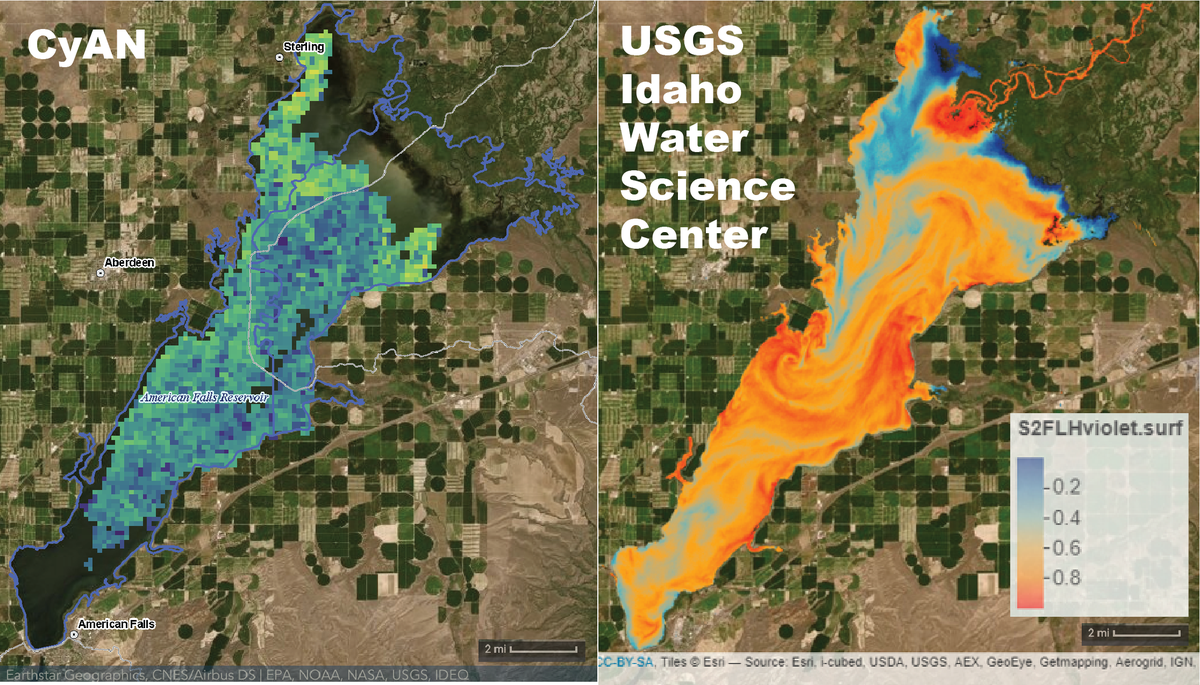
“The idea behind this data product is that (the DEQ) will get that information sooner and they will get it for more water bodies than they currently are able to monitor,” King said.
The Idaho project also differs from CyAN in that it uses a different pigment to detect the blooms — chlorophyll A instead of phycocyanin. If this name sounds familiar it’s because chlorophyll is also used by plants when doing photosynthesis.
Processing satellite images might sound like a simple process, but it’s far from that. First, researchers have to wait about 12 hours before the satellite images are available on Earth for their use.
“Our next step is called an atmospheric correction,” King explained. This means that they process the images to account for things like the amount of moisture or smoke in the air. After this, “we end up with an image that is a lot closer to what you would see if you were standing 6 feet above the ground, instead of 800 kilometers above the ground,” King added.
Finally, they do some more math that leads them to a value that can be correlated to how much algae is present in a body of water. This is the value used by government agencies.
Remote and early detection of blooms can save thousands
Continuous monitoring of bodies of water by the DEQ is necessary to confirm the presence of algae blooms.
Currently, early detection of a bloom depends on how often DEQ officials monitor bodies of water, which usually happens once or twice a week depending on how many people use them.
Reese mentioned that he hopes the project will allow DEQ to “reduce the number of (monitoring) trips from every other week to once a month … and free up time to continue working on our primary responsibilities.”
Similarly, to declare a bloom cleared from a body of water, Idaho’s Department of Health and Welfare requires that toxins are below a certain threshold for two consecutive weekly samples. “We use (satellite data) to monitor for when it looks like the bloom is going away, and then we can start monitoring in person again and collect the samples to verify that it’s safe for public use,” Reese said.
Apart from potentially saving thousands of dollars in the operational costs of government agencies, remotely detecting cyanobacteria blooms can also economically benefit Idaho communities.
A study published last June found that using the CyAN data saved the community associated with Utah Lake near Provo, Utah, an estimated $370,000 in health care costs in June 2017. Remote bloom detection allowed local authorities to post warnings at least a week before people would have started reporting the bloom, and some 8,000 visitors avoided exposure in that period.
Other potential users of the products of this study include Idaho Fish and Game, Idaho Department of Environmental Quality, Idaho Power Company, the U.S. Bureau of Reclamation and the public health districts.
What the future may bring
Researchers in this project are busy trying to improve their results and how they can be used by local authorities, but the study could be ready by late 2021.
“We are all working to identify the level of uncertainty associated with this process,” King said, “and the best that we can do is quantify it and try to minimize it.”
They are also developing methods that allow them to map submerged vegetation in lakes, which also produce chlorophyll A — the pigment detected by the high-resolution satellite images used in the Idaho project — and can’t currently be distinguished from cyanobacteria blooms.
The DEQ expects to have more information about harmful cyanobacteria blooms available for the public soon — including maps and data on current and potential conditions. In the meantime, Reese urges people to be alert when recreating in the water.
“If it looks like you shouldn’t go in, and you don’t, you’ll be fine,” he said.
You should keep people and pets out of a body of water if it looks green, brown or red; if it seems covered by a layer of scum or foam, as if somebody spilled paint in it; if it contains any dead fish or other animals; or if it doesn’t smell good. More information about how to spot a harmful algae bloom can be found on the DEQ website.
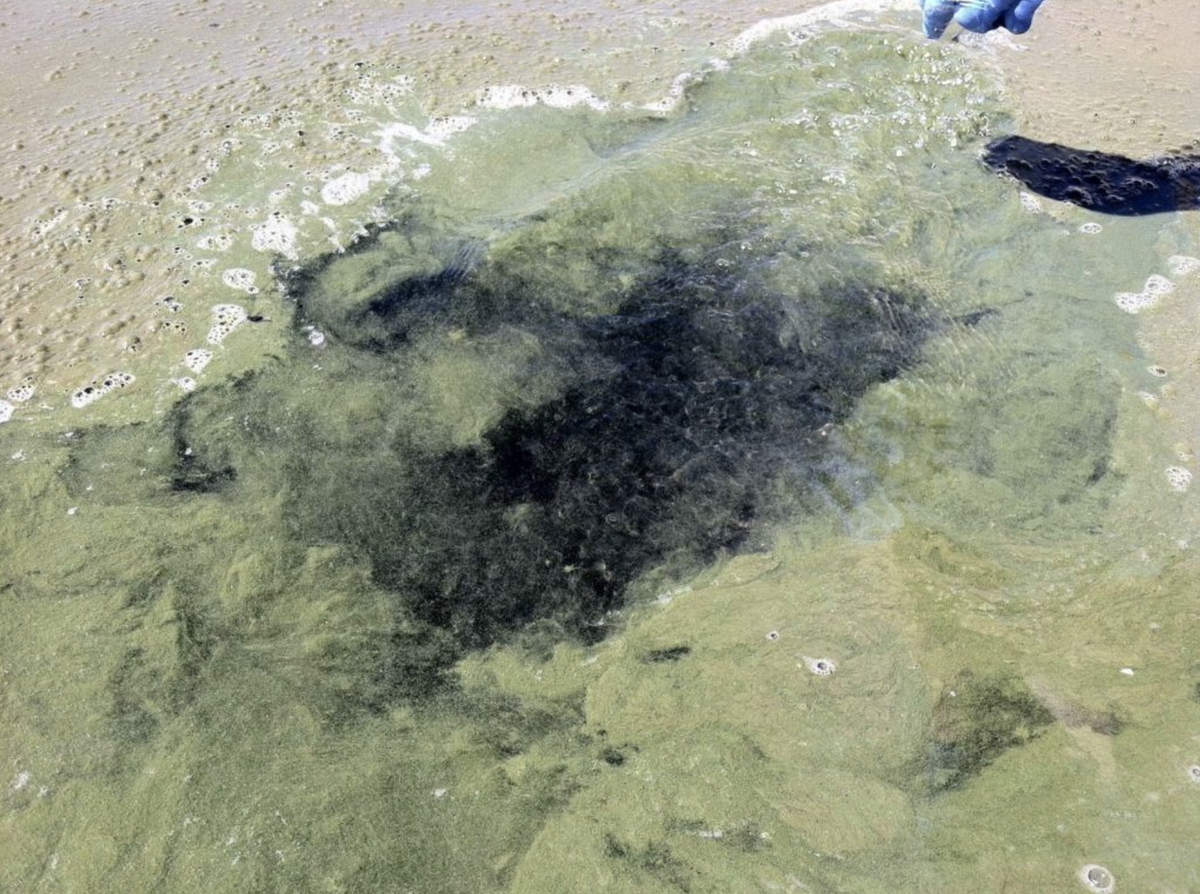
If you suspect there might be a bloom in your area, you can report it — providing photos and location — by contacting your regional DEQ office, sending an email to algae@deq.idaho.gov, or using the bloomWatch app.
This story was originally published August 3, 2020 at 5:00 AM.