
Coronavirus alters Boise’s Earth Day 50th anniversary plans: ‘We’re in a similar place today’
The 50th anniversary of Earth Day was supposed to be a celebration that rivaled that first demonstration that changed the world.
Huge demonstrations were planned around the globe, and Pope Francis was scheduled to host an event in St. Peter’s Square with climate change as the overriding theme.
“Our campaigns are intended to activate at least a billion people worldwide to meet Earth Day’s 2020 theme of climate action,” said Kathleen Rogers, president of the Earth Day Network, in a statement in January.
Then then coronavirus spread worldwide, forcing an unprecedented shutdown in the economy. Earth Day events all over the world — including Boise — were canceled as people retreated to their homes and holed up for the long haul.
But as the economy shut down, pollution levels dropped dramatically all over the Earth. The skies over cities like Beijing cleared as manufacturing plants closed. People in India can see the peaks of the Himalayas from more than 100 miles away for the first time in 30 years, as coal-fired power plants shut down.
The rapid response from around the world to the threat of the virus has exceeded, over a short time, the shift in public attitudes that led to the landmark environmental laws and action that followed the first Earth Day, said John Freemuth, Cecil Andrus professor of public policy at Boise State University.
“What drove the first Earth Day was a reaction to the pollution and mess we had back then,” said Freemuth, who was a student at Pomona College in 1970. “We’re in a similar place today, and the cleaner air we’re seeing is telling people, ’maybe we can keep this going.’”
First Earth Day: biggest national demonstration
Fifty years ago Americans took to the streets in numbers never yet matched to speak up for the environment and against the pollution that was all around them.
In Boise, speakers called for action against hazardous waste at Boise High School, and Boise State University students collected junk in the Foothills. Democratic gubernatorial candidate Andrus marched down Capitol Boulevard with Boise State students.
His opponent, Gov. Don Samuelson, put out a statement against pollution, showing the almost universal support for the demonstration that attracted 20 million Americans across the country.
It all started with the idea of Gaylord Nelson, a Democratic senator from Wisconsin.
Nelson called for a national teach-in on the environment after seeing three million gallons of oil spill across the beaches of Santa Barbara, California, killing 10,000 sea birds in January 1969.
“You can say the coronavirus was kind of our Santa Barbara oil spill,” said Freemuth.
Young Boise climate activists who already have held several demonstrations were planning a larger one on Earth Day. Adam Thompson, a student at Boise State is one of the Boise founders of Sunrise, a national youth movement pushing for action on climate change. He said now they are planning virtual activities.

“Climate change is like the coronavirus,” he said. “The United States didn’t take the kind of precautions it should have earlier, and now it’s costing much more in lives and money.”
Thompson contrasts our response to South Korea, where he is studying next year, which has had far less cases of the virus. It also has been more proactive on climate change with a 30% carbon tax and a ban on plastic bags.
“I hope this is a wake-up call to listen to scientists about this and climate change,” Thompson said.
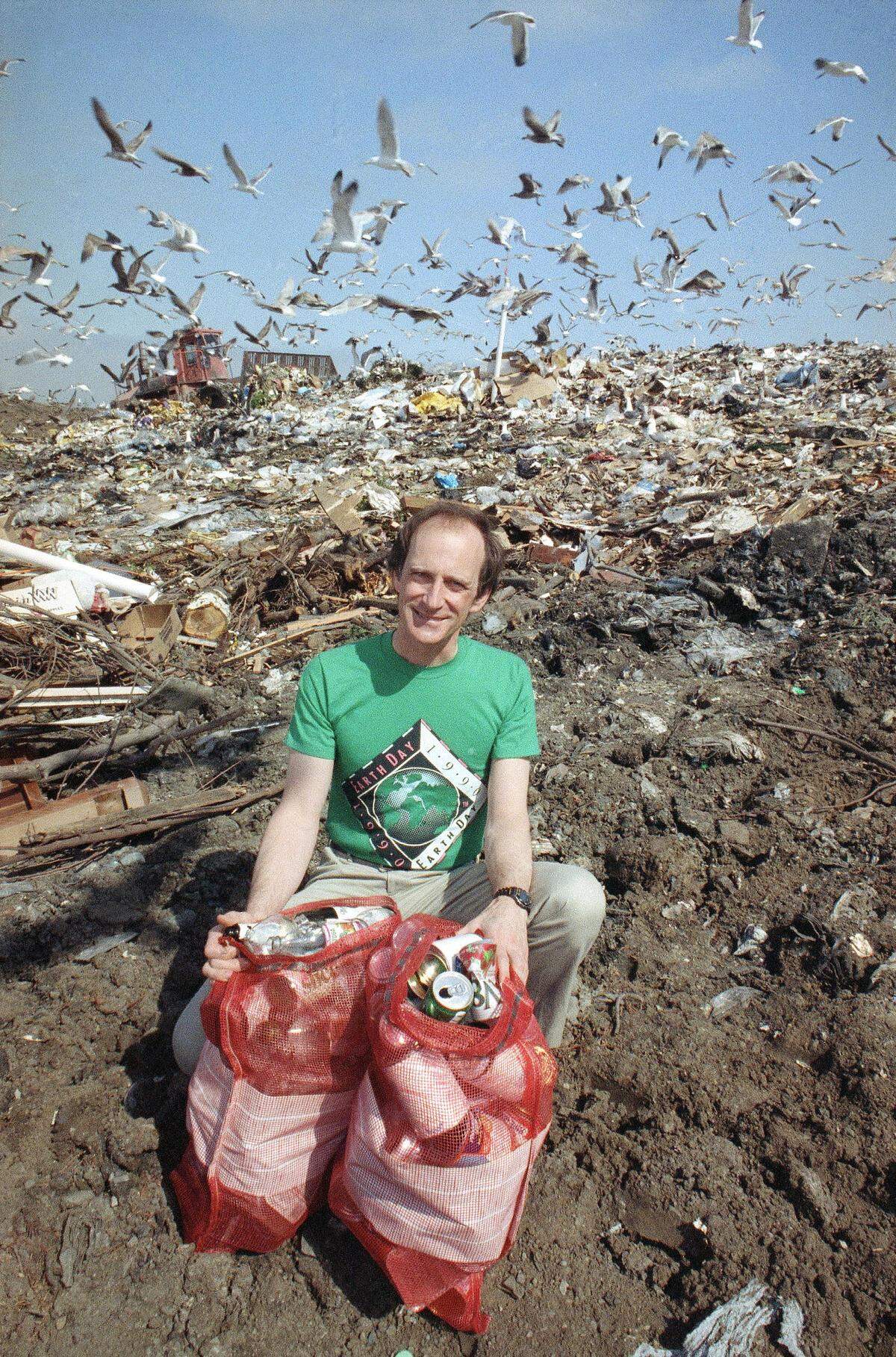
It was youth like Thompson who led the efforts 50 years ago, including Denis Hayes, of Seattle, who Nelson hired to coordinate the actions in 1970. Hayes, now chairman emeritus of the Earth Day Network, urged people to take political action.
“COVID-19 robbed us of Earth Day this year,” Hayes wrote in the Seattle Times. “So lets make election day Earth Day.”