You could go weeks without seeing some species at an African park. Then this Idahoan arrived
Darin Oswald
By Rocky BarkerSpecial correspondent to the Idaho Statesman
This conservation success story is the result of a partnership between Idahoan Greg Carr and the Mozambican government.
GORONGOSA NATIONAL PARK, Mozambique – The success of wildlife restoration in one of Africa’s wildest places became apparent at the end of a game drive at dusk.
Several hippos lounged in the water bellowing as the sun set next to towering Mount Gorongosa 40 miles away.
Most of the antelope are waterbuck, an elk-sized animal with a ring on its rump. Like all the large mammals, waterbuck had been decimated by soldiers and professional poachers down to a few hundred after the civil war that lasted from 1977 to 1992. Today there are more than 50,000.
“I used to come here without seeing a waterbuck in three days,” Muagura said. “You might see an elephant or a buffalo once in two or three months. To me, this is excellent improvement.”
Lion numbers jumped to more than 100 in 2018 when at least 30 cubs were born. The elephant population, which had dropped from more than 2,500 animals to fewer than 300, are now estimated at 650.
Hippos, down from a pre-war population of 3,500 to 160, has risen to 550.
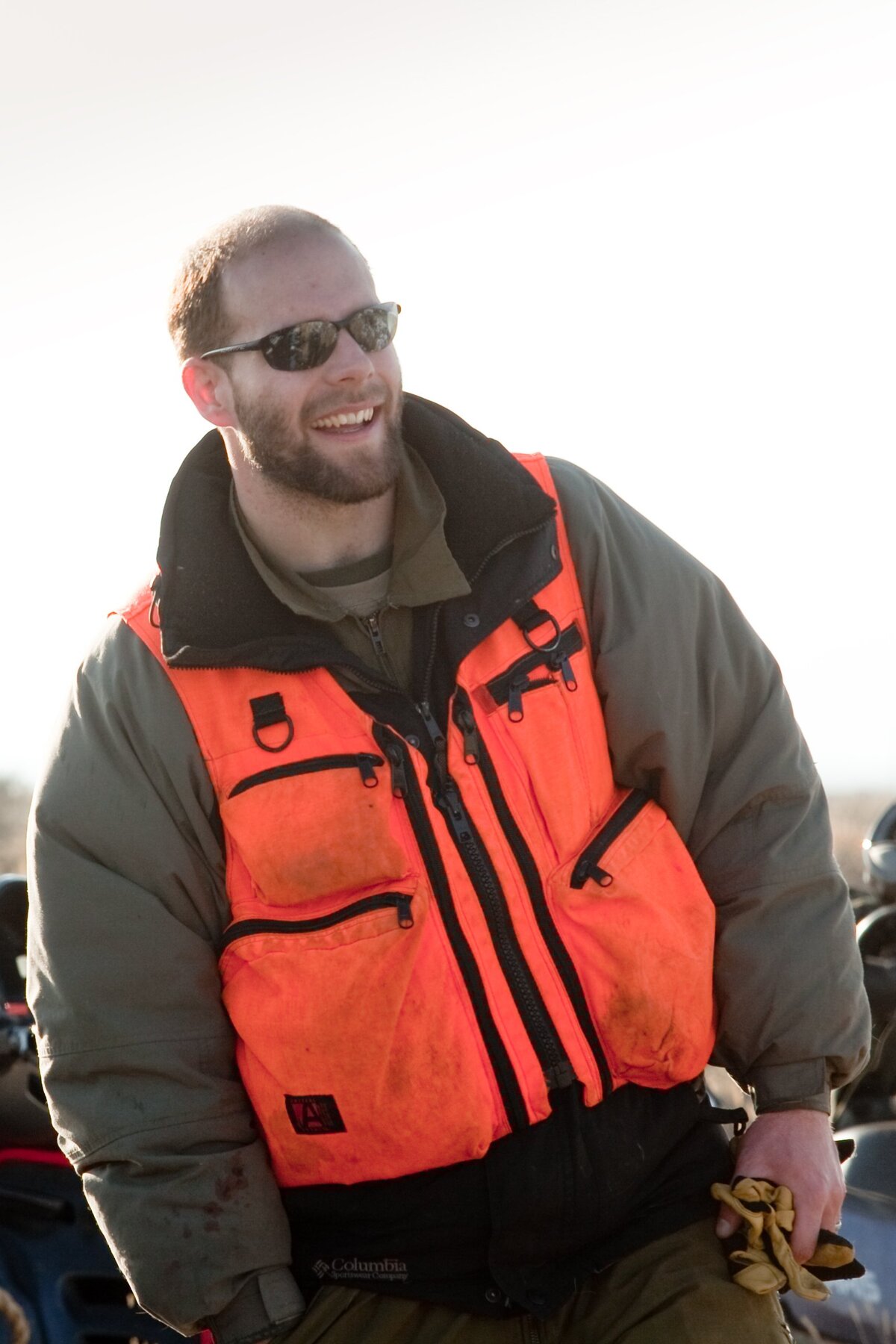
Pedro Muagura, warden of Gorongosa National Park, carries a seedling he planted with Zoo Boise supporters in the park in June. A new problem for the force are illegal loggers who take valuable trees and sell them to Chinese buyers. Tina Barker special to the Idaho Statesman
The Idaho connection to Gorongosa
Carr, the 60-year-old entrepreneur who grew up in Idaho Falls and now lives in Sun Valley, made millions in the 1980s and 1990s as a tech entrepreneur. He began his philanthropic efforts supporting human rights, including the Anne Frank Humane Rights Memorial in Boise.
“He brought us knowledge, he brought us money, and he brought us education,” Muagura said.
From left, Liz Littman, assistant director of Zoo Boise talks with Greg Carr, the Sun Valley philanthropist who has partnered with the Mozambique government to restore Gorongosa National Park, and Vasco Galante, the park’s communications director. Tina Barker special to the Idaho Statesman
The agreement has been extended to 2043. The park has been expanded to include Mount Gorongosa. In addition to building clinics, schools and programs to empower young girls, Gorongosa has its tourism, a coffee business and farm programs. Plans for fruit and cashew businesses are also in the works.
“Our philosophy is we’re here now, we’re here forever,” Carr said.
Africa’s extreme poverty, its civil wars, corruption and weather disasters drive many outsiders to despair or resignation.
But Carr has instead chosen hope.
His foundation has never contributed less than $4 million annually, and it often gives much more to the Gorongosa Project. Its overall commitment is $160 million, which has attracted partners worldwide, including the United States Agency for International Development.
Steve Burns, former Zoo Boise director and current director of the Hogle Zoo in Salt Lake City, first came to Gorongosa in 2007. He started the conservation program that has made Zoo Boise a partner in Gorongosa’s conservation program.
Marabou storks roost in a tree just befre sundown in Gorongosa National Park in Mozambique. Tina Barker special to the Idaho Statesman
“We would go out on game drives and see no mammals but lots of birds,” Burns said.
Carr’s human rights background, commitment to science and relentless optimism in the face of overwhelming challenges has brought Gorongosa back, he said.
“This wouldn’t have happened if not for Greg,” Burns said.
Boiseans name new lion pride
Muagura leads a ranger force of 260 — including 11 women — who patrol the park to prevent poaching and also work with wildlife researchers and the surrounding communities. When the cyclone hit, the rangers became first responders who rescued families stranded on termite mounds and roofs surrounded by flood waters. They helped feed as many as 80,000 in a program that continues today.
The resurgence of wildlife became apparent for Zoo Boise supporters who visited the park in late June, who me and my wife Tina accompanied for much of their trip. On one game drive, two girls, Lucy Tiscornia of Seattle and Olivia Peterson of Boise, spotted a pride of three lions on a kill.
It turned out to be a new pride never seen before. The discovery gave the girls the right to name them. They called them Lucia, Aries and Monte.
“It was exciting,” Peterson said. “They were just off the road.”
We drove by the lion researchers in the dark as they waited for one of the lions, which they had just fitted with a radio collar, to wake up. The vehicle was stationed between the darted lion and the other two, with a ranger standing on top with a gun in case a problem arose.
A male lion yawns in Gorongosa National Park in June. Lions have made a strong comeback with the population estimated at more than 100. Wildlife was decimated by soldiers and poachers during the 16-year civil war that ended in 1992. Tina Barker special to the Idaho Statesman
With conservation success comes new debate
Biologists augmented the populations with reintroductions from parks across Africa for species that were gone or had such low numbers they couldn’t grow. These included elephants, hippos, buffalo, wildebeests and zebras. These populations have grown, but there are noticeable changes from the historic mix.
Yellow-billed storks gather along standing water in the vast floodplain in Gorongosa National Park in Mozambique as a male waterbuck walks through with others in the background. Waterbuck are the most numerous of the large mammals in the restored park after a 16-year war depleted its animals. Tina Barker special to the Idaho Statesman
With the dramatic comeback, many of the same scientific debates and conflicts westerners have faced in Yellowstone National Park and Idaho have arisen here. Now that waterbuck have taken the place of buffalo in the wetlands and the savanna of the Great Rift, some biologists argued for more predators like leopards, cheetahs and wild dogs to control surging antelope populations.
In 2018, a pack of 14 wild dogs was brought to the park from South Africa. The first leopard since the war was sighted in March of last year.
But not all scientists at the E.O. Wilson Biodiversity Laboratory in the park think more predators are the silver bullet for managing the growing herds of antelope including impalas, bushbuck, kudu, nyala and sable, said Josh Daskin, a Princeton Ph.D. candidate. Some believe, as one group of scientists in Yellowstone argued in the 1980s, that the large grazing mammals and the ecosystem will regulate the populations by food availability and disease.
Both sides hope to get answers
“It’s very rare we can do this kind of research over an entire ecosystem,” Daskin said.
Bushbuck, a usually solitary antelope that traditionally stayed in the forest, are routinely seen now out in the open on the savanna since few predators threaten them. Researchers from the University of Idaho, Ryan Long and Hallie Walker, were chasing bushbuck with a land cruiser to place radio collars on them to study their movements now that wild dogs are back. They use a helicopter for kudu.
In other parts of Africa, wild dogs are as popular with livestock owners as wolves are here. Two Mozambicans said the park did not confer with surrounding residents when they decided to bring the colorful dogs back to the park. That could come back to bite the park as their numbers grow if they leave the park and eat livestock, one resident said.
Ryan Long leads a team of biologists who are doing wildlife research in Gorongosa National Park that helps managers restore once depleted populations of large mammals. provided Courtesy of the University of Idaho
Using science to reduce conflict
Already elephants have become a major problem for subsistence farmers living along the Pungwe River acts as a boundary between the park and the buffer zone. The day we visited the village of Vinho, 30 elephants had crossed the river stomping down fields of maize or corn, the main crop, causing mayhem.
The number of school children at the nearby school built by the Carr Foundation has dropped, said its administrator Lionel Jose Domingos. He’s not sure whether the drop is due to the elephants or the cyclone. But people say that “Mr. Greg’s elephants” are driving people away.
She discovered the use of beehive fences, a series of beehives connected by ropes along the river at elephant crossings.
The elephants would leave the park and cross the Pungwe River, hit the ropes and the swarming bees would attack, making the elephants turn tail and return to the park.
“Paola’s research found that beehive fences were very effective and could reduce the probability of elephants crossing the Pungwe River to raid crops by up to 92%,” Long said. “The Conservation Department at Gorongosa recently began large-scale deployment of beehive fences at elephant crossings all along the Pungwe River to help mitigate human-elephant conflict. “
But challenges persist. Poachers have stolen some of the beehive fences to raise honey for themselves. Rangers arrested eight poachers one night while we were there.
The extreme poverty – Mozambique’s income per capita is the eighth lowest in the world – makes some people desperate, Warden Maugura said.
The key is increasing opportunity with more jobs, more effective farming practices, more schools, more clinics and a stronger connection with the park, he said.
“Folks need to consider the elephants ‘our elephants,’ not Mr. Greg’s or Pedro’s,” Muagura said.
UP NEXT: How starting a coffee business on a sacred mountain is putting people to work, saving the rainforest and helping to forge a long-term peace in Gorongosa.
Editor’s note: The Carr Foundation helped fund some of Rocky Barker’s expenses to travel to Mozambique to tell this story.
This story was originally published July 12, 2019 at 8:47 AM.