Idaho schools rely on program’s online courses. Its budget could be cut in half
For more than two decades, the Idaho Digital Learning Alliance has provided online courses to help school districts fulfill new graduation requirements, give students opportunities for credit recovery and allow students in rural districts to take dual credit or other advanced courses.
But this year, IDLA has become a key target of the Legislature.
As lawmakers search for places to trim the budget, they are considering cutting about half of the alliance’s funds and have disagreed over how to do it. Legislators have debated several policy bills, and this week, House lawmakers approved the latest iteration of a bill to make changes to the program.
Jeff Simmons, the superintendent at IDLA, said cuts will have a significant impact on the program, which has a high success rate across the state.
“I think that what’s missed is the investment that’s being made,” he told the Idaho Statesman. “I understand that IDLA is one more budget item that they have to consider and find funding for, but I think if you were to remove IDLA and still ask schools to meet all of the needs that they have to meet, I think your cost would be exponentially higher.”
What happened so far?
Last week, the Joint Finance-Appropriations Committee approved a $13.5 million cut to IDLA’s budget for next fiscal year, but on Monday, the House Education committee rejected a policy bill on a tie vote.
On Tuesday, another bill was introduced, which Simmons said would be more “workable” than previous iterations.
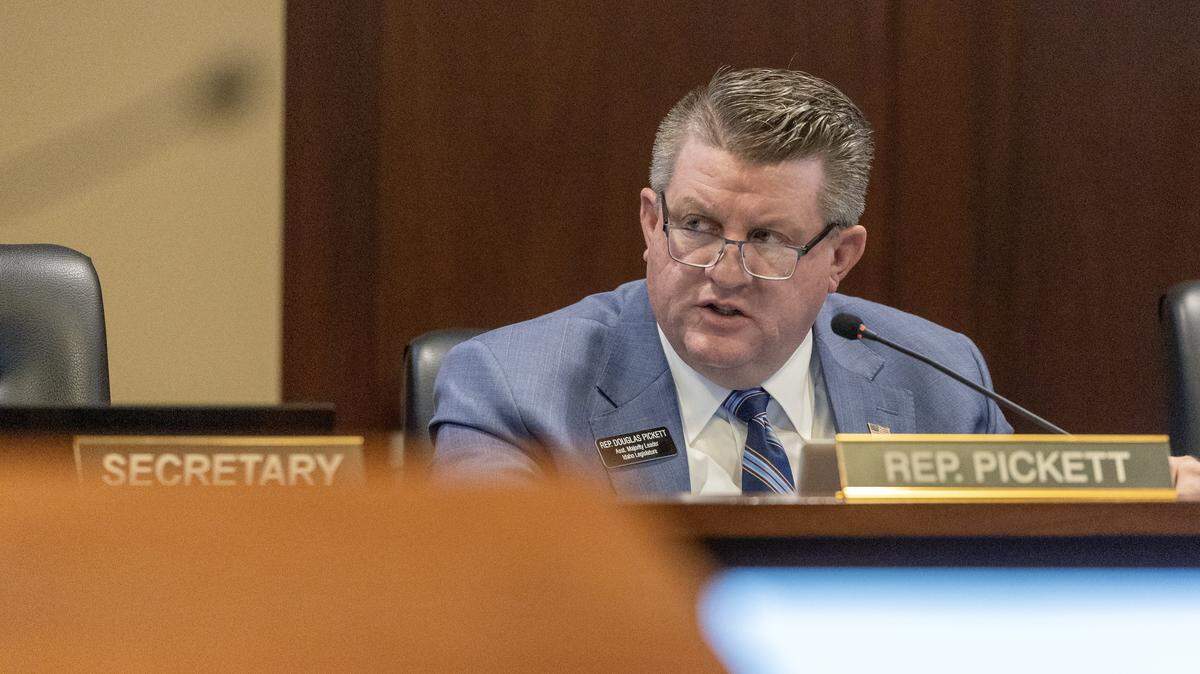
House Bill 940, introduced by Rep. Doug Pickett, R-Oakley, was sent straight to the House floor without a committee hearing. The bill would eliminate some offerings, including virtual driver’s education, a literacy program for students in grades K-5 and custom sections. It also wouldn’t allow state funding for students enrolled in virtual schools taking IDLA courses, or for those in private schools or being homeschooled.
“It still represents a reduction and a cut to our program, but I would say it does the least amount of harm to students and schools of any of the proposals that we’ve seen so far,” Simmons said.
Earlier versions of the bill restricted middle school enrollment and dual-credit course funding.
Lawmakers have raised concerns about so-called “double-dipping,” with the state providing funding for students to take an IDLA course while also paying the school based on average daily attendance. Simmons said schools use the program where they have gaps, and if there wasn’t a need, there wouldn’t be a program.
Overall, lawmakers said the program does good work, but it needs cuts to return to its core mission.
During the 2024-25 school year, IDLA served more than 28,000 students and had over 51,000 total enrollments, according to its cost and funding report. One student enrolled in one class counts as a single enrollment.
Simply put, Simmons said the cuts will mean IDLA can’t do as much.
“Even though it still provides funding for most of what we currently do, it’s still going to reduce the amount of what we can do,” he said. “You’ll still see this impact every school, in some way across the state.”
Superintendents opposed budget cuts
During hearings in committee, lawmakers heard testimony from rural superintendents who all opposed the IDLA cuts. Officials from rural school districts said they rely on the program for some of those hard-to-staff subjects and other needs.
House lawmakers debated the bill for nearly an hour Wednesday. Most said they understood the value of IDLA, but some asserted that it had strayed from its original mission. The bill would keep it in line and set it up for success moving forward, lawmakers said.
“The primary purpose of IDLA is to supplement, not to supplant, but to supplement local school curricula,” Pickett said. “IDLA, in the eyes of many people, including the gentleman on the second floor (Gov. Brad Little), has grown beyond the original scope and intention of its purpose.”
In his budget proposal at the start of the session, Little proposed a $10 million cut to the program.
Pickett said the bill doesn’t cut all of IDLA’s programs by half across the board, but rather targets specific programs that he said are “being overused by districts that are basically conscripting funds out of the budget.”
Rep. Heather Scott, R-Blanchard, said some school districts abused the program, so it was necessary to make cuts.
“We have had some maybe dishonest schools that are double-dipping with this program and now, what’s going to happen, is everyone is going to suffer,” Scott said. “The rural schools will probably suffer and it’s unfortunate that this program has been abused, and so hopefully this does reign it in.”
Rep. Dale Hawkins, R-Fernwood, said this bill wouldn’t kill the program. Districts would still have access to it, but it would be used as it was originally intended, he said.
“This is not the death of a program. The program does good work,” he said. “Let’s just help it be better.”
Those opposed to the cuts said the schools in their districts told them how essential IDLA is. They worried that the cuts would end up putting school districts in a difficult spot, and would mean students in rural districts wouldn’t have access to the same opportunities as those in urban districts.
Rep. Monica Church, D-Boise, said she has worked at IDLA for more than a decade and has taught the children and grandchildren of some legislators. She called IDLA an essential service.
IDLA “was set up … to be an opportunity, especially in our small districts, to equalize the playing field where some of our large districts had dual credit, had AP, had these advanced courses,” Church said. “Cutting it by 50% is going to impact your constituents. It’s going to impact your families, and you’re going to hear about it. Period.”
IDLA is a good use of tax dollars, she said. Its courses are designed by teachers, administrators and experts in Idaho, and cutting it isn’t the answer to the state’s budget deficit, she said.
Rep. Mark Sauter, R-Sandpoint, said the districts in his region have used IDLA consistently and appropriately.
“This is quite a haircut, quite shorter than bills that we’ve heard earlier this session,” he said. “I can’t vote for this. This hurts my school districts.”
Even some lawmakers opposed to the large cuts to IDLA said they understand some things need to change. But they said the bill goes too far.
Many rural districts can’t hire teachers for advanced classes, or don’t have enough interest to create an entire class for certain subjects. Without IDLA, those students would not have access to those courses, some lawmakers said.
“IDLA works. It’s an amazing program,” Church said. “What are we doing?”
The House approved the bill 48-22. It now heads to the Senate.