Idaho schools could get a little special education help from state’s latest idea
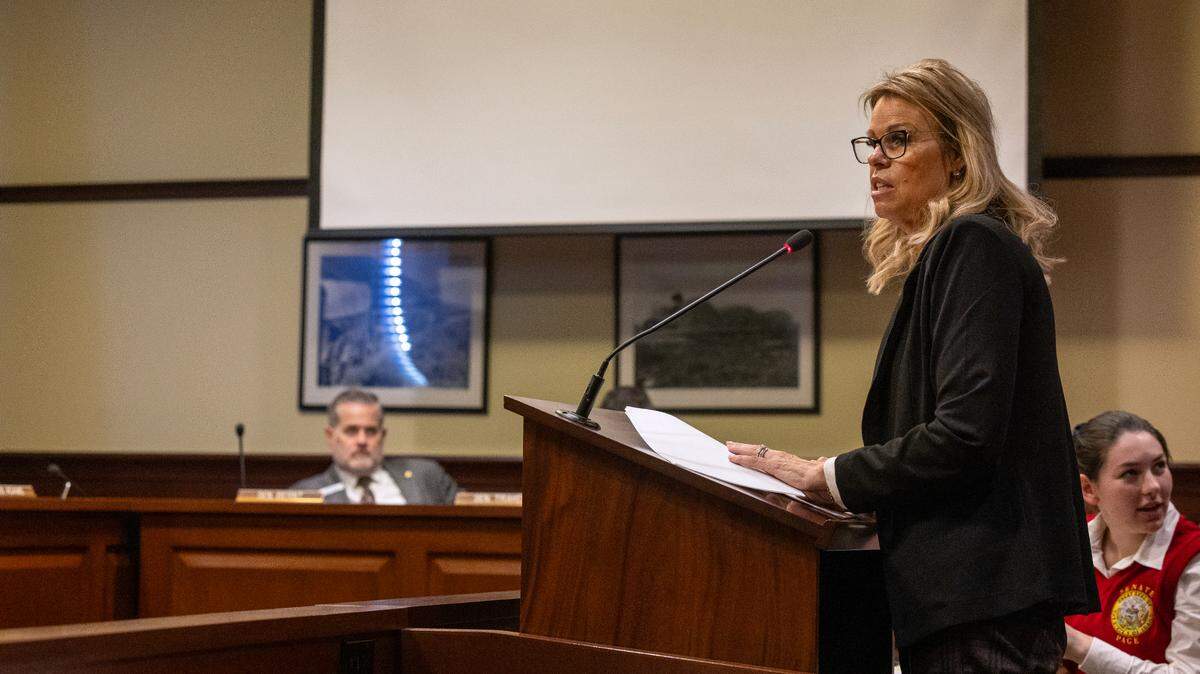
When Idaho State Superintendent Debbie Critchfield made her budget proposal for the next fiscal year in August, she asked for $50 million for special education.
But last month, Critchfield backed off in the face of a challenging state budget. The priority, she said, would be to maintain current funding levels for education. Idaho could face a budget deficit of more than $500 million in fiscal year 2027, according to previous Idaho Statesman reporting.
Instead, Critchfield told the Statesman this week she is moving forward with two smaller proposals to start to bridge the growing gap in special education funding.
“The revision isn’t to signal that we’re closing up that book and saying, ‘Well, we’ll tackle this problem another day,’ ” Critchfield told the Statesman. “That’s not what we’re doing.’”
Special education in Idaho has long been underfunded. Idaho’s Office of Performance Evaluations, an independent oversight agency, estimated in a report released last year that the gap between what school districts spend to educate students with disabilities and what the state provides is more than $80 million.
Over the past year, families told the Statesman that their school districts have failed to identify and evaluate their children for special education and follow the programs to educate them fairly. Parents of students with disabilities have increasingly resorted to filing complaints with the state over their schools’ failure to educate their children, and most of the time, state investigators have agreed. But parents said that wasn’t always enough to force change in their districts.
Critchfield said she doesn’t want new spending proposals to force cuts in other places, but that special education remains a priority.
“I don’t want the public schools budget competing with itself,” she said. “I want to make sure that those things that are currently receiving funding don’t get reduced because there’s a new thing coming in.”
She is hoping to bring back a bill to help school districts support students with higher needs and to work on a proposal for a regional model to centralize resources for school districts.
What are Critchfield’s special education priorities?
Last session, lawmakers nearly passed a $3 million bill to help school districts educate students who need additional services, like a full-time nurse or an ASL interpreter, that can cost more than $50,000. The bill narrowly failed in the Senate.
This year, Critchfield hopes to revive that proposal using interest from two other education accounts, she said. The idea is to use about $5 million in one-time money to create a high-needs fund. Although the specifics of that proposal are not yet clear, last year’s version would have allowed districts to apply for reimbursements for expenses such as nursing, interpreting, physical therapy or specialized equipment.
Rep. Ben Fuhriman, R-Shelley, who sponsored the bill last session, said it can be difficult for smaller, rural districts in particular to find the funds needed to provide these services, but he emphasized that all children deserve a quality education. Federal law requires that schools provide all students with disabilities a free and appropriate education.
“We should care about all children,” he told the Statesman. “And the fact that we’re not fully funding special needs as required by the federal laws is something that I think really should be revisited, sincerely. But until we can do that, I believe that the high-needs, special needs fund is a good solution.”
Critchfield’s other proposal is to use $1 million — the remaining amount of interest — to establish an Idaho regional support centers model. The idea is that districts could better coordinate and share some of the more expensive and difficult-to-find resources, such as speech language pathologists or school psychologists.
The funding would help cover startup staffing costs. The Department of Education is working with schools, service providers and others “to determine what the most effective and equitable structure should look like in practice,” spokesperson Andrea Dearden said in an email.
Idaho has long failed to fund special education
In Idaho, about 12% of students qualify for special education, but the state’s decades-old funding formula provides school districts with a fraction of the amount they need.
Lawmakers and officials have for years been trying to change the education funding formula to better reflect student needs, but those efforts have failed.
The report from the Office of Performance Evaluations last year found Idaho provides less additional funding for special education than neighboring states and data provided to the Statesman showed most districts spend more on special education than they receive from the state. Idaho also consistently ranks last or near last in funding per pupil, according to U.S. Census data.
Across the state, school board members also have pushed for more investments in special education. The Idaho School Boards Association approved a resolution calling for the Legislature to “significantly” increase state funding for special education and for the state’s congressional delegation to push for more federal funding for special education. Resolutions are adopted at the organization’s annual convention each year.
“Without a substantial increase in special education funding, local boards must continue reallocating limited general funds to cover special education costs, to the detriment of all students,” the 2026 resolution said. “This resolution urges the Idaho Legislature to adopt a funding model that supports all students and protects the financial integrity of local school districts.”