
Most emails to Idaho Legislature opposed private school tax credit. The margin was large
Before the House Revenue and Taxation Committee this month approved a bill creating a refundable tax credit for private education expenses, the legislative panel received hundreds of public comments urging lawmakers to reject it.
House Bill 93 would allow private schoolers and home-schoolers to claim a refundable tax credit worth up to $5,000, or $7,500 for special-education students. The full House approved the bill and it’s awaiting a Senate vote.
In the days leading up to a Feb. 5 public hearing on HB 93, Revenue and Taxation received more than 1,000 constituents emails, with residents overwhelmingly opposing the bill — 94% asked the committee to reject it while just 6% were in favor.
Idaho Education News obtained the emails via a public records request.
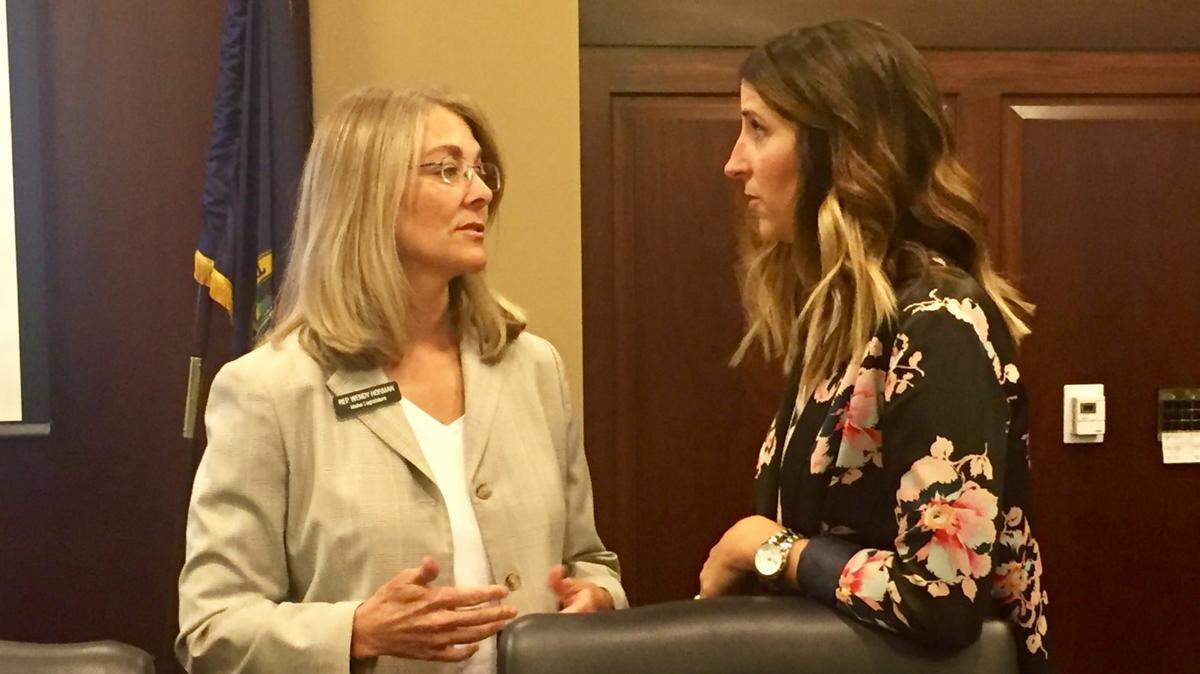
Rep. Wendy Horman, R-Idaho Falls, one of four co-sponsors, asserted that common critiques in the emails were based on “misperceptions about the impact of school choice.”
The Idaho Joint Democratic Legislative Caucus, which opposes the bill, said the tally of negative comments was “stunning.”
“It is the will of Idahoans that should be heeded, not out-of-state special interests,” the caucus said.
What did the emails say?
Emails came from every corner of the state, from Ponderay to Preston. Many constituents identified themselves as public school teachers and administrators. Others identified themselves as parents and grandparents or simply as concerned taxpayers. One was a family physician and another was a water rights consultant.
A common concern among opponents was HB 93’s potential impact on public school funding — particularly in rural areas of the state, where access to alternatives is limited. Others said the bill was unconstitutional because it supports religious schools with public funds. Some worried that state spending on private education could get out of hand, citing growing expenses in Arizona and other states with universally accessible private school choice programs.
“Instead of using public funds to subsidize private schools, I urge the Legislature to invest in strengthening our public education system,” said one message. “Ensuring equitable funding for teacher salaries, classroom resources, and support services will have a far greater impact on improving outcomes for all Idaho students.”
The few supporters, on the other hand, said the tax credit would ease the financial strain of private school, which is a better fit than public school for their children. Most said their children already attend private schools — such as Watersprings School in Idaho Falls and Nampa Christian — but a handful said the tax credit would make private school attainable for the first time.
“Frankly, it is a sacrifice for our children to attend a private school,” said a Blackfoot resident whose two children go to Watersprings. “We are not wealthy, and any assistance we could receive would be a needed relief. … Many families like ours desperately need a different option for their children. Our children deserve to be in a setting where they can thrive in school.”
To read all of the comments, click here. (Note: This is a large file measuring 16 MB.)
Lawmakers react to public comments
In emailed statements to EdNews, Horman and Senate Majority Leader Lori Den Hartog, a co-sponsor on HB 93, tried to counter some of the most common pieces of criticism.
Arizona’s rural public school districts still exist after the state implemented a universal private school choice program in 2022, Horman said, and the Arizona Department of Education had a budget surplus last fiscal year. The Idaho bill would cap tax refunds at $50 million.
“Like any other budgeted program, it will take a majority of a future legislature and the signature of the governor to increase or decrease funding.”
Den Hartog, R-Meridian, said HB 93 would not create an “entitlement program.” Tax credit recipients would only receive state funds for expenses incurred, and the program would be supported by a “revenue reduction” that “does not impact the public schools budget.”
But HB 93’s spending cap could be lifted in the future, reducing revenue to the state’s general fund, which supports public schools. The Democratic caucus pointed to growing costs in other states that have expanded eligibility for private school choice programs. Arizona is expected to spend $800 million on its education savings account program this year, a 323% increase since 2022.
“There’s no reason to believe Idaho’s future will be any different should we go down this road,” the House and Senate Democrats said in an emailed statement. “We urge our colleagues across the aisle to listen to actual Idahoans and prioritize students over special interests.”
Many constituent emails said the Idaho Constitution’s Blaine Amendment prohibits state and local governments from supporting religious institutions using public funds. Most private schools in Idaho are religious. But HB 93 doesn’t run afoul of this provision, Horman said, because parents would receive taxpayer funds.
Meanwhile, existing state programs send public funds to private schools, including Idaho Launch, Horman noted. Brigham Young University-Idaho and Northwest Nazarene University participate in the state-funded workforce training scholarship program.
Den Hartog also pointed to recent U.S. Supreme Court decisions that held states with private school choice programs cannot exclude parochial schools. The court found that “a state cannot rely on its Blaine Amendment to prohibit any religiously neutral and generally available education choice program,” Den Hartog said.
The Senate could vote on HB 93 this week. Approval would send the bill to Gov. Brad Little’s desk.