Closing Boise school would mean changing district boundaries. Here’s what to expect
The Boise School District will begin looking at changing its boundaries as part of a proposal to convert an elementary school on the Bench into an early childhood learning center.
District officials expect that process will take months, and the school board likely won’t make a final decision on whether Owyhee Elementary will close and where students zoned for that school will go until December. The process will include opportunities for parent and community engagement.
The Boise School District announced last month it planned to convert Owyhee Elementary, located near the intersection of Owyhee Street and Catalina Road, into an early childhood learning center. The center would include preschool and early special education and start with the 2025-2026 school year as part of its goal to better meet the needs of young learners.
Parents called the district’s communication deceptive and confusing after it said the school “will be converted” to the center. Many believed the decision was a done deal.
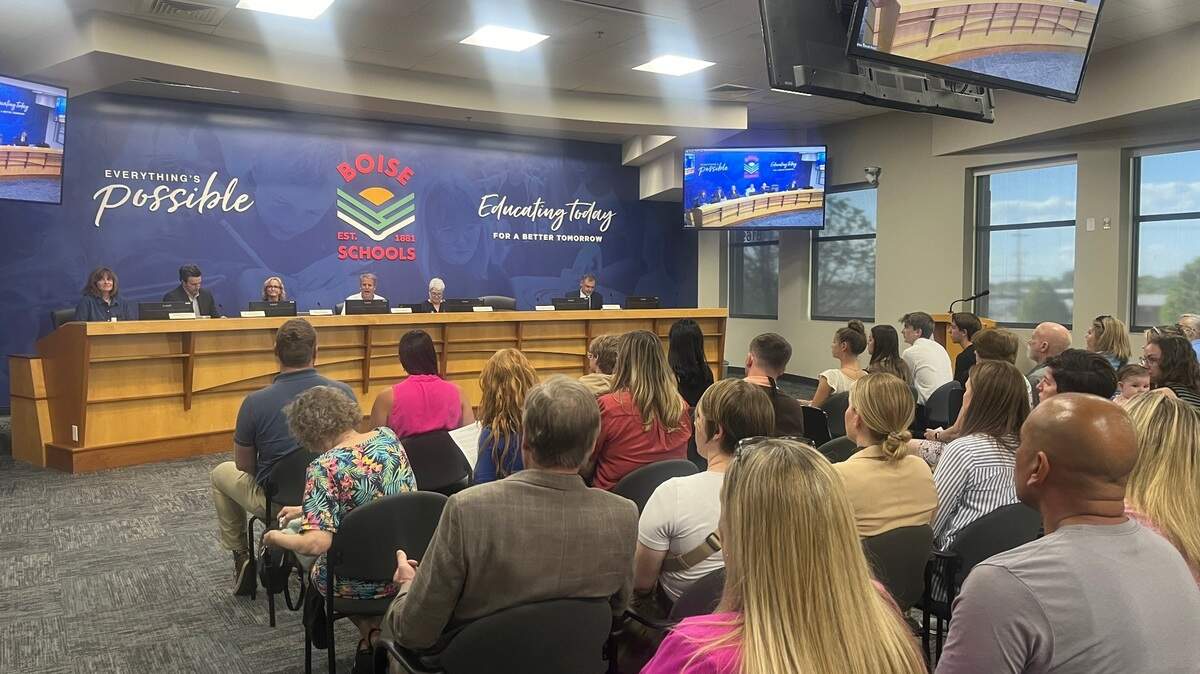
The district later clarified that before the school is converted, a final proposal for district boundary changes would have to be approved by the board. On Monday night, the board heard a presentation on what the process of redrawing the boundaries would look like, how long it would take and what the possible outcomes would be. If the district closes Owyhee, the students in the Owyhee boundary will have to attend other elementary schools. A boundary change process would determine where they would go.
Board President Dave Wagers said the board would consider all input it receives throughout the process.
“We are here to listen,” he said during the meeting. “Everything you say will impact our decision making.”
Process would involve committee, parent engagement
The district plans to create a committee to recommend new boundaries based on a range of factors, including upcoming housing developments and projected enrollment for the surrounding schools. The district proposed that the committee include the principals from Owyhee and nearby elementary schools, members of the neighborhood associations in the area, and parents from all of the impacted schools.
District administrators said they recommended the closure of Owyhee in part because the school has had declining enrollment over the past decade. About 150 students attend the school now, but only about 80 are in the boundary. The other families send their kids to the school through open enrollment.
The committee will hold small group discussions at each impacted elementary school with staff members, parents and others to share the proposal and discuss how it was crafted. The three elementary schools closest to Owyhee are Hillcrest, Whitney and Hawthorne, which all may have to take in additional students if the boundaries change.
The district then plans to share the proposal publicly by displaying the maps at each school, posting the proposal on the district website and sending mailers and emails. At that point, a comment period would open up for parents and community members to give feedback. The district expects to have a Google survey and comment cards available at impacted schools.
Once the comment period is over, the committee will determine its next steps. It could request approval of the boundary changes at a board meeting, change the proposals or repeat the process altogether. The district expects the board to vote on the newly proposed boundaries in December.
If the proposal is adopted, the district would share the new map with the community, and students at Owyhee would be routed to different elementary schools the following year.
The district’s vision for pre-K education includes creating early childhood learning centers that could serve hundreds of kids ages 3-5. Now, the district operates pre-K programs at more than 10 sites and has one early childhood center, a partnership between the district and Head Start.
A new center would allow the district to retrofit a facility to specifically serve young learners, with restrooms and playgrounds made for them. It would also make it easier to centralize resources, bring in different specialists — such as occupational and physical therapists — and build a larger community for teachers and families.
Administrators said they have a waitlist for pre-K and many of the students live on the Bench. The district has also seen growing demand for its pre-K programs over the past few years.
Parents ask board to consider other options
Despite the demand, many parents are upset with the district’s proposal to close Owyhee and are fighting to keep their neighborhood school open.
Parents and community members Monday asked them to reconsider the proposal and look into other options to expand its pre-K programs. They accused the district of ignoring parent voices.
“It appears the district was and is continuing to rush this process along to ensure their agenda is met,” Libby Johns, a parent of two kids at Owyhee, told the board.
Johns urged the board to “prioritize the needs” of those they represent and to ensure transparent and clear communication.
Many parents who have kids at Owyhee Elementary said they loved the small size of the school and that their kids thrived in that environment. Some of the neighboring schools that Owyhee students could end up going to have hundreds more students.
Parents also worried about transportation options for students who may have to walk through busy intersections to get to schools that are farther away. Others said closing the school would mean losing the tight-knit community they and their kids have formed at Owyhee.
Rep. John Gannon, D-Boise, who represents the area that includes Owyhee, said public education is “under tremendous pressure.”
Neighborhood schools and the close relationships they foster provide support for public schools, he said. He warned the school board that the district could lose students if Owyhee closes and young kids are bused across town for pre-K.
“You may find that some parents just decide to forget the public schools and make alternative choices, which is something none of us want,” he said. “This district needs to be inclusive and cultivate support from all of the community.”
At the end of the public comment period, Wagers said trustees would “synthesize” what parents and community members said. “Our goal is to come up with the best answer,” he said.