Boise School District will move its engineering program. Families say it limits access
Kathleen Dykstra’s son would spend hours on the bus. He’d travel to and from the Boise School District’s Dennis Technical Education Center his sophomore year at Capitol High School, and arrive home late into the evening — all to attend an automotive class.
After just a few days, the 18-year-old quit the class, in part due to the commute, and enrolled in an engineering course offered on school grounds. Those classes, his mom said, fueled his passion for the industry — and his plans now to eventually enroll in Boise State University and major in engineering.
Now, those engineering classes will also be moved to the Dennis Technical Education Center.
“It changed his life,” Dykstra said. “If that class wouldn’t have been offered at Capital, he would have never taken it.”
Next year, the Boise School District will move the engineering classes it offers at several high schools, including Capital, to the Dennis Technical Education Center in an effort to offer the program to all students, district officials said.
But families told the Idaho Statesman students would have to miss a second period of school to get to the tech center — a nearly 20-minute drive from some of the district’s high schools — making it more difficult or impossible to fit it into their schedules.
Others said the decision means fewer students will be exposed to engineering courses or even view it as an option. Students who aren’t confident they want to pursue engineering could be deterred from commuting to DTEC and committing two periods of their day to the class, parents said. Students in the class now said they expect enrollment will decline.
“I just think it restricts access to these classes,” said Alissa Thiel, whose son is a sophomore in an engineering class at Capital. “We want to encourage different types of kids to go into engineering, and it seems to me like this is kind of going in the opposite direction.”
School district plans move to DTEC
For years, the district has been planning to move the classes to DTEC, said Dan Hollar, spokesperson for the Boise School District. Classes will be at a “state-of-the-art facility” built for those types of programs, according to the district.
Hollar said students would also be able to spend more time working on projects because of longer class periods, with classes that last 80 minutes instead of 52. They would complete a course in a semester instead of a full year.
“(We) felt that this was the right timing,” Hollar said in an email. “ The annex labs and classroom were built for this type of career technical program
Teachers were told about the move in November, counselors in December and students in January, when they are given information about enrollment for classes for next school year, he said.
The capacity for the courses at DTEC is 336. Currently across the four high schools, 265 students are enrolled, Hollar said. With the move, students at Frank Church High School, who don’t currently have the option to take engineering, will now be able to.
The move could also save the district money. Hollar said the district this year bought four $20,000 3-D printers for every school that offers the program. In the future, the district would only need to purchase one piece of equipment for DTEC.
The district would have a decrease of an estimated $2,000 in state funding for career technical education, Hollar said, but would have an increase in federal funding due to the move.
It’s unclear how much more federal funding the district would get, because it is based on a “pot of money that is distributed statewide for all career technical schools.” Hollar said the state CTE office distributes this funding based on demographic information for each district, and that changes yearly. School districts are notified in the late spring.
“There are many reasons why we are moving our engineering program to the Dennis Technical Education Center, but the most important reason is that we believe this is best for all students in our high schools,” he said.
Students say move will ‘hurt’ those taking it now
Students said the decision will just lead them to choose other electives offered at the high schools instead of continuing with engineering.
Several students told the Statesman they couldn’t miss two class periods to commute to the center, especially when they are trying to fit in multiple AP classes, other electives and other after-school activities. They argued that the high schools already had all of the equipment, staff members and resources to continue offering the program.
Students, including 16-year-old Jake Peake, also said having such easy access to the engineering course peaked their interest in engineering as a career.
Peake is in two engineering courses this year. Now, he’s working on a months-long project to build a model house, a culmination to use many of the skills he’s learned to this point.
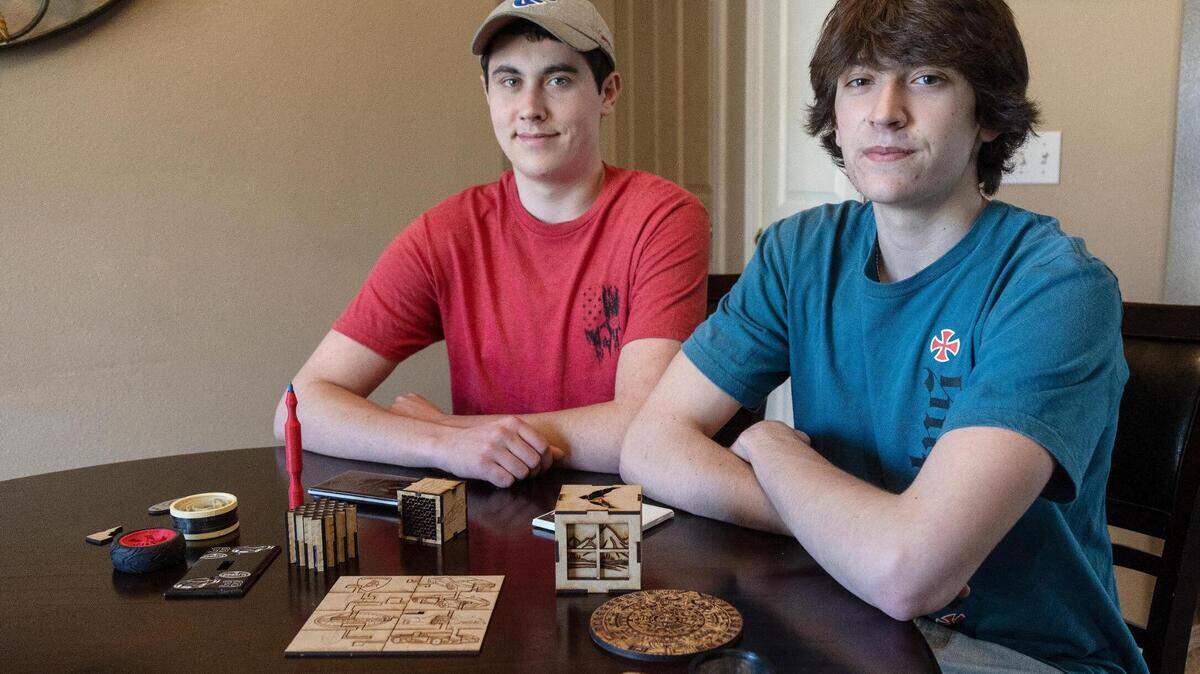
Students in the class said they liked that it was so hands on. They described working on projects such as making a box, inside of a box, inside of a box. They had access to equipment including lasers and 3-D printers and got to learn through doing.
Peake wanted to take a fourth class next year — but if it’s in the DTEC, he isn’t planning to take it. He took a class there before, and the bus from the tech center to his job after school could take an hour.
His situation isn’t unique, he said. Most of his friends in the class who had wanted to take another year of engineering don’t plan to take it at the tech center.
The program at Capital has everything it needs, he said, and it’s thriving.
“I think moving it to DTEC wouldn’t do anything but hurt the students who attend the program currently or any students who would want to in the future,” he said.
Parents expect enrollment to decline
For Dykstra, whose younger son took engineering this year and is planning to take it next year at DTEC, she’s worried about him having to travel to and from the center.
The students who are going to DTEC are the ones who already love engineering and have space in their schedule, Thiel said. While some families might have the flexibility, for example, to take their kids to summer school so they can open up the block in their schedule to travel to DTEC, many others don’t, she said.
“I think that that’s kind of an equity issue at that point,” she said.
Chris Vega, who has a son in the program, said he wishes families were told about the planned move earlier. His son won’t be taking the course at DTEC, he said. His son is part of other school activities and is an athlete.
“It was just really frustrating,” Vega said. “If this was a plan, I think they should have let students know the last couple of years that this program wasn’t going to be available for them to finish out through their years.”
Vega said he supports DTEC, and knows kids who have really enjoyed their time there, but he doesn’t understand why the classes — already established at the high schools — will be moved.
Parents and students said they don’t expect as many people to enroll in the courses, and that it could have a larger impact than expected.
“It’s going to affect a lot of people, probably more than they think it’s going to affect,” said Michael Dykstra. “Having it at Capital just makes it so much easier.”