
BSU is studying these Idaho schools, forced to hire teachers who aren’t certified
Heather Williams is no stranger to being an educator in the Magic Valley.
The Boise State University assistant education professor was the superintendent of Gooding School District’s from 2008 to 2014. Now, she and a colleague are researching causes of the Magic Valley’s teacher shortage.
“I do think the situation in Magic Valley is critical,” Williams said. “Every (school) district in the region has someone that’s on an alternate plan or they’re struggling to fill positions.”
Idaho’s teacher shortage is hitting south-central Idaho the hardest, particularly in rural areas. With fewer applicants for teaching jobs, schools are increasingly hiring people who don’t have traditional teaching credentials in order to fill vacancies.
Unlicensed teachers typically have three years to work toward a state certificate. In the meantime, they receive training and mentoring to help them adapt to working in a school and managing a classroom. When a teacher is hired under alternate authorization, it means they either don’t have a teaching credential or they’re already certified, but don’t have an endorsement to teach a particular subject.
But alternate authorization isn’t just for those who are new to teaching. It also applies to some current teachers if they’re teaching a subject in which they’re not certified.
Across Idaho, the number of alternate authorizations was fairly stable a decade ago, according to data from the Idaho State Department of Education. Numbers didn’t spike until the 2015-16 school year, with 757 total alternate authorizations that year — up from 541 the previous year.
From 2009 to 2014, the percentage of teachers statewide who were under alternate authorization fluctuated between 1.9 percent and 2.9 percent. That percentage has risen in each of the past three years, reaching a high of 5.5 percent during the 2017-2018 school year.
Here in south-central Idaho, the increases are even more drastic. In the Jerome School District, for example, there are 26 alternate authorizations this school year — up from just one during the 2011-12 school year.
That’s in line with what school districts have been hit the hardest by the teacher shortage; The Magic Valley comprises many small, rural school districts, and the number of rural teachers under alternate authorization more than doubled in five years, according to an “Idaho’s Educator Landscape” report released in January.
To help combat the shortage, local school districts are now posting open teaching jobs earlier each spring and taking a proactive approach to filling them.
“We have to go out and recruit,” said Buhl School District Superintendent Ron Anthony. Last school year, Buhl administrators went to teaching job fairs in Boise, Pocatello and Utah.
Of the 13 new teachers Buhl hired this year, two were a result of teaching job fairs. Buhl school leaders also call universities to inquire about upcoming teaching graduates.
Alternate authorization in Twin Falls
This school year, Twin Falls School District has 18 new teachers under alternate authorization and 13 more employees who are either still working toward authorization or need an endorsement specific to the subject they’re teaching.
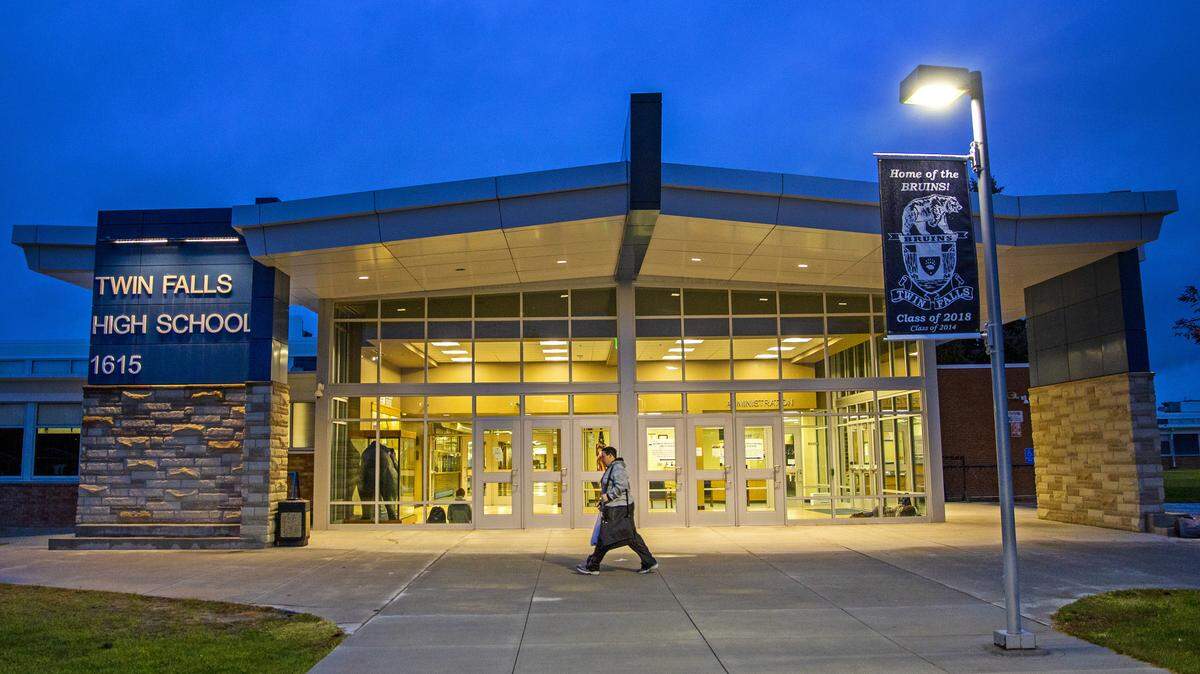
A lot of the alternate authorizations are in special education, human resources director Shannon Swafford said, but others vary in grade level and subject. At Twin Falls High School, four teachers are under alternate authorization.
With more teachers under alternate authorization, the school district spends more time on teacher support and mentorship, Superintendent Brady Dickinson said. Instead of the soon-to-be teachers receiving traditional training in college, “now, that training is really happening on the job.”
New teachers receive a mentor – often a retired teacher – from the Twin Falls School District. Teachers pursuing an alternate authorization typically receive another mentor through their certification program too.
“They kind of get a double dose of mentors,” Swafford said.
New teachers receive training at least four times a year. Plus, instructional coaches — who work at schools — play a key role in helping new teachers. They may conduct informal classroom observations and provide feedback to teachers.
Even if the growth trend with alternate authorizations was reversed tomorrow, Dickinson said, “I think the things we’re doing are going to make a difference for all new teachers.”
Dickinson said his goal is to get teachers trained to the point that it doesn’t matter whether they have traditional training or alternate authorization.
Not that the district has much of a choice; without alternate authorizations, teaching jobs would go unfilled and class sizes would swell. If the district could hire only teachers who have traditional teaching backgrounds, “We’d be in a world of hurt,” Dickinson said.
Teacher shortage research
Williams represents Boise State University during region four superintendent meetings each year. In fall 2017, local superintendents discussed the growing number of alternate authorizations.
Williams volunteered for her and BSU assistant education professor Carl Siebert to look at data and take a deeper look at the issue. Why had region four — which encompasses south-central Idaho — been hit the hardest by the teacher shortage?
Their December 2017 report — “Spotlight on Idaho’s Region 4 Teacher Shortage” — focused on nine counties in south-central Idaho, including 22 school districts and four public charter schools.
“We really wanted to just spotlight the one region that seemed to have the highest number,” Williams said.
The findings showed that the number of alternate authorizations had grown in region four, but the cause of the teacher shortage remains a question.
“We really don’t know yet the reasons why,” Siebert said. “The next step for us is more understanding for the numbers we’re seeing and why that’s happening.”
Williams added: “I think getting to the ‘why’ is really critical.”
Williams and Siebert did a follow-up survey over the winter and into spring last school year. It was an open survey for school districts and other education stakeholders. They received more than 800 responses.
“We’re making our way through that data,” Williams said.
As part of their original report last year, data was based on 19 school districts and two charter schools that responded to a survey.
Survey results indicate most superintendents feel strongly that the best person to fill a teaching job is someone who graduated from college with a teaching degree, Siebert said. “It required less of their time for supervision and they agreed it provided a better education for their students.”
Just 6 percent of respondents said that hiring alternate authorization teachers is an effective way to improve student outcomes.
Certified teachers produce greater gains in student performance, the report stated, citing a study. “Research indicates that teacher preparation is one of the strongest links between student achievement in reading and mathematics, regardless of socioeconomic and language status.”
But the report also said teachers who gain certification after two or three years “do about as well as other certified teachers in supporting student achievement gains; however, nearly all of them leave within three years.”
How to earn a teaching certification
To help combat the teacher shortage, CSI launched an alternate authorization program in August for prospective teachers who have a bachelor’s degree in any subject area.
Another common alternate route is to take online classes through the American Board for Certification of Teacher Excellence. The nonprofit, established by a U.S. Department of Education grant, helps people who already have a bachelor’s degree and want to change careers.
New teachers under alternate authorization who’ve worked in some avenue of education — such as a school paraprofessional or coach — have a real advantage, Dickinson said.
When he receives questions from people who want to get into teaching, Dickinson often recommends they become a paraeducator so they can gain classroom experience. “It’s a great way to test the waters,” he said.
The biggest challenges for a first-year teacher, Dickinson said, are typically classroom management and lesson design. Teachers who go through a traditional university program do student teaching — a key difference compared with alternate routes.
Dickinson said the school district would prefer to have more teachers go through the university route. “However, the Twin Falls School District utilizes the teachers who are available,” he said, and makes sure they’re successful once they get there. And Vogt, principal at Twin Falls High, said differences in how teachers are trained is minimal enough that students don’t notice the difference.
Rural districts
Buhl School District is one of the districts that’s been hit especially hard by the teacher shortage, said Superintendent Ron Anthony. “We don’t get a lot of applications because teachers overlook us.”
About two-thirds of Buhl’s teachers under alternate authorization are new to the profession, such as those who’ve graduated from college with a non-teaching degree or from private industry.
Alternate authorizations require additional paperwork and time to ensure teachers are meeting their plan toward certification, Anthony said. “It creates quite a bit of extra work.”
Anthony said he thinks alternate authorizations have an effect on student test scores, too, as teachers without traditional training must handle typical workloads while also trying to get their feet under them in the classroom.
The tiny Richfield School District, home to about 300 students in kindergarten through 12th grades, doesn’t have any teachers under alternate authorization. Still, Superintendent Mike Smith said, attracting teachers to the small town is tough.
Smith recalls when he applied years ago for a teaching job in Montana, there were 30 applicants for the position he eventually filled. He considered himself fortunate to land the job.
“Now, districts try to recruit, court and attract staff,” he said.
Richfield hasn’t had much teacher turnover the last couple of years. The state’s five-year career ladder, Smith said, has allowed the school to pay teachers better and be competitive with other Magic Valley school districts. The school also provides training opportunities and helps teachers earn advanced degrees.
“I think it’s paid dividends,” he said.
Smith said the four-day school week in Richfield also helps with attracting teachers, though he would be reticent to advertise it. First-year teachers in Richfield, for example, can make about the same amount of money as other Magic Valley schools, but with fewer contracted work days.
When small towns like Richfield can keep educated students from moving away after graduating college, it can result in a valuable pool of talent for hiring teachers.
“In the 14 years I’ve been here, we’ve hired a lot of teachers who already had ties into our community,” Smith said. “Typically, we do pretty good with those folks because they know exactly what they’re going into.”
It’s tough to attract teachers who don’t have a connection to Richfield, Smith said. “There’s not a lot happening for young, single teachers in Richfield.”
It’s common for Richfield job applicants to back out before or after their interview — or even after they’ve accepted a job.
A teacher from Nevada who lost a job because of downsizing was recently planning to interview in Richfield. The teacher got as far as Twin Falls before learning about the salary schedule in Idaho and backed out.
Previously, Richfield had the same math teacher for about eight years. When he left, the next three math teachers were Idaho State University students who hadn’t done their student teaching.
“Unfortunately, as soon as they got their degrees, they were off to greener pastures, which is common for us,” Smith said.
Last school year, Smith couldn’t find a math teacher. A certified secondary teacher, Smith ended up teaching high school senior math himself, and an elementary teacher with a kindergarten through ninth-grade math endorsement taught junior high school math.
For other high school classes, such as pre-calculus, trigonometry, Algebra II and geometry, schoolwork was done online via Idaho Digital Learning. There was a teacher in the classroom with students, but instruction was delivered remotely.
The partnership “saved our bacon,” Smith said, but some students missed having a live teacher for math, even if they didn’t want to admit it at the time.
In the spring, Richfield school officials interviewed an Idaho State University graduate with a doctoral degree for the math teaching job. She’s living oversees in the country of Georgia, so she interviewed remotely.
She accepted the job in March, but a couple months later, she backed out because her family situation changed and she decided to stay oversees.
This school year, Richfield finally has a new math teacher. To attract him and make sure he stayed, the school provided him with a signing bonus — the first time it has done that for a teacher.
Attraction and retention
One explanation behind south-central Idaho’s teacher shortage could be the lack of a four-year university in the area, Williams said. “A lot of residents are place-bound. They’re not able to travel to finish their degrees.”
A handful of Idaho colleges and universities offer degrees for Twin Falls-based students, either online or via in-person classes on the College of Southern Idaho’s campus.
For example, Idaho State University offers a bachelor’s degree in elementary education based in Twin Falls. For secondary education — preparing to teach middle or high school — students can take methodology classes in Twin Falls, but must be in Pocatello for subject-area classes.
Other potential reasons for the teacher shortage could include low pay and a negative perception of teaching, Williams said. “Salary is probably one of the biggest issues related to retention of teachers.”
Even if more teachers become traditionally certified, with low unemployment and higher pay in other industries, Williams wonders: “Will they stay in education?”