
Can playing cards for inmates help solve cold cases?
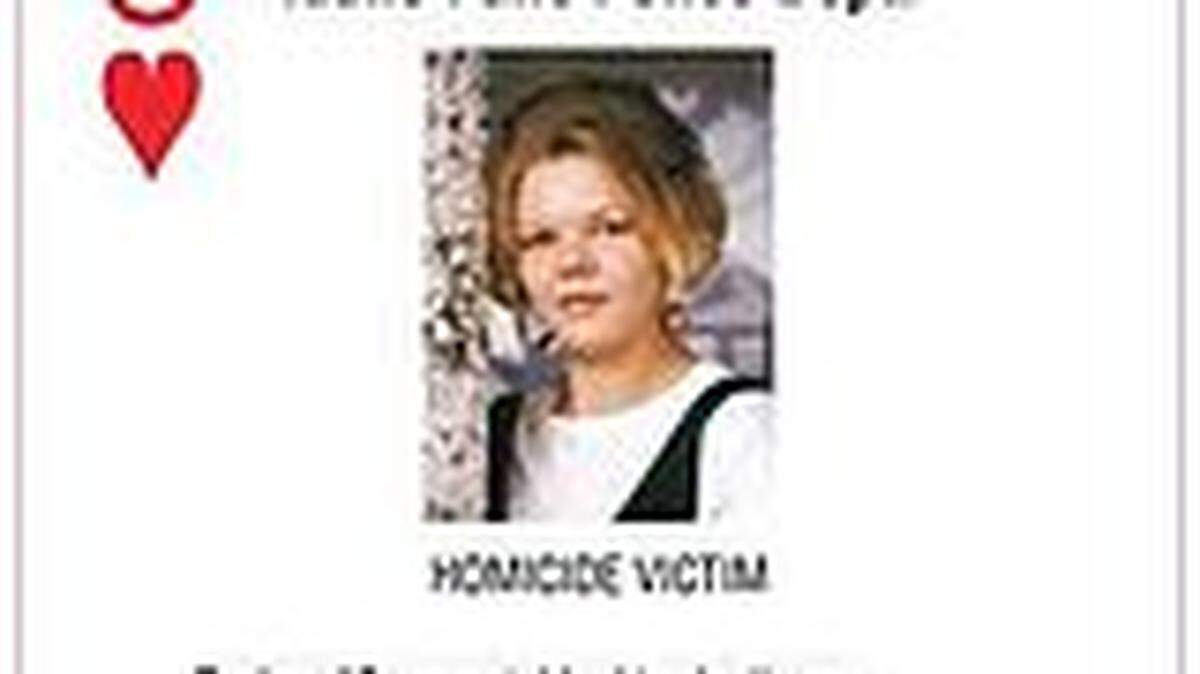
Four teenage girls from Pocatello were abducted and murdered from 1978 to 1983. Their killer or killers were never caught.
This had a profound effect on Crystal Douglas, a child living in Pocatello at the time. She often played in the park from which two of the girls disappeared. She saw accounts of the murders in the newspaper and on TV.
Two years ago, laid up with a broken ankle, Douglas started doing research, trying to find out what happened with those cases and dozens of other East Idaho missing-persons and unsolved-murder cases. She reached out to families and law enforcement agencies for the latest information. She created a database, founded a group called East Idaho Cold Cases, and publicized the database through a Facebook page and, later, a website.
Idaho Department of Correction Director Kevin Kempf learned about East Idaho Cold Cases via Facebook. He heard about an idea Douglas had: to create playing cards whose faces feature cold cases, with pictures of victims or missing persons and details.
Kempf offered to team up with her. Other states and counties have used playing cards to solve crimes, the department said. The agency paid most of the cost of printing the cards. They will be distributed to Idaho inmates starting this month.
“I just want to keep the public awareness alive about these cases, because a lot of our victims’ names are being forgotten over time,” Douglas said. “A lot of the families have told me they feel all alone in this fight. There are so few advocating for cold cases in Idaho.”
Effort expands statewide
Douglas estimates she has posted information on more than 300 missing persons, runaways or unsolved homicides from around Idaho. She said her efforts so far have yielded some useful tips, which she has passed to law enforcement agencies.
Douglas does this on her own time and dime. “It is kind of like a full-time unpaid job, with no retirement,” she said.
Forty-eight of the cards feature the pictures of missing persons or victims of unsolved homicide. The four aces show people wanted for murder. The oldest crime in the deck occurred in 1968, the most recent is 2012.
About half the cases on the cards are from East Idaho, reflecting the initial focus of Douglas’ research. “I would love to put out a second edition deck with a heavier focus on central and northern Idaho,” she said.
The 2,500 decks cost $7,740. IDOC paid $5,705, Douglas $2,035. IDOC will receive 2,100 decks for inmates at its prisons around the state. Douglas will distribute the remaining 400 to county jails and to the families of the victims featured on the cards. The cards are not being offered to the public.
“We know that in 99 percent of crimes someone, somewhere, saw something,” Kempf said. “We’re hoping this program helps brings answers to loved ones who deserve to know what happened.”
IDOC also worked with Idaho State Police to create a new cold-cases tip line — 1-844-TIP-4040 — through which callers can provide anonymous tips. The phone number appears on each card. Inmates who call can remain anonymous if they wish.
The mother of a missing Boise man, Jeramy Burt, hopes the cards will lead someone to come forward with information.
Burt went missing in 2007. His burnt car was discovered in the desert in Owyhee County a few months later. Sheryl Burt thinks there could be a connection between her son’s disappearance and that of another Boise man, Ahren Barnard, who went missing in 2004. Neither has been found.
“I know somebody knows something,” Sheryl Burt said. “They are just too afraid to come forward.
“I am not going to give up,” she said. “When I start feeling down and out about it, I picture sitting in the courtroom with the suspect. That is what keeps me going.”
For Rhonda Hunnel, having her daughter’s case included on Douglas’ cold-case sites and on a playing card “has given me another reason to keep the faith and have hope.”
Since 1995, Hunnel has searched for answers and justice in the death of her daughter, Regina Krieger, who was 14 when she disappeared from her Burley home. Her body was found a couple of months later on the bank of the Snake River downstream from Minidoka Dam. She had been stabbed to death.
“Since my daughter’s case is such a mess and getting colder every day, these cards will make a difference,” Hunnel said.
Cynthia Sewell: 208-377-6428, @CynthiaSewell
Help crack a case
If you have any information on a missing-persons or unsolved-homicide case, call Idaho’s new cold-case tip line: 1-844-TIP-4040.
Donate to get more cards printed and distributed to inmates
Send tax-deductible donations to Crime Stoppers of Bonneville - Idaho Falls, Attn: Cold Case Cards, 310 E. Elm St., Idaho Falls, ID 83402.
This story was originally published January 4, 2016 at 11:32 PM.