Lives changed ‘forever’: Nampa family all sentenced after fatal party shooting
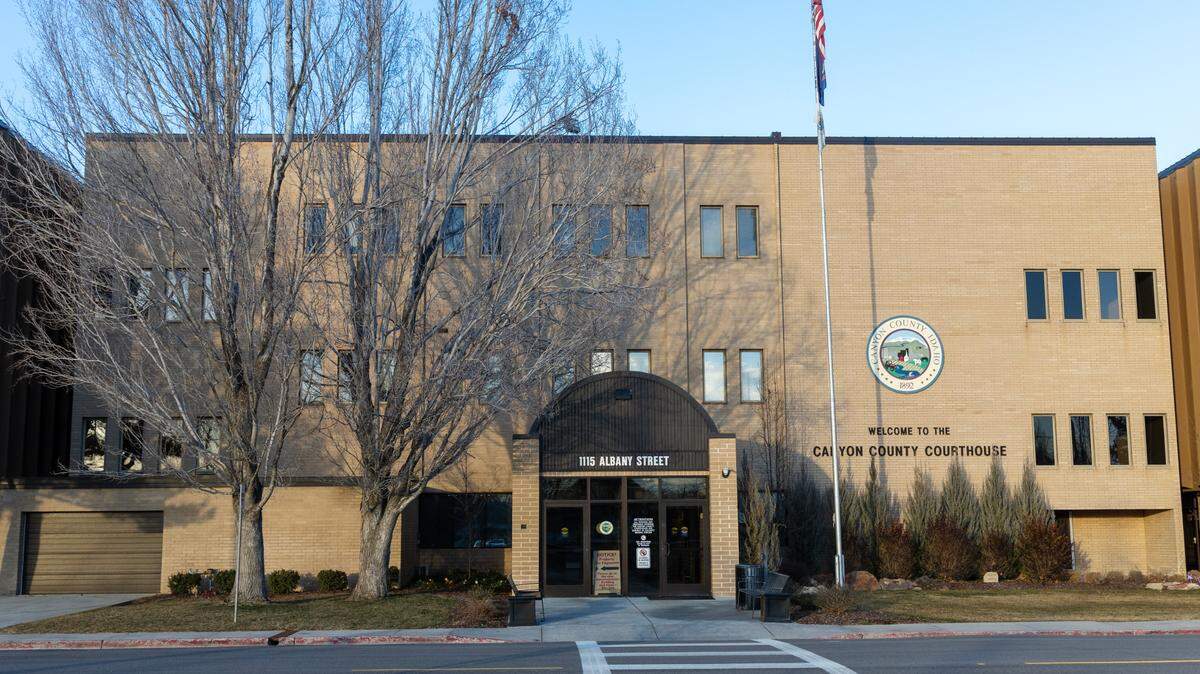
An altercation at a house party in Nampa ended with the fatal shooting of a 20-year-old man in 2022. Four years later, a mother, son and stepfather have been sentenced for their roles in the killing.
In 2024, Canyon County grand juries indicted Victoriano Hernandez Olivo; his mother, Olivia Hernandez Olivo; and his stepfather, Manuel Santana, on various charges in the death of Isaac Bernal.
Santana was charged with first-degree murder, use of a deadly weapon in commission of a felony and a criminal gang enhancement; Victoriano Hernandez Olivo was originally charged with accessory harboring a felon; and his mother was charged with aiding and abetting first-degree murder, and accessory harboring a felon.
All three struck plea deals, and Victoriano Hernandez Olivo avoided a prison sentence. Santana pleaded guilty to second-degree murder, while Olivia Hernandez Olivo entered an Alford plea to aiding and abetting second-degree murder. Victoriano pleaded guilty to obstructing arrest and received unsupervised probation.
Santana will spend at least 15 years in prison before he is eligible for parole, and Olivia Hernandez Olivo was sentenced to 15 years but could be eligible for parole after serving one year.
Alicia Medellin, aunt of victim Isaac Bernal, spoke during each person’s sentencing, and said her family has been left to deal with immense pain, sadness and anger because of the decisions all three made that night.
“It changed our lives forever,” Medellin said. “That’s what makes it even more heartbreaking. We didn’t lose just a nephew, we didn’t lose a cousin, a sibling, a son or a grandson. We lost a piece of our family, a piece of our hearts.”
‘No way he could have survived that’
On the night of Nov. 26, 2022, both Victoriano and Bernal were at a house party on the 17000 block of North Pegram Way, and the two got into an altercation, Canyon County Deputy Prosecuting Attorney Ted Lagerwall said in sentencings.
Victoriano called his mother asking to be picked up, because he thought Bernal had a gun, the prosecutor said. Victoriano’s mother decided to bring Santana along, and he brought a firearm.
While witnesses were not able to see exactly what happened, Lagerwall said, some described seeing a vehicle drive up to where Victoriano and Bernal were, surrounded by a group of people, and Santana, wearing a ski mask, got out of the car and shot Bernal in the chest.
Bernal then made his way to his sister, Lagerwall said, and she heard him say, “I got shot.” During this time, Santana got back into the car with his wife, Victoriano and another girl, and they drove off, according to Lagerwall.
Several people at the party attempted to help transport Bernal to a hospital, Lagerwall said, but they ended up crashing the car.
“They’re kids, they’re not thinking straight. They are scrambling all over the place,” Lagerwall said. “And Isaac lived for a little bit, but there’s no way he could have survived that. No way he could have survived it.” Nampa Police Department officers responded and performed lifesaving measures before an ambulance took Bernal to a hospital, where he was pronounced dead.
Victoriano, who later testified in his stepfather’s case, recounted the incident and said Santana laughed while they drove away, and later told Victoriano, “Make sure nobody says anything.”
Medellin told the court that while her nephew and Victoriano Hernandez Olivo may have been in an altercation, but the two grew up knowing each other.
“What makes it harder is that you and Isaac grew up in the same town, around the same people,” Medellin said to the defendant. “Our families are connected, your cousins are my cousins, our families known each other for generations. And because of what’s happened, nothing’s going to feel the same. Nothing will feel the same.”
Defense attorney believed Santana could have walked away from the case
On Aug. 8, 2024, a grand jury indicted Santana on first-degree murder, use of a deadly weapon in commission of a felony and an added enhancement for criminal gang activity. With a plea agreement, prosecutors knocked down the murder charge to second-degree and dismissed the two others.
In January 2026, Santana stood in front of 3rd District Judge Brent Whiting and received his sentence of up to 22 years in prison, with 15 years fixed before parole could be a possibility. That sentence came after a plea deal reduced his charge to second-degree murder and dismissed the other two charges.
Santana’s defense attorney, Isaiah Govia, said he felt confident that if the case had gone to trial, he could have given the jury arguments of self-defense or in the defense of others, or maybe gotten a reduced voluntary manslaughter charge.
“Or if things went completely our way, Mr. Santana could have been walking away from this case,” Govia said.
Lagerwall said in court that Santana “deserves to go to prison” after delving into his criminal history, which includes violent-offense convictions in both California and Idaho.
In 2015, Santana was convicted of robbery of a store in Idaho and served time in prison. Lagerwall said Santana was charged with battery against a corrections officer while incarcerated.
“This is somebody that should have never even had a gun,” Lagerwall said. “This is somebody who shouldn’t have brought a gun to that party. This is a defendant who is consistently time and time again involving himself in violence.”
Mother and son receive their sentences
To have a strong case against Santana, the prosecution needed Victoriano Hernandez Olivo to testify, Lagerwall said in court. He agreed to do so, and in exchange had his felony charge reduced to misdemeanor resisting or obstructing an arrest.
“Sometimes you do need to do things in order for making sure that justice prevails, and there’s tough decisions, and there’s a long history where prosecutors have to make these decisions to enable justice being served, and that’s what was done in this case,” Lagerwall said.
According to the criminal complaint filed against Victoriano Hernandez Olivo, he left the state to avoid being interviewed by police and told possible witnesses not to speak to police. His defense attorney, David Leroy, argued that he couldn’t have known that calling his mother to remove himself from the situation would lead to Bernal’s death.
“(Victoriano) wishes he had the hindsight to explore other alternatives, not knowing that his simple phone call to his mother would result in this situation,” Leroy said.
On March 19, Whiting decided an appropriate sentence for Victoriano would be one year of unsupervised probation, and he had already spent 156 days in jail. His unsupervised probation is being served in Texas, where he now lives.
Olivia Hernandez Olivo was sentenced in June 2025 after her attorney entered an Alford plea for aiding and abetting in second-degree murder on her behalf. That type of plea carries the weight of a guilty plea but allows a defendant to not admit guilt while understanding that there was enough evidence for a jury to convict.
She was sentenced to a maximum of 15 years in prison, with the possibility of parole after just one year.
‘A difficult set of circumstances and a tragedy’
Lagerwall and Govia said they spent hours working on plea agreements that would get close to the best outcome. Lagerwall noted that Bernal’s family was disappointed with the plea deals in both Santana’s and Victoriano’s cases.
“It’s a difficult set of circumstances, and it’s a tragedy,” Lagerwall said. “The family is obviously, and rightfully, they’re hurting. Their heart was ripped from them, their family member was ripped from them, and it’s senseless.”
Both Govia and Lagerwall agreed that the cases were difficult because of issues with evidence and possible witnesses. Lagerwall told the court that while they knew Santana exited the vehicle, there was no video showing exactly what happened. But the prosecutor said Santana admitted to others that he shot Bernal.
Had the case gone to trial, Govia said he would have attacked witnesses’ credibility and dug into Bernal’s history.
“What we have in this agreement saved everybody from having to go through that,” Govia said.