‘Sexual sin’: Former Nampa pastor sentenced for child porn crimes
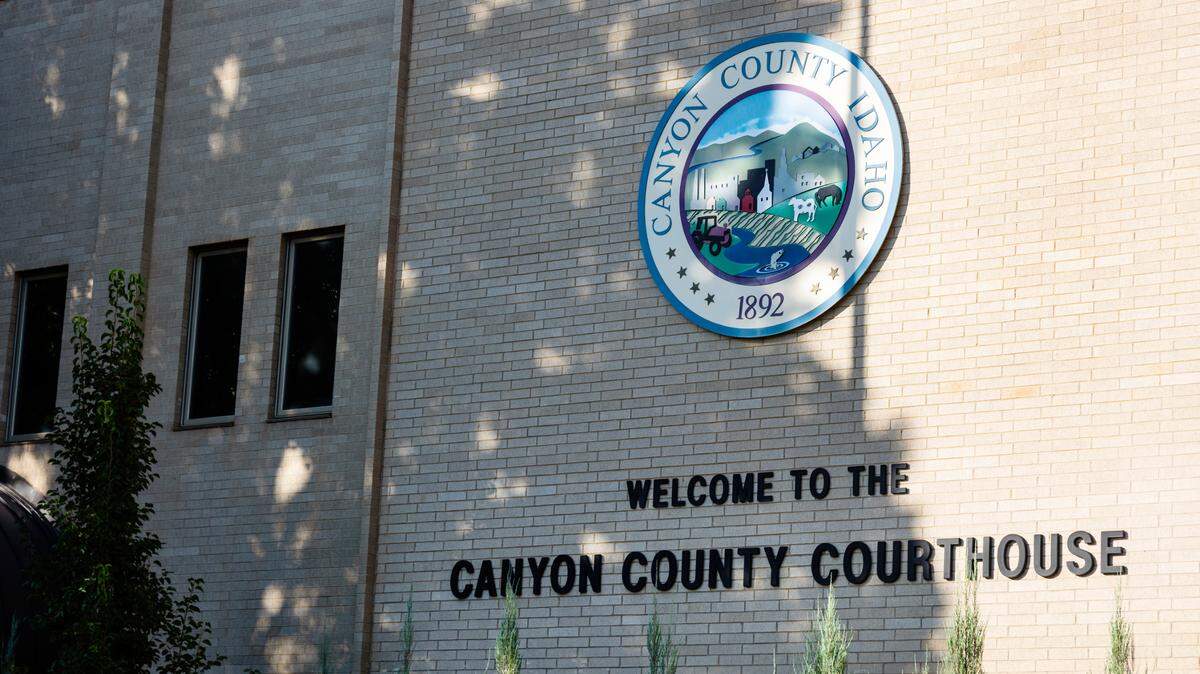
A former Nampa pastor convicted of child pornography crimes told a Canyon County courtroom on Thursday that he takes full responsibility for “every single action.”
He’s now facing a 17-year sentence, with at least five years in prison before parole is a possibility.
Matthew Masiewicz, 53, served as the senior pastor of Sovereign Grace Fellowship before he was arrested in September and charged with 13 counts of child porn: six counts of distributing, six counts of possessing and one count of using Artificial Intelligence to create a visual representation of child pornography.
Masiewicz entered into an agreement with prosecutors in February, pleading guilty to four counts of distributing child pornography and one count of possessing. The other charges were dismissed.
As part of the deal, Masiewicz’s sentencing recommendation was to be for no more than 20 years, although under Idaho Statute, the maximum punishment for his crimes is up to 30 years.
After hearing both the prosecution and defense, Canyon County 3rd District Judge Brent Whiting handed down a sentence of 17 years, with five years fixed and then 12 years either in prison or on parole.
Prosecutor: Masiewicz had a ‘victim mentality’
In his argument to the court, Canyon County Deputy Prosecutor D. Garrett Swenson said Masiewicz’s remorseful statements did not measure up with his actions through the court process.
“He adopted something of a victim mentality during the presentence investigation,” Swenson said. “He repeatedly shared concerns that the court would make an example out of him because of his profession or his status as a public figure.”
According to the case’s affidavit of probable cause, the Canyon County Prosecutor’s Office was given a tip by the Idaho Crimes Against Children Task Force, which led to two IP addresses that uploaded child sexually exploitive material.
One account was registered to Sovereign Grace Fellowship and one to Masiewicz. Law enforcement used a search warrant to examine Masiewicz’s laptop and his phone, and investigators said they found child pornography on both devices.
The document also revealed that Masiewicz was in a group chat with other people through an app to share the material.
Swenson said, and Whiting later agreed, that Masiewicz originally did not show acknowledgment for possessing several other images found during the investigation, many of which showed young children. Swenson added that Masiewicz also “blamed” other people who were in group chats.
The child pornography industry exists because of the demand people create by viewing, possessing and sharing the material, Swenson said.
“It’s not just that the defendant was downloading or viewing child pornography, it’s that he was actually participating in sharing that with other people,” Swenson said. “He wasn’t just a passive viewer of this business that exploits children. He helped supply this media to other people.”
‘I deny nothing. I deny nothing.’
While addressing the court, Masiewicz said that he takes full responsibility for “every single action.”
“I deny nothing. I deny nothing,” Masiewicz said.
His defense attorney, Clarissa Greensmyth, argued that her client had fallen into a pornography addiction and tried to get help prior to his arrest. She said Masiewicz was “deeply remorseful for his actions.”
When law enforcement showed up to Masiewicz’s home to arrest him, Greensmyth said he had taken steps already to stop this addiction.
Investigators said in affidavits that when police made contact with and interviewed Masiewicz, he originally denied any knowledge of the material. But after being told what was found, “he stood up abruptly, turned around, put his hands behind his back and stated, ‘I’m going to own this.’”
Masiewicz underwent a psychosexual evaluation at the recommendation of the court, and it determined that rehabilitation and treatment were likely to work for him, his attorney said.
Handing down the sentence, Whiting said he would not impose the full 20-year recommendation from the prosecution because Masiewicz did take accountability for “all actions.”
“I do believe that that is valuable,” Whiting said. “I believe that’s valuable to you in a rehabilitation standpoint and also psychological standpoint for yourself and moving forward in recovery.”
Masiewicz said that during his last seven months in custody, he spent time repenting and participating in Bible study with others in the county jail.
“I tried to live my whole life in an upright way, but I had one area where I was weak and fell, and it was in the area of sexual sin,” he said. “... This sin has ruined my life. I am committed to never doing this again.”
This story was originally published April 2, 2026 at 3:37 PM.
CORRECTION: The Canyon County prosecuting attorney for the trial was D. Garrett Swenson.