Police deny records release that may explain death of former Bronco Doug Martin
AI-generated summary reviewed by our newsroom.
- Oakland police denied public records requests for video footage, 911 audio and reports.
- Police cited privacy and investigation rules, and deemed release not in public interest.
- Martin’s family said he had mental health challenges, including on the day of his death.
Questions surrounding the October death of former NFL player and Boise State football standout Doug Martin continue to go without answers, which could become permanent.
The Oakland Police Department last week denied a slew of public records requests related to Martin, 36, of Stockton, California. Martin died in police custody at an Oakland-area hospital after a “brief struggle” with law enforcement, the department previously said. Police officers responded to a report of an early morning break-in at a home in East Oakland and Martin was found inside.
The requests filed under the California Public Records Act in the days after Martin’s Oct. 18 death sought body-camera footage from the responding police officers, audio from the 911 call reporting the alleged burglary, and police reports about the incident. All were denied, with the city citing exemptions that, among others, preclude disclosures that “would compromise privacy interests, and interfere with an ongoing investigation.”
“The city concluded that the public interest served by nondisclosure clearly outweighs the public interest served by disclosure in this instance,” according to the denial, which it said was decided by interim Police Chief James Beere. The city’s assistant police chief before that, Beere was tapped on Nov. 14 for the lead role and officially takes the reins Saturday after former Police Chief Floyd Mitchell announced his resignation following just 17 months in the position.
Oakland police also asserted an exemption to a California law that requires the release within 45 days of body-cam footage in critical incidents when a peace officer discharges a firearm at a person, or when use of force results in death or great bodily injury. The city disputed that the circumstances of Martin’s death meet the definition of such a “critical incident.”
Beere did not respond to a request for comment from the Idaho Statesman, but a department spokesperson clarified the city’s reason for declining to release the records concerning the incident that led to Martin’s death.
“At this time, the city has insufficient evidence to make the determination that the use of force by an officer was the cause of death or a great bodily injury,” the unnamed Oakland police spokesperson said in an email to the Statesman. “That determination has not yet been made while the matter remains under active investigation. Therefore, the mandatory disclosure provisions for critical incidents do not presently apply.”
The spokesperson didn’t respond to a request for the names of the police officers who responded and encountered Martin, nor a question about whether they have since returned from paid administrative leave following his death.
California police a ‘complete black hole’ for transparency
The department acknowledged in its initial statement that Martin “became unresponsive” shortly after officers were “attempting to detain him” and then took him into custody. Paramedics were called in, rendered medical aid and transported Martin to a local hospital, where he later died.
David Loy is an attorney and the legal director of the First Amendment Coalition, a California-based nonprofit that advocates for press freedom and open government. Such public records issues with law enforcement agencies unfortunately are not uncommon in California, which is “traditionally a complete black hole” for police transparency, he told the Statesman.
“If use of force did not result in death, they are within their rights under the letter of the law. That being said, they are free to disclose these videos and are not mandated to withhold them,” Loy said in a phone interview. “It’s a choice they’re making. … Frankly, it’s high-profile and someone died. I think the public ought to have access.”
As a result, those seeking the public records into Martin’s death, including several news outlets, would have to sue the Oakland Police Department to try to obtain them, he said. And if Martin’s death is later confirmed as not having been caused by use of force, the city may never have to surrender any of the records, because the state’s investigatory exemption never lapses, Loy added.
“The ironic thing is California fancies itself as progressive in many ways, but is quite retrograde in police transparency,” he said. “In many states, they can withhold records for a limited time, but those eventually expire. It never expires in California, which is immensely frustrating.”
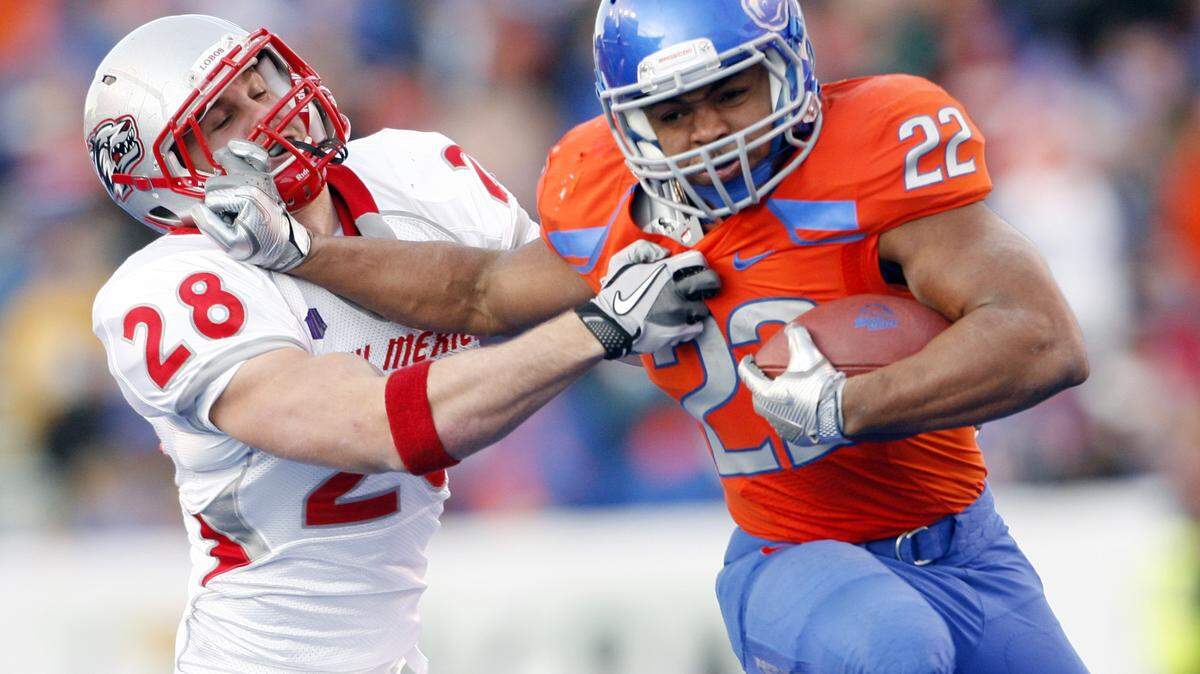
Martin’s sudden death, just a handful of years after his seven-year professional football career ended, sent shockwaves through several communities he touched, including Boise State University and its football program.
Former teammate Charles Leno Jr., who is from Oakland and played offensive tackle for the Broncos, previously called Martin the “heart and soul” of his teams. They overlapped for three seasons, from 2009 to 2011, with Leno a redshirt sophomore when Martin was a senior. Both were drafted to play in the NFL.
“Guys absolutely just loved the person he is, how he showed up every day for his guys,” Leno said. “He was just a team guy.”
Martin’s family issued a statement two days after his death through Athletes First, the Southern California-based management agency that represented Martin during his pro football career. They disclosed that he privately experienced mental health issues that affected him personally and professionally.
Martin’s parents sought medical support for their son, the statement read. Martin, they said, fled his home during the night he was found by police in a neighbor’s house two doors down. His family called Martin’s death a “heartbreaking loss.”
“Ultimately, mental illness proved to be the one opponent from which Doug could not run,” the Martin family’s statement said.