Prisoners help restore Boise Foothills with sagebrush. Trump put funding at risk
At 77 years old, Loyd has been in prison for nearly a decade. He has learned there are three ways to spend that time behind bars: sleeping, working or ending up in solitary confinement — or “the hole.”
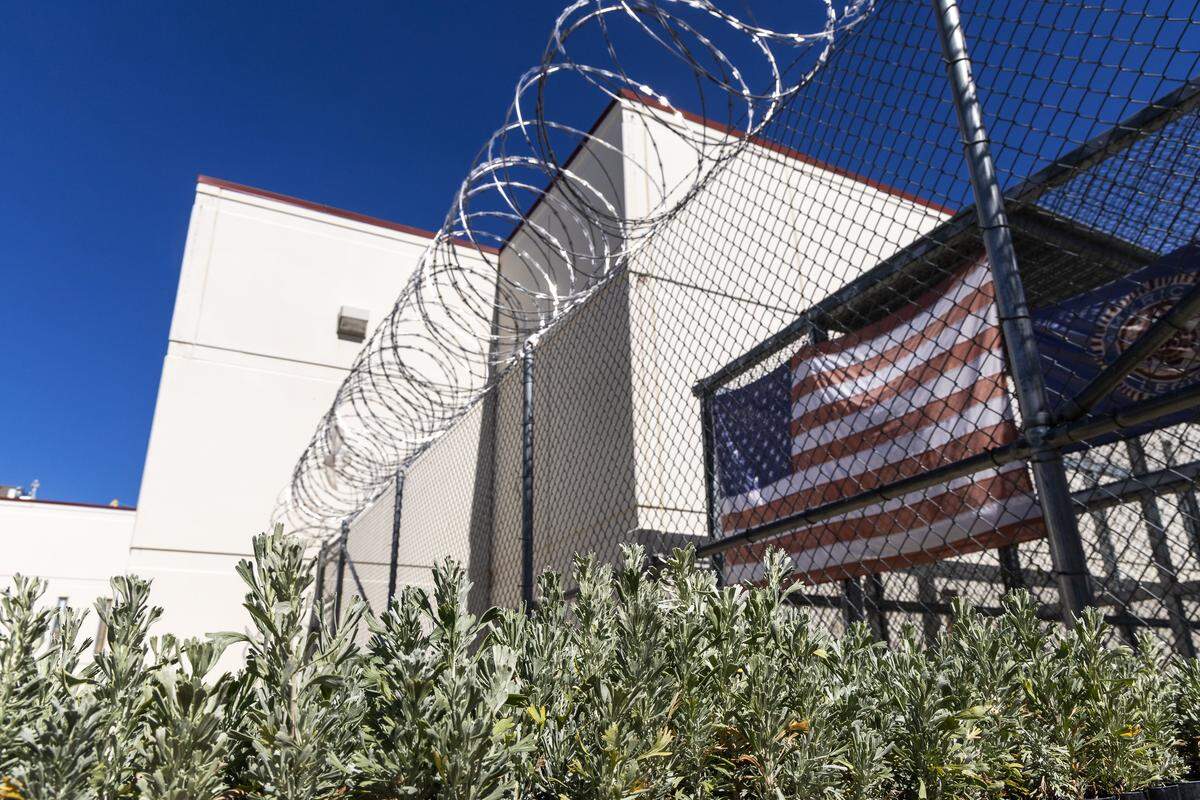
He has tried to spend his time being productive, he told the Idaho Statesman. What that looks like for Loyd, whose last name was withheld at the request of the state’s prison system to protect his victim, is spending his days outside surrounded by bright white walls, barbed wire and thousands of seedlings he’s helping grow.
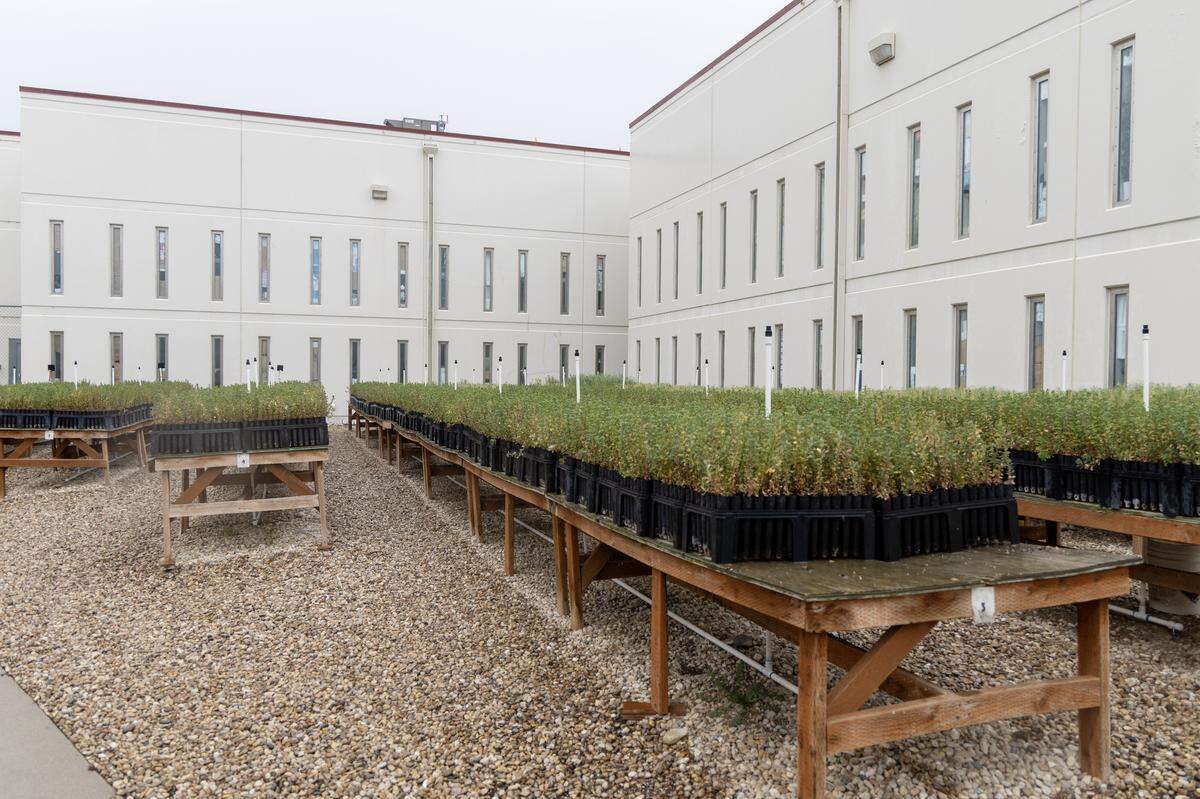
He’s a part of the Sagebrush in Prisons Project at the Idaho State Correctional Center, which grows various plants, like sagebrush, to restore native habitats throughout the Gem State.
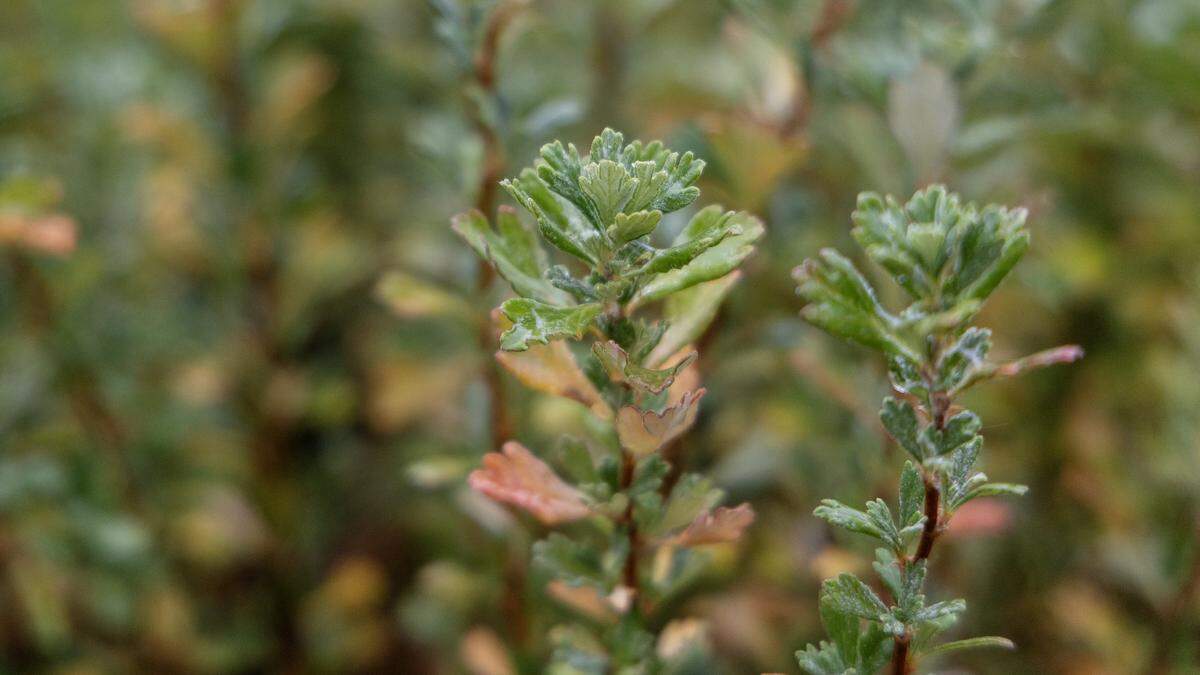
The six-person crew, all men incarcerated at the roughly 2,100-person prison, grow the seedlings — watering, fertilizing, and thinning them out as they develop — to create a root plug stable enough to be transplanted and survive in the wild.
Not only does the work get the men outside the concrete walls, fluorescent lights and sharp sounds of metal doors buzzing open and closed, but it also provides them with a sense of normalcy in their lives again as they work toward rehabilitation.
But more than that, Lloyd said, it’s a way to give back to a community he’s hurt.
“I have hurt people,” he said, holding back tears. “This has given me an opportunity — not in a forceful, frontal way — to be able to do something for the community.”
And the project has delivered.
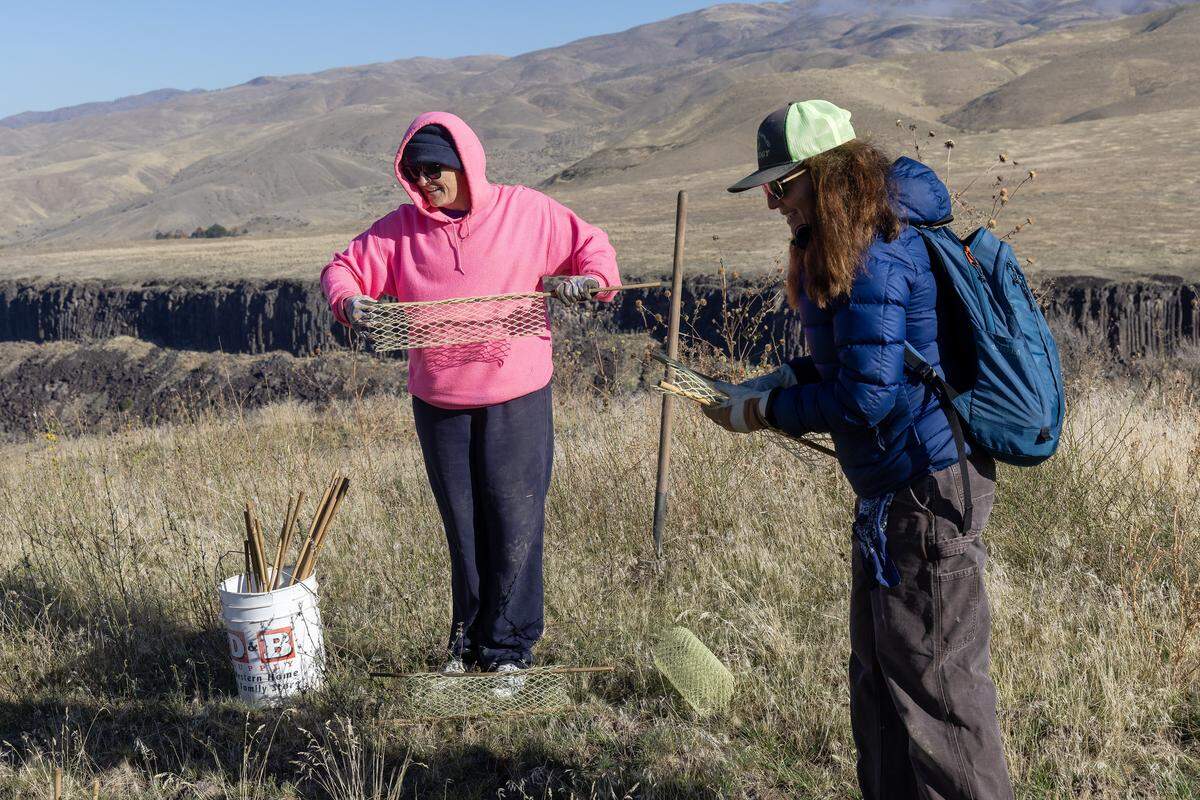
Just this year the project provided 72,000 seedlings of sagebrush, rabbitbrush, and bitterbrush to Idaho Fish and Game to help restore part of the Boise Foothills burned by the Valley Fire last year, when a downed Idaho Power line ignited a blaze that covered nearly 10,000 acres around Lucky Peak Lake.
Women incarcerated at South Boise Women’s Correctional Center were also able to plant several hundred sagebrush plants themsleves at the site of Plex Fire, which burned about 350 acres in 2024.
But the program’s future is uncertain — in Idaho and beyond.
79 conservation programs cut by Trump administration
Historically, the Sagebrush in Prisons Project, which had programs in several other states, largely received funding from the Bureau of Land Management through coordination with the Institute for Applied Ecology, a nonprofit organization dedicated to conservation efforts of native species and habitats in the West. But the funding was delayed earlier this year.
So Idaho Fish and Game, along with other partners, stepped in, providing a roughly $90,000 contract to fund the programs at Idaho State Correctional Center and South Boise Women’s Correctional Center in 2025, according to Michael Young, a wildlife biologist for Idaho Fish and Game.
Still, the Institute for Applied Ecology expected to receive its grant funding from the Bureau of Land Management this year, Executive Director Keith Norris said. And it did.
The Institute for Applied Ecology received seven grant awards from the U.S. Department of the Interior, with three of them — including the Sagebrush in Prisons Project — coming in as recently as August, Norris said.
Weeks later, the grants were canceled as part of mass cuts by the Trump administration — and the money went away. In total, 79 grants focused on conservation efforts throughout the West were terminated, cutting nearly $14 million in funding.
The cuts were praised by federal leaders, including U.S. Secretary of the Interior Doug Burgum, who posted on X that the Department of Government Efficiency’s cost-cutting initiative saved taxpayers millions by cutting grants for “wasteful environmental groups.”
But, in a recently filed lawsuit, the Institute for Applied Ecology, along with the Institute for Bird Populations and the Mid Klamath Watershed Council, accused the Department of the Interior, along with several other agencies, of violating their First and Fifth Amendment rights by withholding federal funding in retaliation for their “unrelated speech.”
The Department of the Interior pinned its decision to cancel the grants — some of which had just recently been funded — on a misalignment of the agency’s priorities, but according to the 28-page lawsuit, government officials’ public statements tell a different story.
The lawsuit pointed to Burgum’s post, along with an article he shared by The Daily Caller, a right-wing news outlet, which pointed to a 2021 DEI action plan for a privately funded initiative on the Institute for Applied Ecology’s website, affirming that “diversity makes us strong and equality is in our nature.”
Funding hopeful for Idaho prison programs in 2026, nonprofit says
Karen Hall, the program director of ecological education at the Institute for Applied Ecology, called the loss of funding “heartbreaking.”
One of the biggest benefits of the program, Hall told the Statesman, is educating people about the landscape of where they live, something she called “super darn important.” Without that knowledge, she said, people make decisions that could be detrimental to the land.
And, the threat to sagebrush isn’t only a concern for Idaho, but for those throughout the West.
“The habitat itself is under continual threat,” Hall said. “You know, a lot of that is through human activity — not all of it, for sure — but a good portion of it is. And as humans, I think we have a responsibility toward nature.”
Brad, another incarcerated man participating in the program, called it “almost idyllic.”
“Going out there and working each day with a bunch of green around us, and watching plants grow from seed — almost feels like we’re birthing something, right?” he said.
It’s also known that programs like the one at Idaho State Correctional Center, and the South Boise Women’s Correctional Center, reduce recidivism, Hall said. Not only does working with sagebrush and the other native plants give incarcerated men and women a sense of autonomy and a connection to nature, but it’s a “lifeline for them in a fairly bleak part of their lives,” Hall said.
Brad, whose last name also was withheld at the request of the state’s prison system to protect his victim, said he’d be greatly disappointed to see the program cut.
“To see it go to the wayside would be a detriment to the whole community, and what we’re trying to do here,” he told the Statesman in an in-person interview.
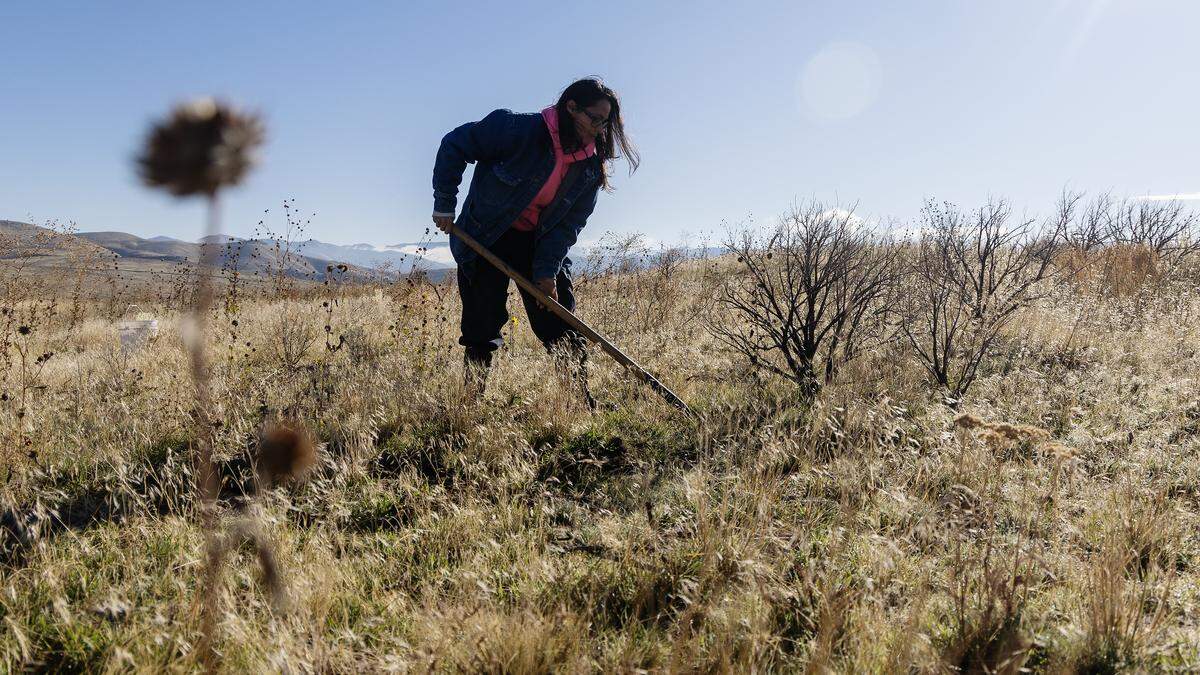
Both Hall and Norris were optimistic about funding the program — at least in Idaho — again next year. Fish and Game also seemed to be onboard to at least provide another roughly $90,000 in funding next year for another season of seedlings, Young said.
“We’re looking forward to exploring (funding) with Idaho Fish and Game and see what our options are for next year,” Norris said, “as we think about what this program looks like in the absence of federal engagement.”
For Loyd, who has been working outside with the seedlings for years, he said he’d continue finding other ways to keep himself busy if the program wasn’t funded next year.
Other than that, he jokingly said he’d throw “a little temper tantrum” in his cell, cry a lot, and then pick himself up and carry on.