Boise woman who stormed the U.S. Capitol released from prison following Trump’s pardons
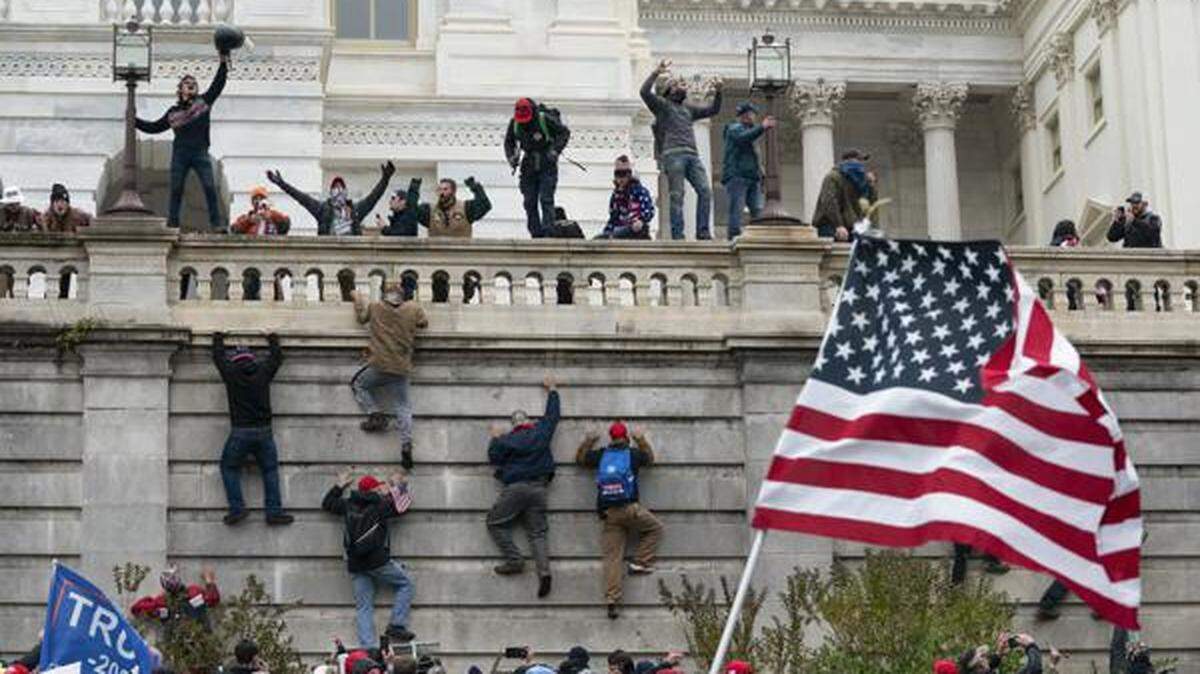
In an anticipated but sweeping decision, President Donald Trump issued pardons for over a thousand people throughout the United States who participated in the Jan. 6 insurrection — including several Idahoans.
It was expected that once Trump was in office he’d forgive the convictions of many of his supporters who stormed the capitol in opposition to the certification of then-President Joe Biden’s election victory but it wasn’t clear how far those pardons would go. Hours after his inauguration the president signed a proclamation that pardoned virtually every person who was involved in the U.S. Capitol riot — including those who injured police officers.
Roughly 140 police officers were assaulted during the riot, according to the U.S. Attorney’s Office for the District of Columbia.
The majority of people from Idaho were convicted of lesser crimes related to illegally entering the capitol, though one man, 70-year-old Duke Wilson, was convicted of assaulting an officer after he stuck an officer with a piece of PVC pipe. He spent a little less than three years in prison before he was released last month before the pardons.
For those who were still serving time — like one Boise woman— their prison sentences were commuted and the Federal Bureau of Prisons was directed to release them from custody immediately. For those whose criminal cases were still ongoing — including two Idahoans — Trump directed the newly appointed attorney for Washington D.C. to file motions asking for the cases’ dismissals.
Throughout the last four years, seven people in Idaho have been charged with crimes related to the insurrection, and of those cases, five people had already been convicted: Josiah Colt, Yvonne St Cyr, Pamela Hemphill, Tyler Tew and Wilson.
Two others, Theo Hanson and Michael Pope, had their ongoing cases dismissed following Trump’s order.
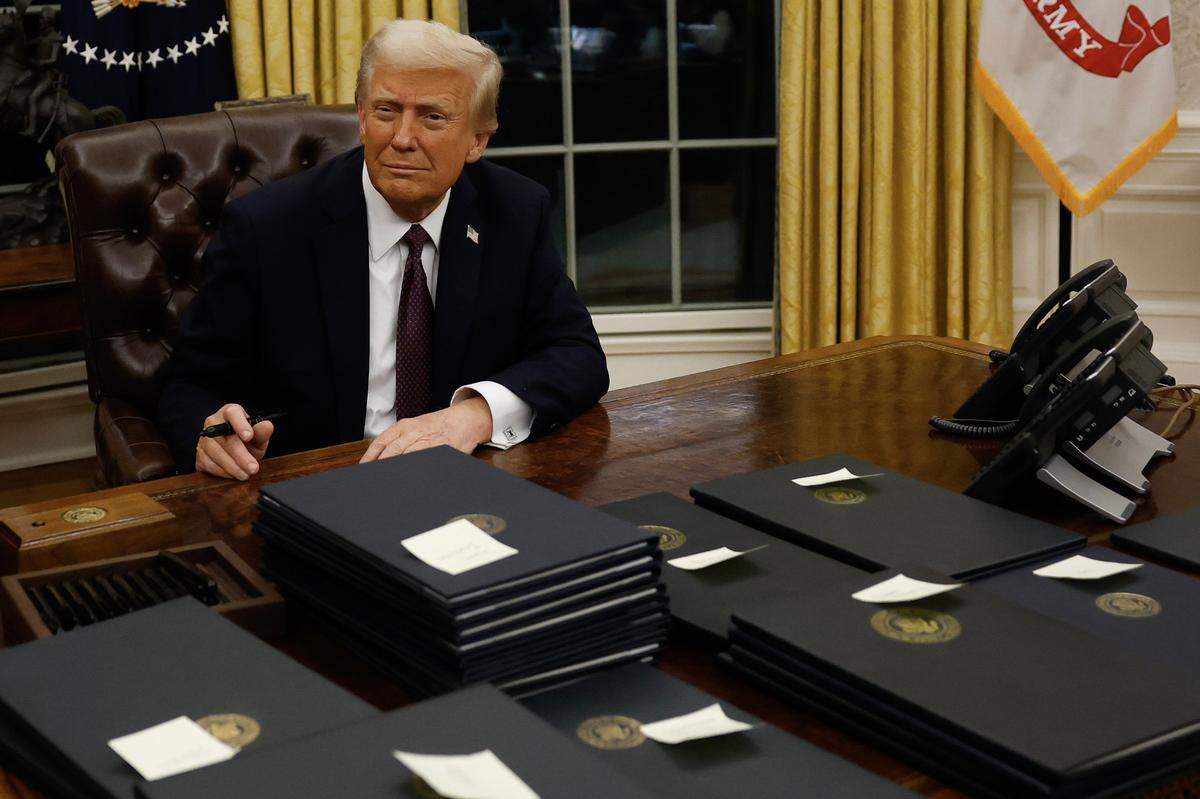
“This proclamation ends a grave national injustice that has been perpetrated upon the American people over the last four years and begins a process of national reconciliation,” Trump wrote in the executive order.
When the Idaho Statesman reached out to the U.S. Attorney’s Office for the District of Columbia with several questions about the pardon and commutation process a reporter was directed back to the president’s proclamation.
“The Executive Order is clear. I recommend you re-read it,” a spokesperson said in an email.
Some Republican leaders across the country have pushed back against Trump’s decision to pardon violent offenders, but others have remained tight-lipped, including Idaho’s leaders — some of whom attend the inauguration.
None of the state’s congressional representatives or senators responded to requests for comments on Trump’s proclamation. And when asked about the possibility of a pardon earlier this month, Gov. Brad Little refused to say whether he would like to see the seven Idahoan defendants pardoned.
”I’ve got a lot of other things I’m working on, and that’s not one of them,” he told the Statesman.
Boise woman released from federal prison Monday following pardons
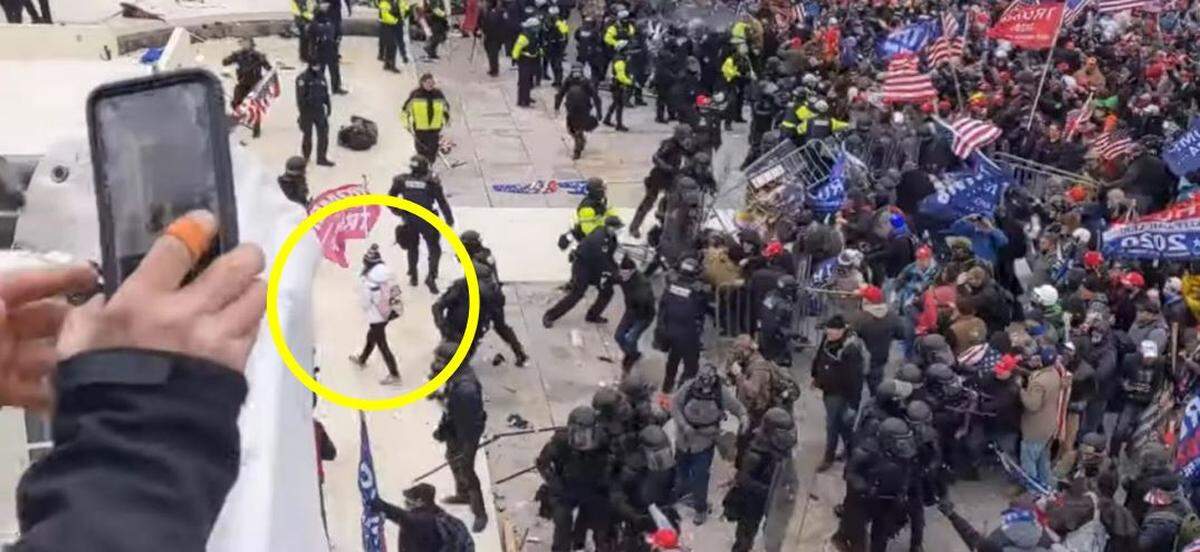
Of those who were convicted, St Cyr, of Boise, was the only one still incarcerated when Trump signed the order, and she was released Monday from a facility in Seattle, according to the Federal Bureau of Prisons.
The 57-year-old was one of the first people to break through the police line and enter the U.S. Capitol, according to prior Statesman reporting. In the time leading up to her 2023 sentencing, St Cyr continued to post conspiracy theories about the government online and called the country’s justice system “corrupt,” the Statesman reported.
U.S. District Judge John Bates, a George W. Bush appointee who sentenced St Cyr, said she had “little or no respect” for the law, the country’s democratic systems or the criminal justice system.
“You’re not being held responsible for your beliefs. You’re not being held responsible for what you have said,” Bates added. “You’re being held responsible for the choices you made on Jan. 6 and the conduct that you engaged in.”
St Cyr was initially sentenced to 30 months in prison in September 2023, though online prison records showed she was expected to be released from prison in July. It’s unclear why her scheduled release date was months early.
The Federal Bureau of Prisons declined to say why St Cyr, along with several of the other defendants, were released or expected to be released from prison months earlier than their prison sentence and before the presidential pardons, but a spokesperson pointed to several ways people incarcerated in federal prisons can reduce their sentences. This includes participating in specific programs like one focused on reducing recidivism and receiving time for good behavior while in prison.
Three other defendants — Colt, Wilson and Hemphill — were also sentenced to prison but they had already been released.
Several defendants including Colt and Hemphill apologized or expressed remorse for their actions during the insurrection — with Hemphill going a step further and rejecting her pardon.
“Accepting the pardon would be an insult to the Capitol Police officers, to the rule of law, to our nation,” Hemphill told the Statesman Tuesday. “The J6 criminals are trying to rewrite history by saying that it was not a riot; it wasn’t an insurrection. I don’t want to be a part of their trying to rewrite what happened that day.”
Colt was initially sentenced to 15 months in prison with 36 extra months that he was expected to spend on supervised release, court documents showed. He was released from prison in March.
“I should have never stepped foot on the Capitol that day. I really am embarrassed and ashamed,” Colt in 2023 said during his sentencing. “I should have turned back, and the adjectives that have been used to describe that day are accurate. It was tragic. It was outrageous, my actions. And it was a travesty that should never happen again. And I am fully remorseful.”
Of all the defendants who were convicted, Tew, of Idaho Falls, was the only one who wasn’t sentenced to prison or jail, instead, he was placed on probation for two years. All of the charges Tew pleaded guilty to were misdemeanors, and the judge in his case acknowledged that he didn’t engage in any acts of violence or with any officers and didn’t destroy any property.
Two other ongoing cases dismissed
Hanson and Pope, the two Idahoans with ongoing cases, have had any remaining charges against them dropped.
In both their cases, U.S. Attorney for the District of Columbia Edward Martin filed motions to dismiss their indictments with prejudice — meaning the cases can’t be reopened. Hours later the cases were officially dismissed, court records showed.
Trump appointed Martin, a Missouri lawyer who helped organize the “Stop the Steal” movement, to the top job Monday, according to the Washington Post. Unlike other major cities, whose top prosecutors are elected, the Washington, D.C., federal prosecutor oversees both local and federal cases and is appointed by the president. He’ll be in the position temporarily until Trump nominates someone permanently for the role.
Hanson, who moved to Idaho after the riot at the U.S. Capitol, wasn’t arrested until late 2023. Records obtained by the FBI showed that Hanson was a part of a Telegram group chat called the “The California Patriots-DC Brigade,” which communicated about gathering fighters to travel to Washington, D.C., to protest the election results.
He was facing six charges: conspiracy to impede or injure officers, civil disorder, entering and remaining in a restricted building or grounds, disorderly and disruptive conduct in a restricted building or grounds, disorderly conduct in a capitol building and parading, demonstrating or picketing in a capitol building, according to his indictment. Hanson was expected to face a jury last year but his trial was pushed back after he was seriously injured in a construction accident, court records showed.
Despite Pope being charged back in 2021, his criminal case was still ongoing. He pleaded guilty to entering and remaining in a restricted building and parading, demonstrating or picketing in a capitol building, and was later convicted of three other counts — civil disorder, disorderly and disruptive conduct in a restricted building or grounds and disorderly conduct in a capitol building — after a bench trial. Pope was expected to be sentenced in April.
Now, all six of the charges against him have officially been dismissed, according to an order signed by U.S. District Judge Rudolph “Rudy” Contreras. Just before the pardon was handed down, the court granted a travel request from Pope so that he could attend Trump’s inauguration.