‘Nothing but loss’: Judge sentences veteran to prison for killing friend in Boise fight
For nearly 15 minutes, 4th District Judge James Cawthon verbally weighed whether to send 25-year-old Javon Harmon to prison, and if he did, for how long.
He described Harmon — convicted of fatally shooting one of his friends — as someone who came from an “exemplary family” and up until this incident lived a life of service himself as a former Marine. Cawthon said that he understood why the March 2024 altercation escalated, as the victim, 26-year-old Maximilian Myers, was threatening one of Harmon’s roommates in their Boise apartment.
But things diverged for Cawthon, he said, when Harmon used a firearm. That choice went beyond self-defense and warranted incarceration.
“The tragedy of these types of crimes is so jarring, and by that I mean the loss of Max Myers’ life, and what situation you and your family find yourself in at this time,” Cawthon said during Harmon’s sentencing last week. “I do view this as a circumstance and a crime that did not have to happen.”
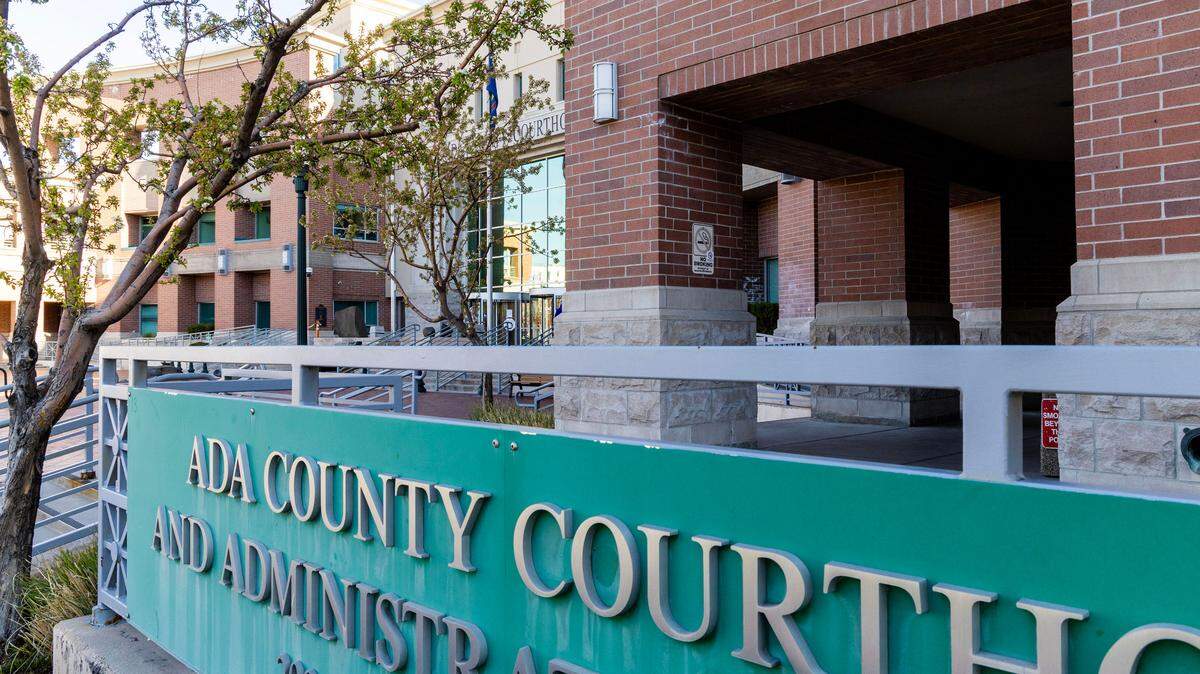
Though Cawthon said he believed that Harmon didn’t intend to kill Myers, he handed down a 20-year prison sentence — 10 years shy of the maximum penalty of 30 years. Harmon will have to spend at least a decade in prison before he’s eligible for parole, though he’ll receive credit for the 10 months he’s already spent in the Ada County Jail.
“It’s just an extremely dangerous decision to discharge lethal force in that manner,” Cawthon said. “When you fired that weapon you hit Max — and you killed him.”
Harmon pleaded guilty to two felonies, including voluntary manslaughter, as a part of a plea deal with the Ada County Prosecutor’s Office.
Cawthon referred to the shooting as an “almost Shakespearean level tragedy” where he said a good person from a good family was confronted with a charged situation with another person, Myers, who also had good qualities.
“In that moment, because of the conduct you engaged in there’s nothing but loss,” he added.
Victim had a history of violent behavior, defense says
Scott Rowley, Harmon’s public defender, also called the shooting a “tragedy.” But he added that the weeks leading up to the shooting were also “horribly tragic.”
Harmon, who is from Delaware, moved into the Lake Harbor Apartments near State Street in Boise with two other roommates, one of whom had a young son, in December 2023. They met Myers, who was homeless, toward the end of January 2024 and he began staying at their apartment off and on.
In the weeks leading up to the shooting, Myers exhibited “unpredictable, possessive, aggressive and ultimately violent behavior” toward Harmon’s roommates and the child, the defense wrote in a court filing.
Rowley said in court that two weeks before the shooting Myers kicked in the door of their apartment during a fight, and it led to the police being called by one of the neighbors. Myers was arrested and Harmon helped bail him out of jail, Rowley said.
He pointed to testimony from Harmon’s roommate who said in a court transcript of a June hearing that Myers’ initial verbal abuse escalated into violence in the days before the shooting. It was normal for Myers to threaten violence, she said during the hearing.
On the night of the shooting, the woman said, Myers got mad at her for grabbing cheaper ingredients for dinner and at one point “smacked” her across the face, according to the transcript. She said that, after telling Myers to stay away from her, she threw a pot at him.
Harmon intervened, and things settled down for a while, according to the woman, who described Harmon as a “big brother.” But things began to escalate again when the woman and Myers began arguing.
The argument eventually moved into the hallway, and Harmon was between the woman and Myers, according to her testimony. Harmon was attempting to de-escalate the situation and keep Myers from hitting her, the woman said.
Myers — who wasn’t holding a weapon — then moved toward Harmon and the woman, which is when Harmon shot him. Myers was transported to Saint Alphonsus Regional Medical Center, where he died hours later. He died from a gunshot wound to the abdomen, according to the Ada County Coroner’s Office.
For his part, Harmon acknowledged that he should’ve called the police that day — or earlier.
“I should have — and I wish I did — use another force other than lethal force to stop him. I regret it every single day,” he said in court. “I know what I did was wrong.
“My instincts just took over,” Harmon added. “It was a split decision and my instincts won.”
He remembered Myers as a good friend, who was nice, sweet and helpful when sober, and someone who could’ve changed if he got the help he needed.
Prosecution calls shooting an ‘overreaction’
Harmon’s roommate previously said in court that she wasn’t afraid Myers would actually kill her, but she did know that “he wasn’t going to stop hurting” her. During last week’s sentencing, the prosecution argued that the woman’s testimony made it clear “that her life wasn’t in danger.”
“Shooting Mr. Myers was not necessary in order to protect her,” Ada County Deputy Prosecutor Dylan Asbury said in court.
While Myers’ actions toward the female roommate weren’t “commendable,” he “certainly didn’t deserve to die,” Asbury added. He asked Cawthon to sentence Harmon to at least 15 years in prison, with another 15 years that he could spend on parole, in prison or both.
The Ada County Prosecutor’s Office “certainly respects the rights of citizens to bear arms,”Asbury said. But he called the shooting an “overreaction to violence” and said “the escalation to a firearm should be deterred.”
The defense acknowledged that if they had taken the case to trial their biggest hurdle would have been proving the necessity of the gun.
“There were a lot of things that could have happened in between shooting a gun,” Rowley said in court.
He added that Harmon was comfortable with his plea deal.
Instead of a prison sentence, Rowley asked the judge during the sentencing to place Harmon on probation. He said that if Harmon had to face prison time, he should be allowed to be released after two years in prison, with an additional 13 years that he ideally would spend on parole.
“Javon’s only 25,” Rowley said. “He can have a whole productive life ahead of him and be happy.”
The prosecution agreed to reduce its initial second-degree murder charge to voluntary manslaughter as long as Harmon pleaded guilty to both the manslaughter charge and an enhancement for the use of a deadly weapon in the commission of a felony.
There wasn’t any stipulation in the agreement as to how long he would be incarcerated. Both charges carry a maximum of 15 years in prison. Seconds after Cawthon handed down his sentence in the Ada County courtroom Friday afternoon, Harmon’s mother began to break down in sobs.