
Jury may see 3D imaging of house where 4 Idaho students were killed. How it works
Law enforcement is using 3D imaging to illustrate the crime scene and layout of the off-campus home where four University of Idaho students were killed — and that could be the best-case scenario for the upcoming murder trial, according to a forensics expert.
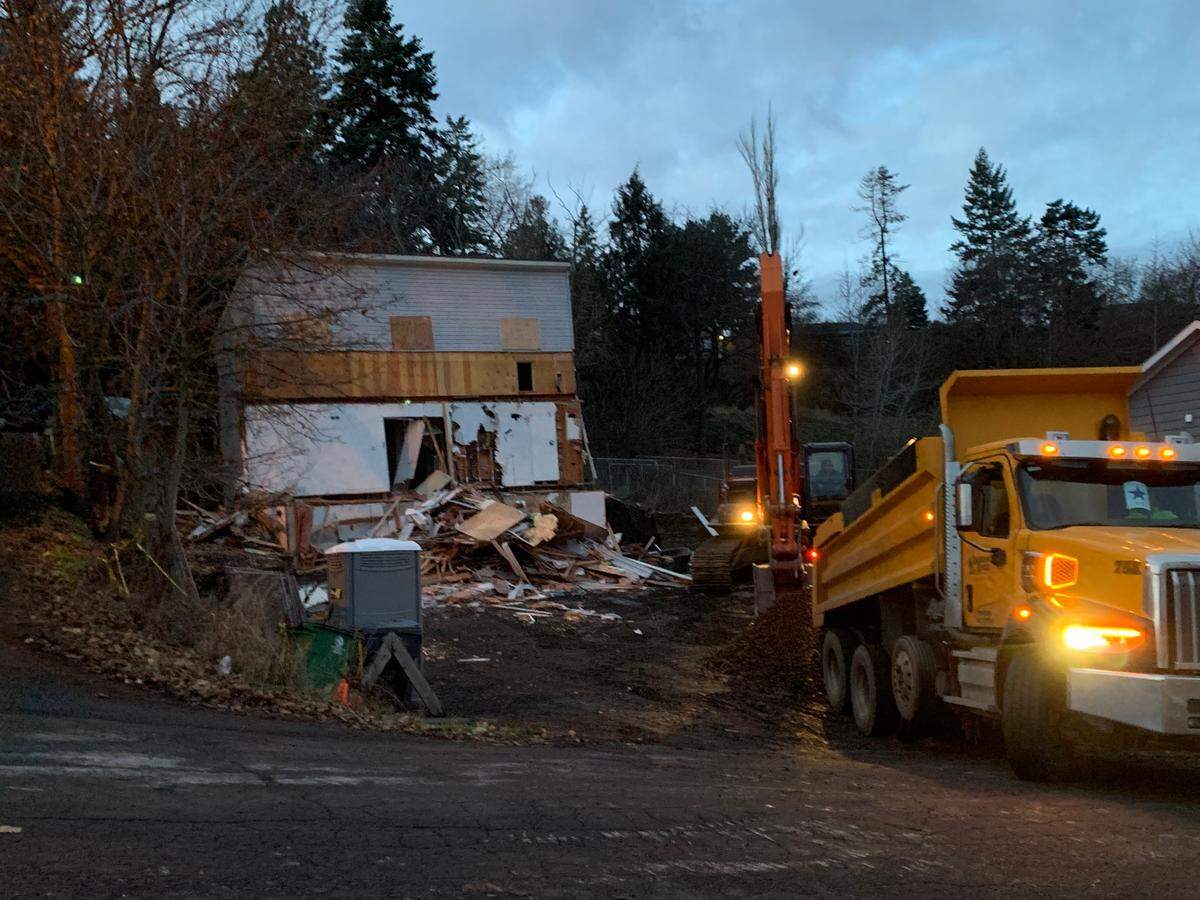
The home at 1122 King Road was torn down Thursday despite objections from families of two of the victims. In a statement, the Goncalves and Kernodle families said it’s important for a jury to be able to see the home and certain vantage points.
Kaylee Goncalves, Xana Kernodle, Madison Mogen and Ethan Chapin were stabbed to death in their home on Nov. 13, 2022. Bryan Kohberger, a 29-year-old former Washington State University graduate student, faces four counts of first-degree murder.
Shanon Gray, an attorney representing the Goncalves family, said in a statement that the home is “one of the most critical pieces of evidence in the case.” The family started an online petition to protect the home, and more than 5,000 people signed it.
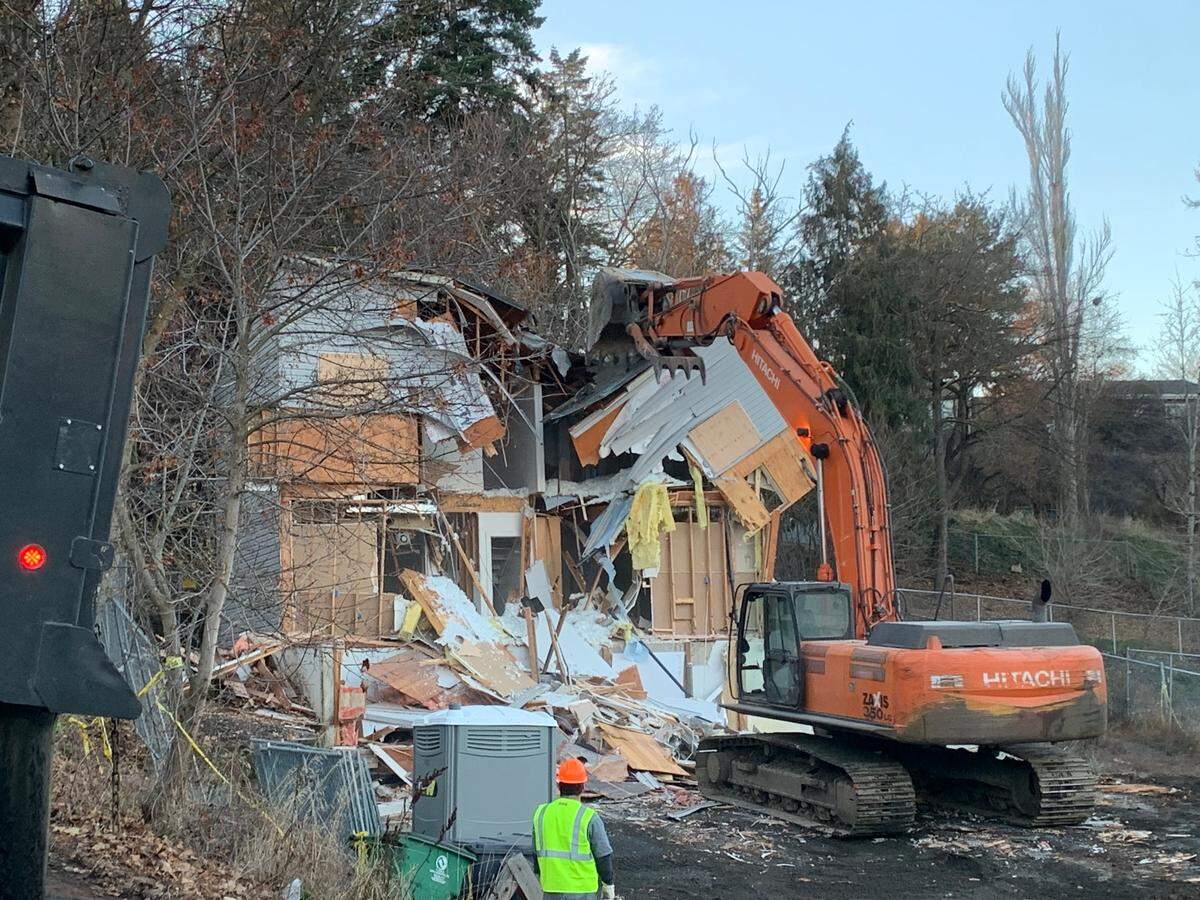
The house was donated to the university, which decided to demolish it to move forward with the healing process, without protest from the defense or prosecution, the university said in a news release.
Latah County Prosecutor Bill Thompson, leading the Kohberger case, said in a Dec. 22 email that the home is so different than it was at the time of the homicides that a jury walk-through would never be approved. He said investigators have gathered necessary measurements to create exhibits that “should be admissible and helpful to the jury.”
3D virtual tour allow jury ‘to enter home’
Eugene Liscio, a 3D forensics analyst, said a model of the home based on the FBI’s scans finished in October is just as good for the jury as a walk-through.
“Bringing the jury to the home can be practical, sometimes it’s not,” Liscio said. “But you can do all that with the 3D model, too.”
Liscio has been a forensic analyst for 20 years. He has a background in aerospace engineering. Now, he owns ai2-3D, a private company in Canada that contracts with law enforcement and sometimes with the Naval Criminal Investigative Service, or NCIS.
Liscio said analysts are able to create a virtual tour for a jury so “they can enter the home” without actually doing so.
“It’s a complete replica of the home. There are things you can do with the model you cannot do in real life,” he said. “Blood stain analysis, bullet analysis, blood spatter analysis. Those things.”
But it’s also possible, Liscio said, that investigators in the Moscow homicides scanned the home and cut out walls for evidence to bring back with them and analyze in a lab.
Laser scans are matched with crime-scene photos
Liscio said the FBI uses 3D technology referred to as a terrestrial laser scanner. It stands on a tripod and spins around. The scanner is calibrated down to 40- or 80-thousandths of an inch, he said, making it the most accurate instrument investigators have. In the case of the King Road home, you could likely scan every room and the outside in almost five hours, Liscio said.
“There is nothing like it,” he said. “No other instrument would give you that much data in so little time.”
Once the data is documented, every inch is pieced together like a puzzle, making the scene look identical to real life.
The technology is able to superimpose crime scene photos down to the exact measurements, because a photo will align with the data, Liscio said.
Other experts also use the technology during autopsies. If enough photos are taken, you can reproduce injuries on a body in 3D, he said.
The images are nearly impossible to be manipulated, because the data is recorded in a complicated number sequence, he said.
“I doubt the FBI even knows how to break into the code to alter it,” he said. “It’s not easily extracted unless you’re the manufacturer.”
The data also has a strict chain of custody since it’s considered evidence, and if any scan was missing, investigators would know, since the comprehensive model wouldn’t be aligned correctly, he said.
3D scan can preserve blood spatter digitally
The 3D scan can preserve any blood spatter digitally, so how the King Road home looked on the night of the homicides is how the jury likely will see it.
Liscio said he usually enters crime scenes after law enforcement has completely documented every piece of evidence. He thinks it’s possible the FBI already made original scans of the home when they arrived last year to assist with the case, but came back if they wanted a more complete scan.
“They may have discovered something else when looking at the scans, or missed something before and came back to get better geometry of the rooms,” Liscio said. “The fact they were already there, they likely already have that data from when the scene was active.”
A jury visiting the scene can always be helpful, FBI spokesperson Steve Bernd said, but it is not common. The FBI’s goal, Bernd said, is to use technology to “best present a case to a jury” that doesn’t have a background in forensics.
Liscio said he can’t imagine that forensic analysts “lost anything” during their crime scene analysis. Because the home was demolished, he said, “I assume the authorities wouldn’t let it go this easily,” if there was still more to be done.
Kohberger faces the death penalty if convicted. His trial has been postponed.
This story was originally published January 2, 2024 at 2:01 PM with the headline "Jury may see 3D imaging of house where 4 Idaho students were killed. How it works."