Boise police cleared in shooting of man driving U-Haul; investigation suggests changes
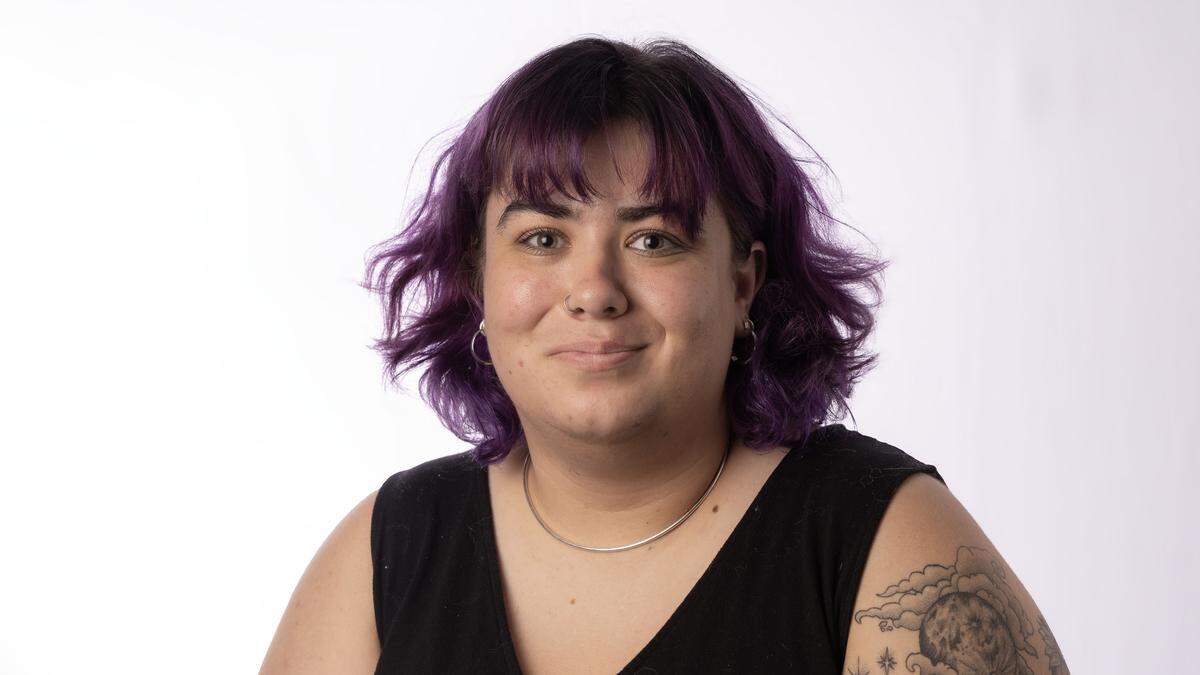
The Boise Office of Police Accountability on Monday released its report on the shooting and arrest of Ezra Smith — who was convicted of three felonies in March stemming from a July 2021 incident with a U-Haul van.
The report clears the Boise police officers involved of any wrongdoing but also questions some of the actions by officers and suggests policy enhancements. The narrative details numerous collisions between police cars and the van, as well as a high-speed pursuit that was deemed too dangerous to continue.
The officers also were cleared by a Critical Incident Task Force in December, according to the Boise Police Department, but that was never announced. The CITF uses investigators from uninvolved Ada County police agencies and a prosecutor from outside the county to review police shootings.
“The CITF report was completed by the task force and officers were cleared by an outside prosecutor in December,” BPD spokesperson Haley Williams told the Idaho Statesman by text. “… At the time a criminal case was still pending against Mr. Smith and additional details were not released.”
In July, officers arrested the 26-year-old Smith after he rammed a stolen U-Haul van into a patrol car several times. Smith alleges he was shot by police six times. He has taken steps to sue the Boise Police Department and the city.
The three officers involved were “exonerated” for their actions by the accountability office. However, the report advises the police department to examine its policy for firing a gun at or from a moving vehicle, and a related internal communication policy.
Smith was convicted after a two-day trial of aggravated battery upon certain law enforcement personnel and aggravated assault upon certain law enforcement personnel, with a deadly weapon enhancement.
A report from the Office of Police Accountability occurs when deadly or serious force is used by a Boise police officer. City officials clear the officers of wrongdoing if the officers are found to have been justified.
Report details Smith’s arrest and officer’s ‘risky decision’
In July, three officers were called to the 7000 block of Overland Road, near a home improvement store, after receiving reports of a reckless driver and that the suspect might be driving under the influence, according to the accountability office report and an initial release from BPD.
The three officers, who are identified throughout the report only as Officer No. 1, Officer No. 2 and Officer No. 3, arrived at the scene at roughly the same time, the report says. They spotted the van parked near the east side of the home improvement store. There is a Lowe’s in that block of Overland.
Boise Police released the names of Officers No. 1 and No. 2 involved in the arrest — though it is unclear which is which: David Skube and Robert Denney, who were both eight-year veterans at the time, though Denney is no longer with the department, Williams told the Statesman.
Williams declined to name Officer No. 3, saying the department only names officers who fired their weapons.
The officers saw that Smith was slumped in the driver’s seat and Officer No. 3 believed Smith was asleep or unconscious, the report says. At that point, Smith looked up and saw Officer No. 3, who was parked in his patrol car roughly 10 to 15 feet in front of the van. Smith drove past the patrol car. The officers began a vehicle pursuit — attempting two separate maneuvers to force Smith’s vehicle sideways and stop it, commonly known as a pursuit intervention technique. Both PITs, which require striking the suspect’s vehicle, were unsuccessful.
During the pursuit, Officer No. 1 drove at speeds of more than 80 mph in a marked 40 mph zone, the report says.
“The subject started driving between vehicles, rocking his van from side to side, and swerving into opposing lanes to avoid slower cars. At this point, a BPD sergeant gave an order over the radio to stop the pursuit,” according to the report.
The officers pulled their cars off the road and waited in a nearby parking lot for roughly three minutes to review a stolen vehicle report. Officer No. 3, according to the report, recognized Smith’s name from a previous call.
The officers determined that Smith was likely in the surrounding neighborhood, and they began to search for him, the report said. After a brief search, the officers found the van — which they believed to be unoccupied — near a home on Riley Court.
According to the report, Officer No. 3 approached the van in his patrol car and was facing the front of the van when Smith rose up in the driver’s seat and rammed the officer’s patrol car. Smith then backed up and went around the patrol car, as Officer No. 3 followed the van. At this point, Officer No. 3 radioed in that he had been hit.
Smith turned around on Derring Place — a dead-end street — and was directly facing Officer No. 3, the report said.
“Officer #3 slowed his patrol car as the van approached him, fearing he would be seriously injured if (Smith) struck his vehicle at a high rate of speed,” according to the report. “(Smith) accelerated and struck the front of Officer #3’s car.”
Officer No. 3 drew his handgun at Smith because he was “concerned (Smith) might be armed” and attempted to push the van backward with his patrol car, according to the report. He gave commands to Smith to put his hands up and that he would shoot him, though Smith was able to drive around Officer No. 3 onto West Riley Court where he encountered Officers No. 1 and No. 2.
“Officer #3’s gun was drawn and pointed at the subject several times during this encounter,” according to the report.
The report criticized Officer No. 3’s “risky decision” to draw a gun during the pursuit. Boise Police allows officers to fire at or from a moving vehicle if “the subject poses a continuing threat of death or serious bodily injury to officer(s) or others” and has no other “reasonable” alternative, according to the department’s policy and procedures manual.
Officer No. 3 never fired his gun.
The report points out that since both vehicles were moving it was less likely “any rounds would have struck (Smith) and could potentially have struck a person or property.” Officer No. 3’s attempt to point a gun and drive one-handed required him to pay attention to “multiple critical tasks at the same time during a high-stress incident,” the report said.
Additionally, if Officer No. 3 had dropped the gun and it ended up lost in the vehicle, it would have made it more difficult for him to defend himself, according to the report.
“BPD should consider examining the current policy allowing for firing at or from a moving vehicle,” according to the report. The report also recommends the department consider adding additional training for officers on the policy.
Williams told the Statesman that the department is working closely with the Office of Police Accountability to address the recommendations. She added the department is in the middle of rewriting its policy “which will cover and update the pursuit and use of force policies.”
Officers fired 10 rounds at Smith, report says
Once Officers No. 1 and No. 2 arrived, they were able to attempt another PIT maneuver and Officer No. 3 rammed his front bumper against the van’s front bumper — pinning the van against a truck in a nearby driveway.
Officers No. 1 and No. 2 then left their patrol car and went up alongside Officer No. 3’s patrol car. The two officers drew their guns and pointed them at Smith.
Officer No. 1, according to the report, told Smith multiple times to stop. Smith “turned his head from side to side” and yelled “no,” according to the report. Smith kept trying to free the van from Officer No. 3’s patrol car, at which point, Officer No. 1 and Officer No. 2 fired their 9mm guns.
Officer No. 1 fired six rounds that went through the van’s front windshield at Smith, while Officer No. 2 fired four shots through the van’s passenger side wing window, the report says. In the tort claim filed by Smith, he alleges police fired 12 rounds at him.
Smith stopped pulling the van forward and exited the vehicle, the report says — following the officer’s orders. Officer No. 1 handcuffed Smith, who was laying on the ground, while Officer No. 3 and his K9 “provided cover.”
Smith was taken to a local hospital for multiple gunshot wounds, according to the report.
In Smith’s tort claim, which is asking the police department and city for almost $1.3 million, he alleges police used “excessive force and police malpractice” during the shooting.
Smith said he sustained multiple face and body fractures, and permanent nerve damage, which resulted in “loss of feeling/sensation in (the) right side of face and neck,” according to the tort claim. He also has post-traumatic stress disorder, night terrors and anxiety, he said.
Report recommends new communication policy
At the beginning of the pursuit, a Boise police supervisor asked the officers what the charges against Smith were, according to the report. The officers didn’t immediately answer.
“BPD should consider adding to their pursuit procedure and train their officers on advising on the radio what the criminal or traffic charges are against the driver as soon as they begin a pursuit,” according to the report.
The report suggests if an officer doesn’t respond to a supervisor about charges or traffic conditions then the supervisor should continue to ask or cancel the pursuit.
“It does not seem clear that the officers understand they should immediately advise and seek approval from a supervisor to engage in such a pursuit,” according to the report.
This story was originally published May 23, 2022 at 4:20 PM.
CORRECTION: This story was updated to correct the spelling of Robert Denney’s name.