
He didn’t kill them, he said. But a trail of dead people followed former FBI informant
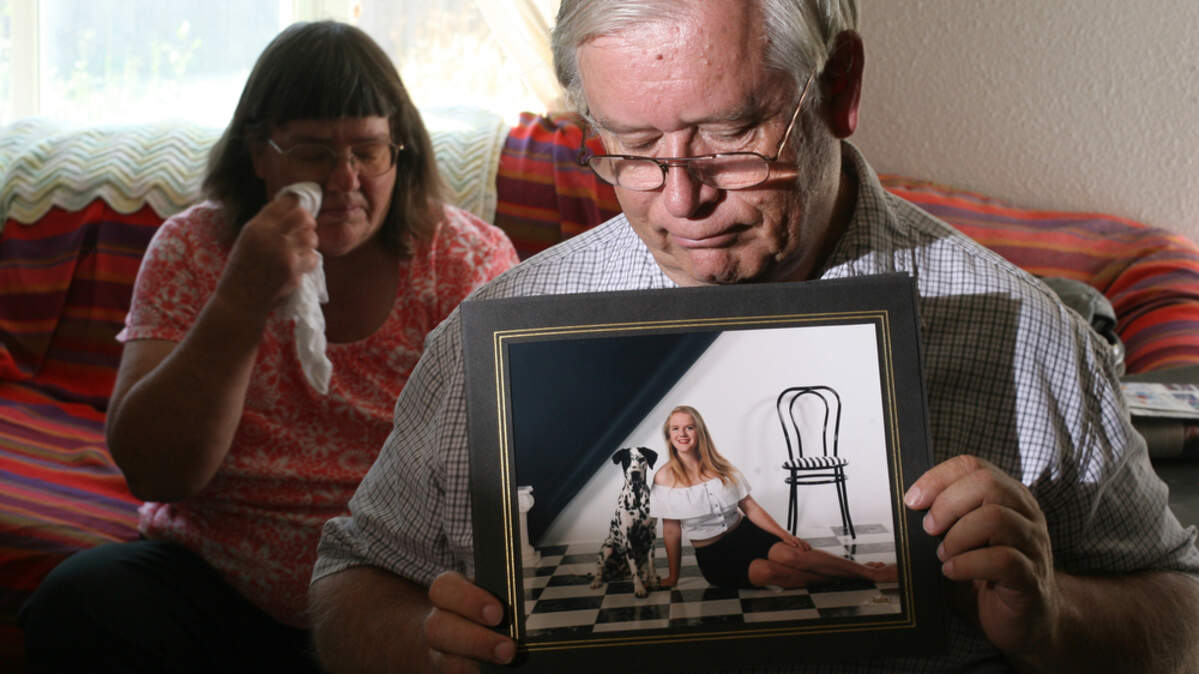
Sept. 20, 2018, update: NBC’s “Dateline” will air a two-hour investigation of Scott Kimball’s crimes at 9 p.m. ET/8 p.m. CT Sept. 21. Watch a trailer for the episode later on in this report.
In a remote area of eastern Utah’s Book Cliffs, north of Interstate 70 close to the Colorado border, a dirt road breaks through rolling terrain fissured by canyons.
It dead-ends in a box canyon pocked with junipers.
On April 22, 2009, a warm and sunny spring day, Howard and Darlene Emry trekked up the canyon’s sandy wash and stood at the base of an escarpment. An FBI agent who led the Emrys on the hike pointed to a small rock ledge midway up the cliff.
This was the spot, hidden from view from above and below, where the body of the Emrys’ 24-year-old daughter, LeAnn, was found.
LeAnn was officially declared a victim of homicide just this past week, but she lay on that ledge for almost six years, since some time around the January 2003 day when she checked out of a Colorado hotel and was never heard from again.
The spot was so remote and so hidden that the FBI may never have found it if it wasn’t for a man named Scott Lee Kimball.
Kimball, a 42-year-old Colorado native who has been in trouble with the law his entire adult life, led authorities this March along that desolate road to LeAnn.
The 10-time felon — who continued to get in trouble even as an FBI informant and witness — is serving more than 50 years in prison for theft and a federal gun charge.
But he left a trail of dead and missing people behind him.
In 2007, a hunter found the body of Kaysi McLeod, 19, who disappeared in August 2003 — just days before Kimball married her mother.
Last month, Kimball led authorities to a body believed to be his uncle, missing since Sept. 1, 2004, in a remote mountain pass west of Denver.
Jennifer Marcum, a woman who vanished Feb. 17, 2003, while Kimball was keeping tabs on her for the FBI, has never been found.
All three — and LeAnn — were last seen with Kimball. But Kimball has yet to be charged with a crime in connection to their deaths or disappearances. He insists he did not kill anyone but knows who did and helped dispose of the bodies.
And a complex plea agreement may keep the Emrys and the families of the other missing people forever in the dark about what happened to their loves ones.
The nightmare never ends
For the Emrys, who live in Payette, the trip to that remote canyon marked the end of a six-year ordeal, but not the end of their nightmare.
“There’s never really closure when anything happens to your kid,” Howard Emry said. “There’s a scar that’s always there, that you never get rid of. ...
“We don’t have to wonder anymore. Is she out there? Is she OK? The knowing helps a lot.”
After six years of puzzling over her disappearance and constantly being rebuffed by local and federal law enforcement agencies that refused to believe their daughter was nothing more than a runaway, LeAnn’s body soon will be returned to them.
Her remains are still being analyzed in an FBI lab in Virginia.
This fall, the Emrys will return to the canyon to place a granite marker engraved with their daughter’s name, her birth and death dates and the inscription: “Forever loved. Never forgotten.”
They want to reclaim the site from the killer. “We want to turn her crime scene into a place of remembrance,” Howard Emry said.
They have not yet decided where to bury their daughter. They are considering cremating her and placing some of her ashes at a special family spot in Wyoming where LeAnn’s beloved Dalmatian, Shadow, is buried. LeAnn often mentioned she would like to be buried next to Shadow.
LeAnn’s story
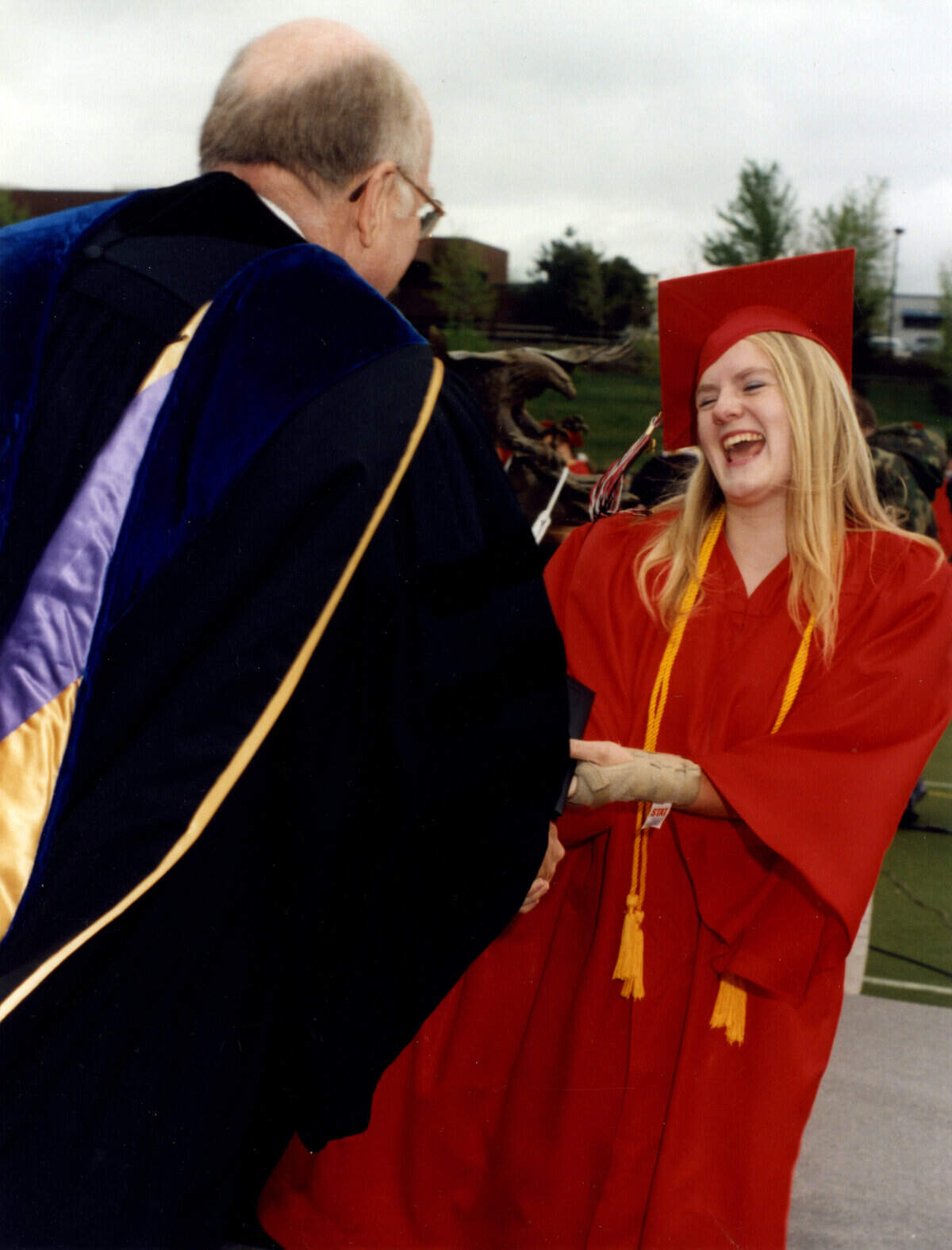
The Emrys have spent countless hours replaying LeAnn’s life — a life that started in 1978 in Weiser, where LeAnn was born in the same farmhouse room as her mother, and violently ended 24 years later in that remote Utah canyon.
“It is a sad story,” her father said. “The story about a young girl who was smart, intelligent, beautiful, and went from having everything going for her and then certain circumstances happened that spiraled her down, and her life just got worse and worse. Even now we think in our minds, both Darlene and I, what is it that made her go to the point that she was murdered?”
The Emrys know LeAnn ended up with a group of people with drug problems and criminal records, but they still don’t know just how involved she was or how she ended up meeting Kimball.
A few weeks before LeAnn disappeared from the family’s home in Centennial, Colo. (they have since moved back to Idaho), LeAnn pored through family photos. She collected pictures of herself and put them in an album. She asked her parents which were their favorites.
She searched frantically for one particular photo: a black-and-white taken in Marsing when she was 3, grimacing after a cat scratch. She finally found the small print and made a large copy of it.
A few days before she left on what she said was to be a spelunking trip to Mexico, she stuck the image on a wall in the living room and told her parents, “This is how I feel.”
“I did not get it,” Howard Emry said. “She was trying to tell me that she was in trouble, but she couldn’t tell me because she was too scared. Like an idiot I didn’t catch on.”
The last time the Emrys saw LeAnn was Jan. 16, 2003.
As they watched LeAnn pack her car for that caving expedition, they thought about how glad they were she was moving on with her life.
The girl who had struggled with bipolar disorder and had gone through a troubled two-year marriage, looked on the surface — to her parents — like she was OK.
“Every weekend, every spare moment she had, LeAnn had been going caving — so this was not out of the ordinary,” Howard said.
But just a couple of hours after she pulled away in her silver sedan with personalized plates that read “Dal Gal” to show her love of dalmatian dogs, LeAnn called her sister Michelle.
“If anything happens to me,” she told her, “I want you to know that I love you.”
The Emrys investigate
About two weeks later, the Emrys got a call from a Moab, Utah, sheriff’s deputy.
LeAnn’s car had been found, abandoned, off a dirt road near the Book Cliffs. The deputy described her personalized plates.
“When he told me that, I knew it was her. It was a shock. I just felt sick to my stomach,” Howard Emry said.
The Emrys immediately filed a missing persons report where they lived, in Arapahoe County, Colo., but they were told there would not be any investigation.
“From day one I reported her as a missing person, immediately the response I got was that she was a runaway, that there was no foul play,” Emry said. “The investigating officer, I couldn’t believe this, he actually told me, ‘When you find a body, then I will investigate.’“
The deputy did not respond to the Statesman last week.
The Emrys started investigating themselves.
LeAnn’s purse and gear were in the car, but her credit cards were missing. Howard Emry contacted the bank and credit-card companies and began re-creating LeAnn’s trail.
She never went to Mexico. For almost 10 days she traversed the West — Wyoming, Oregon, Nevada, Washington and then back to Colorado. The Emrys don’t know what she was doing, just that she kept buying gas with her credit card.
The last time LeAnn called home, 11 days after she left, she told her father she planned to stay in Mexico a while longer. But she was actually calling from Colorado. That same day in Denver, she had bought and mailed a gift certificate to her sister. That night she checked into a Grand Junction hotel. A clerk remembered her, but the LeAnn she saw looked different. Her long, blond hair had been dyed dark and cut short.
Two days later, LeAnn checked out of the hotel. The next day her abandoned car was spotted about 40 miles away.
It didn’t seem to the Emrys like she simply walked into the wilderness.
Howard Emry learned LeAnn’s credit card was used in California a few days after her car was found. At first he was relieved, thinking it meant LeAnn was alive. But copies of the credit card receipts showed the signatures weren’t his daughter’s.
He took his findings to the authorities, but again, no one wanted to investigate.
Two weeks after LeAnn disappeared, Howard Emry received a letter from Steven Holley, a friend of LeAnn’s in jail on bank robbery charges. Holley was concerned he had not heard from LeAnn. Emry wrote Holley that LeAnn had disappeared.
Alarmed, Holley wrote back and urged the Emrys to talk to a specific FBI agent who had been in contact with LeAnn. Emry called the agent, who said Holley was a liar. (Emry wonders if LeAnn was an informant herself, but the FBI will neither confirm nor deny that.)
Then, the Emrys learned LeAnn had been confiding in her cousin in Pocatello via e-mail in the weeks before her disappearance.
Less than a week before she left for her trip, LeAnn wrote: “I have to hide my orders come from Hanable (for the moment) and he’s a dangerous person. ...” Emry asked Holley whom she was talking about in the email to her cousin, but Holley refused to answer, saying that knowledge could get Emry and his family killed. Holley again urged Emry to contact the FBI. He did, but the FBI never responded to his call.
FBI Agent Kathleen Wright said that without a major “red flag,” it can be hard to tell if adults have simply left on their own volition. That keeps some missing persons cases from being fully investigated right away.
Looking back, Emry thinks LeAnn was trying to reach out to her family, but fear held her back. She may have been trying to protect them. He realized this when he began reading LeAnn’s e-mails to her cousin.
“I’m in an underground world,” LeAnn wrote shortly before she disappeared. Another e-mail reads, “If Hanable knew I was talking to you, he’d ... have me killed in a second. Plus, he’d have you killed too.”
Last week, Emry choked back tears as he read the e-mails aloud. She wasn’t imagining a threat, he said. “She wasn’t being paranoid. She did get murdered. She is dead,” he said.
“I feel sick that she was going through this and we didn’t even know it. She was really struggling, and she didn’t get out of it,” he said.
After more than a year of searching, the Emrys had run out of clues. Unable to get local or federal law enforcement agencies to start an investigation, the trail ran cold.
It wasn’t until almost five years after LeAnn disappeared that the FBI finally took the Emrys seriously.
Trail of bones
In October 2007, an FBI agent named Jonathan Grusing called the Emrys in Payette and asked to speak to LeAnn. He wanted to talk to her about a suspect in a homicide investigation.
“I told him he could not talk to LeAnn. He asked why and I said, ‘Because she has been missing for almost five years,’ “ Emry said. “He didn’t say anything for a while. I think it was just a shock to him, that here was another person to add to the list.” Grusing was assigned to the bureau’s Denver office in November 2006 to investigate a murder-for-hire case involving Jennifer Marcum. The more-than-10-year FBI veteran came to the case with experience in violent crimes - kidnappings, bank robberies, fugitive escapes. He declined to talk for this story and referred questions to Agent Wright.
Just a month earlier, the fathers of Marcum and McLeod — each as frustrated as the Emrys in the search for answers about their daughter — went to the FBI and the media, claiming Kimball was involved in the disappearances.
The two men hadn’t known each other but got together when they realized both missing women were connected to Kimball.
At the time, Kimball was back in jail for a parole violation, and Grusing had access to Kimball’s computer.
A search of Kimball’s files revealed hundreds of images of violent rape pornography - including pictures of women being tied up, gagged and assaulted with weapons. The majority of images were Internet downloads, but not all of them. Investigators eventually identified one of the women pictured as LeAnn. The FBI has never told the Emrys the details of LeAnn’s photos.
“It is not necessary,” her father said. “She was going through hell. She was going through terrible, terrible things. I don’t need to know any more. I just feel very bad that I wasn’t able to help her.”
Over the ensuing months, Grusing kept the Emrys apprised of his investigation. The Emrys praise Grusing’s hard work and dedication to LeAnn’s case. They say it is a marked change from their experience with law enforcement agencies when LeAnn first disappeared.
The Emrys eventually learned a few details about LeAnn’s case from investigators, but they still do not know why she was killed or how she became involved with Kimball.
According to Emry, the fraudulent credit card charges in California were made by a prostitute who said she received the credit card from a man as payment for services. Emry thinks that man was Kimball.
The Emrys also would learn Scott Kimball’s prison nickname: Hannibal.
From criminal to FBI informant and back
Kimball’s recorded life of crime started as soon as he turned 18. He has 10 felony convictions, but none of them for violent offenses.
He has served time in Colorado, Montana, Washington and Alaska for theft, fraud, forgery and more.
Spokane police investigated charges that Kimball kidnapped his ex-wife there in 2001. A judge noted there was “good cause” for the charges, but that the state dropped them because Kimball was already serving “a long sentence in federal prison.”
Court documents show that Kimball has assisted the FBI in a number of investigations. He was a key witness in a case involving the planning of a judge’s murder in Alaska, and in the murder of a Assistant U.S. Attorney Thomas Wales in Seattle. Kimball was a witness in a federal arson case in Montana.
On Dec. 18, 2002 — just weeks before LeAnn disappeared — Kimball was released from federal prison in Colorado, and he stepped back into his role with federal investigators.
“At that time, the FBI was investigating a big ecstasy operation around Denver,” Emry said. “Scott Kimball convinced them he could get into the gang, and he could find out what they were doing and break up the ring. The FBI fell for it and they actually they let him out of jail to be an informant for them.”
Agent Wright said Kimball was not let out of prison early to help the FBI, but she confirmed that he was working as a “cooperating witness” at the time of his release — and during the time LeAnn and the others went missing.
Kimball is no longer an FBI informant, Wright said. She would not say when the FBI stopped using Kimball as an informant or if he had been paid for his services. She said it is standard procedure for the FBI to pay confidential informants and cooperating witnesses.
Bargaining with a criminal
In March, Grusing made the phone call the Emrys had expected, longed for, and dreaded.
Kimball had led searchers to a body about 10 miles away from where LeAnn’s car was found.
“I’ve known (since Grusing’s first phone call) that LeAnn was murdered,” Howard Emry said. “I knew it, but as a parent you don’t want to really believe it. It is sort of a denial. You think maybe there is a mistake, maybe there’s some hope here. But when they actually find the body of your daughter it changes your feelings, you know there’s no hope anymore, no hope of her ever having a fulfilled life.”
Just days ago, Grusing called the Emrys to say the forensic examiner had ruled LeAnn’s death a homicide. The examination revealed how LeAnn was murdered; that information has not been released.
Ironically, the killer’s effort to conceal her body may have proved a pivotal mistake — LeAnn was protected from the elements and undisturbed, preserving evidence that otherwise might have been lost over time.
But that evidence may never come into play.
Court records show that prosecutors asked Kimball to lead them to “certain human remains” in exchange for letting him plead guilty to a second-degree murder charge and receive a 28-year sentence.
Kimball has only revealed two of the three missing bodies. Each of the at least two times he has shown searchers where to find Marcum, they’ve found nothing.
Now, the plea deal is up in the air while prosecutors decide what to do next.
Emry has mixed feelings about the plea deal. If the deal holds, the full story of what happened to LeAnn may never be known.
The Emrys would like Kimball to be given the death penalty, but some justice is better than no justice. They don’t care what prosecutors charge Kimball with — as long as he never gets out of jail. “If he can walk on two feet he will do this again,” Emry said.
This story was originally published June 20, 2009 at 12:00 AM.