Meridian caps year with another nearly 700 homes OK’d. What it took to get the green light
The Meridian City Council capped its year by green-lighting two more large residential developments in its final 2024 meeting.
The planned developments would add a combined 683 single-family homes to two Meridian neighborhoods along some familiar roadways.
In Northwest Meridian, the Baratza subdivision is planned at the southeast corner of Black Cat and McMillan roads.
The 80-acre, “homestead”-style subdivision with 344 single-family homes has gone through multiple iterations and has been met with concerns over density, traffic impacts and school overcrowding at each step.
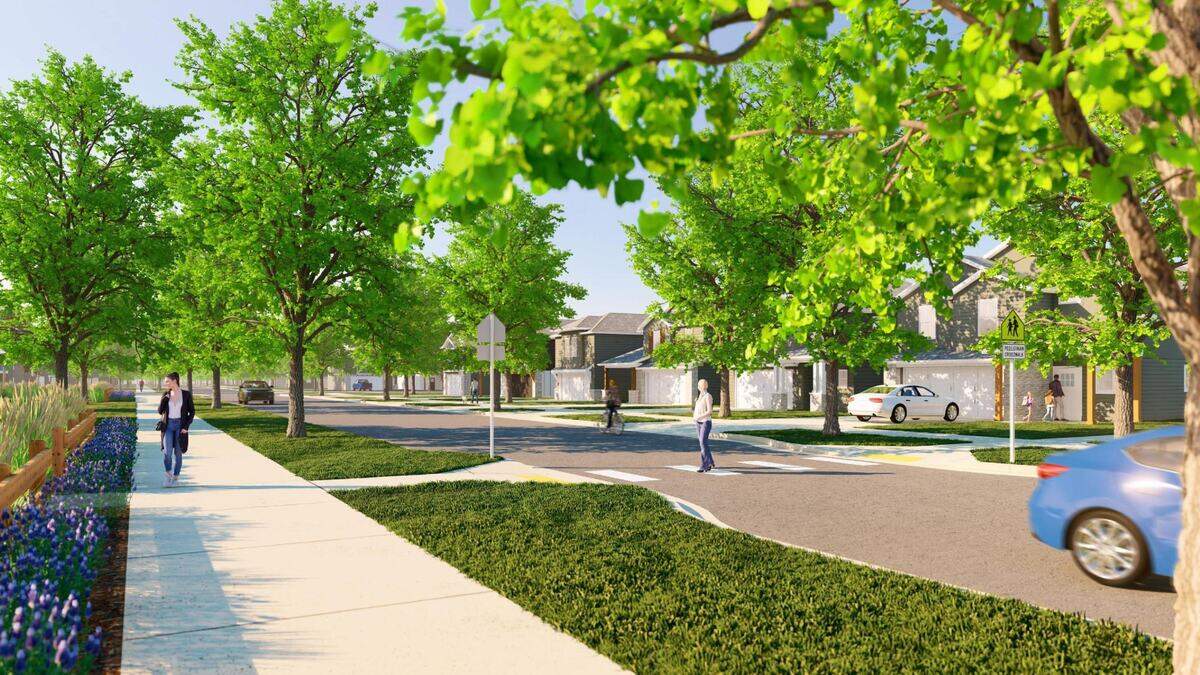
An original proposal, called the James Ranch subdivision, was denied by the City Council in 2022, and the Planning and Zoning Commission recommended denial of the plan for the Baratza subdivision just two months ago — to cheers from neighbors.
So what did it take for Lennar, the Miami-based developers at the helm of the project, to get the council’s OK this time?
City planners presenting at the public hearing Dec. 17 said Lennar worked with them to comply with 17 conditions of approval, including providing a “mix of dwelling types.”
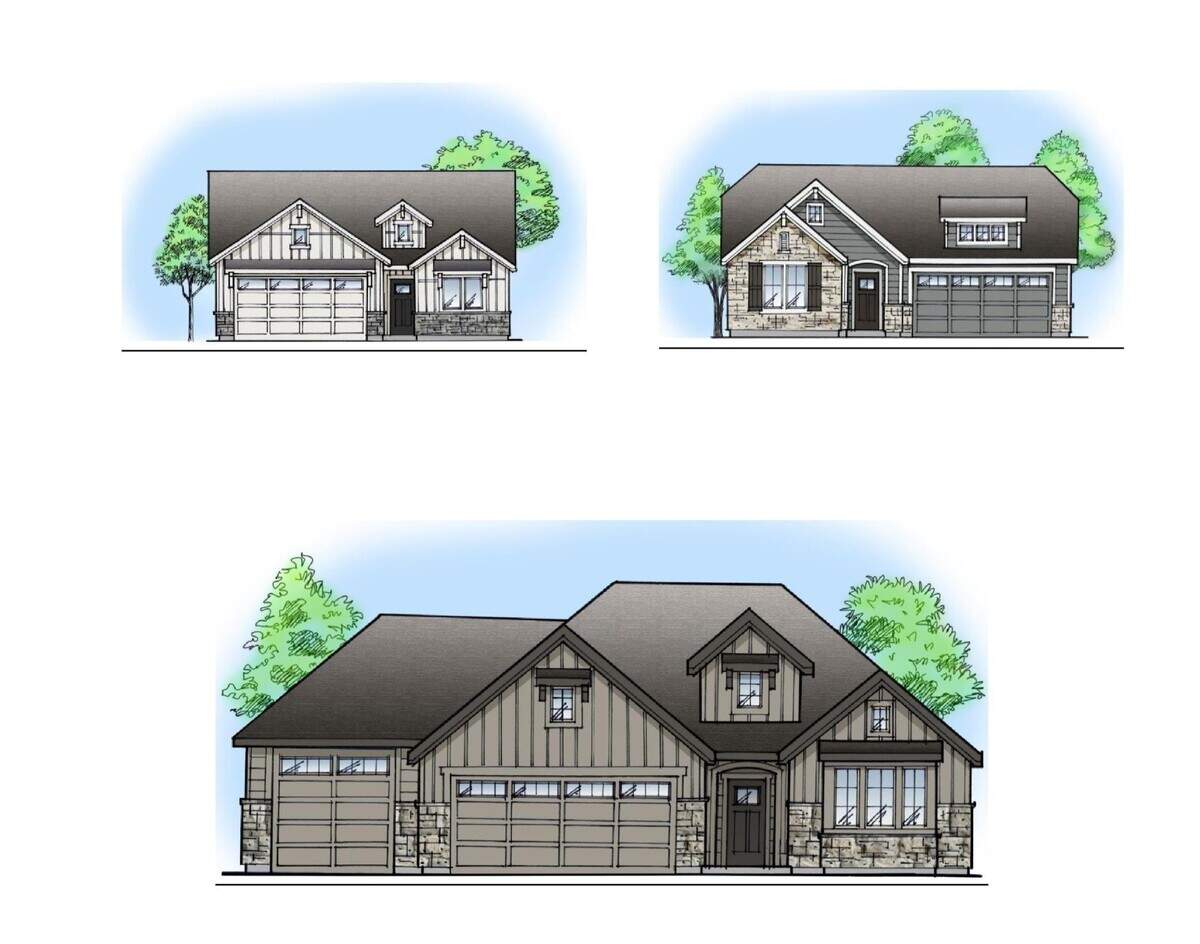
To meet this requirement, Lennar proposed adding what it called “NextGen” homes. Describing the style as “a home within a home,” Jeff Clemmens, who oversees Lennar’s Boise division, said the homes would allow multiple generations of a family to live under one roof, with separate access points for independent living.
The developers also reduced the subdivision’s density on 15 of its acres, bringing the project’s overall density to 5.62 units per acre.
Responding to concerns that the subdivision could strain nearby schools, the developers pointed out the West Ada School District plans to build a new school in Star.
A letter from the school district said the planned subdivision will add an estimated 171 school-aged children to nearby schools, including Pleasant View Elementary School, Star Middle School and Owyhee High School. Two of those schools are already over program capacity.
In an updated memo the day of the meeting, the district said the new school in Star, expected to open in 2026, would alleviate some of the crowding. Still, the district said already-entitled development in the area would eventually outpace the increased capacity from the new school.
A $6 million traffic solution
The main hurdle for the City Council wasn’t design or even density — turns out, it was traffic.
“McMillan is a parking lot,” John Caldwell, who lives next to the proposed Baratza subdivision, told the council at the hearing. Caldwell said he’s concerned about congestion on McMillan Road, as well as the safety of children and pedestrians on the private roadways he thinks Baratza residents would use as cut-throughs.
Traffic was a main factor in the Planning and Zoning Commission’s denial recommendation in October as well.
.jpg "Elevations Rend_SuperHome_NextGen_Farmhouse_F_page-0001 (1).jpg")
So Lennar announced what turned out to be a popular decision: It would front the cost of a roundabout at Black Cat and McMillan roads, a project that has been on the Ada County Highway District’s wish list since 2016.
Representing the developers, Sonia Daleiden, an engineer for the transportation-consulting firm Kittleson & Associates, told the City Council that Lennar would invest $6 million to help ACHD construct the multilane roundabout.
Daleiden said the contribution would accelerate construction one to two years from what ACHD could otherwise accomplish, and that Lennar would not start building homes until the roundabout is complete sometime in 2028.
Lennar could receive up to $4.5 million in impact fees but at minimum would pay $1.5 million out of pocket, Daleiden said.
Council Member Liz Strader, who said she initially thought the planned subdivision would be “dead on arrival,” said it was “rare (to) see an applicant that takes the real challenges that we’re having in the community so seriously that they’re coming to the table with solutions.”
Her colleagues agreed, saying they appreciated the innovative NextGen design and partnership with ACHD. The council unanimously approved the 344-home project.
300+ homes near Discovery Park
The last development to come before the City Council in 2024 was also a large single-family project, on the opposite side of town.
Summerlin West, a development headed by Boise’s Conger Group, plans to bring 339 single-family homes to a much less built-out part of South Meridian.
Located southeast of Lake Hazel and Locust Grove roads near Discovery Park, Summerlin West is next in line for the emerging development hot spot — where Brighton’s Pinnacle development is rapidly expanding and another Conger Group project was recently approved.
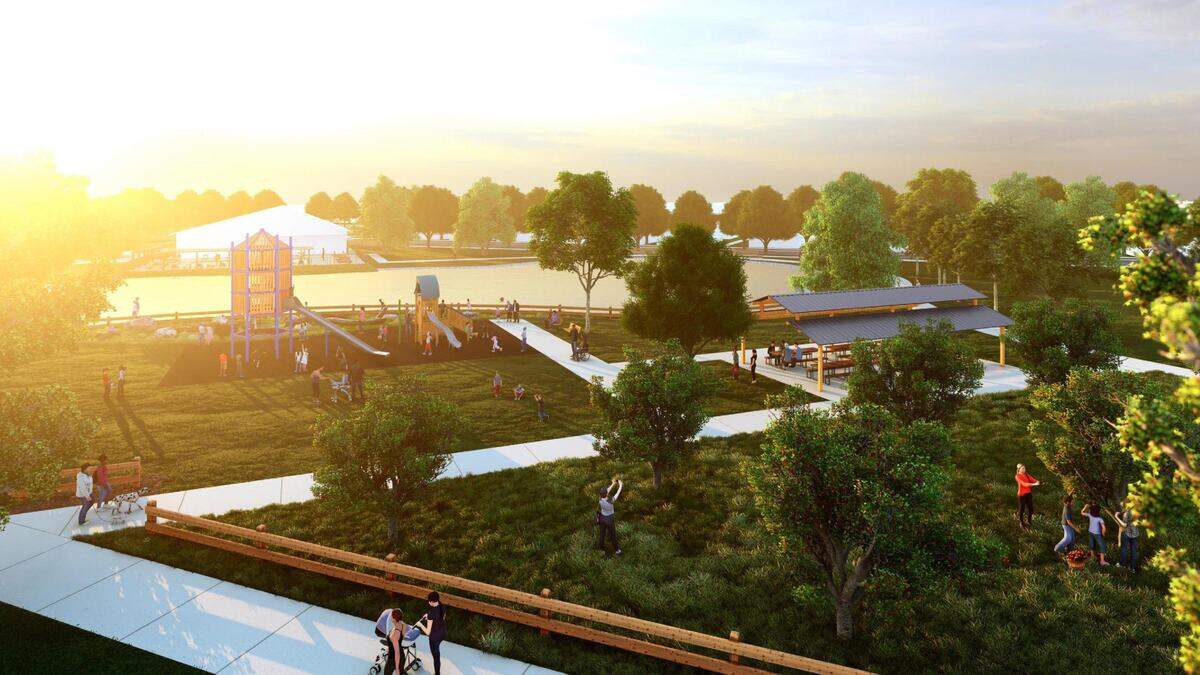
Planned on 70 acres , the Summerlin West subdivision would run along the north side of Rawson Canal. According to a project narrative filed with the city, residents would have access to a half-mile of walkway along the canal. The planned subdivision would have over 15 acres of open space, including a large central park with a pool, pickleball courts, a dog park and a playground.
The Planning and Zoning Commission recommended approval in a public hearing Nov. 21, and city planners also recommended approval in a staff report.
‘Pay-to-play’? School district suggests investment
The project’s main holdup: impacts on schools.
Any future school-age children living in Summerlin homes would fall within Kuna’s school district and likely attend the Silver Trail Elementary, Fremont Middle, Kuna High and Swan Falls High schools.
A letter from the Kuna School District filed with the city of Meridian indicated that these schools are “at or over capacity” and that the district “cannot serve this development.”
Developers pushed back at the public hearing Dec. 17, saying the school district didn’t provide any data on current capacity or the impact the proposed subdivision would have.
“We do pay very close attention to what’s going on with the school districts,” Hethe Clark, representing Conger Group, told the council. “This letter, for us, is tough because … (it) doesn’t give us actual numbers.”
Clark pointed to data from the Idaho State Board of Education showing the district’s overall enrollment is higher in grades 9-12 and then tapers off for younger grades.
The developers also took issue with a clause in the letter requesting that they support the district through capital investment.
“To reduce our reliance on bonds and promote reasonable growth within our district, we generally seek partnerships with residential developers,” the letter said. Partnership, the letter said, “can be in the form of a donation of land, money, or in-kind facility work.”
The letter said that every new student represents an estimated $46,100 in capital costs for the district.
Clark criticized what he called the “pay-to-play scenario.” He said the Conger Group received a similar letter for its adjacent project to the north, the Hadler subdivision, and he questioned the legality of the district soliciting funds in this manner.
“The tool that the Legislature has given us to fund these necessary capital improvements is bonding, and we’re fully confident that when voters understand the facts and the need that they will approve the bonds,” Clark said.
Clark said he worries the district’s approach “undercuts that message” and “makes it more difficult to pass a bond.”
“You’re not going to build a school $1,500 at a time,” Clark said.
Representing the school district, Fremont Middle School Principal Tim Jensen told the City Council that the district is under-resourced and agreed that bonds are necessary for long-term security and larger-scale improvements.
“We are at capacity,” Jensen said. He said Silver Trail Elementary, one of the schools expected to be impacted by Summerlin West, is over capacity and that enrollment has grown over the course of the year. Though he didn’t have numbers, he also attested that enrollment is trending upwards.
“Ultimately we would love to be able to pass bonds, and that would lessen some of that pressure on our community members … to have to go out and have to keep trying to pass these levies that are just kind of Band-Aids to get us through,” Jensen said.
Jensen pointed out that Idaho is one of only two states in the country requiring a two-thirds vote to pass a school bond.
“I think it’s a bigger conversation than just Kuna,” Jensen said.
“Unlike West Ada district, the Kuna School District does not have a lot of options when it comes to busing students to different schools or redrawing the school boundaries,” Linda Ritter, an associate city planner, also told the City Council.
Jensen confirmed that if the development were approved, school-age children in the subdivision would have a place to go to school in Kuna. It could come at the cost of larger class sizes, adding modular classrooms, or other forms of reduced quality in education, Jensen said, but the district would serve those students, as it is required to do by law.
“You do what you have to do,” Jensen said.
City Council feedback
Council members said additional data from the school district in the future could help them make the call on a development.
“When an entity helps us solve a problem, by not just saying, ‘This is a problem,’ but saying, ‘Here’s how we can work through it,’ ” Council Member Doug Taylor said at the hearing.
“My heart goes out to the Kuna School District,” said Strader, the council member.
Strader said the letter the city received and concerns raised by the developer bother her, especially if there’s an implication that the district might send a different sort of letter if developers contribute capital funds.
“I think that kind of arbitrary nature sort of undermines even my ability to support the Kuna School District,” Strader said, because the district’s capacity is still unclear.
Summerlin West was unanimously approved, bringing the total to 683 new homes approved in the last meeting of the year.
Jensen told the council members that he appreciated the feedback and that the concerns raised in the hearing “did not fall on deaf ears.”
Jensen did not immediately respond to the Statesman’s request for comment.
The City Council plans to reconvene on Tuesday, Jan. 7, to evaluate two industrial developments and another subdivision.
This story was originally published December 22, 2024 at 4:00 AM.