A new downtown Eagle road has been planned for 20 years. The new mayor may stop it
The future of downtown Eagle may ride on an unbuilt road less than a quarter-mile long.
The proposed extension of Palmetto Drive, connecting State Street and Plaza Drive, must be built before the developers of a hotly contested apartment and townhouse complex can open their doors. The complex, named Molinari Park, would add 307 townhouses and apartments, as well as 5,000 square feet of retail space, near the southeast corner of South 2nd Street and East Plaza Drive.
Other landowners, including one who wants to build a brewery and restaurant to the corner of Old State Street and Plaza Drive, are waiting for the road extension, too.
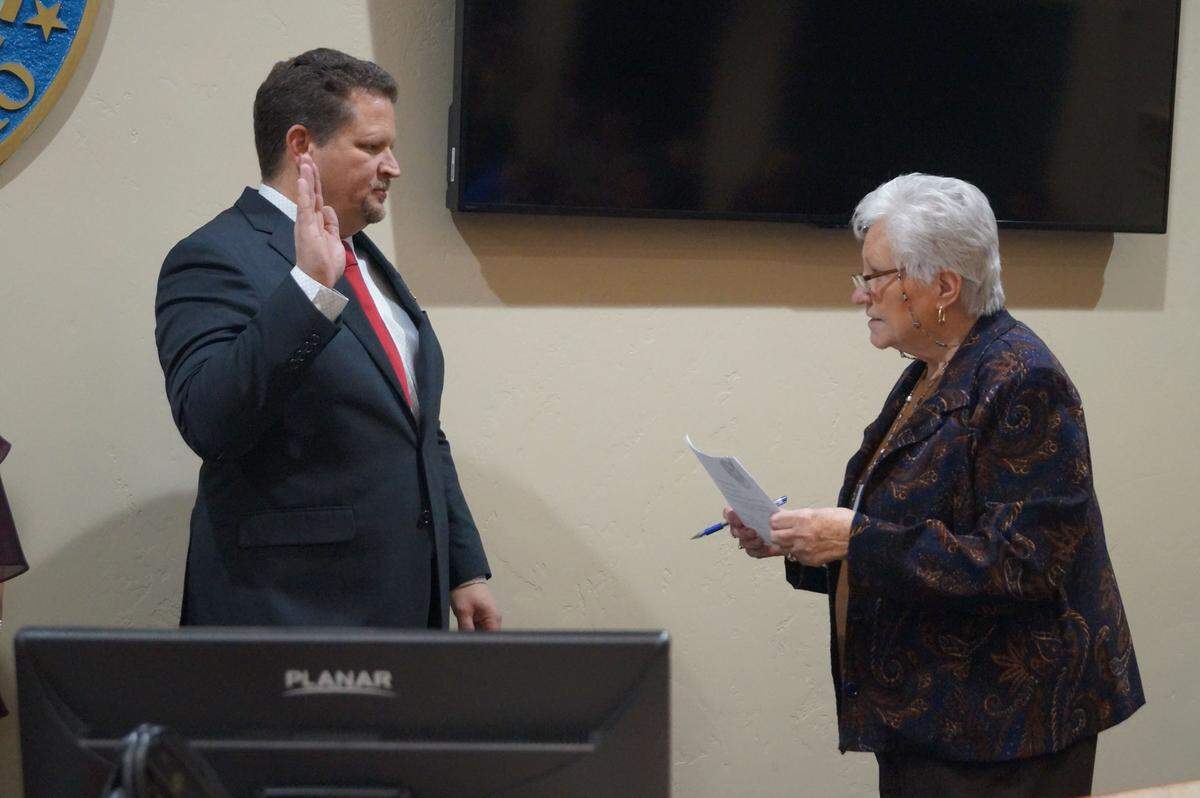
The city’s previous mayor, Stan Ridgeway, had pushed to use city funds to build the extension so it could be completed this year. But Eagle’s new mayor, Jason Pierce, says the developers of Molinari Park should build it.
Palmetto Drive has been in the city’s comprehensive plan since the late 1990s. Typically small roads like Palmetto are built only when nearby landowners want to develop their land, and they concurrently build any planned roads nearby.
Around 2015, a Boise resident named Greg McVay approached the city with plans to develop a parcel he owned through a company named Eagle 26 near the southeast corner of South 2nd Street and East Plaza Drive. City staffers told McVay that because his parcel abutted the planned Palmetto Drive extension, he would be required to build the extension as part of his development.
With McVay and his development team on board, Eagle leaders hoped they could finish the development ahead of a critical deadline: the road needed to be in place by December 2020. After that, the Idaho Transportation Department plans to build a new intersection at State Street and Eagle Road. If Palmetto isn’t done before ITD starts its construction, Eagle won’t be allowed to begin work until 2023 or later.
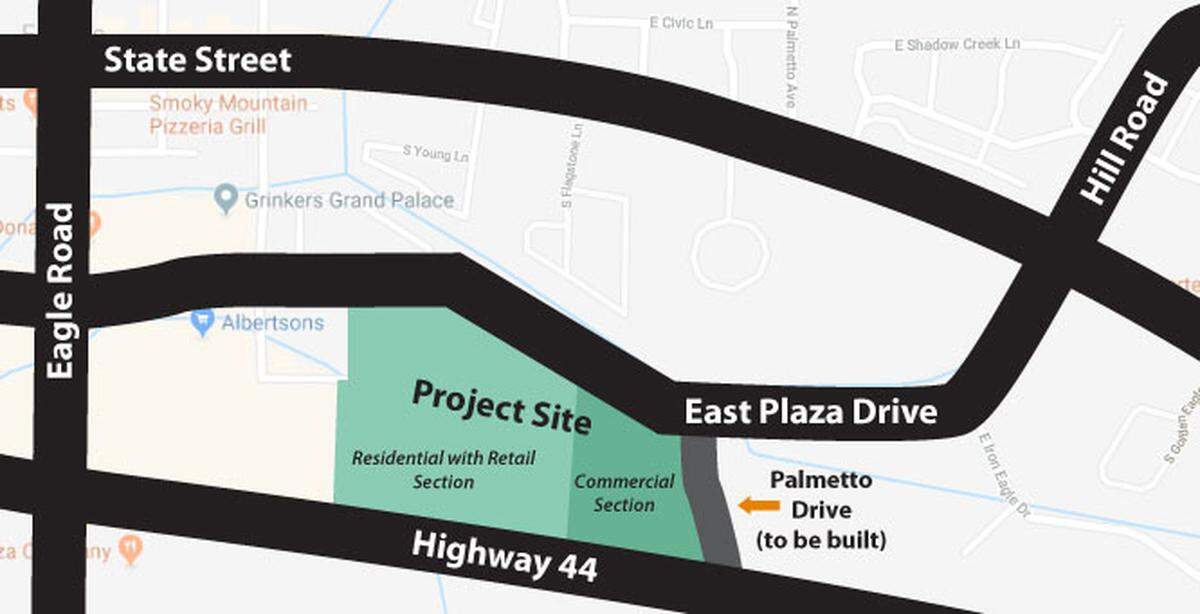
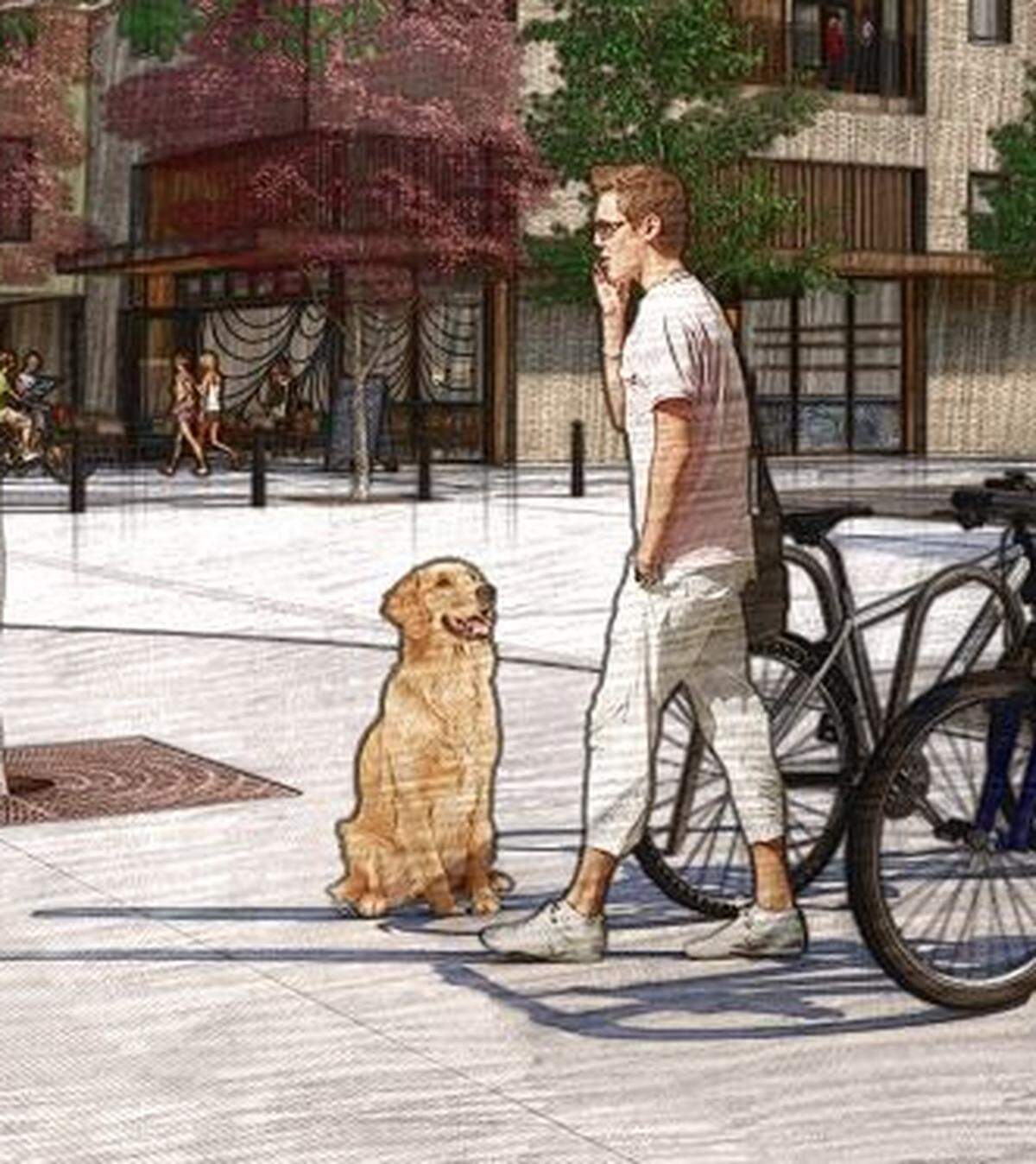
But it took until May 2018 for McVay to submit a development application to the city to build Molinari Park. In February 2019, the former Eagle City Council under Ridgeway approved the development, with the condition that the road would need to be built before anyone could move in.
In August, a group of frustrated neighbors took the city to court to challenge the approval of the project. They argued that the downtown apartments would hurt their property values of their single-family houses elsewhere in the city.
The lawsuit has brought Molinari Park to a standstill until a judge decides whether Eagle followed proper procedures in approving the development. No construction crews are moving on the project — and that includes the construction of Palmetto Drive.
Yet the city desperately wanted the road built. Ridgeway believed the project would catalyze further economic development in Eagle’s downtown, and that it would help to ease traffic along State Street. Members of the Eagle Urban Renewal Agency board — all Ridgeway appointees — agreed. (Ridgeway served on the urban renewal board too, but his tenure ended with his term as mayor.)
To get the road built this year, the city in August budgeted $380,500 for Palmetto Drive — about one-third of its estimated cost. The Eagle Urban Renewal Agency pitched in an equal amount, with the idea that the developer would agree to fund somewhat less than a third.
But the developer balked even at that reduced contribution.
“My developers would build it in a heartbeat,” said Mark Butler, a land use consultant to Eagle 26, by phone. “But they’re not going to build Palmetto if they don’t have a development, and they don’t have a development.”
So, in December, following months of talks, Eagle 26 and the city reached a new agreement: the city and the urban renewal agency would evenly split the estimated cost of construction on the road, $984,647, in return for the developer donating right of way to the city.
The city still needed right of way from two other land owners around the proposed roadway. So it asked Eagle 26 to enter into land swaps with those landowners to assemble all the parcels needed for the road. Those agreements will expire after a few years, at which point the land will be returned to the prior owners if the road is not built.
On Ridgeway’s last day in office, Jan. 14, the city received the deeds from Eagle 26 that gave the city legal ownership over the right-of-way property.
City code dictates the mayor may sign deeds and other city contracts when authorized by the Cty Council. In previous instances, the council has taken votes on whether to “record” new deeds. Recording finalizes the sale of property with Ada County.
But with Ridgeway and two supportive council members about to be replaced by Ridgeway critics, the mayor decided to go to the Ada County recorders’ office that day and record the deeds himself without a City Council vote.
In an interview, Ridgeway said the city protocol around deeds is “procedural’ and hasn’t been followed other on other occasions when Eagle has acquired new properties.
Butler said Eagle seemed to be working quickly to get the road approved. “The last two to three months seemed to go faster than I’ve ever seen city government go,” he said.
As fast as Ridgeway’s administration moved, the final call on whether to build the road still fell to Pierce and the new council.
And Pierce says the city shouldn’t be in the business of building roads.
“I don’t want to see taxpayer dollars spent to build these roads,” Pierce said at a joint meeting last week of the council and the urban renewal board. “That’s what developers do.”
Butler said the cost-sharing agreement with the city became necessary because of the lawsuit.
Ridgeway believes Pierce wants to block the road to prevent Molinari Park from being built. The Eagle residents who signed onto the lawsuit blocking the project — Kevin Zasio and Paul Villaret, among others — were some of Pierce’s loudest supporters during the campaign.
“If the court stops it, it’s a done deal. If the court doesn’t stop it, he will,” Ridgeway said in a phone interview.
Pierce denied Ridgeway’s allegations. “That’s not it,” he said by phone. “My whole purpose is, I don’t think we should spend a million dollars of taxpayers’ money.”
Palmetto Drive is just one of Ridgeway’s initiatives that Pierce, who took office last month, has threatened to undo.
Ridgeway pushed for an amendment to the city’s plan to limit development in the Foothills north of Eagle. Pierce has said he wants to maintain the current plan.
Ridgeway worked since June to develop a new community center and museum for the city by renovating three old buildings near Eagle Elementary School. Pierce has said he wants to auction the property and move the center to a different building.
And Ridgeway wanted to build apartments downtown to add population density and support businesses there. Pierce wants to preserve Eagle’s large-lot character and grow outward.
Pierce is supported on the council by Charlie Baun and Brad Pike, who like Pierce were elected in November. He’s opposed by two holdovers, Kenny Pittman and Miranda Gold.
Pierce also questioned whether residents would even be able to take full advantage of Palmetto Drive while ITD construction proceeds along State Street. During construction, movements at the Palmetto and State Street intersection will be limited to drivers making a right turn onto Palmetto from State Street and drivers turning right onto State from Palmetto.
The mayor also said the urban renewal agency could better spend its share of the roadway costs — about $500,000 — on other projects.
“Going through the budgets, seeing the money that’s been spent, it’s just been one after another after another,” Pierce said. “We need to pull back a little bit.”
The council voted Feb. 4 to continue seeking bids to build the extension to ensure that the cost of construction would be no more than the estimated $984,647. The council will then decide whether to proceed further and spend money to build the road this year.
The council also directed staff members to renegotiate with the Molinari Park developer, to get them to pitch in more money for the road.
“It’s a 20-year-old project,” Pittman said. “The community needs this project done, and it needs to be done before 2023.”