F-16 fighter jets may soon soar over Boise. What does that mean for neighbors?
Could F-16 fighter jets soon roar over a Boise neighborhood?
The U.S. Air Force is phasing out older aircraft at bases across the nation. The Idaho Air National Guard could be next to replace its fleet.
This transition would mean big changes for the Idaho Air National Guard — and residents living near Gowen Field Air National Guard Base.
Here’s what to know:
Are F-16 fighter jets coming to Boise?
Gowen Field is currently home to 21 A-10 Thunderbolt II warplanes, affectionately known as Warthogs.
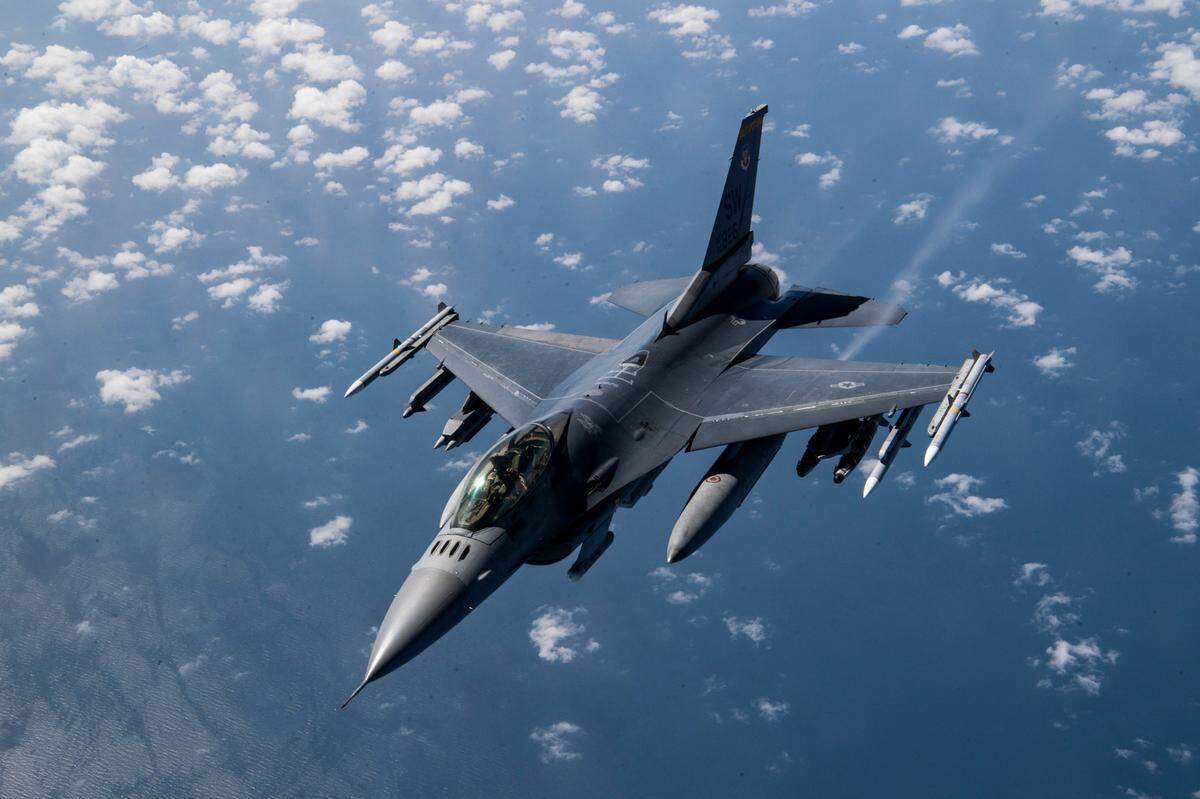
However, the Air Force is ending the use of those aircraft, and no longer training pilots to fly them. The military branch wants to upgrade the Idaho Air National Guard’s fleet by replacing A-10s with F-16 Fighting Falcon aircraft.
This would “transition the 124th Fighter Wing from its current A-10 Thunderbolt II mission to an F-16 Fighting Falcon mission,” the National Guard Bureau said on the evaluation project’s website.
“The decision to host the F-16 mission at Gowen Field came after assessing the area’s ability to facilitate the mission and infrastructure capacity, while accounting for community support, environmental factors and cost,” the Secretary of Air Force Public Affairs said in a 2023 news release.
“It all depends on the budget,” Col. John Williams, 124th Operations Group Commander and part-time pilot with the Idaho Air National Guard, told the Idaho Statesman.
It wasn’t clear how much the transition will cost in total.
“Basing moves have a number of variables, and we don’t track funding in a way that sets one amount for the entire process,” an Air Force spokesperson told the Statesman via email.
Why is Air National Guard switching to new planes?
Fairchild Republic manufactured A-10 Thunderbolt II warplanes from 1976 to 1984 for $20 million each. The unit cost of the A-10 has since dropped to $9.8 million.
The single-seat, straight-wing subsonic attack aircraft have been flown in military operations including Operation Desert Storm, the Iraq war and the war in Afghanistan.
“The A-10 was designed for the close air support role ... to protect our troops on the ground on the battlefield,” Williams told the Statesman via phone. “They are the experts at combat search and rescue.”
The Air Force requested retiring 162 Warthogs in 2026 in addition to the 56 it was allowed to decommission in the previous year, according to an overview of the U.S. Department of Defense’s budget for fiscal year 2026.
While the A-10 was built to execute a specific mission to perfection, Williams said, the F-16 is designed to operate in both air-to-air combat and air-to-ground support.
“As we reduce the number of pilots and fighter squadrons that we have, the multi-role fighter becomes quite appealing if you’re looking to balance a budget and live with less numbers,” Williams told the Statesman.
Why is Air Force transitioning to F-16 fighter jets?
Moving F-16 fighter jets into Idaho has been up for debate for years, the Statesman reported previously.
First flown in December 1976, the F-16 Fighting Falcon was developed by General Dynamics before it was sold to its current manufacturer, Lockheed Martin, according to the Hill Aerospace Museum.
It’s a speedy, cost-effective combat plane that’s “highly maneuverable,” the Air Force said on its website. “It provides a relatively low-cost, high-performance weapon system for the United States and allied nations.”
Each Falcon costs $14 million to produce.
F-16 Fighting Falcons “can locate targets in all weather conditions and detect low flying aircraft in radar ground clutter,” the Air Force said.
They’re also faster than the A-10 Thunderbolts, which travel up to speeds of 420 mph. In contrast, F-16s can reach 1,500 mph, according to the Air Force.
Does changing planes mean fewer pilots?
Williams, who plans to train on the F-16 mission “if the timing works out,” added that several pilots in the 124th fighter wing have decided to retire with the A-10s they trained on.
“A lot of them ... want to see it to the end,” Williams said. “(They have) over 20 years of service, and they’re staying because they’re still compelled to serve. The Air Force is not training any more A-10 pilots.”
How could arrival of F-16s impact your neighborhood?
Air Force officials are working on an environmental impact statement that will reveal the “potential environmental, social and economic impacts” of moving nearly two dozen F-16 Fighting Falcons to Gowen Field.
“Topics under evaluation include aircraft noise, air quality; land use compatibility; biological and water resources; cultural and historic sites; infrastructure and public services,” the project website said.
“We need to be very careful about implementing any kind of change like this,” Idaho state Rep. John Gannon told the Statesman in 2023.
Noise is a primary concern for the Boise Democrat, who represents residents of the Boise Bench neighborhoods north of Gowen Field.
Can sounds from fighter jets damage your hearing?
Locals have heard the roars of F-16s before, when the Air Force’s Thunderbirds performed above downtown Boise in Gowen Thunder Airshow events.
The sounds produced by the fighter planes approach the limits of what’s safe for human ears to experience.
“When the engine runs at full afterburner, it creates a 139-decibel roar,” the Air Force said on its website. “The loudest sound that is safe to be around with hearing protection is 140 decibels.”
The Hearing Health Foundation warned that sounds that exceed 70 decibels can damage hearing without protection.
The Air Force previously considered stationing a set of F-35s in Boise, which can reach speeds of up to 1,200 mph.
However, a draft environmental impact statement in 2020 found that operating the louder planes out of Gowen Field could make hundreds of nearby homes unlivable, according to previous Statesman reporting. The Air Force instead sent the planes to Wisconsin and Alabama.
According to Gannon, the Federal Aviation Administration would help purchase Boise homes if studies determined that decibel levels from F-16 aircraft made them unsuitable for residential use, forcing some residents near the airport to relocate.
When will environment impact report be complete?
The environmental impact statement is still in early stages and will be released in draft form in the summer of 2026, according to the National Guard Bureau. Final results will come in the spring of 2027.
If Gowen Field isn’t assigned a new mission as the A-10s are pushed out, then the Idaho Air National Guard could also be retired, according to Williams.
“I don’t think it’s necessarily tied to F-16s, but if they don’t replace the A-10s that we’re losing with something, then there’s no reason for us to be paying for these hangers,” Williams said. “That’s the threat.”