Are Idaho stores allowed to refuse cash? State money laws explained
Picture this: You head to the register with your purchase, and open your wallet.
All you have is cash.
Are Idaho retailers legally required to accept cash payment? Can stores refuse to take your crumbled bills and spare change?
Here’s how the Gem State’s money policies could impact you:
What’s considered legal tender in the US?
U.S. coins and currency are considered “legal tender” under federal law, which means they can be used to pay back “all debts, public charges, taxes and dues.”
“There is no federal statute mandating that a private business, a person or an organization must accept currency or coins as payment for goods or services,” the Federal Reserve said on its website.
Instead, the Federal Reserve said, “Private businesses are free to develop their own policies on whether to accept cash unless there is a state law that says otherwise.”
Can Idaho stores refuse to take cash?
Under Idaho law, stores, restaurants and other businesses aren’t required to take cash payments.
However, there have been efforts in the Gem State to protect residents’ rights to pay with bills and coins.
Introduced in March 2021, House Bill 256 would have required sellers in Idaho to “accept cash as a method of payment.” It died in committee.
“There are a lot of cases where some people that don’t have credit cards, or shouldn’t have credit cards at all,” the bill’s author, state Rep. Heather Scott, R-Blanchard, said at the time.
Blanchard said she specifically wanted to protect minority groups that prefer to pay in cash.
Across the West, lawmakers have worked to enact similar cash usage policies.
An Oregon law that went into effect in 2022 bars businesses from refusing to accept U.S. currency and coins from customers.
Cities in California and Washington state similarly passed laws to prevent businesses from refusing cash as a form of payment, McClatchy Media said.
Do Idaho residents want to use cash or cards?
As of 2022, 14% of U.S. residents use cash for all or nearly all of their purchases, while 44% used cash for only some of their transactions, according to a Pew Research Center study.
Meanwhile, 41% of those surveyed no longer use cash to pay for groceries, gas and other expenses.
With cashless payments and digital transactions on the rise, whether or not Idaho businesses accept paper money seems irrelevant for many Boise-area residents.
“Wtf is cash?” one Reddit user wrote in a comment on a November 2023 post about a Treasure Valley bowling alley refused cash payment.
“I wish more places would stop accepting cash,” Reddit user Mt_Zazuvis wrote in a comment on the post. “It’s well past time people moved on from using cash for daily transactions.”
However, not everyone is ready to give up cash as a form of payment.
“I remember Dutch Bros stopped accepting cash during COVID,” Reddit user JeffreyGoldberg wrote. “As a result they were on my boycott list for a while. Cash is king.”
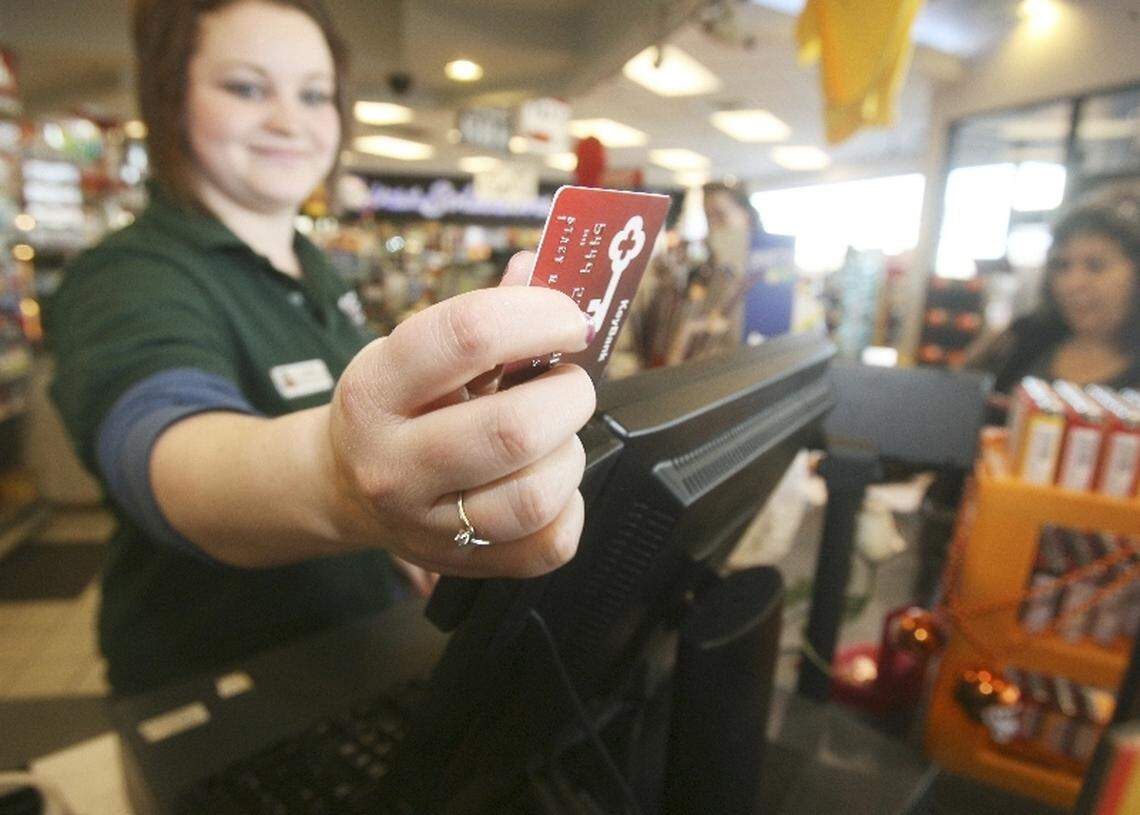
What percentage of Idaho residents use banks?
Idaho residents without active bank accounts or credit cards are forced to rely more on paper bills and pocket change for their purchases.
The most recent Household Survey from the Federal Deposit Insurance Corporation shows that the percentage of U.S. residents without access to banks has dropped significantly since 2009 — from 7.6% to 4.2%.
That means about 5.6 million households were unbanked. A majority of those earn less than $15,000 in income a year.
The 2023 survey catalogued answers from about 30,000 households from all 50 U.S. states as well as the District of Columbia.
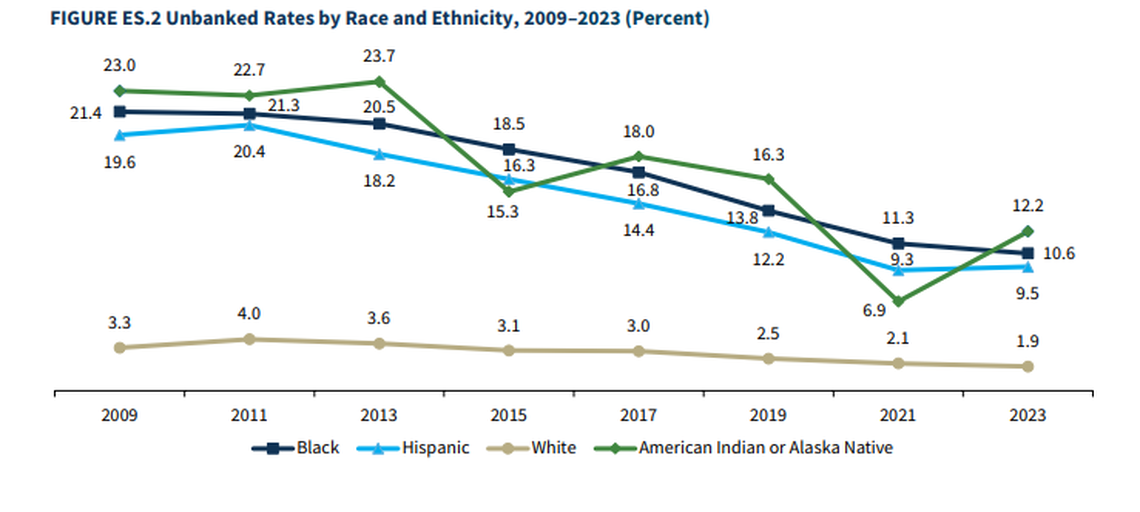
The Federal Deposit Insurance Corporation also broke down banking access by race and ethnicity.
Only 1.9% of white households in the United States didn’t have access to bank accounts in 2023, the survey found, compared to 9.5% of Hispanic households, 10.6% of Black households and 12.2% Native American households.
In 2023, 2.5% of Idaho residents didn’t have bank access, compared to 6.6% in 2009, the survey found.