
Tired of ‘library desert,’ West Boise residents want a branch. Is it in the cards?
AI-generated summary reviewed by our newsroom.
- Supporters urge a two-mile access standard to address West Boise gap.
- Consultants favor larger branches; study finds system 20–30% undersized.
- Council asked Library Board for square‑foot and cost goals this year.
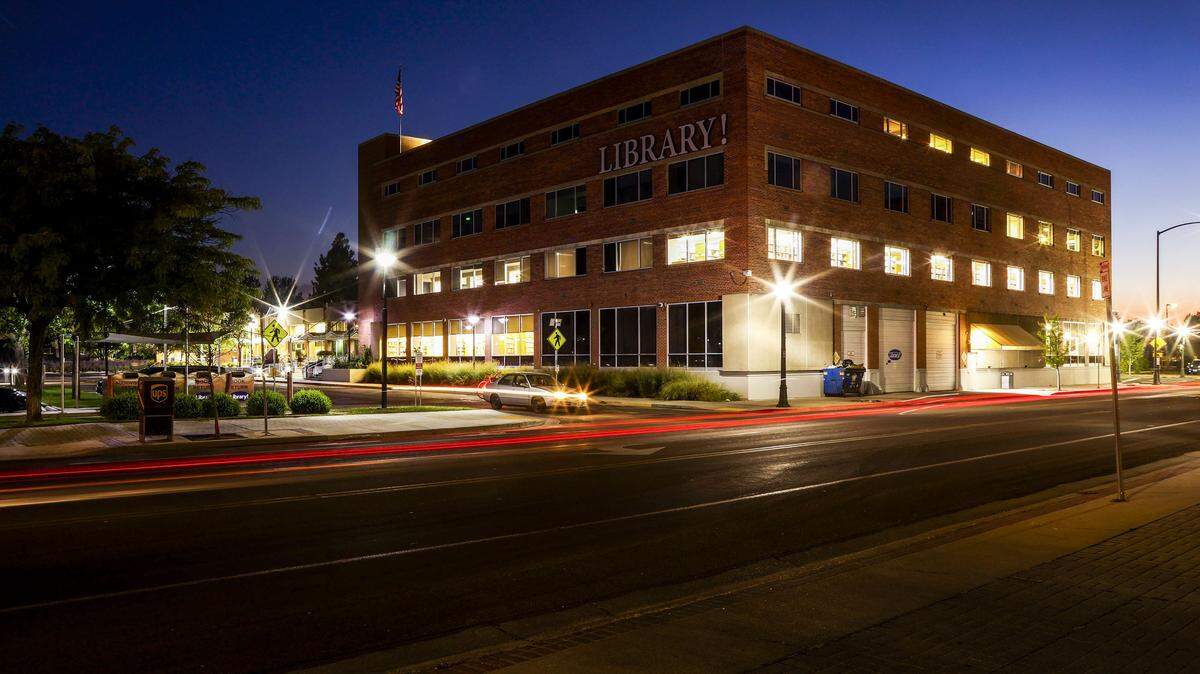
Going on four years ago, Mark Salisbury took a map and measured the miles around every library in the Treasure Valley.
He drew 2-mile circles centered on each, and then shaded in the circles. There was a lot of color on the page, and one broad swath left out — right around his home in West Boise.
Since 2023, Salisbury and his neighbors have pushed for a branch to fill the gap in the city’s West Cloverdale neighborhood, where some 30,000 people live. If they can’t get a library on the books this year, they’ll likely need to keep waiting — as long as two decades.
That’s because Boise is working through its library facilities plan this year, updating a document published in 2000. On Tuesday, the City Council and independent Boise Public Library Board of Trustees met to work on the project, the latest meeting in an ongoing planning and budgeting process slated to stretch into the summer.
The goal for the two governing boards this week was to outline objectives for the library system’s long-term vision, which should come to a boil when the groups meet to discuss paying for the plan this summer.
The goal for Salisbury and his supporters was simpler: to make sure a new branch around Cloverdale and Ustick is part of that vision.
“The city is choosing future residents over West Boiseans,” said Salisbury, founder of the group Citizens for a Library, at a press conference in front of City Hall on Monday. “Shouldn’t we be thinking about residents who have lived for decades in a library desert first?”
Salisbury and his five children are in that “desert.” A software developer by trade, he lives a 5-mile drive from the nearest branch, he said.
But the scope of the plan sets up competing ideas about how libraries ought to work — and for whom. Should they be smaller community hubs, close to home? Or should they be larger service destinations, offering more to do a longer drive away?
The City Council on Tuesday asked the Library Board to look into each approach, requesting that it come up with a square-footage goal for library buildings, a conceptual plan for a West Boise branch, and cost estimates for both. Another joint planning meeting is scheduled for April, with funding talks set for June.
“Then,” Boise Mayor Lauren McLean said, “it gets real.”
West Boise wants ‘focal point’
Like much of the talk at City Hall, the library’s outlook is tied to Boise’s expansion, and the heartburn that arises when the needs of residents conflict with future demand from people who might be here soon.
“As we at the library are talking about growth, every city department is talking about growth,” Library Director Jessica Dorr told the council.
As it stands, the five-branch system — roughly 131,000 square feet of library space — is still catching up to the city’s decades-long population boom, Dorr said.
“We just do not have enough space for the services that people are expecting from our libraries,” she said.
They’re about 30,000 to 40,000 square feet short of what consultant Group 4 Architecture said Boise’s population needs, “and we’re in a city that’s growing,” Dorr said.
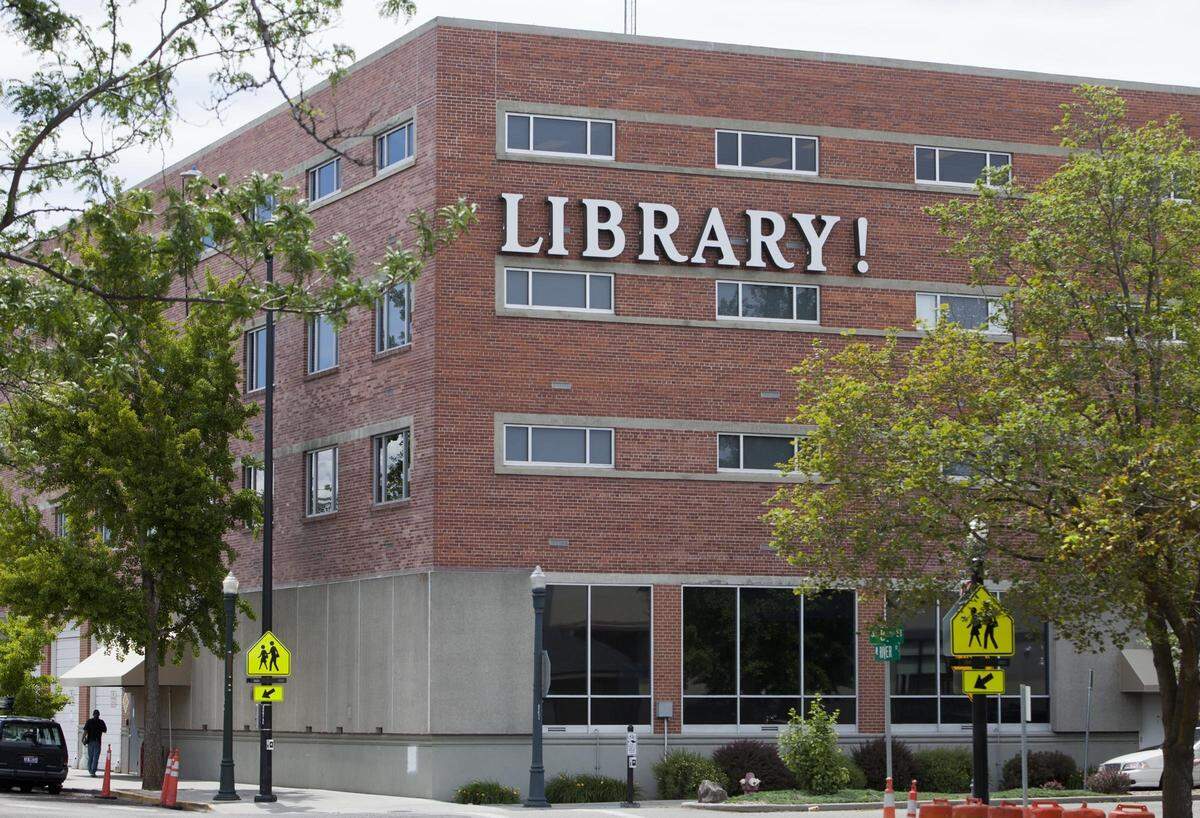
On a per capita basis, Boise has more library footage than Meridian but less than Nampa — and falls below peer cities, such as Tacoma and Spokane in Washington, Dorr said. What space the library does have is overwhelmingly downtown. About 60% of the system’s footprint —roughly 80,000 square feet of the total — is at the flagship building on Capitol Boulevard.
The study Group 4 delivered in August was mostly worried about the capacity. The consultants found that the library system is already 20-30% too small for Boise’s size. They advised the city to replace the existing Collister and Ustick branches with buildings that were 25,000 square feet or more, and eventually expand the downtown branch.
In general, the report favored larger libraries — which can be more efficient for staff and offer a wider range of services — sited close to where the city expects to grow.
The consultants’ report didn’t indicate that library access was a problem, and didn’t suggest a new branch for West Boise.
Council Member Luci Willits represents District 1, which runs between Five Mile Road and the Meridian border south of U.S. Highway 20. Salisbury is one of her constituents, as are many of the 1,334 Boise residents who signed his petition to add a library in West Cloverdale to the city’s plan.
In an interview with the Idaho Statesman, Willits praised the library board’s dedication but worried that it didn’t represent her side of town. The five-person library board is meant to represent “a cross-section of community interests,” but the appointed positions aren’t tied to a geographic district the way a council seat is.
“They’re not attuned to what West Boise is asking for,” she said.
“I think the city is smart to look at where it’s growing. We need to think about library access, but not at the expense of the people already paying taxes.”
Willits represents the only district in Boise without a library at which to meet with constituents. She said she goes to another district for town halls, or holds them in the largest city-owned space in her zone: a sewer treatment plant.
“Every neighborhood needs a focal point,” West Boise resident Larry Ice said. “Every City Council district has that except West Boise.”
Willits also noted the disparity.
“I think it solidifies stereotypes: that City Hall focuses on certain areas and not others,” she said. “If the plan is approved as (Group 4) drafted, they’ll be shafted — and I think it’s a shame.”
Boise’s library funding could be final determinant
The library has its own board, and it sets policy and programming as it sees fit. But the City Council has the checkbook.
Boise allocated $19.1 million in general funds for fiscal year 2026 — between 5% and 6% of its $331.1 million spending plan. What’s more, a 2019 ballot initiative requires a majority of voters to sign off on any library expenditure of $25 million or more, adding another wrinkle to expansion.
“This needs to be collaborative,” Library Board Chair Ron Pisaneschi said Tuesday. “If there’s no funding available, none of this matters.” He said he wanted to be “realistic, even though we’ve had feedback that people want more of almost everything.”
It remains to be seen how Pisaneschi’s pragmatism will translate to policy. Today, Boise’s guiding documents set a standard of getting as many residents as possible within 3 miles of a library branch. By that benchmark, the current setup looks good, because about 87% of city residents live within that distance of a library, according to city data.
And the Boise Library is part of a larger consortium; add in partner libraries in neighboring cities or Ada County, and Dorr said 97% of people are within 3-mile catchments. The city’s math indicates that 87% of residents can get to a a Boise Public Library within a 10-minute drive, Dorr said. (Salisbury countered that “these drive times are really optimistic with traffic conditions.”)
Council President Meredith Stead said she was happy with the 3-mile standard. To her, Dorr’s presentation satisfied questions of access, freeing the library board to consider capacity. Stead favored a “holistic” approach: If people are willing to drive, a library’s location matters less than what you can do when you get there. She urged planners to look systemwide, rather than site by site.
“To me, the general square footage is more important than the neighborhood (a library) is serving,” she said.
That view is at odds with Salisbury’s — and, on Tuesday, with Willits’ as well. She urged the city to aim for a 2-mile standard, rather than focus on a square-footage benchmark.
“We have an entire section of the city that has asked us for something, and the numbers back it up,” she said. “I think it would be a disservice to them to ignore them.”