Nearly 6 years after launching ‘smartass’ Boise news show, TV anchor steps away
AI-generated summary reviewed by our newsroom.
- Brian Holmes launched The 208 in 2020, reshaped Boise TV news with snark.
- He stepped away citing burnout, still covering shifts and returning for Winter Olympics.
- The 208 used conversational format and accountability reporting to engage viewers.
A few years ago, Brian Holmes helped launch what he hoped would be a departure from anything else on local news in Boise.
Now he’s departed the show he created with a bittersweet farewell, a promise to return and no solid plans for what’s next.
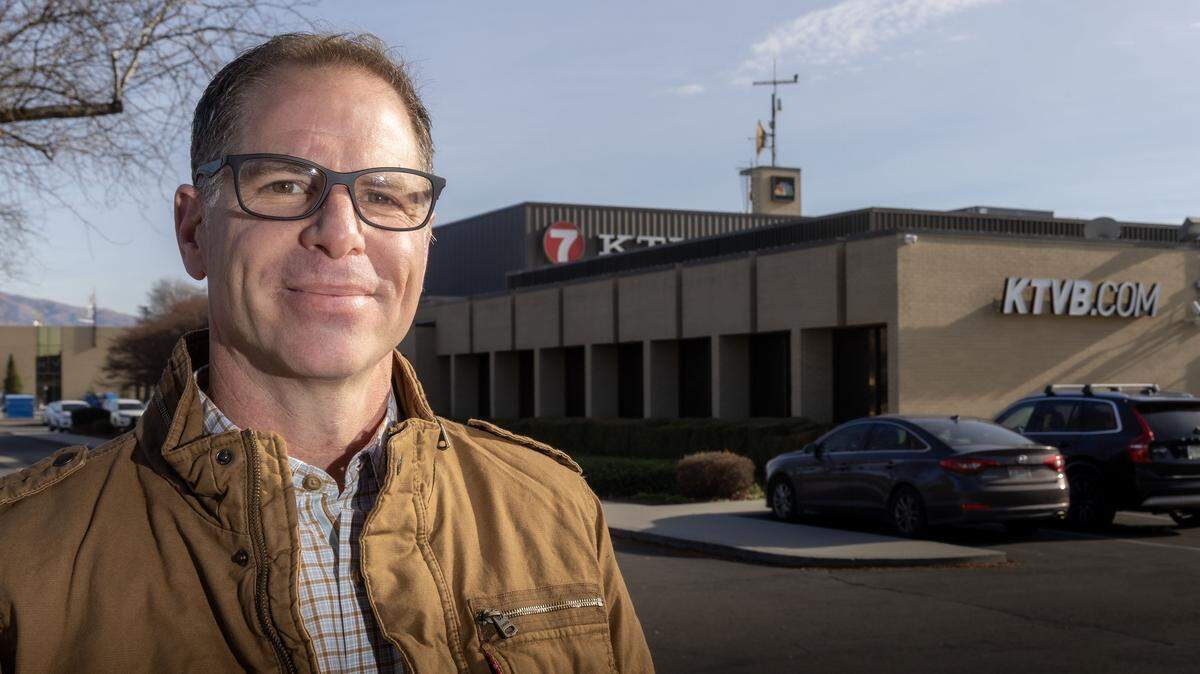
Holmes announced in early December that he would be leaving KTVB during a broadcast of “The 208,” the 5 p.m. show he co-created in 2020.
He told the Idaho Statesman in an interview that the show — a “smartass” take on the news inspired by “Next with Kyle Clark” on Denver’s 9 News — was a major achievement in a career in Boise news that dates back to 1999. The show became known for Holmes’ conversational style and self-described “snark,” as well as a desire for accountability from sources and interaction with viewers.
“Of all the things I’ve done at Channel 7, this was the one thing that probably garnered the most reaction from people,” Holmes told the Statesman. “I did weather, and people would stop me in the store sometimes and ask about the weather stuff, but people would go out of their way to mention this show specifically.”
Holmes hasn’t fully exited the TV station. He said he’s still covering shifts at KTVB and will return in February alongside Olympic gold medal-winning cyclist Kristin Armstrong, of Boise, to host the channel’s Winter Olympics coverage. The Winter Games run Feb. 6-22 in Italy.
From ‘all-star’ Boise job to unique Idaho newscast
Holmes said journalism wasn’t his plan. After taking a drafting class in high school, he fell in love with the idea of architecture and pursued that at California Polytechnic State University, but realized the field wasn’t for him. He took some time away from college and began working as a bartender, where he said he was “watching ESPN all day.”
That’s when he became interested in his line of work.
Holmes went back to school at California State University, Northridge for television production. He said he wanted to be “the next Vin Scully,” the renowned Los Angeles Dodgers broadcaster. Holmes even landed a job at Dodger Stadium, but said he enjoyed creating videos more than anything else.
He found a job at KSBY in San Luis Obispo, California, in production.
“I thought I was living the dream, living back at the beach, working nights, going out after the show and just learning everything there is to learn about TV,” Holmes said.
He was able to fill in on sports occasionally, and when an “all-star” job came up at FOX 12 in Boise in 1999, Holmes took it — and moved to the Treasure Valley sight unseen.
Holmes moved to KTVB in 2001. After time away to raise his four kids, Holmes returned to Channel 7, where he had a variety of roles. When he was asked to take over the 5 o’clock news with Kim Fields in 2020, he did so with the condition that he could create a different kind of show.
“It was kind of that idea of if we’re sitting in the newsroom and we say, ‘Hold on a second, that’s BS,’ why wouldn’t you push back on it?” Holmes said. “Or if you’re sitting at home watching it and you’re cracking jokes about somebody’s answer or something, then we should be able to do that, too, right?”
Kevin Eslinger, a photojournalist who worked with Holmes at FOX 12, also joined the team for “The 208.”
“We talked about just trying to kind of break the mold a bit, just do things differently, not be stuck into such a routine,” Eslinger told the Statesman.
Reporting the news and pushing boundaries
Holmes said it took time to build trust in the new format, the way he presented stories and, in particular, his “tone.” He recalled one of the first times he got pushback: when U.S. Sen. Jim Risch fell asleep during President Trump’s impeachment proceedings, a moment that was captured by a courtroom sketch artist.
“The line I wrote was, ‘He fell asleep long enough for somebody to draw a picture of it,’ ” Holmes said. “Everybody kind of felt nervous, like, ‘Can we do this? Can we say this? Can we call him out?’ ”
Holmes said there were still moments that the show’s unconventional tone was reined in. In one instance, he planned to read excerpts from a local author’s “romantic comedies” about seniors called “Wrinkly Bits” for a segment.
“We decided to put up a fireplace in the back on the TV screen, I put on like a red velour coat, had a glass of brandy,” Holmes said. “It was about five minutes to air, and they’re like, ‘We’re not doing that.’ ”
By and large, the reporter said, he was able to push boundaries to tell difficult and interesting stories, and push the envelope on the traditional format of TV news, all while doing serious reports sometimes.
Recently, he and Eslinger worked on an 18-minute segment on Vietnam War veterans.
Eslinger said working alongside Holmes was “a good challenge” and called his colleague “a capital-J journalist” with an intense attention to detail.
“I would get a script and it would scare me, because most scripts, you have a chunk of track, and then you’ll get a sound bite, another chunk of track,” Eslinger explained. “And with Brian’s scripts it’s just a completely different thing to edit. And I mean, it was fun to do the edits, but it kind of scared me.”
Leaving Boise TV station is ‘humbling,’ Holmes says
During Holmes’ send-off broadcast on “The 208,” he quoted Neil Young and said he was leaving the station to burn out rather than fade away. He told the Statesman that the time was right to step away, as the pace of the show — and his commitment to its quality and format — were pushing him closer to burnout.
“I kind of had to look for a little exit, because I was getting tired, and my contract was coming up,” he said. “It’s just getting too hard.”
Holmes said that in addition to returning for Winter Olympics coverage, he would be open to collaborating with KTVB for future projects. He said the reality of the decision may hit home soon, but he knew it was the right time to leave.
“I’ll probably get a month into it and be like, ‘What did I just do?’ ” he joked.
Holmes called the outpouring of appreciation from viewers and social media users “humbling.”
“I didn’t set out to be a TV guy,” Holmes said. “I just wanted to kind of do stories and tell people’s stories.”